Jerome Karabel Professor of sociology, University of California at Berkeley
Video cameras have transformed how we view police killings. First, there was the horrifying homicide in July 2014 of Eric Garner, placed in a choke-hold for selling loose cigarettes and denied medical assistance for several long minutes despite pleading “I can’t breathe” eleven times. Then there was the shocking slaying in April 2015 of Walter Scott, stopped for a non-functioning third brake light and shot in the back in broad daylight while running away from the police. Most recently, there was the fatal shooting this July of Samuel Dubose, stopped for a missing front license plate and shot in the head while attempting to drive away. In all three cases — two of them caught by citizen videos and the third by police camera — the victims were African-American.
In the wake of these events and protests that have done so much to focus public attention on them, our knowledge of police killings has rapidly expanded. So, too, has the issue’s political salience. The videos — and the outrage that followed — helped ignite the most powerful civil rights movement since the 1960s. Thanks to this movement, the issues of police killings and mass incarceration are now squarely on the public agenda.
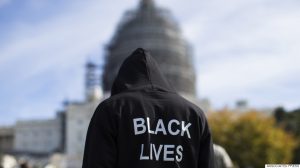
Neal Blair, of Augusta, Ga., stands on the lawn of the Capitol building during a rally to mark the 20th anniversary of the Million Man March, on Capitol Hill, on Saturday, Oct. 10, 2015, in Washington. Thousands of African-Americans crowded on the National Mall Saturday for the 20th anniversary of the Million Man March. (AP Photo/Evan Vucci)
Like the movements against lynching, state-sanctioned segregation and the death penalty before it, today’s movement is part of a centuries-long struggle for racial justice. These movements have repeatedly challenged the taken-for-granted practices of the day and redefined them, step-by-step, as no longer morally acceptable. As I will discuss below, this pattern describes the struggle that led to the decline and ultimate elimination of lynching, and it captures as well the ongoing fight against the death penalty that may well culminate in its abolition. Today’s movements aim at a similar transformation: to define routine police killings and mass incarceration — practices now taken for granted as normal features of American life — as neither normal nor morally acceptable.
How Common Are Police Killings?
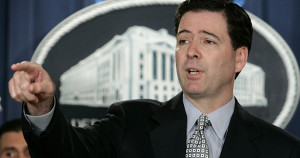
The current movement emerged out of mounting anger over the killing of unarmed citizens by police. When the question of how often such killings take place quite naturally arose, the shocking answer was that no one knew — a state of affairs the FBI director James Comey has aptly described as “embarrassing and ridiculous.” Though the FBI annually issues a report that provides figures on “justified police homicides,” reporting from local police forces is voluntary and thousands of them turn in no information. Investigations by the Wall Street Journal and FiveThirtyEight determined that hundreds of police killings went unreported annually, but they could do no more than provide rough estimates. This is in striking contrast to many European countries, where every killing by the police is carefully recorded; indeed, in Germany and Finland, each and every shot fired by the police is entered into a national database.
In response to the upsurge in public interest in police killings, the Washington PostandGuardian have stepped in to perform a task that should have been done by the government: the recording of every police killing. Though the newspapers use slightly different methodologies, both newspapers draw on two citizen-initiated sources, “Killed by Police” and “Fatal Encounters,” which collect news reports of people killed by law enforcement offices, and both include data on whether the person was armed.1 In addition to the time and place of the killings, both databases include basic demographic information, including race, gender, and age. Neither attempts to determine whether the killings should be deemed “justified.”
As recently as the summer of 2014, when the deaths of Michael Brown and Eric Garner thrust the issue of police killings into national prominence, the most widely used estimate of the number of people killed by police was provided by the FBI’s Uniform Crime Report: slightly more than 400 per year. But we now know that this figure was a gross underestimation, for the actual number is more than 1,100 police killings each year — about one every eight hours.2This is a level of police violence that is simply unimaginable in other wealthy democratic country; in Germany in 2012, a total of seven people were killed by the police, and in England a single person was killed in 2013 and 2014 combined. And Japan, a nation of 126 million people that is as non-violent as the US is violent, had no police killings over the past two years. Read more here :Police Killings Surpass the Worst Years of Lynching, Capital Punishment, and a Movement Responds
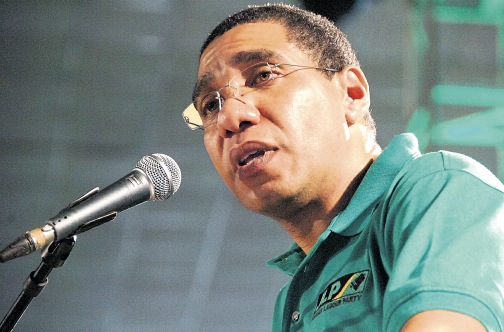
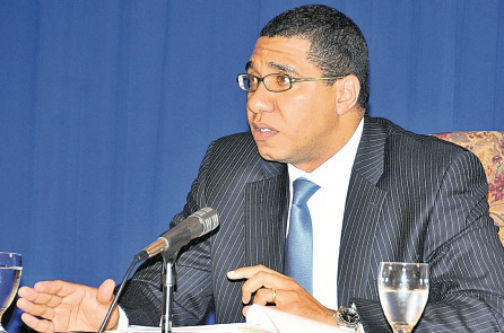
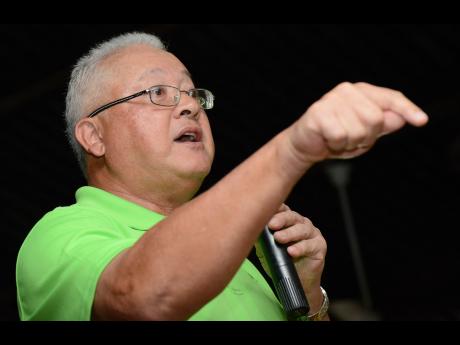
KINGSTON, Jamaica – Leader of the Opposition Andrew Holness says that the Government appears to be incapable of managing crime.
In a release yesterday on the position taken by the Opposition in the discussions which followed Tuesday’s statement in the House of Representatives, by Minister of National Security Peter Bunting Holness said:
“The PNP [is] trying to cover up murders and crime in Jamaica. The old PNP trick of attacking the messenger in the hope that the message will die will not work. We are on to them this time. The facts are incontrovertible. Whenever the PNP is in power murder rises. Lawlessness and disorder increases.
“No one is arguing that crime is not a national problem with many causes and we all have a role. National security like health, education, and all other ministries are the national concerns and we all have responsibility. However, when we elect a government we don’t expect them to turn to the public to say we can’t do anything about crime, it’s an all out responsibility. If that’s the case why have a government?
“Why pay Peter Bunting to tell us that the increase in murders is a mere bump in the road and since then murders have almost double. We all can pray for divine intervention on our own we don’t need a paid Minister of Government to tell us that.
“The PNP has a nerve to talk about a bi-partisan approach to crime fighting. We have facilitated every Bill that has been brought to Parliament to be fast tracked for passage. However, when the greatest opportunity presented itself to erode the criminal networks in Jamaica by extending the state of emergency in 2010, the PNP rejected the very bi-partisanship of which they speak. The PNP have no moral authority to speak about crime given their history and lack of performance in this regard.
“I will not stop talking on the murder issue… If murders were reduced by almost 500 under the JLP government, the public is justified in expecting a continued decrease under the PNP. Instead this is not. Murders are now 24 per cent ahead of what they were last year. This Government simply doesn’t care and is incapable of managing crime.” Holness explains position on crime situation
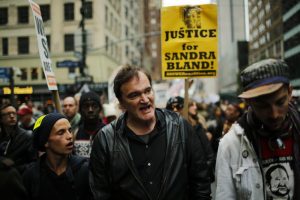
Quentin Tarantino (c.) takes part in a march against police brutality called “Rise up October” on Oct. 24 in New York
After a week of silence, the “Pulp Fiction” director has gone medieval at critics of his anti-cop rants — and has taken a few swipes at NYPD Police Commissioner Bill Bratton.
“You’ve got (Police Commissioner) Bill Bratton saying…’There are no words to describe the contempt I feel for him.’ Him being me,” Tarantino told the LA Times Wednesday. “Yet when asked about the Eric Garner case, his quote is: ‘I personally don’t think race was a factor in that incident.’ If you watch the tape, you can tell that it was absolutely a factor in that incident. But I’m the only one he has no words for the contempt because I was against police brutality.”
Being against police brutality for (Bratton) is being against the police,” he said.
Tarantino’s royale with cheese smack down came on the same day Nassau County cops joined a boycott of Tarantino’s upcoming film “The Hateful Eight,” which hits theaters on Christmas Day. Tarantino said he is not worried that his movie is going to tank as a result. “The people who are screaming against me are the mouthpieces for the police,” he told the west coast paper. “They can call for a boycott. That doesn’t mean that cops are going to respond. I actually have a whole lot of fans that are police officers. And they’re not going to take (Patrolmen’s Benevolent Association President) Patrick Lynch’s word for what I said.” Read story here…Tarantino fires back at cops calling for boycott of his new film: ‘Being against police brutality for (Bratton) is being against the police’
Jeremy Mardis, a first-grader, was shot dead Tuesday night after his father, Chris Few, fled police. Few is in critical condition, authorities said.
Authorities say a 6‑year-old boy is dead and his father is in critical condition after marshals for a city in central Louisiana shot at a vehicle they were fleeing in. Officials say the two were shot about 9:30 p.m. Tuesday in the city of Marksville.
Avoyelles Parish coroner Dr. L. J. Mayeux identified the driver as Chris Few and his son as Jeremy Mardis, a first-grader at a nearby elementary school. Mayeux says city marshals were chasing Few after he fled an attempt to serve a warrant. The coroner says Few reached a dead end and was backing into the marshals when they fired. The coroner says the boy was “caught in the line of fire” and was killed. State police are handling the investigation, but they provided few details. 6‑year-old son of man fleeing arrest dies in police-involved shooting
THE Tivoli Enquiry heard yesterday that residents of Tivoli Gardens could not identify a number of the men killed inside the community during the May 2010 operation to apprehend Christopher ‘Dudus’ Coke because they were “imported” into the area to defend the former strongman.
This evidence was given by Inspector Mario Pratt, who was one of the drivers picking up bodies throughout the community and in the neighbouring Denham Town between May 24 and 25 of 2010.
He testified that a total of 13 bodies were placed in his truck on May 25 and that residents told an accompanying colleague of his that the men were imported so they wouldn’t be unable to identify them.
He also testified that others refused to co-operate with the police when asked if they knew the men. Pratt testified in his examination-in-chief, led by attorney Deborah Martin, that the bodies were picked up in pathways and on the road and that none was removed from houses or yards in the community.
Evidence had already been given that upwards of 300 gunmen were in Tivoli Gardens to defend Coke and that they were paid handsomely to be there.
A senior Jamaica Defence Force soldier testified that a number of men with rural addresses were rounded up in the area and some were even put out by Denham Town residents after members of the security forces gradually took control of the area. The men were unable to say what they were doing in the community and were predominantly dressed in white shirts and blue jeans. Evidence was given that this was the mode of dress for gunmen, who had engaged members of the security forces in the West Kingston area during the operation.
– Paul Henry
The enquiry, being held at the Jamaica Conference Centre in downtown Kingston, is looking into the circumstances surrounding the deaths of more than 70 people during the operation to apprehend Coke and restore law and order to the area after gunmen barricaded sections of the community and turned it into a fortress.
Questioned by Terrence Williams, who heads the Independent Commission of Investigation, Pratt agreed that he never put in his statement the evidence that residents said the bodies belonged to imported men.
The cop, who was a sergeant back in 2010, said that his intent in November of that year when he wrote his statement was to give an outline of what occurred in Tivoli Gardens when he entered the community. Read more here : Cops say several dead men identified as ‘imports’
KINGSTON, Jamaica — Leader of the Jamaica Labour Party (JLP) Andrew Holness has expressed concern that as many as 800 members of the Jamaica Constabulary Force (JCF) may be leaving the force this year. “Just today I did some research, and I am told that the attrition rate in the police force is over 800 this year. Eight hundred policemen have decided to leave the police force,” Holness told the crowd at Sunday night’s JLP mass rally in May Pen, Clarendon. “If you want to fight crime, you have to make the crime-fighters happy. If you want to fight crime, you have to make the police feel appreciated and motivated,” Holness stated.
“And so the Labour Party makes a commitment that we will look very closely at the remuneration of police. We will look very closely at the conditions and terms of service of policemen to ensure that they are comfortable in the fight against crime,” he added. Holness also referred to the armed robbery of the JLP councillor for the Mocho Division of the Clarendon Parish Council, businesswoman Henene Simpson, on Saturday, and commented that not many Jamaicans are as lucky she was. “Not many Jamaicans are so lucky, because crime is out of control in this country. Whenever the People’s National Party is in power murder rises; whenever the PNP is in power crime rises; and I keep telling people that you have a greater chance of being murdered in Jamaica than being hit by a car,” he said.
“We believe that there is a lot that we can do to solve crime in this country,” Holness said. “There is a lot that we can do to bring down murders in this country. There is a lot that we can do to make you safer in your own homes and public spaces. “The first thing that we have to do is to let our policemen feel appreciated again. The morale among policemen is very low,” he added.
Ted Cruz celebrated Republican victories across the country at Harvard Law School in November 1994. He marked off George W. Bush’s win in the Texas governor’s race.
CAMBRIDGE — As the lights rose, Ted Cruz held center stage, dressed in black and kneeling at a bedside. The first-year student at Harvard Law School delivered his lines with the emotions of a man gripped by anger, fear, and worry for his reputation.
“Do you understand that I have many enemies?” he thundered. “There is a faction that is sworn to drive me from my pulpit. Do you understand that?” Cruz, then a devoted amateur thespian, was playing the role of the Rev. Samuel Parris in “The Crucible,” Arthur Miller’s allegorical play about McCarthyism.
The lines — and the part — seem prophetic today.
In the US Senate, the Tea Party Republican from Texas has continued to seek out a spot at center stage. His enemies — and he has many, including some in his own party — characterize him as power-hungry, self-righteous, driven by single-minded political piety. He even mounted what detractors called a groundless witch hunt, against the presidential nominee for secretary of defense.
View Story Where Ted Cruz stands on key issues Cruz hopes to energize the evangelical wing of the GOP and supplement his already strong support among tea party and grassroots conservatives. Video: Cruz acting in ‘The Crucible’
None of which, to his former Harvard Law classmates, is surprising.
Interviews with more than two dozen alumnae and professors fill in a portrait of Cruz, in Cambridge two decades ago, that would be fully recognizable to those who know him now in Washington. He made a lasting impression as someone both arrogant and pretentious, as well as someone unwilling to yield or compromise.
But he was also universally respected for his intellect, described by friend and foe alike as brilliant but with a hard edge.
“He never really had an off switch with his debater’s demeanor,” said Ted Ruger, who was president of the Harvard Law Review during Cruz’s third year. “We just realized that was the way a discussion with Ted was going to go. If you expected something different, you came away shaking your head.”
Some two decades later, Cruz has deftly tapped into a rebellious, angry strain in American conservatism and emerged as a leader in the Tea Party movement. He was a primary force behind last month’s government shutdown, and has been mentioned as a possible 2016 presidential candidate.
The man who prodded his colleagues on the Harvard Law Review is now the one drawing the ire of his Senate colleagues. He remains more notorious than popular.
Looking back, Cruz said those three years at Harvard Law School, from 1992 to 1995, sharpened his political vision and trained him for the intense sparring with liberals that has become his signature style as a national politician.
But he also said he has mellowed since then.
“I suspect I was not the first 21-year-old who thought he knew more than he did,’’ Cruz said in an interview in his Senate office. “And one of the virtues of age, one of the virtues of getting married and becoming a father, is it often leads one to take a more measured approach to life.”
Born in Canada
Ted Cruz arrived in Cambridge as an outsider.
He was born in Alberta, Canada. His father fled persecution in Cuba, eventually settling in Austin, Texas, where he learned English and earned a college degree.
After growing up in the Houston area, Cruz studied public policy at Princeton, where he developed a reputation as a quick-witted national debate champion. His near-perfect score on the LSAT helped him fulfill a dream of going to Harvard Law School.
It was a long way from Texas. Cruz’s father called it “missionary work,” a place that would allow his conservative son to preach to the liberal élite. And Cruz’s strident views stood out as much as the cowboy boots he wore to class, or the large Texas flag in his dorm room.
“Going to school on a campus where the faculty overwhelmingly disagrees with you, and where the student body overwhelmingly disagrees with you, is challenging,” Cruz said. “If you go in without a firm foundation, it can undermine what you believe.”
Cruz enrolled in 1992, a year after President Obama left and just as Elizabeth Warren began teaching as a visiting professor (she never taught him). He immediately stood out academically, even in a class of 560 of the country’s brightest students.
“He came in with his right hand raised and basically kept it raised the entire semester,” said Alan Dershowitz, who taught Cruz in a first-year criminal law class. “Every year you see two or three students who you know are natural leaders. Everybody saw that with Barack Obama … Everybody saw that with Elena Kagan. There are students who come in with charismatic qualities who other people follow. He was one of them.”
While talkative and outgoing, he struck some classmates as nakedly ambitious.
As they were entering their second year in law school, Melissa Hart agreed to give Cruz a ride from New York, where Cruz was at the end of the summer, back to Cambridge. She didn’t know him well, but he sought her out after she had been given a prestigious award for first-year students.
“We hadn’t left Manhattan before he asked my IQ,” Hart said. “When I told him I didn’t know, he asked, ‘Well, what’s your SAT score? That’s closely coördinated with your IQ.’ ”
“It went from, ‘Nice guy,’ ” she said, “to ‘uh-oh.’ ”
A former roommate told the magazine GQ recently that Cruz preferred to study only with graduates of Harvard, Princeton, or Yale, dismissing the rest as “the minor Ivies.”
“It’s complete nonsense,” Cruz said. “It’s simply not true.”
The five-member study group included one member, Jeff Hinck, who attended Northwestern.
Law Review post
Cruz lived in Hastings Hall, a six-story brownstone behind wrought-iron gates. The Hemenway Gymnasium, where he played intramural basketball and volleyball, was 40 steps away; Gannett House, which housed the Harvard Law Review, was 70 more.
Occasionally he would venture into Harvard Square for Mexican food or a movie. He avoided Boston, although one classmate recalls Cruz being the only one willing to shell out money to see Michael Jordan in the Boston Garden in his second game back from his brief baseball career (Cruz can still recount the box score).
In his second year, Cruz joined the Law Review and became a principal editor. He was also a founding editor of the Harvard Latino Law Review (where he is listed as “Rafael E. Cruz”) and joined the conservative Harvard Journal of Law and Public Policy (“R. Ted Cruz”).
Cruz focused primarily on his studies, and the law journals. But he stayed up late playing marathon sessions of “Super Mario Brothers” on the Nintendo, or cards. If the game was hearts, his signature move was to “shoot the moon,” the game’s riskiest, showiest, and most aggressive maneuver.
“It’s hard to execute,” said Charles Morse, a law school friend. “Ted was fond of that.”
If the game was poker, he put all his chips on the table.
“He would go all in sometimes … and you’d never know if he’s bluffing,” said Alexander Acosta, another friend. “He’s someone who’s willing to take risks.”
He also enjoyed antagonizing liberal classmates. Late nights at the Law Review were the scene of fierce debates. Cruz’s beliefs are no different now, and when it came to taxation classmates recall him arguing that the government was stealing money from the rich and giving it to the poor.
“Some topic would come up and it was a free for all,” said Dean Newton, a fellow conservative on the Law Review. “All you’d have to do is say something remotely conservative and it would catch people’s hair on fire. It was fun to goad them.”
Poking at turtles
Newton compared the sparring he and Cruz would engage in with Harvard liberals to poking at snapping turtles stuck at the bottom of a barrel.
“It didn’t take much of a stick,” he said. “And they would immediately snap.”
But with Cruz, those arguments became heated. It wasn’t just the substance, but how Cruz presented his case. To his adversaries, he was relentless. To his allies, he was misunderstood.
“Some people think his language is hard,” said David Panton, Cruz’s longtime best friend, and his roommate their first year at Harvard Law School.“But he’s a litigator. He has strong views and he makes his points clearly and empathically.”
Ted Cruz was, and in many ways still is, an actor.
In high school, he says, he considered dropping out and moving to California to pursue an acting career. His parents talked him out of it.
Shortly after he got to Harvard, he auditioned for “The Crucible,” which the law school drama society was staging to mark the 300th anniversary of the Salem witch trials.
Miller’s play was written during Senator Joseph Mc- Carthy’s Communist witch hunt in the 1950s. Since becoming a senator, Cruz’s critics have likened him to McCarthy for suggesting, without evidence, that Defense Secretary Chuck Hagel might have accepted money from extreme or radical groups. The comment drew a rebuke from Senator John McCain, who later called Cruz a “wacko bird.”
Cruz rejects comparisons of himself to McCarthy, suggesting he is the one being judged.
“It’s a tremendous play,” he said. “And it is obviously a lesson against jumping to conclusions and being unfairly and harshly judgmental of others. That is a lesson I wish a lot more in Washington would take heed of.”
To the play’s cast members, “The Crucible” is memorable for another reason.
After the successful first performance, Cruz spent the cast party imbibing so much Everclear — a powerful grain alcohol — that he couldn’t make it through the next night’s performance. His fellow actors had to coax him into going onstage, but by Act III his condition worsened.
A video of the performance shows him sitting on a bench onstage, his head buried in his hands for nearly five minutes straight. After meekly delivering a line, he walked off stage in the middle of the scene, forcing cast members to improvise around the departure of a lead character. He didn’t return for the remainder of the play.
“I was not feeling well, which was unfortunate,” Cruz said, taking a philosophical view of the experience. “The young are not renowned for their wisdom. And that’s certainly not a principle from which I was exempt.”
Asked if he’d had a sip of Everclear since, he replied, “I doubt it.”
It was a rare display of weakness for someone who otherwise seemed determined to succeed.
From the moment Cruz stepped onto the Harvard campus, he was intent on winning a clerkship with Supreme Court Chief Justice William Rehnquist, a fast track to conservative legal prominence.
“From day one … that was his tangible, near-term goal,” said Jeff Hinck, a study partner.
Cruz was so driven to secure a clerkship that he resolved to learn tennis, since Rehnquist, an avid player, was known to organize weekly matches with his clerks.
When he finally got an audience with Rehnquist and was asked if he was willing to play, Cruz, while allowing that he was “not very good,” eagerly agreed.
He got the job, but paid a price.
“What he didn’t realize until later was that ‘not very good’ was an incredible boast,” Cruz said. “I was so horrifically bad at tennis.”
Looking beyond campus
At Harvard Law, Cruz was a member of a small band of conservatives whose politics were out of step with most of their peers. But beyond campus, conservatism was a gathering force.
As the 1994 elections approached, with Newt Gingrich leading the charge, Cruz and his friends threw a “Republicans Take Back the House Party,” in Hastings Hall. When Republicans triumphed, the campus conservatives erupted in cheers — antagonizing Harvard’s liberals with their raucous celebration.
“I walked in and there were people going crazy,” said Matt Bodie, one of Cruz’s liberal classmates. “I said, ‘Oh I gotta get out of here.’ But there were some very happy conservatives.”
By the time he left Cambridge, the right wing in American politics was ascendant and Cruz, with his newly minted Harvard Law degree, was one of its brightest young stars.
Shortly after graduating magna cum laude, he took out a loan and bought his mother a new Saab convertible for her birthday. Then he embarked on the series of prestigious clerkships that planted the seeds for his political career.
Inside his Senate office, on a shelf with some of his writings in Harvard law journals, he keeps a baseball cap that has the words “WACKOBIRD” on it, memorializing the term McCain gave him.
As Cruz leaned back in his chair, nursing a cold following a weekend trip testing the presidential waters in Iowa, he reflected on the lessons he took from Harvard Law School. And that man who has so roiled the Republican Party, and upset Washington for his demeanor and his tactics, said there needed to be more civility.
“There is a depressing tendency in modern political life to disparage those who disagree with you as either stupid or evil,” he said. “’They’re either too dumb to know the right answer or, even worse, they’re smart enough and yet they wish suffering on others and are just downright evil.’ The truth of the matter, most people are neither.” SEEMOREHERE : Harvard Law outsider became Tea Party hero
Excessive force may be the most commonly discussed form of police brutality but according to a new study from the Associated Press, sexual misconduct is among the most prevalent type of complaint against law enforcement in the United States.
With the trial of Daniel Holtzclaw, the Oklahoma City police officer indicted for raping at least 13 women while on-duty, set to begin today, an astonishing new report sheds light on the enormous scope of rampant sexual misconduct by police officers across the U.S.
In a yearlong investigation of sexual misconduct by state and local police, sheriff’s deputies, prison guards and school resource officers, the APuncovered about 1,000 officers who were fired between 2009 and 2014 for “rape, sodomy and other sexual assault; sex crimes that included possession of child pornography; or sexual misconduct such as propositioning citizens or having consensual but prohibited on-duty intercourse.”
And 1,000 is surely an undercount as the state’s with the largest law enforcement agencies in the country, New York and California, were not included in the count because they do not have a statewide system to decertify bad cops. Neither does New Jersey. Three other states did not hand over their records.
Only 25 states require a police department to tell the state board anytime an officer is fired for misconduct — or anytime an officer is fired at all. And only 10 of the states that require police departments to report firings also require them to report resignations due to misconduct. In fact, as has become painfully obvious to even the most casual observer of the national dialogue on police misconduct, there is no nationwide database of officers who have even been fired for any cause because the FBI does not collect such data.
So, the AP obtained records from 41 states that do keep records on police decertification from 2009 to 2014:
550 officers were decertified for sexual assault, including rape and sodomy, sexual shakedowns in which citizens were extorted into performing favors to avoid arrest, or gratuitous pat-downs. Some 440 officers lost their badges for other sex offenses, such as possessing child pornography, or for sexual misconduct that included being a peeping Tom, sexting juveniles or having on-duty intercourse.
[…]
About one-third of the officers decertified were accused of incidents involving juveniles.
[…]
even among states that provided records, some reported no officers removed for sexual misdeeds even though cases were identified via news stories or court records.
“It’s so underreported and people are scared that if they call and complain about a police officer, they think every other police officer is going to be then out to get them,” said Chief Bernadette DiPino of the Sarasota Police Department in Florida, who helped study the problem for the International Association of Chiefs of Police.
The AP’s report is, of course, only limited to those officers who were actually stripped of their badges as a result of their sexual misconduct.
As Truthout’s Candice Bernd sadly tracked, in the month of June alone:
[A] county sheriff’s deputy in Georgia was charged with fondling women involved in court cases; a deputy in Colorado was arrested on a domestic violence-related sex assault charge; a police deputy chief in Utah resigned after allegations of sexual harassment; a woman in New York City filed a lawsuit accusing an officer of rape, assault and battery after the officer allegedly pressured her into a date by promising to clear up her case; a former Georgia officer was sentenced to 35 years on child molestation charges after he forced sex acts from two girls and a woman while on duty; an officer in Texas was arrested on domestic violence charges, saying in a recording that his wife needed to be ‘cut by a razor, set on fire, beat half to death and left to die’; several sexual assault charges were filed against a former California officer who allegedly molested a 14-year-old Explorer Scout; an officer in North Carolina faces peeping charges; a former Arkansas officer plead guilty to five counts of sexual assault of a 16-year-old girl; a former DC officer admitted in federal court recently he forced underage teenagers to work as escorts out of his apartment; and a former Wisconsin police officer, Steven Zelich, was arrested for allegedly murdering two women and stuffing their bodies into suitcases. See more here The police brutality epidemic that goes unnoticed: More than 1,000 police officers fired over the last six years for sexual misconduct
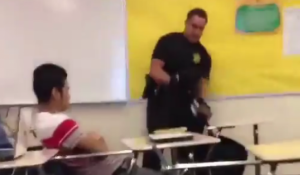
A still from a video of a police officer and a student at Spring Valley High School in Richland County, South Carolina.
Updated | The South Carolina student flipped and tackled by sheriff’s deputy Ben Fields is in foster care, her attorney told the New York Daily News.
The student, who has not been identified by authorities, refused to leave the room after disturbing a class on Monday at Spring Valley High School in Columbia, South Carolina. Fields, a school resource officer, entered the classroom to remove her after a teacher and administrator was unable to do so. In a video filmed by another student, the officer is seen flipping the girl over in her chair and throwing her across the room.
Richland County Sheriff Leon Lott fired Fields on Wednesday, saying it was the throw that compelled him to do so.
In an interview on the Joe Madison Show on Thursday morning, Todd Rutherford, the girl’s lawyer, said her biological mother and grandmother are both alive. His remarks clarified a story published in the New York Daily News on Wednesday suggesting the girl’s mother had recently died. The Daily News updated its story on Thursday morning, but maintains that the student is currently in foster care. The girl’s relationship with her father is unknown, and she has not spoken publicly about the incident or Fields’s firing.
After the video went viral on Monday, authorities said the student was not injured. However, her attorney Todd Rutherford told WLTX that she suffered neck and back injuries from the incident. “He weighs about 300 pounds. She is a student who is 16 years old. Who now has a cast on her arm, a band aid on her neck, and neck and back problems. There’s something wrong here,” Rutherford said.
The student still faces charges of disturbing the peace, Lott said on Wednesday. “She was very disruptive, very disrespectful. She started this whole incident with her actions.”
More than 30,000 people have signed a petition calling on the news channel to fire bombastic newsman Don Lemon.
Another day, another dose of sour Lemon-aide for CNN.
More than 30,000 people have signed a petition calling on the news channel to fire bombastic newsman Don Lemon after he insisted that his colleagues Wolf Blitzer and legal analyst Sunny Hostin withhold deciding whether South Carolina “resource officer” Ben Fieldsused excessive force when removing a student from a classroom earlier this week.
With an average of around 600,000 viewers, that’s about 5‑percent of Lemon’s audience calling for his ouster.
But his many of his co-workers are unfazed by the incident.
“Don Lemon is in trouble again? What else is new?” a CNN producer said.
“The more he says outrageous things, the more people tune in — most people here are not surprised at anything that comes out of his mouth anymore.”
A CNN rep said Lemon had declined to comment about the peition.
Ripping Lemon and the things the newsman says has become something of a cottege industry for media watchers.
He drew fire last June while covering Carolina Gov. Nikki Haley’s call for the removal of the Confederate flag from the state capitol.
Last November, as Ferguson, MO erupted into anger, bullets and flamesLemon ham-handedly drew tear gas into his own gas mask, whined for water and a device to contact his producers, and then made a culturally insensitive comment about protesters smoking pot.
A few days earlier Lemon was roastef ro
insinuating that one of Bill Cosby’s alleged sexual assault victims should have bitten the comic instead of performing oral sex.
This week’s petition, posted on change.org declared:
“We, the people, want a journalist and an anchor that will not be afraid to accept the facts that are occurring within the African-American community and who will encourage our people the same way that person will encourage others across the board,” explains the Change.org petition. “We, the people, have no confidence in Mr. Lemon’s ability to do that. Therefore, we are asking CNN to remove him from his position.”
Video recordings of police officers battering or even murdering unarmed black citizens have validated longstanding complaints by African-Americans and changed the way the country views the issue of police brutality. Police officers who
Harry Campbell
might once have felt free to arrest or assault black citizens for no cause and explain it away later have been put on notice that the truth could be revealed by a cellphone video posted on the Internet. This kind of public scrutiny is all to the good, given the damage police brutality has done to African-American communities for generations and the corrosive effect it has on the broader society. Yet the peeling away of secrecy on these indisputably unconstitutional practices is now being challenged by politicians who want to soft-pedal or even ignore police misconduct while attacking the people who expose it or raise their voices in protest against it. This trend is like something straight out of Orwell.
Gov. Chris Christie of New Jersey — the increasingly desperate presidential candidate who is going nowhere fast — took this posture on Sunday when he accused President Obama of encouraging “lawlessness” and violence against police officers by acknowledging that the country needed to take both police brutality and the “Black Lives Matter” protest movement seriously.
The president is absolutely right. This movement focuses on the irrefutable fact that black citizens are far more likely than whites to die at the hands of the police. The more the country ignores that truth, the greater the civic discord that will flow from it.
The recent remarks of James Comey, the director of the Federal Bureau of Investigation, were not as racially poisonous as Mr. Christie’s, but they were no less incendiary. In a speech at the University of Chicago Law School on Friday, Mr. Comey said that heightened scrutiny of police behavior — and fear of appearing in “viral videos” — was leading officers to avoid confrontations with suspects. This, he said, may have contributed to an increase in crime.
There is no data suggesting such an effect, and certainly Mr. Comey has none. But his suggestion plays into the right-wing view that holding the police to constitutional standards endangers the public. Justice Department officials who have made a top priority of prosecuting police departments for civil rights violations — and who dispute that heightened scrutiny of the police drives up crime — were understandably angry at Mr. Comey’s speculations.
His formulation implies that for the police to do their jobs, they need to have free rein to be abusive. It also implies that the public would be safer if Americans with cellphones never started circulating videos of officers battering suspects in the first place.
A day after Mr. Comey made his remarks, The Times published a lengthy investigationinto racial profiling and abusive police behavior in Greensboro, N.C., the third-largest city in the state. After reviewing tens of thousands of traffic stops and years of arrest data, Times reporters found that the police pulled over African-American drivers at a rate far out of proportion to their share of the local driving population. The police searched black motorists or their cars twice as often as whites — even though whites where significantly more likely to be caught with drugs and weapons.
Greensboro police officers were more likely to pull black drivers over for no reason and more likely to use force if the driver was black, even when the driver offered no physical resistance. A black Greensboro man who nearly lost his job as a result of asking an officer why he was being ordered out of his car during a nightmarish encounter said: “Every time I see a police officer, I get a cold chill. Even if I needed one, I wouldn’t call one.”
This is the kind of treatment that some Americans routinely face at the hands of their police departments. Mr. Comey’s speculations about alleged pressure on officers to stand down shows that he hasn’t begun to grasp the nature of the problem. Read more : Political Lies About Police Brutality
The parliamentary Opposition has ratcheted up its resistance to the Government’s push to have the Caribbean Court of Justice (CCJ) installed as the nation’s final appellate court, declaring yesterday that it is prepared to mount a constitutional challenge all the way to the Judicial Committee of the Privy Council in the United Kingdom.
And if that fails, Delroy Chuck, the Jamaica Labour Party (JLP) spokesman on justice, has warned that the party would “use a simply majority of Parliament” to ditch the CCJ if it wins State power in the next general elections.
“The only way the CCJ can be the final appellate court is when we put it to the people and we say to the people ‘do you want the CCJ or you want a final Jamaican court’ and let the people of Jamaica make that decision,” Chuck vowed yesterday during a Jamaica Labour Party (JLP) Area Council One meeting in St Andrew.
Chuck, who is also an attorney, warned that if any JLP senator broke ranks and voted with their government counterparts, they are going to be embarrassed.
“If one, two, or eight [JLP] senators make the error [and vote for the bills], not only would they be embarrassing themselves, but what they would do is cause the Labour Party to expend money to take these three bills to the Supreme Court, the Court of Appeal, [and the] Privy Council,” Chuck cautioned.
“Let me make it even further clear. If one, two, or all eight of them go ahead and support the bills, the leader of the Jamaica Labour Party, the spokesperson on justice, and the Jamaica Labour Party will take those three bills to the Constitutional Court, right up to the Privy Council, to show that they are a mockery to the Jamaica Constitution,” he said.
Members of the House of Representatives have already voted by a two-thirds majority to pass three bills that are aimed at having the CCJ replace the Privy Council as the country’s final appellate court. The bills are now being debated in the Senate and will need the vote of at least one opposition senator and all 13 government senators for them to be passed.
But, according to Chuck, the JLP’s pending legal challenge is based on the view that the bills “do not sit well with the Jamaican Constitution”. He predicted that none of the eight opposition senators would vote in favour of them.
However, former Justice Minister K.D. Knight disagreed, arguing that the move to have the CCJ entrenched through a two-thirds majority would satisfy the scheme of the Constitution as well as a previous Privy Council ruling on the issue.
Knight, who is an attorney-at-law, also took aim at calls by the parliamentary Opposition for a referendum that would make the CCJ deeply entrenched in the Constitution.
“This request for it to be deeply entrenched really has neither a logical foundation nor a legal one,” he told The Gleaner yesterday.
Opposition Senator Arthur Williams, who many believe is likely to break ranks and vote in favour of the bills, said yesterday that his colleague’s comments would have no bearing on how he votes.
Knight also chimed in saying Chuck’s assertion “does not have the logical force that would cause anybody to change an opinion”.
With JLP delegates urging him on, Chuck also made it clear that if the JLP’s legal challenge to the CCJ bills was unsuccessful, that would not be the end of the issue.
“If they put the CCJ in section 110 of the Constitution, the next JLP government, which will be in power later this year or next year … whenever the elections are called, we are going to use a simple majority to remove it,” he emphasised.
Police officers are terrified that if the public sees how they do their work, they will be less able to do that work effectively. That mentality seems to have made its way all the way to the FBI Director who said Friday that the increased presence of cell phone video may be contributing to the increase in violent crime.
James Comey said that he has been told by officers that the increases in violence in major cities is tied to “the era of viral videos.”
“I don’t know whether this explains it entirely, but I do have a strong sense that some part of the explanation is a chill wind blowing through American law enforcement over the last year, and that wind is surely changing behavior,” he said.
Comey said the officers he has spoken with have told him that they feel “under siege.”
“They told me, ‘We feel like we’re under siege and we don’t feel much like getting out of our cars,’” said Comey.
DC Police, the FBI, and Their Secret Agreement to Hide Cell Phone Spying
In August 2012, the Metropolitan Police Department (MPD) in Washington, DC entered into a secret agreement with the FBI.
The MPD was promising not to disclose any details about its use of a highly controversial antiterrorism surveillance technology known as a Stingray. About the size of a suitcase, the Stingray simulates a cell phone tower and intercepts mobile phone calls and text messages.
The MPD also agreed that if the department learned that any technical details about the surveillance technology was at risk of being exposed during a judicial proceeding, MPD would contact the FBI so the bureau could ask MPD to “seek dismissal of the case” in order to continue protecting the overall secrecy of the Stingray.
The unusual and potentially illegal arrangement between the FBI and MPD was memorialized in a six-page non-disclosure agreement (NDA) signed by MPD Assistant Chief Peter Newsham [pdf at the end of this story] after the police department requested “certain wireless collection equipment/technology” — what is commonly called the Stingray — manufactured by Harris Corporation, a Florida-based defense contractor.
“Consistent with the conditions on the equipment authorization granted to Harris Corporation by the Federal Communications Commission (FCC), state and local law enforcement agencies must coördinate with the Federal Bureau of Investigation to complete this non-disclosure agreement prior to the acquisition and use of the equipment/technology authorized by the FCC authorization,” states the August 17, 2012 NDA sent to Newsham by the FBI.
KINGSTON, Jamaica — The People’s National Party Youth Organisation (PNPYO) has lashed out at the Opposition, telling them not to politicise health care.
The Jamaica Labour Party (JLP) and its affiliates have called for the sacking of Health Minister Dr Fenton Ferguson over the outbreak of health care-associated infections at the University Hospital of the West Indies (UHWI) and Cornwall Regional Hospital which have claimed the lives of 18 babies since June.
However, the PNPYO said in a release last evening that the Opposition “must immediately remove their favourite politically coloured lenses and call a spade a spade”.
The organisation explained that kledsiella is well known as one of the most common hospital bugs, causing possible fatal illnesses worldwide.
“Kledsiella’s spread among neonates does not average above six per cent in Jamaica, including the deaths this year, and while statistics will not bring back the lives of some of our youngest Jamaicans, we still fare better than some more economically successful countries, such as Brazil with a 50 per cent affected rate of its neonates” the PNPYO argued.
The Opposition, in its call for Dr Ferguson’s sacking, also said it doubts the minister’s claim that he acted as soon as he was informed of the situation. Read more here : PNPYO accuses JLP of politicising health care
Kerry urges end of inflammatory rhetoric in talks with Israel’s Netanyahu
Remarks from US Secretary of State come after Israeli PM suggested mufti of Jerusalem persuaded Hitler to kill Jews
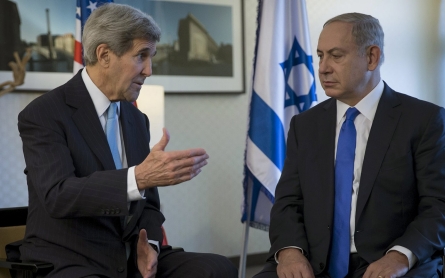
U.S. Secretary of State John Kerry called Thursday for an end to inflammatory Israeli-Palestinian rhetoric during a meeting with Israeli Prime Minister Benjamin Netanyahu, which took place as the death toll from a recent surge of violence again climbed. Speaking to reporters ahead of talks with the Israeli PM, Kerry made no reference to Netanyahu’s suggestion this week that Haj Amin al-Husseini, the Mufti of Jerusalem during the 1940s, persuaded Adolf Hitler to exterminate the Jews. Those comments, which come after three weeks of Israeli-Palestinian violence, have attracted wide criticism from, among others, Israeli opposition politicians and Holocaust experts, who accused the prime minister of distorting the historical record. Meanwhile, the cycle of violence continues in Israel and the occupied Palestinian territories. On Thursday, a Palestinian was shot dead during an alleged stabbing attack Israeli at a bus stop west of Jerusalem.
Israeli police said on Thursday that the two suspects attempted to get on a children’s school bus in Beit Shemesh, a majority ultra-orthodox area. After they were asked why they were doing so, they attempted to stab an Israeli at the bus stop at which point they were shot by the police, witnesses said. The Israeli, a 25-year-old man, was moderately injured in the attack, police said. The injured men were taken to hospital, with the second suspect said to be in a critical condition. Since Oct. 1, a total of 52 Palestinians — including suspected attackers, unarmed demonstrators and bystanders — have been killed by Israeli soldiers or settlers, while eight Israelis have been killed in Palestinian attacks. Israeli forces have been accused of using excessive force against protesters and suspected attackers. Rights groups have said “disproportionate violence” has been used against Palestinian children, with at least 10 killed in the violence.
Among the causes of the turmoil are Palestinians’ anger at what they see as Jewish encroachment on the al-Aqsa mosque compound in Jerusalem’s Old City, Islam’s holiest site outside Saudi Arabia, which is also revered by Jews as the location of two ancient temples. “It is absolutely critical to end all incitement, to end all violence and to find a road forward to build the possibility, which is not there today, for a larger process,” Kerry told reporters as he and Netanyahu posed for pictures. Kerry said he hoped that the two men could agree on steps “that take us beyond the condemnations and beyond the rhetoric.” Diplomats hold out little hope for any resumption of broader Israeli-Palestinian peace talks, which collapsed in 2014. Netanyahu blamed the Palestinians for the recent surge in killings, singling out Palestinian President Mahmoud Abbas. “There is no question that wave of attacks is driven directly by incitement. Incitement from Hamas, incitement from the Islamist movement in Israel, and incitement, I am sorry to say, from President Abbas,” he said.
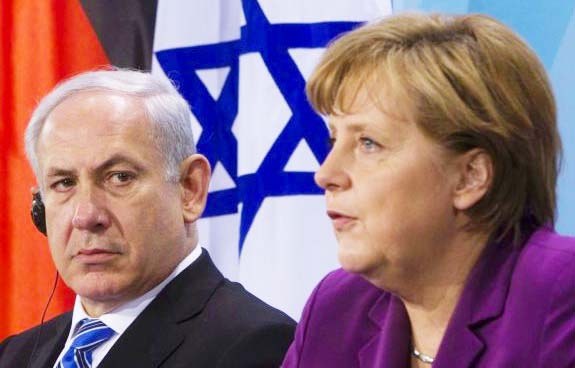
A senior U.S. State Department official told reporters that Kerry hopes to persuade both sides to “tamp down” their rhetoric during a four-day trip to Europe and the Middle East in which he also plans to meet Abbas and Jordan’s King Abdullah. His tone mirrored that of German Chancellor Angela Merkel at a joint news conference with Netanyahu on Wednesday evening. “We have to do everything to calm down the situation and in this spirit I think all sides need to make a contribution,” she said. It is not clear why Netanyahu launched into the issue of the then-Mufti of Jerusalem, Husseini. His remarks come with Israeli-Palestinian tensions at a new peak, notably over the Jerusalem holy site overseen by the current mufti. Israel says it respects the status quo, which allows tourists and non-Muslim visitors to enter the Al Aqsa compound at some hours but forbids non-Muslim prayer.
Palestinians say that ultra-Orthodox and national-religious Jews are exploiting the rules to enter the area, called the Noble Sanctuary by Muslims and the Temple Mount by Jews, in growing numbers and surreptitiously pray there, in breach of the status quo. Israel says it expels anyone who prays, but the practice continues and some Israel government ministers have been open about encouraging Jewish access to the area, saying all monotheistic religions should have the right to pray. U.S. officials say they hope a change in the rhetoric over the holy site could help ease tensions more generally. Read more here:Kerry urges end of inflammatory rhetoric in talks with Israel’s Netanyahu
The Israeli prime minister, Binyamin Netanyahu, has attracted a storm of criticism for an incendiary speech in which he accused the second world war Palestinian grand mufti of Jerusalem of having suggested the genocide of the Jews to Adolf Hitler. The comments in a speech to the World Zionist Congress in Jerusalem came in the context of the current violence between Israelis and Palestinians and were condemned by historians and the Israeli opposition leader Isaac Herzog for trivialising the Holocaust. On the Palestinian side, senior official Saeb Erekat described the remarks as absolving Hitler.
In his speech, Netanyahu purported to describe a meeting between Haj Amin al-Husseini and Hitler in November 1941. “Hitler didn’t want to exterminate the Jews at the time, he wanted to expel the Jews. And Haj Amin al-Husseini went to Hitler and said: ‘If you expel them, they’ll all come here [to Palestine].’” According to Netanyahu, Hitler then asked: “What should I do with them?” and the mufti replied: “Burn them.” Among those questioning Netanyahu’s interpretation of history was Prof Dan Michman, the head of the Institute of Holocaust Research at Bar-Ilan University and head of the International Institute for Holocaust Research at Yad Vashem. He said that while Hitler did indeed meet the mufti, this happened after the Final Solution began.
Yad Vashem’s chief historian, Prof Dina Porat, told the Israeli news website Ynet that Netanyahu’s claims were incorrect. “You cannot say that it was the mufti who gave Hitler the idea to kill or burn Jews. It’s not true. Their meeting occurred after a series of events that point to this.” Netanyahu made the claim – which he also made in 2012 – to illustrate what he said was the Palestinian history of using holy sites in Jerusalem as pretexts for committing acts of violence against Jews. However, almost as soon as the transcript was released by his office, he was accused on social media and then by a raft of Israeli political figures of factual errors in his assertions.
The claim that Husseini – who met and supported Hitler – was the one to initiate the idea of the extermination of Europe’s Jews has been suggested by historians on the fringes of Holocaustresearch, but is rejected by most historians. Defending his comments, Netanyahu said: “I didn’t mean to absolve Hitler of responsibility, but to show that the father of the Palestinian nation wanted to destroy Jews even without occupation.”
Speaking before flying to Berlin to meet the US secretary of state, John Kerry, Netanyahu said he did not mean to diminish Hitler’s responsibility for the Holocaust. “He is responsible for the Final Solution, and he made the decision,” he said. “It is also absurd to ignore the role played by the mufti Haj Amin al-Husseini, who was a war criminal and encouraged Hitler to exterminate European Jewry.”
A spokesman for the German chancellor, Angela Merkel, however, rejected Netanyahu’s framing. “All Germans know the history of the murderous race mania of the Nazis that led to the break with civilisation that was the Holocaust,” her spokesman, Steffen Seibert, said. “I see no reason to change our view of history in any way. We know that responsibility for this crime against humanity is German and very much our own.”
At the centre of the row is Netanyahu’s suggestion that Hitler had wanted to expel Jews and that it was Husseini who somehow persuaded him instead to kill them when the two men met in late November 1941. In reality, the mass killings of Jews by SS mobile killing units – Einsatzgruppen – were already under way when the two men met face to face. The first was in Lithuania in July 1941, described by Yad Vashem as the “beginning” of the Final Solution. In September 1941, again before Husseini’s meeting with Hitler, Einsatzgruppe C, commanded by Otto Rasch, killed more than 33,000 Jews over two days in the Babi Yar ravine on the outskirts of Kiev, an act of mass murder ordered by the new Nazi military governor of Kiev, Maj Gen Kurt Eberhard.
Netanyahu’s incendiary comments come amid a rising death toll and accusations of incitement on both sides, with Israelis pointing to comments made by Palestinian officials and inflammatory material on social media, and Palestinians equally accusing Netanyahu’s government of fanning the flames and pointing to anti-Palestinian material on social media. The violence continued on Wednesday with several incidents, including a stabbing that critically injured a 19-year-old Israeli female soldier. Over the past month, 10 Israelis have been killed in Palestinian attacks, most of them stabbings. In that time, 46 Palestinians were killed by Israeli fire, including 25 identified by Israel as attackers, and the rest in clashes with Israeli troops. AnEritrean asylum seeker died after being shot by a security guard and beaten by a mob that mistakenly believed he was a Palestinian assailant during a deadly Arab attack at a bus station. Reacting to Netanyahu’s comments, Herzog wrote on his Facebook page: “This is a dangerous historical distortion and I demand Netanyahu correct it immediately as it minimises the Holocaust, Nazism and … Hitler’s part in our people’s terrible disaster.”
He added that Netanyahu’s remarks played into the hands of Holocaust deniers. “A historian’s son must be accurate about history,” Herzog wrote. “Netanyahu has forgotten that he’s not only the prime minister of Israel but the prime minister of the Jewish people’s government.” The grand mufti, added Herzog, “gave the order to kill my grandfather, Rabbi Herzog, and actively supported Hitler”.
Herzog’s fellow Zionist Union MP Itzik Shmuli called on Netanyahu to apologise to Holocaust victims. “This is a great shame, a prime minister of the Jewish state at the service of Holocaust-deniers – this is a first,” he said. “This isn’t the first time Netanyahu distorts historical facts, but a lie of this magnitude is the first.” Denouncing Netanyahu’s comments, Erekat, the chief Palestinian peace negotiator, also weighed into the row. “It is a sad day in history when the leader of the Israeli government hates his neighbour so much so that he is willing to absolve the most notorious war criminal in history, Adolf Hitler, of the murder of 6 million Jews during the Holocaust.”
Seeking to defend Netanyahu, the defence minister, Moshe Ya’alon, told Army Radio that the idea for the Final Solution was Hitler’s and the mufti had joined him, and accused the Palestinian Authority of employing “incitement” that was “the legacy of the Nazis”. “I don’t know what exactly the prime minister said. History is actually very, very clear,” said Ya’alon. “Hitler initiated it, Haj Amin al-Husseini joined him, and unfortunately the jihadi movements promote antisemitism to this day, including incitement in the Palestinian Authority that is based on the legacy of the Nazis.” Netanyahu’s comments follow remarks made by the energy minister, Yuval Steinitz, at a recent conference in Washington, who accused the Palestinian president, Mahmoud Abbas, of “Nazi-like incitement”. Steinitz – one of Netanyahu’s most loyal allies who often echoes the Israeli prime minister’s positions – labelled Abbas “the number one inciter in the world against Israel and the Jewish people” and compared his attacks against the Jewish state to Nazi propaganda. Read more here : Anger at Netanyahu claim Palestinian grand mufti inspired Holocaust
U.S. Criticizes Settlements While Giving Israel “Carte Blanche” to Continue Occupation
The death toll from violence in Israel and the Occupied Territories has increased with new Palestinian stabbing attacks and an intensified Israeli crackdown. On Sunday, an attacker identified as a 21-year-old Arab citizen of Israel knifed an Israeli soldier to death and then opened fire at a bus station in Beersheba, wounding 10 people. The attacker was killed. In an apparent case of racial profiling, a mob of soldiers and bystanders then shot and beat an Eritrean man to death, mistakenly thinking he was a second assailant. After sealing off East Jerusalem neighborhoods last week, Israel is widening its crackdown on Arab residents and continuing military operations across the West Bank and Gaza. The United Nations says last week was the deadliest for Palestinians in the West Bank and Israel in 10 years, raising concerns “of excessive use of force, and violations of the right to life and security of the person.” We are joined by two guests: Jamil Dakwar, a Palestinian human rights lawyer with Israeli citizenship, and Nathan Thrall, senior analyst at the International Crisis Group whose new article for The New York Times is “Mismanaging the Conflict in Jerusalem.”
AMYGOODMAN: The death toll from violence in Israel and the Occupied Territories has increased with new Palestinian stabbing attacks and an intensified Israeli crackdown. On Sunday, an assailant identified as a 21-year-old Arab citizen of Israel knifed an Israeli soldier, then opened fire at a bus station in Beersheba with the soldier’s rifle, wounding 10 people. The soldier and the attacker died. In an apparent case of racial profiling, a mob of soldiers and bystanders then shot and beat another man to death, mistakenly thinking he was a second assailant. Video footage shows the crowd kicking and assaulting the victim, 29-year-old Haftom Zarhum, as he lies on the ground. Zarhum later died in the hospital. He had been seeking asylum in Israel from his native Eritrea. The incident comes after Israeli forces shot dead five Palestinians accused of stabbing attacks, including three in the occupied West Bank city of Hebron.
After sealing of East Jerusalem neighborhoods last week, Israel is widening its crackdown on Arab residents. A new bill before Parliament would give forces stop-and-frisk powers to search anyone in the streets without cause. In addition to severe restrictions on movement, Israel is also erecting a wall in East Jerusalem that would separate Palestinian neighborhoods from a nearby Israeli settlement. Israeli forces meanwhile continue military attacks across the West Bank and Gaza, raiding villages and firing on Palestinian demonstrations. Over the weekend, a group of some 200 Israeli settlers reportedly attacked two Palestinian villages in the West Bank with firebombs.
The surge in Palestinian knife attacks and protests is partially fueled by concerns over Israeli control of the Al-Aqsa Mosque compound and visits there by far-right Israelis. On Sunday, Israel rejected a French proposal to deploy international observers at the flashpoint holy site. Speaking today in Madrid, Secretary of State John Kerry backed Israel’s rejection of a foreign presence at the Temple Mount, but said he would meet with both Israeli and Palestinian leaders in the coming days.
SECRETARYOFSTATEJOHNKERRY: Israel has every right in the world to protect its citizens, as it has been, from random acts of violence. But in my conversations with the prime minister, as well as with King Abdullah and the foreign minister of Jordan, they have expressed a desire to try to see this process be able to find a way of making certain that everybody is clear about what is happening with respect to the Temple Mount.
AMYGOODMAN: The overall death toll stands at 44 Palestinians and eight Israelis this month. The U.N. says last week was the deadliest for Palestinians in the West Bank and Israel in 10 years, raising concerns, quote, “of excessive use of force, and violations of the right to life and security of the person.”
Joining us now are two guests. Here in New York, Jamil Dakwar is with us. He’s a human rights lawyer, a Palestinian citizen of Israel who previously worked as senior attorney at Adalah, a leading human rights group in Israel. And in Jerusalem, Nathan Thrall is with us, senior analyst at the International Crisis Group covering Gaza, Israel, Jordan and the West Bank. His new article for The New York Times is headlined “Mismanaging the Conflict in Jerusalem.”
Nathan, let’s start with you in Jerusalem. What is happening there, and why do you believe that the situation is so out of control at this point?
NATHANTHRALL: So what’s happening now in Jerusalem is checkpoints are going up all over the east. At the exits to Palestinian neighborhoods in occupied East Jerusalem, you have big concrete cubes going up and very, very long lines for Palestinians to exit their neighborhoods. And there is a sense among Palestinians in East Jerusalem that they are being punished for these so-called lone wolf stabbing attacks that have taken place so far. The other morning, residents of one neighborhood, where basically the traffic police, the parking — people who give parking tickets never go, came and left 500-shekel tickets on everybody’s car. And there are a series of small steps like this that are leading a lot of Palestinians in East Jerusalem to feel that they’re being collectively punished for what’s going on now.
I live right at one of the seam neighborhoods between the east and the west, and it’s filled with border police who are basically stopping a high proportion of the Palestinian men who are walking from one side of the city to the other. Many of them work in the west side of the city. You had mentioned a moment ago that there is a consideration of allowing the police to do stop-and-frisk without cause. You know, that’s news to the residents of Palestinian East Jerusalem, who are stopped and frisked without cause all the time and are being stopped and frisked without cause today. So the situation in Jerusalem is extremely tense. People are eyeing one another suspiciously. A Palestinian woman in West Jerusalem was walking around today and was telling me how people were staring at her, surprised that she was walking around there.
So, the attacks don’t seem to have any kind of organized leadership behind them, which makes them much more difficult for anybody to stop. And one of the big problems here is we don’t have an organized political leadership in Jerusalem, a Palestinian political leadership in Jerusalem, which means that there’s no one for the Israelis to talk to in order to try and calm the situation.
AMYGOODMAN: I wanted to go right now to what happened on Sunday. The Israeli prime minister, Benjamin Netanyahu, rejected Palestinian concerns over the Temple Mount.
PRIMEMINISTERBENJAMINNETANYAHU: The reason the status quo has been violated is not because we changed it. We didn’t change anything. The orders of prayer, the visiting rights have not changed for the last 15 years. The only thing that’s changed are Islamist hoodlums, paid by the Islamist movement in Israel and by Hamas, who are entering the mosque and trying to put explosives there, and, from there, emerge and attack Jewish visitors to the Temple Mount, and Christian visitors. That’s the only change in the status quo. Israel will protect the holy site, will guard the status quo. Israel is not a problem on the Temple Mount, Israel is the solution.
AMYGOODMAN: That’s Benjamin Netanyahu, the Israeli prime minister. We’re also joined by Jamil Dakwar, human rights lawyer, a Palestinian citizen of Israel, who previously worked as a senior attorney at Adalah, a leading Israeli human rights group. Your response to what Netanyahu just said?
JAMILDAKWAR: Well, I think that what is really striking here is that the Israeli government, every time there is any kind of a rise in tension and crisis and use of violence, it turns into militaristic approach towards dealing with the Palestinians. It’s using that same old policies of a crackdown, on collective punishment, on seeing the Palestinians with no really value of their life and their basic human rights. The response, and particularly on the issue of status quo, you know, Israel is the only country that is allowed to change the status quo in Jerusalem, and it’s been changing that for years, for decades. And yet, if a country or political party is suggesting a change of the status quo towards more peaceful resolution, towards more protection of civilians, then that is always rejected. So I think there is, clearly, a going back to giving now the Israeli government and Benjamin Netanyahu a pretext to go — what he really would prefer to do is to continue his policies of aggression against Palestinians.
Certainly, this is going to be more and more difficult, because in Jerusalem, in East Jerusalem, the reason that there is no leadership is because Israeli policies were cracking down on institutions. The Orient House was closed by the Israeli government. The Palestinians who were elected by their own people were not allowed to engage in political activities. Many of them were imprisoned. So that, in and of itself, clearly shows that the Israeli government wants to see only its own interest, meaning the Jewish Israeli interest in Jerusalem, and that continue to perpetuate the situation both in East Jerusalem and in the West Bank as a military occupation, which is now nearing 50 years.
AMYGOODMAN: Explain what has caused this latest escalation of violence, from your perspective. Where did you grow up, by the way?
JAMILDAKWAR: I grew up in Haifa. I went to school at Tel Aviv University. I remember when I went to law school at Tel Aviv University, there were very, very difficult times. There were times when there were suicide attacks going on inside Israel. Those happened in response to the settler going to Hebron mosque and killing prayer — Palestinians who were praying in the mosque. That kind of blew up the whole situation. And it was clear that without cracking down on the settler violence, without ending Israel’s settler activity in the West Bank, there is no way that the Palestinians will sit back and allow the Israeli government to continue to control their life in every way.
So I think the escalation that we’re seeing now has been mounting, has been building, because of what’s happened in the last several years. There is no hope for any real, normal life. This is the new normal for the Palestinians, which is military occupation continues unabated, the Israeli government continues to send settlers to the West Bank. There’s a crackdown rounding up children, Palestinian children, in night raids, documented by Palestinian and Israeli human rights organizations. These kinds of things will make Palestinians despair or make the Palestinians, some of them, to resort to violence and do what they are doing. And I think that is what is really concerning.
AMYGOODMAN: Are these knife attacks new?
JAMILDAKWAR: These knife attacks are new, although in the — we’ve seen in the — this is not the first time that there were these kinds of wave of knife attacks. And it happened during the Shamir — appeared in the ’80s. They were very much similar, in a situation where the Palestinians were really giving up on their hope to have a normal life. I think that there’s now also — there’s the impact on their lack of ability to be able to express themselves.
You mentioned the Arab Palestinian citizen who stabbed the soldier. The overwhelming majority of Palestinian citizens are peaceful. They’ve been peaceful in their activities for their entire career, and yet the Israeli government is cracking down on their leadership, is cracking down — there are home demolitions inside Israel, displacement of Arab Bedouin communities. That is making people see that despite the fact that you are making an effort to be a citizen, a law-abiding citizen, the Israeli government is saying, “No, you are not welcomed here. You are an enemy. You are not going to be enjoying the same basic rights as others in the country.”
AMYGOODMAN: On Sunday, a Palestinian reportedly opened fire at a central bus station in the southern Israeli city of Beersheba, killing a soldier and wounding 11 other people. He had taken the gun of the soldier. Afterward, the Israeli police spokesperson, Micky Rosenfeld, addressed reporters.
MICKYROSENFELD: As a result of the attack where the terrorist had a pistol and opened fire, we have six people that were injured, four of them being police officers injured inside the central bus station. One man was severely taken to hospital and received medical treatment. Unfortunately, confirmed that he passed away a few minutes ago. Heightened security is continuing in the area, and our police units are still in and around the central bus station.
AMYGOODMAN: Israeli eyewitness to the shooting, Sima Koseshvili, called for greater security.
SIMAKOSESHVILI: [translated] Do I need to live in a world where I am afraid to leave home to go to my college studies, to work or to go shopping? Everything is frightening, and I want the police to take more action and increase their security presence.
AMYGOODMAN: Nathan Thrall in Jerusalem, can you talk about what happened there in Beersheba? First you had the killing of both the Palestinian gunman and the Israeli soldier, many other people also injured, and then the Eritrean man being beaten to death in a case of apparently mistaken identity.
NATHANTHRALL: Yes. Frankly, I know about as much as what — as much as you do about what happened there. I wasn’t there, and I’ve seen the reports and watched some of the videos. And I’ve seen that the government has, you know, acknowledged that a tragic mistake was made. But beyond that, I don’t know the details of the incident.
AMYGOODMAN: The significance of this?
JAMILDAKWAR: The significance is that, look, what’s happening is that now anyone appears to be an Arab Palestinian. And that starts with the racial profiling, stop-and-frisk, that is a daily experience of Palestinians. But also Israeli Jews who are Arab Jews, who come — [Sephardic] Jews, who appear to some Israelis or to the Israeli security forces as suspicious Arab Palestinians, some of them are even being attacked. I think this is going out of control, because the Israeli government and the politicians are spreading those statements, making those statements that are very dangerous statements, encouraging citizens to take arms and shoot people, shoot to kill. And there are now human rights reports investigating the shoot-to-kill orders. This amounts to extrajudicial killing. There need to be clear investigations of these instances. You have people who did not pose any imminent threat to additional people; even if they committed crimes, they still should not be executed right on the spot. And that, I think, will bring the situation to a much worse, because people are mistrusting anyone who is a Palestinian, who is an Arab, who appears to be Palestinian, and that’s why the Eritrean refugee got in that situation. And the lynching — there’s situations where a soldier is standing by, security forces standing by and not protecting those civilians. That, in and of itself, is a huge, dangerous escalation that I think even worse than the act of lonely or individual taking some knives and stabbing people, because that frustrates entire — puts entire communities at risk, when law enforcement carries those attacks and crackdowns and opens fire with no respect to human life.
We see a situation that really requires more attention and more action, not just — you know, condemnation of acts of violence is the easy part of this. What is really needed to be done is what needs to be done about the situation, the situation of the occupation, the situation on East Jerusalem. And what we’re not hearing, what are the solutions, including administration officials. Every time Secretary Kerry tries to say something right, whether it’s the recent comment that he made, where he said, “Well, we’ve seen building of settlements, an expansion, etc. That is now — and now we’re seeing violence.” So he’s making the right connection, a very logic, commonsense connection, and yet he had to retract those statements, even though he’s really saying what everybody knows, what everybody knows in the Obama administration, what everybody knows here in the United States, that settlements are illegal, and yet they are now getting full support from this Israeli government, and is now building on turning this conflict into a religious war. And I think that is really the critical point where I think we need to be very, very concerned about. People who know the situation know that if you are going to speak to the youth about religious wars and agitate them, they will take things like this, they will take knives and stab people. And without leadership, without any hope, without a future, this will become the norm. And unfortunately, that would be a very dangerous route to go to.
AMYGOODMAN: Is there a role for the ICC here, the International Criminal Court?
JAMILDAKWAR: Well, the ICC, as you know, there’s a preliminary investigation of the situation in Israel and Palestine, particularly the situation of Palestine after Palestine joined the ICC. There were calls to ask the prosecutor to look at the alleged crimes committed in the recent month. I believe it will be a little bit difficult for the prosecutor to jump at this issue. There’s a significant development that happened just last week with the ICC prosecutor asking to open full investigation in Georgia. That will be an important — has important implications on the situation in Palestine, because this will be — if this full investigation will move forward, will be the first nonstate party full investigation that is taking place in the ICC, which could, again, delay, on one hand, the Palestinian situation, but, on the other hand, would also set important precedent for that. I think, most importantly, there should be a clear deterrence to the Israeli government from clear statements made, that the Israeli government cannot continue these actions with no consequences. There is no accountability. We know from reports like B’Tselem, Yesh Din, Al-Haq and other organizations that investigations within the Israeli military are discredited, they’re not credible, they’re not serious, and therefore, at some point, there will be action by legal mechanisms, including the ICC, to look into the crimes that are committed in the occupied Palestinian territory.
AMYGOODMAN: On Saturday, New York Mayor Bill de Blasio and his counterpart in Jerusalem, Nir Barkat, visited Israeli stabbing victims recovering in the hospital. On Sunday, Mayor de Blasio visited the Western Wall and toured the Yad Vashem Holocaust Memorial Museum. He signed the guest book at the museum, “Never again,” then made a statement.
MAYORBILLDEBLASIO: We’re here at a painful moment. We’re here at a moment where people are afraid, where people are struggling, because of the violence in their midst every single day lately, more and more terrorist attacks on absolutely innocent civilians, something unconscionable and unacceptable, according to all our values, and something that must end.
AMYGOODMAN: Nathan Thrall, I wanted to get your comment — also the Joint Chiefs of Staff chair, Marine General Joseph Dunford, in addition to de Blasio, are in Israel — to what you believe needs to be done and what de Blasio said.
NATHANTHRALL: So, what we’re seeing is the beginning of the United States compensating Israel for the Iran nuclear deal, and they’re discussing now increasing the $3 billion in aid that Israel receives each year. And regarding de Blasio’s statement, of course attacks on civilians are horrible, and all of this death is horrible. In terms of looking at the root causes, I see very little being done to address that.
What we’re seeing right now among Palestinians in the West Bank and Gaza, and particularly in Jerusalem, is a real sense that the idea of a Palestinian state with a capital in Jerusalem is escaping them. Jerusalemites have felt for many years that they are losing Jerusalem. They feel that they’re losing control over Al-Aqsa Mosque, as well. And so, they’re — the other guest had mentioned that the institutions of the Palestinian political leadership used to exist in Jerusalem. The PLO had something called the Orient House, which was its headquarters in Jerusalem, that had been — that has been shut down and is shut down. And, you know, Jerusalem has been separated by an enormous wall from the rest of the West Bank. And when Palestinians come and visit from Gaza, for example — those few who are allowed exit permits and do get to come to Jerusalem — they’re in shock at what they see. And seeing it with their own eyes and going around the West Bank, they come to the conclusion that the possibility of separating Israel from an independent Palestinian state passed a long time ago.
And nobody is offering any kind of solutions or answers to Palestinians, including their own leadership. And I think that’s a big part of why you see Palestinians actually acting right now outside of the political factions that dominate Palestinian politics. Palestinians feel like those factions are not offering any solutions and that they are taking matters into their own hands. So, the center of some of the fighting against Israel has occurred specifically among those groups who are not under Palestinian Authority control. The Jerusalem — Jerusalemites, of course, are not at all under Palestinian Authority control. The Palestinian Authority is forbidden from acting in any form in Jerusalem — and in other domains, as well. Villages in the West Bank who are fighting against the wall cutting through and taking part of their land also find — many of them are outside of the Palestinian Authority’s control and therefore are able, actually, to fight Israel. The same thing with hunger-striking prisoners and with Gazans now, who are approaching the border fence every day and throwing rocks, and getting shot and killed in the process.
So, I think that Palestinians, in general, feel that they are approaching the end of an era, and that era is the era that was inaugurated with President Mahmoud Abbas’s election in January 2005. This came just after Yasser Arafat had died and at the end of a very bloody and painful intifada, one that was bloody and painful for both sides. And what Abbas represented for Palestinians was a chance to try a totally different strategy, one that was not based on armed conflict, one that would basically give Israel exactly what it most wanted, which is security, and to coöperate with Israel, fully in security, to hunt down militants in the West Bank and to prevent attacks against Israelis, against settlers. And Abbas — if you ask the Israeli security establishment, they will say that Abbas has delivered that in spades. And what the security officials say is, you know, “We view our job as to provide the calm that allows the political leadership to reach out and to make a deal, or at least to improve the situation.” Even if you don’t have a final peace agreement, there are a thousand things that Israel can do to make life better for Palestinians in the West Bank and Jerusalem and Gaza. And a lot of the anger — sorry.
AMYGOODMAN: Well, I just — we have to wrap up, but I wanted to bring Jamil Dakwar back in. Go ahead with “a lot of the anger,” and then I’m going to go back to Jamil.
NATHANTHRALL: Sure. OK, sure. I just wanted to say that a lot of the anger is a sense that that strategy, that was inaugurated with Abbas’s election in January 2005, has been given 11 years now to play itself out, and it hasn’t achieved anything. And it hasn’t really eased life or restrictions on Palestinians in Gaza and the West Bank and Jerusalem. And so, what Palestinians are doing now is, in a very nonstrategic and emotional way, rebelling against that, without a clear vision of where they’re headed. See more here : Israel-Palestine: As Stabbings, Shootings Kill Dozens, Endless Occupation Fuels Vengeful Resistance