Trudeau wins Canada’s prime minister race; Harper steps down as head of Conservative
Canadians voted for a sharp change in their government Monday, returning a legendary name for liberals, Trudeau, to the prime minister’s office and resoundingly ending Conservative Stephen Harper’s near-decade in office. Justin Trudeau, the son of late Prime Minister Pierre Trudeau, became Canada’s new prime minister after his Liberal Party won a majority of Parliament’s 338 seats. Trudeau’s Liberals had been favored to win the most seats, but few expected the final margin of victory. “Tonight Canada is becoming the country it was before,” Trudeau said.
He said positive politics led to his victory. “We beat fear with hope,” Trudeau said. “We beat cynicism with hard work. We beat negative, divisive politics with a positive vision that brings Canadians together. Most of all we defeated the idea that Canadians should be satisfied with less.” Harper, one of the longest-serving Western leaders, stepped down as the head of Conservatives, the party said in a statement issued as the scope of the loss became apparent. Tall and trim, Trudeau, 43, channels the star power — if not quite the political heft — of his father, who swept to power in 1968 on a wave of support dubbed “Trudeaumania.” Pierre Trudeau, who was prime minister until 1984 with a short interruption, remains one of the few Canadian politicians known in America, his charisma often drawing comparisons to John F. Kennedy.
Justin Trudeau, a former schoolteacher and member of Parliament since 2008, becomes the second-youngest prime minister in Canadian history. Trudeau has reenergized the Liberal Party since its worst electoral defeat four years ago when they won just 34 seats and finished third behind the traditionally weaker New Democrat Party. Trudeau promises to raise taxes on the rich and run deficits for three years to boost government spending. His late father, who took office in 1968 and led Canada for most of the next 16 years, is a storied name in Canadian history, responsible for the country’s version of the Bill of Rights.
A bachelor when he became prime minister, Pierre Trudeau dated actresses Barbra Streisand and Kim Cattrall and married a 22-year-old while in office. Canada has shifted to the center-right under Harper, who has lowered sales and corporate taxes, avoided climate change legislation and clashed with the Obama administration over the Keystone XL pipeline. “The people are never wrong,” Harper said. “The disappointment is my responsibility and mine alone.” Harper said he called Trudeau to congratulate him. The Trudeau victory will ease tension with the U.S. Although Trudeau supports the Keystone pipeline, he argues relations should not hinge on the project. Harper has clashed with the Obama administration over other issues, including the recently reached Iran nuclear deal. Trudeau’s opponents pilloried him as too inexperienced, but Trudeau embraced his boyish image on election day. Sporting jeans and a varsity letter jacket, he posed for a photo standing on the thighs of two his colleagues to make a cheerleading pyramid, his campaign plane in the backdrop with “Trudeau 2015” painted in large red letters.
“A sea of change here. We are used to high tides in Atlantic Canada. This is not what we hoped for,” said Peter MacKay, a former senior Conservative Cabinet minister, shortly after polls closed in Atlantic Canada. The Liberals were elected or were leading in 185 districts, with Trudeau winning his Montréal district. The party needed 170 to gain a majority.
The Conservatives were next with 97, followed by the New Democrats at 28 and Bloc Québécois with nine. Harper, 56, visited districts he won in the 2011 election in an attempt to hang on to them. On Saturday, he posed with Toronto’s former crack-smoking mayor, Rob Ford, in a conservative suburb. Harper had said he would step down if his party didn’t win the most seats. Former colleagues of Harper said he would be personally devastated to lose to a Trudeau, the liberal legacy he entered politics to destroy. Harper’s long-term goal was to kill the widely entrenched notion that the Liberals — the party of Pierre Trudeau and Jean Chretien — are the natural party of government in Canada, and to redefine what it means to be Canadian.
Hurt when Canada entered a mild recession this year, Harper made a controversy over the Islamic face veil a focus of his campaign, a decision his opponents seized on to depict him as a divisive leader. “Canadians rejected the politics of fear and division,” New Democratic Party leader Tom Mulcair said of the Harper Conservatives. Nelson Wiseman, a political science professor at the University of Toronto, said Canadians rallied around the Liberals as the anti-Harper vote. The New Democrats suffered a crushing defeat, falling to third place after winning official opposition status in the last election. “I congratulated Mr. Trudeau on his exceptional achievement,” Mulcair said. Paula Mcelhinney, 52, of Toronto voted Liberal to get rid of Harper. “I want to get him out; it’s about time we have a new leader. It’s time for a change,” she said. Read more here :Trudeau wins Canada’s prime minister race; Harper steps down as head of Conservatives
Fifty-two-year-old Eric Lee Anderson died after he was shot in the head.
CAREYPARK, Trelawny — The Trelawny police have launched a massive manhunt for a gunman who brazenly murdered a taxi operator and shot and injured a female cop and a motorist along the Carey Park main road in Trelawny, Sunday evening.
The deceased has been identified as 52-year-old Eric Lee Anderson of Zion district in the parish.
According to the police, Anderson was plying the Ocho Rios to Montego Bay route when an argument over fare developed between himself and one of the five passengers he was transporting.
The rowdy passenger reportedly brandished a gun and fired a shot from a window of the moving motor vehicle. He then ordered Anderson not to stop upon reaching a section of the Carey Park main road where a police service vehicle was spotted. Read more here :Cops on the hunt for Trelawny cabbie killer
A group of police officers, who opted for early retirement from the Jamaica Constabulary Force (JCF), is now threatening legal action against the Government for outstanding compensation.
The disgruntled retirees said they are facing severe hardship, that they are at a stage of desperation after years of being told to “hold strain”, and that they will be taking their grouses to the Office of the Public Defender.
“Is more than 30 years of my life I served my country, never miss a day from work, and after all of that I made the decision to retire from the JCF on the promise that if I took up the early retirement offer I would be fully compensated. Now almost two years have passed and still nothing has happened,” a 57-year-old complainant told Jamaica Observer recently.
He, like the other retirees quoted for this story, asked not to be named or photographed for fear of retribution.
“My life has now fallen into shambles,” the frail-looking man added, with tears freely flowing.
He showed a document from a financial institution warning that his house would be placed on auction within a few days if he did not make outstanding payments.
According to another, who said he retired after 35 years of service, his daughter is in need of life-saving surgery which he’s not able to afford.
“I don’t know where to turn. As a big man I cry so much time,” he said. “I can’t cry anymore.”
A 59-year-old retiree said his case was so dire he could no longer find basic items such as food.
“I credit from the shops in my area so much, promising them that I would get my pension,” he said. “I am now afraid to go back home to face this embarrassing situation.” He too served in the JCF for over 30 years.
“It hard to see me spend all my life serving a cause, risking life and limb to serve and protect; and what do we get?” he said before breaking down.
He claimed that many of his former colleagues died waiting on the promised payment.
To make matters worse, the retirees said, they have received reports that some who were late applicants to the early retirement incentive programme have been receiving payments ahead of them.
However, Lucius Thomas, the former commissioner of police — who heads the welfare committee reviewing, among other things, the pension of retired policemen and women — has sought to clarify the issue.
The scene on Carey Park main road in Trelawny where a taxi driver was shot dead and a policewoman shot and injured. (Photo: Mark Cummings)
Information is sketchy at this time, but OBSERVERONLINE has learnt that the taxi operator was killed by gunmen who were travelling in his car, after he was signalled to stop by police officers.
After the driver brought the motor vehicle to a halt, alleged eyewitnesses say the gunmen opened fire on the taxi driver and then turned their weapons on the cops, injuring a woman constable.
She has since been taken to hospital and is reportedly in serious condition.
The gunmen escaped on foot.
It is not clear if the other passengers in the motor vehicle were injured.
In this incident you will see what is happening in America today even as America seeks to tell other Nations how to behave it’s Jackbooted goons are actually doing this to little boys. Oh by the way did I mention that this is not happening on the streets, this kind of Governmental aggression is actually happening in the schools. On Wednesday, fellow students and friends of 15-year-old Tyler Deburgo filmed him being needlessly body slammed by a police officer at William Tolman High School in Pawtucket, R.I.
From the looks of the video and interviews with eyewitnesses, Tyler was an innocent onlooker as his friend, Ivander, was being arrested by police inside of the school. When the officer grabs Tyler by the throat and brutally slams him to the ground, you can hear the outrage from fellow students growing and teachers attempting to calm them down. It’s horrendous that this level of brutality is happening inside of our schools. Just last week in Texas, a very similar case of police brutality took place.
CRIMINALS who continue to wreak havoc across the island have now snuffed out the lives of close to 1,000 people since the start of the year. Statistics gathered by the Jamaica Observer showed that, up to the 14th of October, 981 people have been killed, which is a 25.4 per cent increase in killings when compared to corresponding period last year when 781 murders were recorded. Statistics show that the parish of St James continues to record the highest number of murders, recording 171 so far, compared to 111 up to October 14 last year.
Clarendon follows closely behind with 107 murders, compared to 71 last year this time. Hanover also has recorded a big jump, with 54 murders up to October 14, compared to 30 over the same period in 2014. Police say this is the highest ever for the tiny parish. Police have blamed criminals involved in the lotto scam for the bulk of murders committed in the western parishes. If the killings continue at this rate, the country could end the year with more than 1,200 murders. The country ended 2014. Read more here : Murder toll moves close to 1,000 mark
A Palestinian uses a sling shot to throw stones during clashes with Israeli troops at Qalandia checkpoint between Jerusalem and the West Bank city of Ramallah (AP photo
Violence between Palestinian protesters and Israeli security forces spread beyond the walls of Jerusalem’s old city on Friday, with at least eight Palestinians shot in clashes in the West Bank and Israeli policemen injured by firebombs in a restive part of the city. In a rare decision, Israeli leaders called up a few hundred border police reservists to beef up security as tensions rise over Jerusalem’s most sensitive holy site. One Israeli civilian has been killed in the violence since Sunday. In the West Bank, violent protests broke out after Muslim prayers Friday afternoon. The Palestinian Red Crescent said 8 Palestinians were seriously hurt after being shot by live rounds. About 20 were lightly hurt in clashes with Israeli soldiers, it said. Two Palestinians were shot and wounded while throwing firebombs at Rachel’s Tomb in Bethlehem, police said.
Palestinians also clashed with Israeli forces in Hebron, Qalandia and elsewhere. The policemen were attacked on Friday near the area in Jerusalem where an Israeli man died earlier in the week after Palestinians pelted his car with rocks. Palestinians threw firebombs and rocks at the officers, and three of them were taken to a hospital, authorities said. Emergency services said one officer was shot in the arm. Most of the unrest had until now focused on Jerusalem’s most sensitive holy site — a hilltop compound sacred to both Jews and Muslims. The compound is a frequent flashpoint and its fate is a core issue at the heart of the Israeli-Palestinian conflict.
It is known to Jews as the Temple Mount, site of the two biblical Jewish temples and the religion’s holiest site. Muslims revere it as the Noble Sanctuary and it is Islam’s third holiest spot, where they believe Prophet Muhammad ascended on a visit to heaven. Since Israel captured east Jerusalem from Jordan in 1967, Jews have been allowed to visit but not pray at the compound. Under an arrangement, Muslim authorities manage the site’s religious and civilian affairs under Jordanian supervision, while Israeli police oversee security. Palestinians say in the last two months there has been a new development where Israel has intermittently restricted some Muslims from the compound when Jews visit. Israel says this is to reduce friction, but Palestinians claim that Israel intends to establish Muslim-free Jewish visiting hours, which they fear could lead to upsets in the fragile arrangement in place.
Israel has reiterated its position that it has no plans to change the status quo at the site. But even rumors to the contrary are enough to spark violence. The unrest began Sunday on the eve of the Jewish new year holiday of Rosh Hashanah when Palestinians barricaded themselves inside the Al-Aqsa Mosque and threw rocks and firecrackers at officers. Police said pipe bombs were also found there.
Palestinians run as Israeli troops use a water canon to disperse protesters during clashes in Jalazoun refugee camp, near the West Bank city of Ramallah (AP photo)
Rumors had been spreading among Palestinians of a “plot” to take over the site after activists from a Jewish group publicized a notice for “a mass visit to the Temple Mount” on Sunday. Police entered the hilltop compound three days in a row to disperse Palestinians who had holed up inside the mosque with stockpiles of rocks and fireworks. The Israeli response sparked condemnations across the Arab world and concern that the tensions could spiral out of control.
Palestinian President Mahmoud Abbas condemned the clashes in particularly harsh language, claiming that none of Jerusalem’s holy sites belonged to Israel. Israel’s public security minister Gilad Erdan on Friday blamed Abbas for “incitement and lies” that led to violence. He said that by bringing explosive materials and rocks into the holy site, protesters had turned the “house of worship” into a “warehouse of terror.”
Earlier, parliament’s foreign affairs and defense committee decided in a “special discussion” Friday to call up border police reserves to beef up security. Police have put thousands of officers on patrol. Authorities also banned Muslim men under the age of 40 from praying at the site in an attempt to curb violence as mostly younger Palestinians throw rocks at the site. Saudi Arabia’s King Salman has telephoned world leaders including U.S. President Barack Obama, British Prime Minister David Cameron, Russian President Vladimir Putin and U.N. Secretary-General Ban Ki-moon, urging them to take measures at the U.N. Security Council to stem the unrest, the Saudi Press Agency reported.
He told the leaders in his calls Thursday that “such aggression flagrantly violates the holiness of religions and gives a hand to fan extremism and violence in the entire world,” the report said. He also spoke with Abbas concerning the developments. Elsewhere in Israel, a rocket fired from Gaza exploded in the border town of Sderot on Friday evening, the military said. The town has been hard-hit by rockets from neighboring Gaza, ruled by the Islamic militant group Hamas, over the years. Israeli media said the rocket Friday damaged a house and a bus. Nobody was hurt. Violence erupts as Palestinians and Israel forces clash in Jerusalem, West Bank
THE Court of Appeal has chided security minister Peter Bunting for his deportation of a Curaçao national notwithstanding a court order not to do so in April 2013.
The court also rapped the minister for “castigating” a magistrate’s decision to hear an application on a Saturday from lawyers representing Shurendy Quant, whom he had labeled a drug kingpin.
The court last week described Bunting’s statement regarding the magistrate as “unfortunate” and said the minister should have instead commended the magistrate.
Retired Court of Appeal President Justice Seymour Panton, in the ruling, said he was “surprised” that the minister “does not know that a resident magistrate may properly sit and dispose of matters on days other than those that have been gazetted”.
The court also slammed Bunting for claiming ignorance of an order by the Supreme Court barring Quant’s deportation.
“In light of the integral function the minister plays in the deportation of an alien, the assertion that he was ignorant of the court’s order staying his order is curious. It is certainly odd, in light of the crucial role he plays or ought to play in a deportation, that he didn’t acquaint himself with the outcome of the proceedings,” the court noted.
Bunting had signed an order on Friday, April 5, 2013 for the deportation of Quant, after a taxi in which he was travelling in St Ann was found to contain ganja that the driver of the vehicle subsequently claimed.
Quant was not charged but was taken to the Narcotics Division in Kingston where his attorney Chukwuemeka Cameron inquired about his release to no avail.
His attorney applied for a writ of habeas corpus before the magistrate on Saturday, April 6, 2013.
The magistrate then adjourned the matter to the Monday after little information was forthcoming when she inquired from the police officer present the reason for Quant’s detention.
At the adjourned hearing, a Detective Inspector Johnson presented the court with two orders signed by Bunting for Quant’s deportation. This was the first time the appellant was made aware of the deportation orders.
The officer informed the court that there was no narcotics investigation against Quant.
The magistrate then adjourned the matter for April 11, 2013, during which time Quant’s legal team filed in the Supreme Court a habeas corpus application and an application for judicial review of the minister’s deportation order.
Quant’s legal team also obtained an interim order staying Bunting’s order of deportation. However, Quant was deported on April 11, 2013, a day before his challenge of Bunting’s order was scheduled for hearing in the Supreme Court.
On that same day, Bunting told a public lecture at the University of the West Indies regarding Quant that, “There was a clear national security interest here, an alleged narcotic kingpin, wanted internationally… Interpol arrest warrant.”
He called the Saturday sitting of the court to hear Quant’s matter “very unusual, highly puzzling” and added that “it was very strange to the police officers as well”.
Prior to that, Quant was never informed that he was viewed as a narcotic kingpin and that there was an Interpol warrant for him, nor was he given a reason for his deportation.
Following his deportation, Quant filed contempt of court action in the Supreme Court against Bunting, among other things. But the court ordered that Quant deposit a million dollars in an account to cover Bunting’s legal cost should he fail in his court action.
He successfully appealed the Supreme Court ruling, with the Court of Appeal delivering its decision last week that Quant does not have to deposit the one million dollars.
It’s in that decision that the appellate court blasted the minister.
The court said that Bunting’s comments, if he was properly quoted, lend credence to Quant’s allegation that the minister’s pronouncements tended to and/or were calculated to interfere with the administration and/or course of justice.
“His statement inveighing against the magistrate for her industry is unfortunate. The rationale for a magistrate or judge making himself/herself available at any time of day or night is to prevent an irreversible wrong occurring, such as unlawful deportation,” the court said.
“There was nothing sinister about the judge sitting on a Saturday afternoon to hear an application for a habeas corpus writ. It was her duty to sit and she ought to have been commended rather than castigated and have aspersions publicly cast on her character,” the court added. Read more here : Court of Appeal blasts Bunting
Israeli Zaka volunteers carry a body following a shooting attack on a bus in an east Jerusalem Jewish settlement adjacent to the Palestinian neighbourhood of Jabal Mukaber on October 13, 2015. Two attackers opened fire on a bus while another assailant carried out a car and knife assault in Jerusalem, leaving two people dead and five wounded in two separate incidents, Israeli authorities said. AFPPHOTO /THOMAS COEX (Photo credit should read THOMASCOEX/AFP/Getty Images)
Palestinian men armed with knives and a gun killed at least three people and wounded several others in a string of attacks in Jerusalem and near Tel Aviv on Tuesday, police said, on a “Day of Rage” declared by Palestinian groups. With the worst unrest in years in Israel and the Palestinian territories showing no signs of abating, Prime Minister Benjamin Netanyahu called a security cabinet meeting for 3 p.m. to discuss what police said would be new operational plans.
Officials said Israel’s public security minister was considering whether to seal off Palestinian neighborhoods in East Jerusalem, home of many of the assailants of the past two weeks, from the rest of the city. Unlike their brethren in the occupied West Bank, Palestinians in East Jerusalem can travel in Israel without restrictions. Israel annexed East Jerusalem after a 1967 war in a move that is not recognized internationally. Adding to a growing sense of Israeli public insecurity, two Palestinians shot and stabbed passengers on a bus in Jerusalem, killing two and injuring four, police said. One of the assailants was killed, an ambulance service spokesman said, and the other captured.
“We don’t know what to do, or where to walk,” Avi Shemesh, a witness to the attack, told reporters. “They are Israel-haters and they need to be eliminated.” Minutes later, another Palestinian rammed his car into a bus stop in the center of Jerusalem, then got out and began stabbing pedestrians, killing one and wounding six, police said. They said the attacker had been “neutralized”, without saying what this meant. Seven Israelis and 27 Palestinians, including nine alleged attackers and eight children, have died in almost two weeks of street attacks and security crackdowns. The violence has been stirred in part by Muslim anger over increasing Jewish visits to the al-Aqsa mosque compound in Jerusalem, Islam’s holiest site outside the Arabian Peninsula. Read more here :Israel, Palestinian Territories Suffering Worst Period Of Unrest In Years
Jerusalem (CNN)The spiral of violence spurred by Israeli-Palestinian tensions showed no sign of slowing down Monday as officials reported multiple stabbings in Israel.In the latest bloodshed, Israeli police said they shot and killed a young Palestinian man who attacked one of their border officers with a knife in Jerusalem. That violence followed earlier incidents. In Jerusalem, a stabbing attack near the police headquarters ended with a suspect shot at the scene, Israeli police spokesman Micky Rosenfeld posted on his official Twitter account. Rosenfeld said the attacker was a woman and one officer was slightly injured. A Palestinian witness who was walking by heard the gunshots. “I was walking home when I saw a number of school students that were on their way home from school followed by six or seven settlers who were going after them and provoking them,” said the person who did not want to be named for security reasons. “Then, suddenly I heard shots and saw one of the girls injured on the ground. I don’t know if it’s the settlers or the police officers who fired towards them.”
In another attack, two Israelis, ages 16 and 20, were stabbed in Pisgat Zeev, which is in the northern part of east Jerusalem. One of the injured, a boy who was riding a bicycle at the time of the attack, is in critical condition, Rosenfeld said. The second person has serious wounds, he said. Two attackers ran from the scene, and one — a 17-year-old — was shot by police as he ran toward them with a knife, Rosenfeld said. A fourth confrontation Monday took place near one of the gates to Jerusalem’s Old City. Border police officers were suspicious of a man walking with his hands in his pockets and asked him to stop and take them out, Israeli police spokeswoman Luba Samri said. As the officers approached him, the man, a Palestinian, took out a knife and stabbed one of them in his flak jacket, Samri said. Border police responded by shooting and killing the man, she said without providing details on his identity. Close friends of the Palestinian’s family identified him as Mustafa al Khateeb, an 18-year-old from East Jerusalem who was in his last year of high school. The police officer was unharmed in the clash, Sabri said.
Violence spreads to Gaza
The violence Monday followed a weekend of deadly clashes and an order by Israeli Prime Minister Benjamin Netanyahu for police reinforcements in Jerusalem. The Israeli Air Force bombed two Hamas weapon manufacturing facilities in northern Gaza early Sunday in response to a rocket fired into southern Israel. The exchange of fire suggested the Israeli-Palestinian tensions were spreading further beyond Jerusalem and the West Bank. The Israeli strike on Gaza City caused a house to collapse, resulting in the deaths of a 3‑year-old child and a 35-year-old woman who was five months pregnant, the Gaza City Fire Department said. Israel’s Iron Dome missile defense system intercepted the rocket from Gaza with no injuries or damage reported, according to the Israeli military. Another rocket launched from Gaza Sunday hit an open area in southern Israel without causing any reported injuries, it said.
Mounting death toll
Two young Palestinian men carried out knife attacks near Jerusalem’s Old City on Saturday in which several police officers and other Israelis were hurt, according to police. Both of the attackers were killed by police, authorities said. Six other Palestinians were killed in clashes with Israeli security forces over the weekend, according to the Palestinian Red Crescent. They included a 13-year-old boy who was hit by a rubber-coated bullet in the West Bank on Sunday, according to the Palestinian Health Ministry. Hundreds of other Palestinians were wounded in the clashes in Jerusalem, the West Bank and Gaza, the Red Crescent said. The Health Ministry reported Sunday that 24 Palestinians have been killed since the beginning of October and more than 1,300 have been wounded by live and rubber-coated bullets.
Four Israelis have been killed and several others wounded in knife and gun attacks by Palestinians in Jerusalem and the West Bank since October 1. Some have suggested the violence represents the start of the third intifada, or uprising, by Palestinians. But others have dismissed that label, saying the unrest is simply the consequence of the absence of any move toward peace.“We’ve tried negotiations and it didn’t work. So now we will fight,” one Palestinian youth in the West Bank city of Hebron told CNN as thick smoke rose from flaming tires.
Tensions over holy site
Amid the continuing attacks, about 1,600 reserve border police officers have been mobilized in Jerusalem and throughout Israel, the Prime Minister’s office said in a statement over the weekend. The additional force will continue as necessary as “a primary preventive and deterrent measure,” the statement said. “We are in the midst of a wave of terrorism originating from systematic and mendacious incitement regarding the Temple Mount — incitement by Hamas, the Palestinian Authority and the Islamic Movement in Israel,” Netanyahu said. The Temple Mount is the Old City holy site that Muslims call the Noble Sanctuary. Palestinians have repeatedly clashed with Israeli security forces at the site in recent weeks, prompting Israel to restrict access to the site. Palestinian leaders have suggested the Israeli government is planning to change the status quo at the site, where Jews are allowed to visit but not pray. Netanyahu has denied the allegations and called on both sides to abstain from going to the site to avoid escalating the situation. Read more here : Multiple stabbings in Israel after weekend of deadly clashes
Minister of National Security Peter Bunting meets residents of Campbellton, Hanover
CAMPBELLTON, Hanover — The police have in their custody one of the prime suspects fingered in Thursday night’s bloodbath in this rural community, where 10 members of a family were shot, six fatally, by gunmen who sprayed bullets on their five-bedroom board house, then firebombed it. The suspect was handed over to the police by a relative late Friday afternoon, after the police went to his home and did not find him. Reports say that the police were preparing the process for an interrogation of the detainee, who had not been charged up to late yesterday.
The deceased have been identified as Linett Bloomfield, 62, Mark Bloomfield, 40, Brian Mangaroo, 29, Kerrian Bloomfield, 36, and her two children Alliah Mahabee, 17, and Davian Mahabee, 15. Linett is the mother of Mark and Kerriann, while Brian is her nephew. The 62-year-old’s husband, said to be over age 70, is among the four hospitalised. The father of Alliah and Davian is also in hospital. Reports are that members of the Hanover police division were summoned to the Campbellton community around 11:00 pm after residents reported that they heard a barrage of gunshots.Upon their arrival in the community, the police team spotted a house engulfed in flames and the fire brigade was called in.
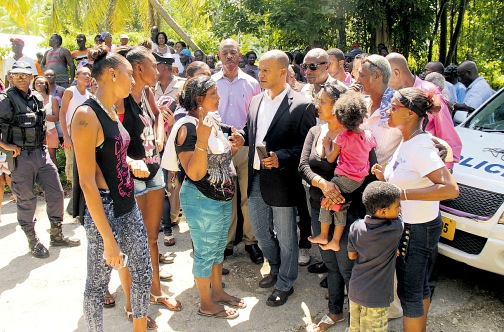
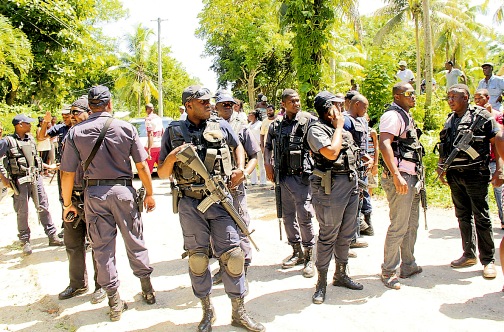
Police keep a heavy presence in Campbellton, Hanover.
Firefighters, after carrying out cooling down activities, found the charred remains of six family members in the rubble. Four other occupants of the house who were severely burnt were rushed to the Noël Holmes Public General Hospital in the parish capital of Lucea, where they were admitted. Up to late yesterday afternoon the police were still maintaining a strong presence in the troubled community where residents continue to reel from shock and disbelief over the action that they described as “heartless”. In the meantime, some of the grief-stricken residents are pointing fingers at one of the victims, who is accused of being the target of the onslaught which claimed the lives of innocent family members. “Everybody is saying because of that guy, the innocent people dead. Him and some people inna ‘ruption and I understand that them send threat that they are going to kill him,” a resident told the Jamaica Observer yesterday.
That theory was also put forward by police investigators. The police confirmed that before the shooting ensued, the shooters called out two persons who were at the house, one of whom was among the six later killed, and another who was included in the four hospitalised. During his visit to the community on Friday with Commissioner of Police Dr Carl Williams, Minister of National Security Peter Bunting appealed to community members that association with criminal elements can result in exposure to harm. “I want to use this opportunity to appeal to residents of Hanover and indeed all Jamaica, whenever you associate with criminals, whether violence producers or scammers, those who have illegal guns, you put your entire family at risk,” Bunting stated.
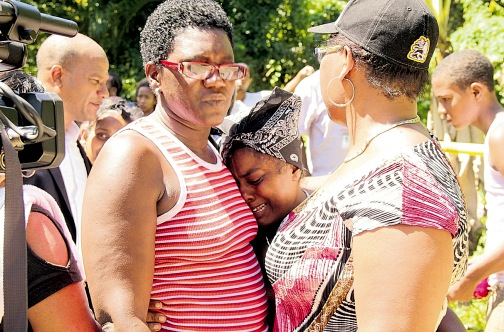
A grief-stricken relative of the victims of Thursday’s deadly attack in Campbellton, Hanover, has to be consoled by residents.
He added: “When we do the analysis of victims of gun murder, the vast majority of them are either persons involved in criminal activity or the close family or associates of those involved in criminal activity. So I would appeal to the ladies, stay away from these gangsters, they come to visit, they will put the rest of your family at risk. As you have seen when they get into this reprisal and counter-reprisal violence, they are indiscriminate. They don’t care who is the target from who is collateral damage.”
Dr Williams pointed out that the identities of the killers and arsonists are known to the police. “There were some disputes from weeks ago; I am not going to speak on the details of them now because those matters are still under investigation but suffice it to say we have a very good sense, based upon our investigation, on what led to these killings here and we are going to use it to aid us to catch the perpetrators,” Williams said. He also expressed concern over the surge of violence that has dogged Hanover in recent months, lamenting that the onslaught of the family unfolded even as the police have provided additional resources to the parish.
“I was here two weeks ago because I was very concerned about the trend that was happening in the parish and I sought to put some things in place, some additional resources, we sought to strengthen the command in Hanover, we gave them some vehicles and we saw what we saw last (Thursday) night so we know we need to mount a stronger response, as the minister indicated earlier. We are going to have to ensure that the citizens of Hanover can be safe when you go to bed at nights,” the police commissioner pledged. Bunting was also worried over the unprecedented 54 murders recorded in the normally peaceful parish since the start of the year.
“Ironically, I was speaking at a national security seminar at the University of the West Indies yesterday (Thursday) and I was bemoaning the situation in Hanover (where) we are seeing such rapid deterioration in the security situation here in a parish with less than 70,000 people. “But since the beginning of September I think we have had more murders in Hanover since the beginning of the month than in Kingston and St Andrew combined,” Bunting bemoaned. Read more here : Police hold massacre suspect
Moments before he died, Charly Keunang took a swing at a cop. This wasn’t an ordinary jab or hook. In cell phone video filmed by a bystander in March, the 43-year-old homeless man can be seen spinning toward a group of Los Angeles police officers, arms flailing. He looks more like the Tasmanian Devil than Mike Tyson. The whirlwind attack lasts a few seconds, and then ends just as quickly as it began. Keunang, a Cameroonian immigrant who was known as “Africa” on Los Angeles’ Skid Row, careens wildly into the incoming fist of one of the officers. The cop punches Keunang in the face and takes him to the ground, where the scuffle continues. “Stop resisting,” officers yell as they try to subdue Keunang. Four officers blanket him, and you can hear the sound of one of their stun guns clicking. “He has my gun. He has my gun,” screams one. The officers then open fire. An autopsy later shows that two bullets struck Keunang in the chest at close range. Two entered elsewhere on his torso, and two hit his left arm. Keunang was pronounced dead at the scene, his name among at least 61 unarmed black men killed by police this year, according to a database compiled by The Guardian.
The eyewitness video of Keunang’s death went viral, sparking protests from Angelenos who argued the shooting was further proof that the city’s police department should overhaul its use of force policy and rethink its approach to dealing with the mentally ill. More than 1,000people with mental illnesses are estimated to live on the streets of Skid Row, an expanse of downtown Los Angeles that has one of the nation’s biggest populations of homeless people living on the streets. Tensions between police and civilians in the area run high.
As the public searches for answers about what happened on that afternoon in March, a new set of concerns has emerged about police officers’ use of body cameras — and how, or if, the devices will promote accountability and transparency if the policies that govern the footage are overly restrictive. Two of the officers involved in Keunang’s killing were equipped with body cameras that were recording during the episode. Although investigators have that footage in their possession, the LAPD has not publicly released it. Under recently adopted policy, the department likely won’t release the videos unless it’s compelled to do so in a criminal or civil court proceeding. Without the body camera footage, a number of questions linger. What happened before the confrontation became physical? Could officers have done a better job of de-escalating? Does the body camera video provide a clearer picture of how and why officers resorted to deadly force?
The existing bystander footage has provided little conclusive evidence. LAPD officials have claimed the most-watched video shows Keunang grabbing an officer’s firearm during the struggle, causing the officer to fear for his life. More than seven months later, the Los Angeles County district attorney, Jackie Lacey, hasn’t announced whether charges will be filed against any of the officers. To complicate matters further, the few journalists who have seen the body camera footage say it challenges the official police account and calls the department’s tactics into question. At GQ,Jeff Sharlet wrote that the video never shows Keunang gain control of the officer’s weapon. Gale Holland and Richard Winton of the Los Angeles Times reported that officers repeatedly threatened to use a Taser on Keunang before he got violent, while he was trying to talk with them. It’s unclear if the body camera videos will affect the decision about whether to charge the officers in Keunang’s death. If the LAPD gets its way and the footage is not released, the public will be asked to trust that Lacey made her decision correctly and impartially. In other words, the presence of body cameraswill have changed very little in this case, at least outwardly.
With more and more police departments beginning to adopt officer-worn camera technology, Keunang’s death and its aftermath should serve as a warning. When the White House announced a $75 million initiative last year to expand body camera programs around the nation, it said the devices would help “build and sustain trust between communities and those who serve and protect these communities.” But the equipment can only achieve this goal if the policies governing the use of body cameras and disclosure of the footage don’t get in the way. Critics say the LAPD’s body camera policy is problematic because it allows the department to withhold its footage from the public, it requires officers to review footage before they write police reports, it doesn’t lay out clear punishment for officers who fail to turn on their cameras during critical incidents, and it doesn’t provide clear privacy protections to limit public surveillance. This is a troubling list of complaints. But at their core is an essential problem: Giving police the power to block the release of body camera footage deprives the public of an opportunity to better formulate an opinion about police tactics and to push back with facts, should community members find an officer’s actions to be inappropriate. In many places, bad body camera policy is threatening to undercut public demands for accountability and transparency before programs even get off the ground. Here are a few scenarios to look out for.
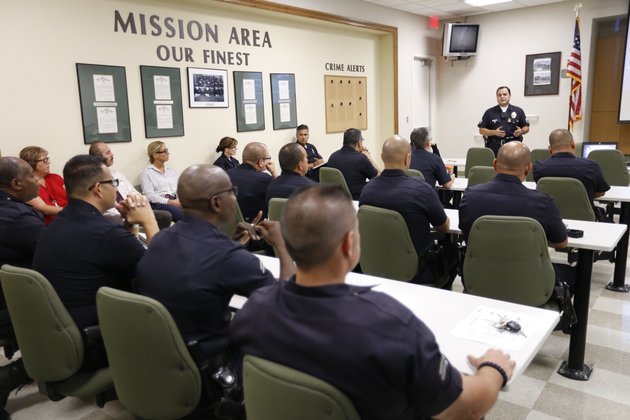
LOSANGELES, CA — AUGUST 31: Los Angeles Police Department Sgt. Dan Gomez with information technology bureau briefs LAPD officers on the use of body cameras during a training session at Mission Station on August 31, 2015 in Los Angeles, California. Over 7,000 officers will be outfitted with the cameras in the coming months, with the first round rolling out today. (Photo by Al Seib/Los Angeles Times via Getty Images)
Your community might not get to decide whether it wants police to use body cameras in the first place.
Before civilians weigh in on how body camera programs should work, they need to decide if they want police to have the devices at all. People are already being left out of this most basic decision-making process, says Nadia Kayyali, an activist for the Electronic Frontier Foundation, a nonprofit that focuses on digital rights and technology.
“Where body cams are being adopted, it’s really important that community members — particularly those who come from the communities that are most affected by police accountability issues — need to be involved in that decision. They need to have a discussion,” Kayyali said. “And what we’re already seeing is that instead, law enforcement agencies are applying for this money without that discussion.” Last month, the Justice Department announced grants to help 73 local and tribal agencies in 32 states expand their body camera programs. Many other cities and towns had already started to do so, though a number of major metropolitan police forces have been slower to move, often due to disputes over the costs of equipment and data storage, as well as resistancefrom police officers themselves.
But while many departments have either begun equipping officers with body cameras or have outlined plans to begin the process, most of them have not yet released official guidelines on how the cameras will be used. Some departments are in the process of drafting policy for the use of body cameras. Others are waiting for pilot programs to conclude before moving forward. Activists and police officials regularly tout the acquisition of body cameras as a key step toward reform, but many people are still skeptical, believing the devices could fail to prompt meaningful change and even make certain issues worse. “There is concern that body cameras can be misused, are going to provide more ammunition in court for prosecution, rather than accountability for law enforcement themselves,” said Kayyali. “There is concern that they are really creating pervasive surveillance.”
Your community might not be included in the policy-making process.
Even if residents agree that police should be equipped with body cameras, they most likely won’t get final say over the policies that will ultimately determine how effective the programs can be. A coalition of more than 30 groups, including the American Civil Liberties Union and the EFF,signed a letter in May that outlined a set of body camera principles for departments to consider. First among them: “Develop camera policies in public with the input of civil rights advocates and the local community.” Many departments have taken this advice to heart, at least in theory, by holding listening sessions and seeking public input about body cameras. But just because they’re asking people to submit recommendations doesn’t mean they’re actually including them in the resulting policies. Cities like Los Angeles have already come under fire for not allowing sufficient public input before drafting policies, and for putting forth proposals that critics say have failed to incorporate civilian priorities. In September, the ACLU suggested that the Justice Department should deny federal grant money to Los Angeles due to deficiencies in its body camera policy. But the LAPD ended up receiving a $1 million grant, putting it among the top funding recipients.
Police could make it difficult or impossible for the public to access critical body camera footage.
This is the biggest concern for civil rights groups and the public, who have pushed for the adoption of body cameras largely in the belief that they can make police more transparent and accountable. But in some places, law enforcement is already severely restricting the footage it will release publicly. In Los Angeles, for example, body camera footage is explicitly exempted from public records laws. The chief of police can decide to release video as he or she sees fit. The District of Columbia is currently considering a proposal not to publicly release body camera footage if there are pending criminal charges against a suspect or an officer. In matters of great public interest, however, the mayor would have the authority to decide whether or not to unseal related video. This policy was suggested after Mayor Muriel Bowser attempted earlier this year to make all body camera footage exempt from public records requests.
In Las Vegas, which has taken a more open stance on body camera footage, police will be allowed to withhold video pertaining to ongoing criminal investigations or internal investigations. While this may make sense in some cases, many of the most controversial incidents — shootings, in-custody deaths, use of force complaints — typically result in these types of probes, meaning police could use this provision to suppress the majority of consequential footage untilafterthe investigation has been completed. Together, such measures have the effect of preserving the existing system, in which the public must simply trust that law enforcement will properly resolve any issues without external oversight. That’s not helpful. “If you’re using body cameras for accountability, you can’t then depend on police discretion for the footage to be used for that purpose,” said Kayyali.
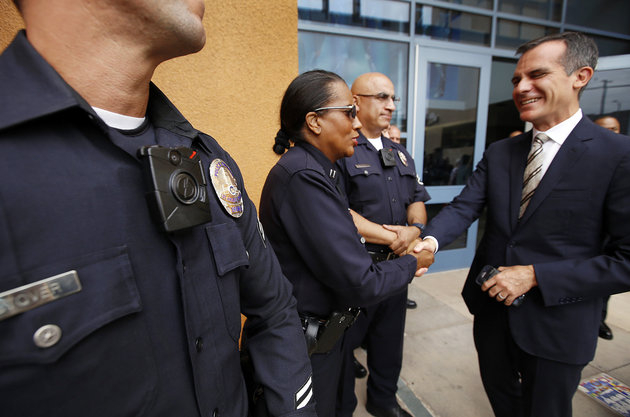
Los Angeles Mayor Eric Garcetti shakes hands with LAPD officers who are wearing the department’s new body cameras on Sept. 4, 2015.
Police may end up using the footage only for their own benefit.
Another emerging point of contention is whether officers will be allowed to view recorded footage before filing their reports or making statements about an incident. Law enforcement officials in a number of cities, including San Francisco, San Diego andDenver, have said their officers should be able to do so. A Justice Department report on body cameras released in 2014 supports this practice, claiming it will help ensure accuracy, though as The Washington Post recently reported, the director of the group that authored the report has since changed his mind. In Los Angeles, any officer accused of excessive use of force or grave misconduct will be required to review relevant body camera footage before giving any statement to investigators. Civil rights groups like the ACLU, however, see this as a move that will taint the investigative process before it begins and protect officers from potential repercussions for misconduct.
“It will allow officers to lie and tailor their stories to the video,” said Jay Stanley, a senior policy analyst for the ACLU’s speech, privacy and technology program. “But even for most officers who don’t lie, video is not an objective record, and even memory is not an objective record. The officer might see things or experience things the video doesn’t capture, depending on lighting, camera angle, when the video was turned on or turned off.” Beyond that, there’s the more basic matter of preferential treatment. A civilian under police investigation would not get to review an officer’s body camera footage before being questioned. Some argue that police deserve certain privileges in the legal process, but Stanley says that if the goal is equal justice under the law — even for the law — this shouldn’t be one of the benefits. “An investigation is supposed to be a search for truth. The families of a person who’s been shot or beat up, they deserve the truth,” he said. “This is not a policy that will yield truth most accurately.”
Officers may not face significant punishment for failing to enable cameras or for disabling them.
While police are pushing for a variety of measures that may end up making body cameras less helpful to the public, the equipment is completely useless if it’s not being used properly in the first place. To make sure that officers can’t simply snuff out evidence of misconduct by switching cameras off or by tampering with footage after it’s recorded, the coalition of civil rights organizations recommends that departments outline clear policiesabout when and where officers must turn body cameras on, and enforce strict disciplinary protocols for any violations. Many departments have established specific guidelines to determine which kinds of interactions with civilians should be recorded, but the punishment for failing to follow policy may not fit most people’s definition of “strict.” In Los Angeles, the city’s body camera policy doesn’t lay out specific sanctions for an officer who fails to activate the device, though it does say that any tampering with the footage will be “considered serious misconduct and subject to disciplinary action.”
In other cities, the disciplinary response is less vague. In Denver, the first failure to adhere to body camera recording requirements in a 12-month period will result in a written reprimand. A second violation in the same period means will result in the officer being fined a day’s pay and subjected to an in-depth audit of his or her body camera use. A third violation will trigger a formal disciplinary case, while “purposeful, flagrant or repeated violations will result in more severe disciplinary action.” It’s not clear what level of discipline is necessary to ensure that officers are compliant with body camera programs, but there’s reason to believe they’ll need some pressure. Over the years, we’ve seen a number of controversial incidents in which dashboard or surveillance cameras supposedly “malfunctioned” at critical moments. Important footage has also simply gone “missing,” making it impossible to prove allegations of misconduct.
And in the past year, there have been at least a few instances of officers not activatingbody cameras before fatal encounters. Pilot programs have provided some insight into how this problem could play out when more officers are equipped with body cameras. In Denver, an independent monitor’s review found that over six months, many officers failed to record incidents in which they used force. At the time of the report in March, police officials disputed the findings and refused to clarify if those failures were a result of policy violations or faulty equipment.
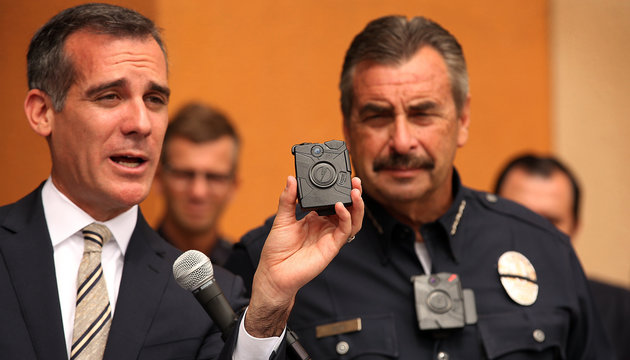
Los Angeles Mayor Eric Garcetti, left, with LAPD Chief Charlie Beck, right, who is wearing a body camera, shows off the new LAPD body camera on Sept. 4, 2015.
Sensitive body camera footage could end up coming back to bite you.
Another essential aspect of the debate over body cameras centers around privacy. As body cameras become commonplace, police will increasingly be recording in private settings and sensitive situations that involve victims, witnesses and bystanders. Only some of this footage will be of value to the public interest. Good body camera policy should honor the need for transparency while minimizing the potential for privacy violations or putting recorded subjects at risk.
Many cities have drafted policies requiring officers to notify individuals when they are being recorded in their homes or elsewhere. Others clearly lay out instances in which officers may switch off their cameras at the request of a victim or witness.
In Seattle, where police are releasing a much higher volume of video to the public, the city’s police department has decided to withhold footage recorded in private. Other video appears online in heavily redacted form, but gives people the option of filing a formal request to view an unedited version.
These are positive steps, but they don’t eliminate the possibility of abuse. A letter from the ACLU criticizing the LAPD’s body camera policy suggests departments must set down clear guidelines to prohibit footage from being used for any political or personal purposes.
“Finally, while the policy bars unauthorized release of video by officers, its failure to set any rules for release through authorized channels threatens privacy by potentially allowing release of sensitive or embarrassing footage where there is no clear public interest in disclosure,” writes the ACLU.
Officers may use body camera footage for more general surveillance.
Civil rights groups are also concerned about the risks of encouraging police to equip every police officer with a device capable of constant recording. “We’re very concerned that this technology will expand to include things like facial recognition,” said Stanley. “[The use of body cameras] should be something that helps an investigation and helps establish trust between community and police officers. This should not become yet another surveillance tool.”
Police departments are having enough trouble figuring out how to use body cameras in their current, relatively primitive form, so perhaps this isn’t an immediate concern. But as the devices become more widely used, it seems likely that their capabilities will expand in ways that would further benefit law enforcement. After all, they’re the ones buying the products — even if it is with taxpayer dollars. “We don’t want the kind of scenario where facial recognition is run against all video with the identity of everybody who’s spotted anywhere at any time logged and stored in some government database — or for this to be turned into the facial equivalent of license plate scanners, where everyone’s face is scanned,” Stanley said.
Body cameras may work better or worse depending on which state you live in.
Keeping an eye on what your local police department is doing about body cameras is important, but it might not be enough. Around the nation, states are reforming public access laws in ways that will ultimately make it harder for body cameras to further the goals of police accountability and transparency. According to the Reporters Committee for Freedom of the Press, 10 states have already passed laws this year that will limit access to these videos, while a number of others proposed unsuccessful legislation.
Rep. Kevin McCarthy (R‑Calif.) pulled out of the running for House speaker on Thursday,according tomultiplereports.
McCarthy was considered the top contender to replace House Speaker John Boehner (R‑Ohio), who will retire from Congress at the end of this month.
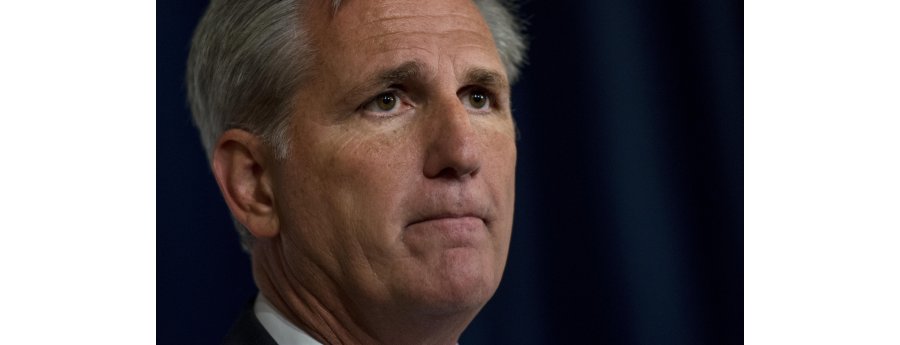
House Majority Leader Kevin McCarthy (R‑Calif.) pulled out of the running for House speaker on Thursday.
McCarthy announced his withdrawal during a meeting in which the House Republican Conference was scheduled to pick its candidate for speaker. The election for the Republican candidate for the next speaker has also been postponed.
“If we are going to unite to be strong, we need a new face to help do that,” McCarthy said at a press conference Thursday afternoon. McCarthy added that he felt good about the decision and would stay on as majority leader.
In a statement, McCarthy said it had become clear that House Republicans are divided.
“Over the last week it has become clear to me that our Conference is deeply divided and needs to unite behind one leader,” McCarthy said in a statement. “I have always put this Conference ahead of myself. Therefore I am withdrawing my candidacy for Speaker of the House. I look forward to working alongside my colleagues to help move our Conference’s agenda and our country forward.”
McCarthy withdrew his name from contention in a two-minute speech, according to one Republican who was in the room. McCarthy was considered the top contender to replace House Speaker John Boehner (R‑Ohio), who had said he would retire from Congress at the end of this month.
“He asked for the floor, and it was a two-minute speech,” Rep. Robert Pittenger (R‑N.C.) said. “He said the country is asking for a new face, new leadership, and he said I’m going to pull out. I’m not the right person for this job. I think we’re all in shock.”
Boehner was among those who were surprised at the announcement, according to Rep. Trent Franks (R‑Ariz.).
Rep. Charlie Dent (R‑Pa.) said he wasn’t sure whether McCarthy could muster enough votes to become speaker.
“I suspect had this gone to the House floor, it might have been uncertain as to whether Kevin could get 218 Republican votes,” he said.
“That wasn’t helpful. I could’ve said it much better,” McCarthy said Thursday, adding that the comments had become a “distraction from the committee” and factored into his decision not to run for speaker.
Reps. Jason Chaffetz (R‑Utah) and Daniel Webster (R‑Fla.) were also running for speaker. On Wednesday, the conservative House Freedom Caucus endorsed Webster.
GOP Reps. Paul Ryan (Wis.), Jim Jordan (Ohio) and Trey Gowdy (S.C.) all quickly said Thursday that they were not interested in running for speaker.
“I think the Freedom Caucus just wanted to move the country in the best direction possible for America, and I believe that coincided, ironically, directly, with Kevin McCarthy’s own agenda,” said Franks, who is a member of the Freedom Caucus.
Jennifer Bendery and Michael McAuliff contributed reporting.
Security Minister Peter Bunting: Prison deal will benefit both Jamaica and Britain
SECURITY Minister Peter Bunting says Britain’s £25 million towards the construction of a new prison in Jamaica is a conditional offer.
“… It’s not a gift. They have been very clear that this substantial contribution towards the building of the new prison is conditional upon us passing legislation, successfully negotiating a prisoner transfer agreement, and then making it operational,” Bunting told reporters at yesterday’s Jamaica House press briefing.
However, despite the raging debate, it could take up to a year before the country knows if Britain will give Jamaica the promised £25 million to build the new penal facility, Bunting indicated yesterday.
He said all that time may be needed for Parliament to finish its consultations and decide whether or not to allow Britain to send up to 300 Jamaican convicts back here to finish their sentences. The Government, however, is expected to use its parliamentary majority to push the matter through the House.
“It may or may not occur. The key element is whether Parliament will approve the framework legislation. We know it is a sensitive issue for the society, so we would want to allow as much participation as possible, so that would take a few months,” said the security minister.
If the Government does not agree to this one-way prisoner exchange programme Britain could withdraw its £$25-million offer to help build a new prison, which the Jamaican Government insists that the country desperately needs.
The minister told the House of Representatives on Tuesday that a special select committee is to be set up to receive submissions on this issue from technical experts and all interested parties, including civil society and the diaspora. He said the resulting report could either recommend abandoning the proposal due to the strong sentiments around the issue, or to proceed with legislation and the negotiation on the prisoner transfer agreement.
Although maintaining that the announcement made by British Prime Minister David Cameron last week had given the impression that an agreement was in place, Bunting said the arrangement could benefit both sides.
“We are not going to sign something that at the end of the day would represent a net transfer of financial responsibility from the UK to Jamaica. There can be a win-win situation in this because it costs about £6,000 to keep a prisoner in a Jamaican facility versus £25,000 in a UK facility, so there is sufficient scope for there to be a win-win if and when we get to negotiating the prisoner transfer agreement itself,” he said. Read more here :It’s not a gift’
U.S. Coast Guard Capt. Mark Fedor speaks to the media about the sinking of the container ship El Faro. The Coast Guard has concluded that the ship sank after encountering Hurricane Joaquin on Thursday.
Extinguishing hope that the cargo ship that went missing near the Bahamas could have survived a Thursday encounter with Hurricane Joaquin, the Coast Guard announced Monday that the ship, El Faro, sank, according to the Associated Press. The Coast Guard also found an unidentified body of one crew member. Several “survival suits” were spotted floating in the water, one of which contained the body. In addition, an empty, heavily damaged lifeboat was found. Barry Young of Jacksonville, Fla., whose grand-nephew, Shawn Riviera, was a crew member on El Faro, said his family is tempering their hope that Riviera could be alive with the reality of the situation. He spoke with Jessica Palombo of WJCT, Jacksonville’s NPR member station.
“The Coast Guard did say that they are still seeing debris. They’ve found other survival suits, they called them gummy suits, so they’re trying to find each and every one to make sure there’s not a person in that suit who’s alive, who they can rescue and take back to their families,” Young said, adding that the Coast Guard is now adding vessels to the search. “It does give you hope, but to be honest with you, the reality of it, we don’t see it as coming out any other way than tragic.” U.S. Coast Guard Capt. Mark Fedor told the media that the search has shifted from finding the vessel to rescuing passengers who may still be alive. “We are still looking for survivors or any signs of life,” he said. “The search for survivors continues.”
The ship, owned by Tote Maritime, set out from Jacksonville, Fla., on Sept. 29 laden with commercial goods and 33 crew members — 28 Americans and five from Poland. On Thursday, the ship lost power and communication and began to take on water as it passed an island in the southeastern Bahamas, about 10 miles from the center of the hurricane, according to the AP. Fedor says it appears that the crew was forced to abandon the sinking ship in a Category 4 hurricane. “So you’re talking up to 140 mile an hour winds, seas upwards of 50 feet, visibility basically at zero. Those are challenging conditions to survive in.”
Laurie Bobillot of Maine, whose 24-year-old daughter, Danielle Randolph, was a crew member on the ship, said she received a message from her daughter before the ship went down. “Not sure you’ve been following the weather at all,” Bobillot read during an interview with WGME, Portland’s CBS affiliate. “But there’s a hurricane out here and we are heading straight into it, Category 3. Last we checked, winds are super bad and seas are not great. Love to everyone.” On Friday, the Coast Guard deployed a rescue helicopter to look for El Faro, but found no sign of it.
The CEO of a Tote Maritime subsidiary in Jacksonville, Phil Greene, says Captain Michael Davidson thought he could pass in front of the storm, but the ship had a problem with its propulsion system and ended up without power in Joaquin’s path.
The El-Faro..
On Saturday, the Coast Guard reported finding a life ring from the ship and Navy and Air Force planes and ships joined the search. The following day, the Coast Guardfound large debris that appeared to include material from the ship, along with oil on the surface of the water. Joseph Murphy, a former master of commercial ships and now an instructor at Massachusetts Maritime Academy, told Here & Now that he can understand why the tragedy occurred. “Unfortunately, while people may think we have perfect information, we do not. When they sailed, it was reported as a tropical storm, something that ship has gone through many times in that very same areas,” he said. “What was not anticipated or known was the intensification of the storm and its development into a Category 4.”
Murphy said that one of the academy’s graduates was aboard the ship. He characterized the loss as one of the “perils of the sea. He said the ship “had the best of equipment, it was well inspected. The crew were well trained. They were simply overwhelmed by the force of nature.” But for the families of those lost at sea, these words are small comfort. Young says his family is struggling with the situation. “My family as a whole, we’re just banding together to support each other. That’s all we can do right now,” Young says. He says Riviera was a cook on the ship and describes his grand-nephew as a “go-getter” with two children and one on the way. Young said the tragedy has been hard on his family, especially his niece — Shawn is her only child. Story originated here : Coast Guard Says Cargo Ship Sank; Body Of 1 Crew Member Found
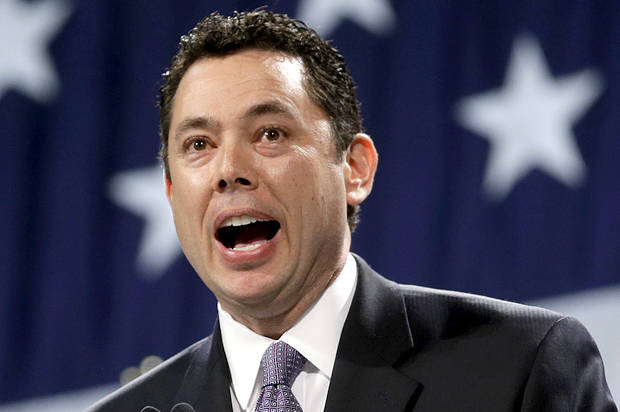
Rep. Jason Chaffetz, R‑Utah, speaks during the Utah Republican Party nominating convention Saturday, April 26, 2014, in Sandy, Utah. About 4,000 Republican delegates are gathering in Sandy for their state nominating convention Saturday to pick the party’s candidates for four congressional seats and nine legislative races. (AP Photo/Rick Bowmer)
The news that Utah congressman Jason Chaffetz has decided to throw his hat into the ring for speaker shouldn’t have surprised the denizens of the Beltway as much as it did. After all, it had been Chaffetz week on Capitol Hill. If you had checked in on politics for the first time several months, you’d have thought Chaffetz was the rising superstar in Republican politics. He was everywhere. At the beginning of last week, it looked as though the he couldn’t win for losing. As the chairman of the House Oversight and Government Reform committee, he presided over an interrogation of the president of Planned Parenthood, Cecile Richards, in a performance that was both bullying and ineffectual — which may be the worst of all possible worlds. Progressives were outraged at Chaffetz’s aggressive questioning of Richards and interrupting her before she could answer, while conservatives were angry that he nonetheless failed to land any punches.
If you’re wondering why Boehner was days away from getting canned, today’s nonsense is why. Case study in ineptitude of failure theater.
Can you imagine if this band of incompetent morons had been in charge of prosecuting the Nuremberg trials? My goodness what a farce.
It’s unknown what they expected, but presumably they had hoped to somehow vanquish Planned Parenthood with one put-away shot that failed to materialize. At the end of the hearings, with Richards having clearly prevailed, Chaffetz looked to be the week’s GOP goat. (Well, assuming one of the presidential candidates didn’t say anything dumb.)
But as luck would have it, just as Chaffetz’s reputation looked to be seriously frayed, his star rose once again when the Washington Post reported that the director of the Secret Service had wanted to release personal information on Chaffetz in retaliation for his contentious oversight of the agency in the wake of the various tabloid scandals that have plagued it in recent years. Needless to say, civil libertarians and elected officials on both sides of the aisle were appalled by such an abuse of power and Chaffetz was back on TV, this time as the victim of government abuse, instead of as the abuser.
And then came presumptive Speaker, Kevin “Loose Lips Sink Ships” McCarthy, with his now-infamous admission that the Select Committee on Benghazi was a political enterprise which was being used to damage Hillary Clinton. (As he said to Jake Tapper on CNN: “Have the select committee get all the information, all the hearings, so the public can see that. You win the argument to win the vote.“)
It was already obvious that the select committee was misusing its authority since there had already been eight earlier investigations which had thoroughly examined the facts and issued numerous reports, but McCarthy’s admission pulled back the very thin veil of legitimacy and exposed the Republicans to charges of malfeasance. But among the first to rush to the cameras was none other than Jason Chaffetz, the man who had just hours before been justly railing against the Secret Service illegally using its authority to damage his reputation, defending the Benghazi committee for doing the same thing and criticizing his friend Kevin McCarthy for accidentally speaking the truth.
Everywhere you turned, it seemed Jason Chaffetz was on television, so much so that if you didn’t know better you might think he was running for speaker himself. Lo and behold, by the weekend, he was. A week that started off with him brow-beating the director of Planned Parenthood ended with him on “Fox News Sunday”and explaining to Politico that his rationale for running for Speaker was his superior communication skills. (And truthfully, compared to McCarthy, he’s Winston Churchill.)
Chaffetz is a well-known figure on Capitol Hill but the average member of the public, if they know him at all, probably remembers him mainly as the guy who sleeps on a cot in his office rather than spring for a room somewhere. But he’s been marked for stardom since he was a college football star: In the words of Dave Weigel in this 2010 article, “when [Chaffetz] started to make it in politics, his teammates would recall how, after successful kicks, he would remove his helmet to reveal a perfect head of hair for the TV cameras.”
The son of a man once married to Kitty Dukakis, wife of 1988 Democratic presidential nominee Michael, Chaffetz started off as a Jewish Democrat, then converted to Mormonism during his last year of college in Utah — and Republicanism when former President Ronald Reagan was hired as a motivational speaker for Nu Skin, the “multi-level marketing” company (think Amway) which employed Chaffetz for a decade before he entered politics. He worked as chief of staff for the famously moderate Gov. Jon Huntsman and then beat the very conservative Representative Chris Cannon by running against him from the right in the 2010 Tea Party electoral bloodbath. On Election Night, Cannon said, “the extremists who don’t want to win elections have taken over the party. We don’t want that to happen in Utah. Politics is way too important to leave to the boors.” See story here :Jason Chaffetz, grandstanding charlatan: What you need to know about the GOP’s shameless up-and-comer
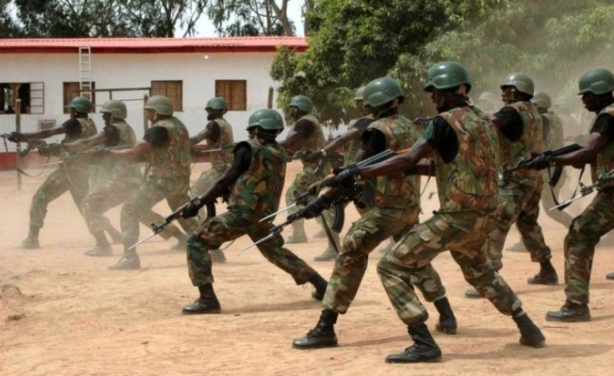
Nigerian troops have arrested a suspected financier of the extremist sect, Boko Haram, the army said Tuesday. Mohammed Maina, who sells and supplies stimulants used by the insurgents, was arrested in Bama, Bama Local Government Area (LGA) of Borno State,
Nigerian troops have arrested a suspected financier of the extremist sect, Boko Haram, the army said Tuesday
the army said. “The suspect a native of Ngurosoye came from Shuari village in Bama LGA, he was arrested with the sum of One Million Naira cash and some items,” the army said in a statement by its spokesperson, Sani Usman, a colonel.
“Investigation revealed that Mohammed supplies them Kolanuts and other items especially stimulants. He further revealed that kolanuts is in high demand among the terrorists as it keeps them active at night.“It is apparent also that he plies Maiduguri-Dikwa-Kulli axis where he gathers monetary and other materials contributions from Boko Haram sympathizers along that axis and send same to the terrorists camps,” the statement said. Separately, the army said troops of 112 Battalion and Special Forces in Mafa and Dikwa raided a Boko Haram camp at Bulungwa Naibe in Dikwa Local Government Area of Borno State on Monday.
“During the operation, quite a number of the Boko Haram terrorists were killed and the following items were recovered; 1 Buffalo vehicle mounted with an Anti-Aircraft Gun, a Rocket Propelled Grenade, 2 Machine Guns and 1 Sub-machine Gun. Others include 5 AK-47 rifles, 1 Fabrique Nationale rifle and 2 Sewing Machines used for sewing uniforms by the terrorists,” the statement said. Story originated here :http://allafrica.com/view/group/main/main/id/00039141.htmlhttp://allafrica.com/view/group/main/main/id/00039141.html
Cape Town — The discriminatory practices of the apartheid era had a negative impact on the medical education of
Apartheid dirty-tricks head Dr Wouter Basson at hearings held by the Health Professions Council of South Africa into his conduct. Basson oversaw the manufacture of biological weapons such as lethal bacteria to kill only black people. File picture: Oupa Mokoena
black students, the care of black patients in private as well as public institutions, and the careers of black medical doctors. Medical student training programmes at most universities ensured that white patients were not examined by black medical students either in life or after death. Post-mortems on white patients were conducted in the presence of white students only; students of colour were permitted to view the organs only after they were removed from the corpse.
Public and private hospitals reflected the mores of apartheid South Africa. Ambulance services were segregated, and even in emergencies a designated “white ambulance” could not treat and transport critically ill or injured patients of colour. Public hospitals had separate wings for white and black patients and medical staff. Many private practices had separate entrances and waiting rooms for patients with medical insurance and those paying cash, effectively segregating white and black. Doctors treating political prisoners faced dual loyalties on a regular basis. Some, like Dr Wendy Orr, resisted the gross human rights violations, while many were complicit. In particular, the abhorrent treatment of medical student and political activist Steve Biko received international attention.
The conduct of district surgeon Dr Ivor Lang and chief district surgeon Dr Benjamin Tucker in the Biko affair was indefensible. They failed to examine Biko adequately, did not attempt to elicit even a basic history from him, and did not provide adequate care or treatment. Instead, they acquiesced to the instructions of the security police, neglecting to place the best interests of their patient above all other considerations. This unprofessional conduct may be explained by the conflict of the doctors caught in a classical “dual-loyalty” situation — one in which their duty to their patient, Biko, conflicted with their (perceived) duty to the state. In fact, Tucker subsequently admitted: “I had become too closely identified with the interest of the organs of the state, especially the police force, with which I dealt practically on a daily basis… I have come to realise that a medical practitioner’s primary consideration is the well-being of his patient.”
GR McLean and Trefor Jenkins make the point that the Biko case is an example of a difficult ethics case not because it is difficult to know what the morally correct course of action is, but “because it is hard to do what one ought to do”. The duty of the doctors involved in Biko’s case was clear, but performing that duty was difficult. They had become so accustomed to working with the security police and regarding the detainees as dangerous terrorists rather than patients that they had disengaged from the duties and the responsibilities of their profession. Neither the Medical Association of South Africa (Masa) nor the South African Medical and Dental Council (SAMDC) supported charges of misconduct or unethical conduct against the doctors involved in the Biko case.
The Biko affair marked a moral threshold in public life. The reputation of the medical profession had never sunk as low. Confidence had evaporated. It was no longer just a matter of moral wrongdoing by a few medical practitioners. Through the actions of Masa and the SAMDC, the whole organised medical profession became implicated in that wrongdoing. It was only after a small group of doctors (Frances Ames, Edward Barker, Trefor Jenkins, Leslie Robertson, and Phillip Tobias) successfully obtained a Supreme Court ruling to force the SAMDC to re-open the case against the Biko doctors that the council did so in 1985. Ultimately, Lang was found guilty of improper conduct and received a caution and a reprimand; Tucker was found guilty of improper and disgraceful conduct and was later struck from the medical roll.
Other human rights violations occurred at the hands of physicians, many of them in prisons and the military. In particular, Dr Wouter Basson joined the South African Defence Force as head of Project Coast — the chemical and biological warfare programme of the apartheid government. It was only in 1998, during the Truth and Reconciliation Commission (TRC) hearings, that the details of the activities of Project Coast emerged: the manufacture of biological weapons, secret stockpiles of lethal bacteria to kill people with pigmented skin selectively, and chemicals and drugs developed specifically for use against enemies of the apartheid South African government. Although Basson gave evidence at the TRC hearings for 12 hours in 1998, he did not apologise, he did not show remorse, and he did not request amnesty. Finally, after a 13-year-long case with the Health Professions Council of South Africa (HPCSA), Basson was found guilty of unethical conduct in December 2013. Although he argued that he had acted as a soldier and not a doctor, that medical ethics were different for military doctors, and that he had no doctor-patient relationship with those he harmed, among other arguments, a long-awaited guilty verdict was reached.
Although the Sama issued a statement in support of this verdict, Basson retains his membership in the organisation Apartheid corrupted the moral fibre of South African society in a manner that permeated and broke the core ethical covenants of the medical profession. Separation between the profession and the state became opaque and ambiguous. Through this dense veil of confusion, a minority of health professionals were able to see their way clear and rebel against injustices in health care in the prisons and security forces. However, the stance of many was one of indifference or, worse still, complicity. Public hospitals are now fully integrated. HPCSA mandated that ethics training for all registered professionals become compulsory. All medical schools are now compelled to provide training in ethics, law, and human rights as a compulsory part of their curricula.
Medical undergraduate training ensures equity in student intake and training, except for a minority of apartheid institutions that continue to use language as a barrier to entry, thereby denying access to non-Afrikaans-speaking students, who are typically black. We hope that this bleak chapter of medical history will never be repeated. * This is an edited extract from a paper Dual Loyalties, Human Rights Violations, and Physician Complicity in Apartheid South Africa first published in the AMA Journal of Ethics. Story originated here: Apartheid corrupted the medical profession October 6 2015 at 03:44pm
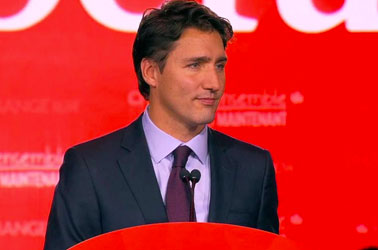
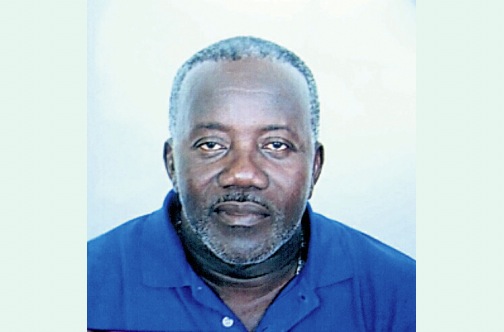
 A group of police officers, who opted for early retirement from the Jamaica Constabulary Force (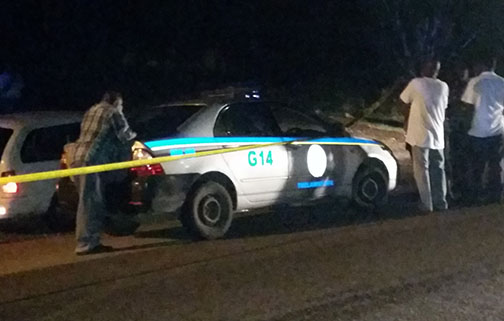


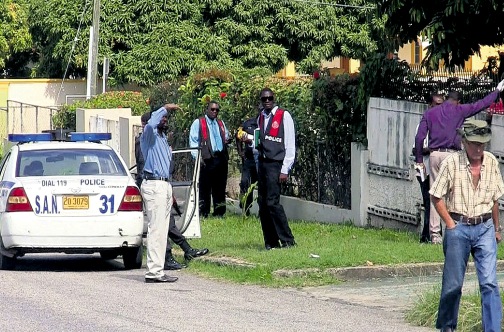
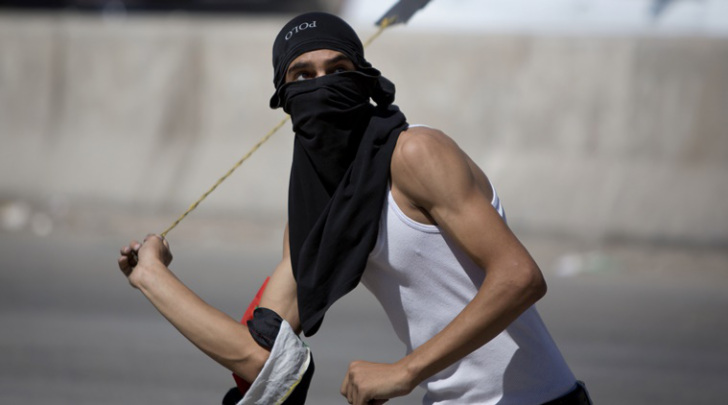
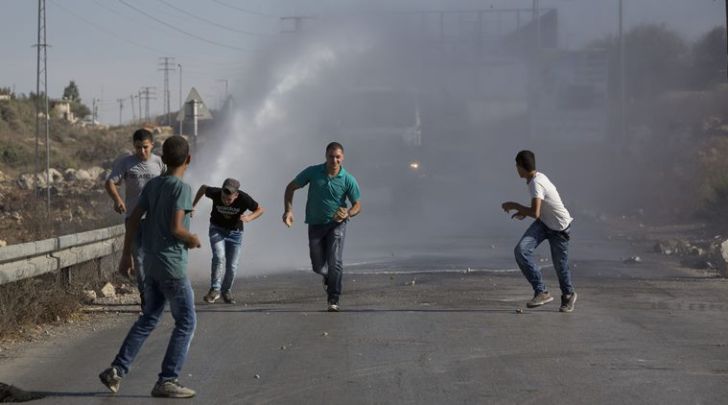
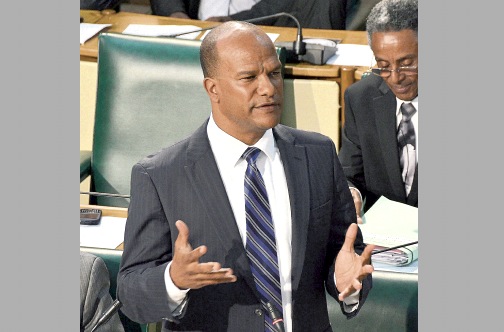
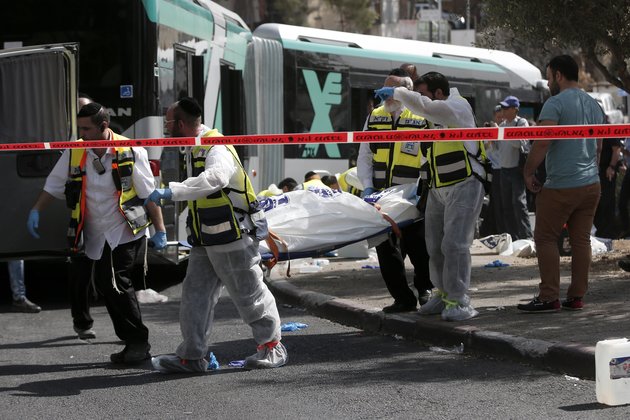
 Jerusalem (