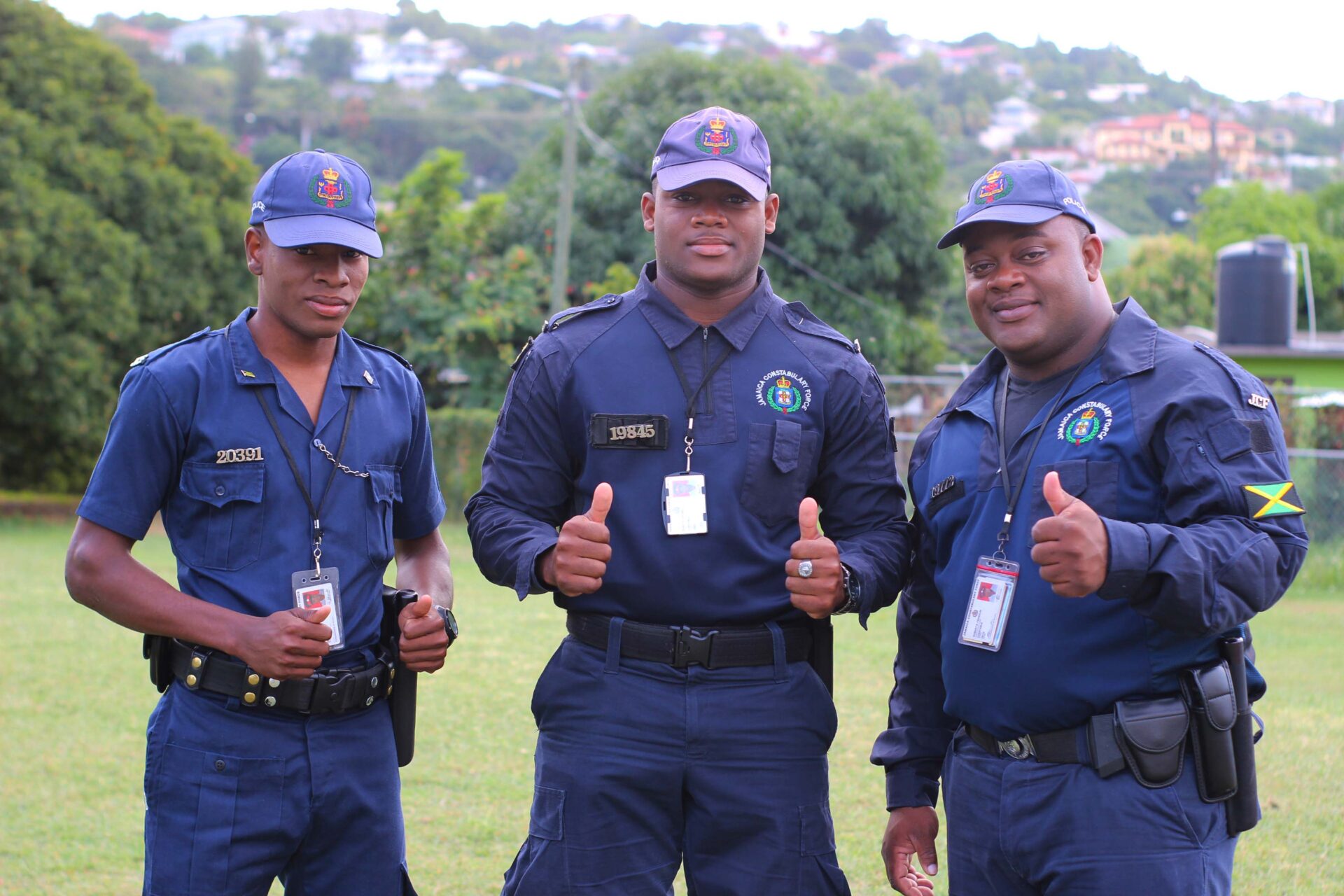
There is a reason that people from overseas police departments have been offering their services to the Jamaican Government to recreate and refocus the Jamaican Constabulary Force (JCF). There are good reasons that many fine officers continue to leave the Jamaica Constabulary Force prematurely. For many people looking at the JCF who are not familiar with the discipline of policing or what it should look like, the papered-over broken system that is supposed to be representative of a better police force seems just great. The police job is not always pleasant; it isn’t always good to look at when executed. Consequently, many are offended when officers act against offenders who refuse to comply with their lawful instructions. And so, the loud noises you hear from bystanders are understandable to officers as long as they do not physically intervene. Ultimately, the true test of an effective police department is the fulfillment of its mission statement. In the case of the JCF, whose mission statement is the Protection of Life and Property, the Preservation of Peace and Good Order, and the Prevention and Detection of Crime, there is no rational case to be made that this is a worthwhile police department… https://mikebeckles.com/its-time-to-send-a-clear-message-to-the-bleached-out-faced-killers-that-we-will-not-play-by-their-rules/
Let me be clear: the failures of the JCF cannot and must not be laid at the feet of the Rank and file of the force. The police high command was and still isn’t representative of a competent body that could provide the country with a state-of-the-art police service. That is not to say quality men and women of competence haven’t served in the high command. It means that the colonial policy directions of the JCF do not allow the force to be a quality twenty-first-century police agency. It also means that the JCF is still an agency stuck on form, regurgitating and wallowing in the archaic functions of the colonial era while ignoring the substance of its core mission. This effectively makes the JCF decrepit the equivalent of an old building with rotting walls and a new coat of paint. It does not require foreigners to fix the problems inherent in the JCF execution of its functions; in the same way, it does not require this writer, who left the force long ago. For God’s sake, looking at what works in other places and learning from them is not so hard. https://mikebeckles.com/move-forward-with-stiffer-penalties-to-hell-with-the-detractors-we-tried-it-their-way-part‑2/
A hindrance to true and lasting competence in the JCF, and I dare say in other government agencies, is the misinformed idea many have that they can do different people’s jobs in other disciplines. This fallacy is born out of the idea that once a person earns a liberal arts degree, that person is considered educated and, therefore, competent to do anyone’s job. What is laughable is that, though this idiocy is pervasive in our country, they would not have the very same degreed person perform heart surgery on them or fly an airplane on which they are passengers. But they steadfastly believe they know how to do the police job. Today, the Police high command is populated with officers who have undergraduate and graduate degrees. There may even be one or two with Doctoral degrees. I recall past commissioner Carl William had a Doctoral degree. In reality, none of that matters in the discipline of policing. Being credentialed is a net positive, but if it is just for being credentialed, it’s a waste of time. The officers of the high command now speak the King’s English because we were told by the elitists at and out of the intellectual ghetto that the force was bad because officers were dunce. https://mikebeckles.com/a‑force-for-good-is-an-empty-slogan-without-results/
The irony today is that the same elitists from the intellectual ghetto are trying to persuade Jamaica that the Patios dialect should become a written language and we should all speak it. Because they said so, what frauds!!! My friend told me of a recent experience with some young officers who stopped him on his way to work. He explained that the officers were courteous and respectful, and he was soon on his way. It was heartwarming to hear this bit of positivity about their police officers from a Jamaican citizen. His comments came against the background of some harsh comments I made about the incompetence of the JCF. He insisted that the JCF today is better than the agency of the past. I respectfully disagreed with my friend. By every metric, the JCF of the 80s was the most effective the agency has ever been and continues to be. Today, we have criminals gravitating toward Jamaica because of the lax laws and the incompetence of the police department. During the 80s, they ran away to foreign lands to find refuge. As I said before, policing is not always pretty, and though officers can be effective and courteous simultaneously, the job of the police is to live up to its mission statement. https://mikebeckles.com/jolyan-silveras-arrested-but-many-more-well-connected-murderers-walking-free/
The needless death of Constable Rushane Lee along the north-south highway in Saint Anne is a grave reminder of the incompetence of the police high command. According to the high command, at about 11:40 pm on January 31, officers were conducting vehicular checkpoint duties along the highway in Unity Valley in St Ann when the driver of a Toyota Probox motor car, reportedly traveling at high speed, was signaled to stop. The driver reportedly slowed down and then sped off, hitting the policeman. The injured cop was rushed to the St Ann’s Bay Regional Hospital, where he was admitted. He subsequently died. There is so much wrong here that goes to incompetence and a glaring lack of appreciation for reality that eludes many people who care about this subject, even some officers. In one or more of the articles I linked above, I consistently point to the lack of visibility of the police on the streets of our nation, and as such, the streets have become extremely lawless. I have even argued that the police have surrendered the streets to lawless motorists. In rare instances, the police are visible, out of their vehicles, standing around talking and laughing or occupied with their cellular devices. Let me repeat this: Officers have no logical reason to be out of their vehicles. If they need to move quickly, valuable time is lost getting back in and starting. Driving along the North-South and Edward Seaga Highways, I see the occasional cop car, usually with two officers outside the vehicle, supposedly monitoring speeding motorists. What a joke. They are usually not paying attention to the speeders, much less intentional about doing anything about them.
So, why would any commander allow officers to leave their vehicles at night? Before anyone begins to object and come up with some cockamamie reason, let me stop you. Jamaica is inundated with illegal, high-powered guns. Does the police sense that no one will pull up with weapons? However, what do they think those persons will do if someone pulls up with weapons? What would be the officers on the ground response given the likelihood of such a plausible and probable scenario? The report following the killing of Constable Rushave Lee does [not] include the apprehension of the hit-and-run driver. Some reports indicate that the driver of the vehicle is also a member of the JCF. We have not independently verified that report. This is the clearest indication that the officers on the ground had no contingency plan to effectuate a meaningful vehicular checkpoint because the force’s leadership had no idea how to do it. These directives must be written policies inculcated into the ongoing training of officers that are followed with military-style precision. The vehicular checkpoint in which the constable was killed was not set up to corral criminals; it was set up with the mindset that every driver is a law-abiding citizen. Any argument to the contrary will be meritless and argumentative. If the mindset was that all motorists are law-abiding, why was one needed in the first place?
.
.
Mike Beckles is a former Police Detective, businessman, freelance writer, black achiever honoree, and creator of the blog mikebeckles.com.
I had a conversation with a young friend yesterday; he wanted my opinion on what was happening in Israel. I told him I had no idea what was happening in Israel because I did not know of a country named Israel. I am aware, however, of a nation called Palestine. He then asked don’t you believe in a two-state solution? I responded no!!! Shocked, he asked don’t you believe Palestinians deserve a state? I responded, of course, that is the only state I believe in. He replied I want peace, so I think two states will resolve the situation. I asked him how that could be when Israel was built on a lie. How can there be peace without justice? Anything resembling peace in Palestine, even if there were to be a two-state experiment, would amount to a smoldering cauldron that would explode at any time. Nobody wants to say out loud what needs to be said. Everyone is either afraid or in cahoots with the Zionist Lobby AIPAC, The American Israel Public Affairs Committee. Even those opposed are petrified of the Zionists and their allies coming after them. In the video I did above, one of my dear friends, a man I greatly respect, told me he would consider whether it was wise of him even to share the video. My friend was concerned for my safety but feared that merely sharing a video about the subject would endanger him as well. Such is the palpability of the fear the Zionists have imposed on ordinary Americans and their ability to speak out on this travesty in Palestine.
What the world is forced to contend with is an illegitimate state created and enhanced by the Americans in 1947 and recognized first themselves a year later in 1948. This illegitimate state is no different than that which the Dutch created in South Africa, the British in Australia, or even the Americans created almost three hundred years ago. Truthfully, the world has always been one in which the strong take what they want, and the weak suffer. However, after the Second World War, the world was told that there was a new international order in which nations were obligated to operate like good citizens in a country of laws. This new order meant that nations could not invade other countries, plunder their resources, and take their land. An international court was also set up in the Hague, Netherlands, to hear cases against errant nations. This was doomed to fail from the start, as the powerful nation that was instrumental in establishing the court, the United States, removed itself from its authority. Some argue that the new order has worked. They point out that since the Second World War ended in 1945, there has not been another worldwide conflagration. Truthfully, it was a mere 21 years after World War I ended before the start of the second. It is now 79 years since World War Two came to an end. On the face of it, it appears that this international order has kept the peace.…..except that the world was thrust into an existential stalemate between the United States and the Soviet Union, two nuclear-armed powers competing for world domination.
After the Soviet Union collapsed, the world faced the United States, the sole nuclear Superpower, having total hegemonic autonomy over our planet. From that emerged America pushing its weight around in nations as small as Grenada and Panama to others as large and remote as Iraq and Afghanistan. No country was spared America’s hegemonic reach, overt and covert. So no, there has not been another world war, but we have had many wars all started by the United States. Part of the immense power wielded by the United States included, though not confined to, the destabilization of Libya and other countries while nuclear arming and protecting the Zionist state of Israel in the United Nations Security Council. As a consequence, Israel has thumbed its nose at the international community as it goes about committing atrocities and war crimes against the Palestinian people with zero consequence… In the meantime, the powerful zionist lobby manages to cow anyone who dares speak out against Israel’s war crimes by labeling them antisemitic in the American mainstream media. Even elected officials are afraid to vote against sending American tax dollars and bombs to kill Palestinians. That is the power of the wealthy and powerful Zionists operating from America’s soil…
.
.
Mike Beckles is a former Police Detective, businessman, freelance writer, black achiever honoree, and creator of the blog mikebeckles.com.
This Article is dedicated to the memory of former Inspector Dadrick Henry who lost his valiant struggle with cancer. I wrote this article as a tribute to you, sir, a man who spent his entire life trying to make Jamaica better. Misunderstood and unaided by a filthy system that was more sympathetic to the criminals than to you and your sacrifices. Rest In peace, brother.
After my ten-year career in the Jamaica Constabulary Force, I left the department in 1991. I realized (1) that I could not accomplish my economic goals and (2) that I could not effectuate real change in our criminal justice system from within a fundamentally flawed agency that itself operates in a system of law and order that was in name only. In my view, two critical components prevented our nation from being safer: (1) our incomprehensible infatuation with the celebrity gangster culture and (2) the structural built-ins that allow the well-connected to operate outside the laws. To the extent that Jamaica is seen as a lawless country, these two components have acted as an umbrella under which the nation’s crime pandemic mushroomed. A careful consideration of the foregone may be juxtaposed with other critical elements such as conflicts of interests, such as defense lawyers walking out of courtrooms where they are defending violent murderers and then walking into Gordon House to legislate on gun violence. The JCF is far from the only agency to experience brain drain, but the high attrition from the JCF speaks for itself. Given the appropriate opportunities, the attrition rate would be exponentially higher.
I felt that I could kill two birds with one stone if I left the JCF at the time I did. (1) I could attempt to achieve some of my financial goals and (2) be more effective in shining a light on the system from the outside without the constraints of being inside an agency and a system that frowns upon constructive criticisms. Having said that, no one should be under any illusions as to where my loyalties lie. When I started writing in support of policing, many people encouraged me, but they wouldn’t go much further than that. The blowback was intense; some even threatened my life (not something I was particularly perturbed about). I was never one to cower in fear. The anti-police vitriol in our country was intense, made worse because there was no active governmental support for the police. I absolutely believed that there was a fundamental need for police reform. But I also thought that reforming the criminal justice system was far more important as the police operate in the wider justice system that includes the prosecutor’s office, the criminal courts, the prison system, and last but not least, the legislative framework that dictates whether the police succeed or fail.
I wrote hundreds of articles making the case for (1) Constitutional reform, (2) reforming the powers of the judiciary, (3) police oversights, and (4) the antiquated penalties for violent crimes. There was zero attempts to transform the criminal justice system during the 90 to the early or mid-2000s’, it was,’ anything a anyting’. The Golding administration broke an 181/2‑year cycle of PNP rule that saw our nation teetering on the brink of collapse. Instead of learning while looking from the outside, Bruce Golding took office and decided that the problem was with the police. So his response was to create an oversight agency and fully equip that agency with amenities that the police still do not have today to do their jobs. Bruce Golding had no problem getting support for forming that agency, as the PNP was willing to support anything against the police and the rule of law. We all saw where Bruce Golding’s head was as events came to a head in 2010. Bruce Golding will forever be remembered as the leader who refused to hand over a trans-national gangster for trial. This is nothing any leader should be proud of. Golding’s opinion should never factor into discussing Jamaica’s way forward.
Andrew Holness did not come to office understanding the critical role the rule of law plays in a democratic society — a product of the same sewer that produced past leaders. His disdain for the police was evident from the start. His love affair with the military and his use of soldiers in his government elicited claims that he wanted to turn the country into a dictatorship. I never thought that Andrew Holness harbored strong man tendencies. I believe that his perceived disrespect for the police stemmed from a lack of understanding of the rule of law enhanced by the source of his formal education. Holness, too, demonstrated a strong belief that attacking the police and advancing the JDF was the way to go. The idea is that members of the JDF have a better rapport with the public than members of the JCF. The misguided perception many Jamaicans harbor is also from a lack of understanding of the functions of the two agencies. We all love to see our military members, and we take pride in them, but the minute you have them do police duties, the shine is off the ball, and they become just as disliked by those who support lawbreakers. This writer has tried to explain this for years, and now we see the luster of the JDF diminished like a cricket ball that has been batted around for sixty overs.
Governing is far different than campaigning or sitting on the sidelines, a lesson Andrew Holness is beginning to learn. Thus, attacking the JCF under the guise of reformation has exposed the need for a wider approach to reforming the criminal justice system, which this writer proposed a decade and a half ago. The JCF surely needed reforming, not the destructive approach demanded by reactionaries like Carolyn Gomes, Terrence Williams, and others. However, after your so-called reform of the JCF, what then? I’ll tell you what, then: violent crime is still trending upward, the streets are just as lawless, and everyone is looking at each other while wringing their hands. I hate to say I told you so.….but I did. Reform the wide system, then reform the police. The police were never the problem; the police have always been a microcosm of the wider system. I have proposed numerous system changes to save lives and produce a better police department. The Andrew Holness administration has recently started to pay attention to some of these proposals, even though they will never admit where those ideas came from. There are no writers, politicians, or anyone for that matter who have consistently demanded that the parliament pass much stronger laws for criminals with guns who commit murder. There has never been anyone on the Island who has demanded that there be mandatory minimum sentences for certain categories of violent crimes. No one on the Island has proposed removing from the judge’s purview the sentences meted out to capital murderers. But the burgeoning crime statistics have promoted action, and many people are jumping on the bandwagon. I want to welcome them to the party even though they are a dollar short and a day late.
This writer is unapologetic in standing on the demand for mandatory minimum sentences for violent crimes regardless of who commits them. I also strongly believe that Jamaica needs to sever its colonial ties with Britain and, therefore, embark on a new constitutional order. Nevertheless, I applaud the UK Privy Council, which upheld the constitutionality of mandatory minimums for violent offenders in May last year. The Privy Council dismissed the garbage appeal of Tafari Morrison who was sentenced to 15 years by the local courts in 2013 for a robbery in which the victim was robbed of his cell phone and shot multiple times. The victim was shot multiple times despite handing over his phone to Morrison and his cronies. Morrison was 16 years old at the time of the robbery and, at age 17, was sentenced to more than 15 years in prison. The Supreme Court had imposed a mandatory minimum sentence of 15 years in prison on the teenager. The Appeal Court upheld the sentence following an appeal by his attorneys, who argued that the imposition of the 15-year minimum sentence for the firearm offense was prohibited by the Charter of Fundamental Rights and Freedoms and was, therefore, unlawful. The attorneys then took the matter to the Privy Council. I believe that lawyers have a right to defend their clients vigorously. But I must ask, who is paying these vultures for these expensive appeals? Instead of making these frivolous appeals, how about instructing your clients that what they did was abhorrent? There is nothing unconstitutional about sentencing a violent offender to prison for extended periods of time. If you do not want to be imprisoned, do [not] pick up a weapon to rob and then shoot an innocent person.… period!!! My issue with this sentence is that it was not nearly long enough.….. this vicious animal will be out of prison in his early thirties, hardened to do it again. He should have been sent away for life without parole.
For a long time, many talking heads in Jamaica have argued that long sentences do nothing to deter criminals. I have consistently disagreed. Removing violent murderers from the equation essentially means they cannot commit more crimes. Notwithstanding this simple reality, the idea that we should be lenient has prevailed and devastatingly affected policy. The government is finally changing its tune now. Here’s Prime Minister Andrew Holness recently in Salt Springs Montego Bay after a triple murder, including two children. Quote, “we have already started to increase the penalties for murder and, in particular, capital murder. In our system, the way to separate them is to give them long sentences and take them out of the space. Short of the death penalty, this is the next best thing.” No shit Sherlock, I have been saying this same fucking thing for almost two decades. Whether they are locked away or killed by the police, they [do not] come back to kill again; that’s the greatest deterrent. For decades, there have been criticisms locally and internationally about how Jamaica governs itself, particularly on the issue of crime. A quick review of the local groups reveals a common denominator: they are funded and assisted by foreign dark money. Why? Front and center in offering unsolicited opinions have been the“US Department of Justice’s Office of Justice programs. In offering an assessment of the Gun Court Act in 1992, the agency said the following: Jamaica’s principal gun-control legislation, the Gun Court Act, mandated harsh sentences for criminals who used guns during a crime and denied some Jamaicans their legal rights; these harsh measures proved to be ineffective in controlling crime. Nowhere in the world are citizens more denied their legal rights than in the American Criminal Justice system, which is a race-based system. Secondly, who asked them? Jamaica streets are inundated with guns that come mainly from the United States. If the United States cared about the rights of Jamaicans, they would plug the dyke and stop the flow of illegal guns into Jamaica. The most sacred right a person has is the right to life.
The US Department of Justice went on to state; The Gun Court Act was passed in 1974 and survived in its most repressive forms through 1982. This act established a special court to deal with the offense of the illegal possession of firearms and other offenses that involved firearms where the offender’s possession was illegal and provided for a mandatory and indeterminate sentence for illegal possession and use of firearms. Despite the limitations of the data and analysis, a general empirical assessment of the Gun Court Act can be made. The data show that following an initial decline, there were overall increases for all firearm-related crimes throughout most of the study period. Those interviewed about the causes of the firearm crime who were not directly affiliated with either political party attributed it to the use of strong-arm men, gunmen, and gangsters in the political arena; widespread victimization in the allocation of jobs and contracts by successive governments and by local authorities; and interference by politicians with the police in the execution of their duties. Statistics suggest that illegal firearms were still in the hands of many criminals during the years the Gun Court Act was implemented. The attempt to control firearm criminals through the passage of mandatory firearm legislation failed, and political motivations seem to have been important reasons for this failure. Following the election of the JLP in 1980, the Gun Court Act remained in effect with its most oppressive features for two years. By early 1982, many individuals interviewed stated the failure of either government to remove, or at least substantially amend, the act was a challenge to all class interests.
Repressive forms? There are no Jamaicans buried behind Jails in Jamaica. The data show that following an initial decline. Of course, if the government is not resolute, crime will increase after the initial lull. America has some of the most repressive laws, all aimed at controlling its Black population. As such, no one should pay attention to the Americans and their advice. We must take their CIA assessment with a grain of salt. Today, while the US State Department cautions Americans about traveling to Jamaica because of crime, Jamaica welcomes almost five (5) million visitors yearly. Jamaica has no mass shootings in Churches, Supermarkets, and other places where people gather in large groups. We must press home this advantage by enacting the stiff penalties I have advocated for, which the administration has finally come to recognize.
.
.
Mike Beckles is a former Police Detective, businessman, freelance writer, black achiever honoree, and creator of the blog mikebeckles.com.
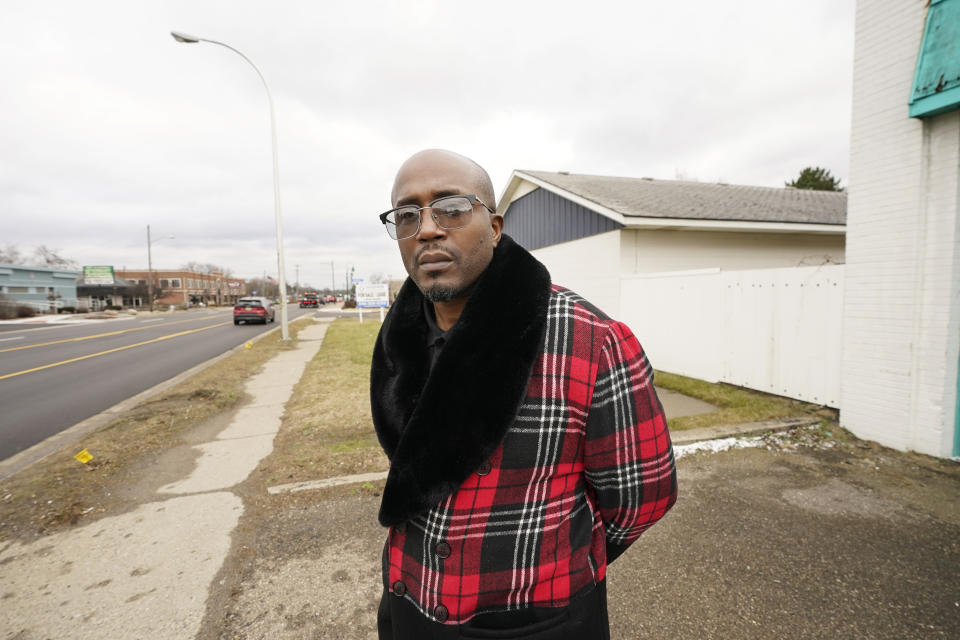
Brian Chaney stands near the area where he was arrested, Wednesday, Jan. 10, 2024, in Keego Harbor, Mich. The officer told Chaney he thought Chaney was breaking into cars and cuffed him. Chaney, who is Black, asked for a supervisor. The white officer told pointed to another officer from a different police department and told Chaney he was the supervisor. The Keego Harbor chief said in a deposition in a lawsuit Chaney filed that it’s ok for his officers to lie when they are not under oath.
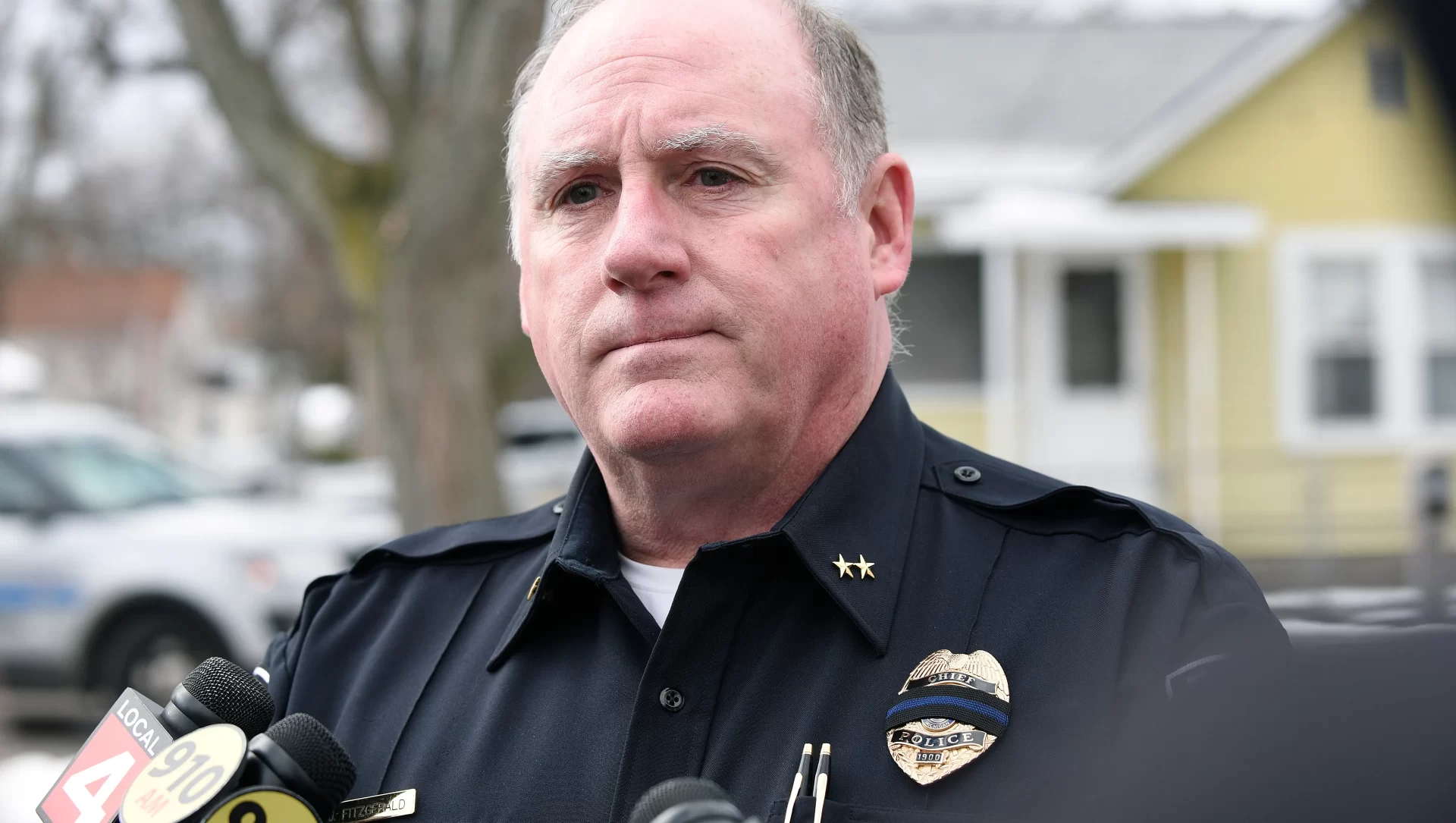
A Black man who was detained by police during an early morning walk in a quiet community northwest of Detroit says the white officer who threw him against a squad car, cuffed him and accused him of planning to break into a car also told a significant lie. Brian Chaney says he asked for a supervisor during his arrest in Keego Harbor, Michigan, and Police Officer Richard Lindquist told him that another officer was present and in charge. The problem: That second officer was not a supervisor or even a member of the Keego Harbor Police Department. Lindquist was never disciplined and his chief says that while a suspect has the right to request a supervisor, what the officer did was OK. “An officer can lie in the field when he’s not under oath,” Keego Harbor Police Chief John Fitzgerald said in a deposition in Chaney’s $10 million wrongful detention lawsuit. But with American trust in police plummeting, buttressed by cellphone and bodycam videos that can expose untruths, a profession once broadly considered above reproach has seen its reputation suffer.
Keego Harbor Police Chief John Fitzgerald
“It’s well accepted that the weakest and most vulnerable members of society are the biggest victims of coercive practices, like police being dishonest and deceptive practices in interrogations,” said James Craven, a legal associate with Cato Institute’s Project on Criminal Justice and a former criminal defense attorney. In a Gallup poll last year, 43% of respondents said they have a great deal or quite a lot of confidence in the police, down from 51% in 2021 and 64% in 2004. Gallup says 43% is an all-time low. “We need police we can trust,” Craven said. “We need to start envisioning a police force that’s built with integrity at the center.” Several recent cases underscore that need. In May, a Washington, D.C., police officer was arrested on charges that he obstructed an investigation and lied about leaking confidential information to Proud Boys extremist group leader Enrique Tarrio. A white police officer and union leader in Portland, Oregon, was fired in 2022for leaking a false report from a 911 caller who claimed a Black city commissioner had been involved in a hit-and-run. The department later reinstated him.
A former officer in Louisville, Kentucky, admitted in court that she and another officer falsified information in a search warrant that led to the 2020 fatal police shooting of Breonna Taylor, a Black woman. Police are allowed to use deception and present false evidence during interrogations and investigations to get suspects to admit guilt, according to a 1969 U.S. Supreme Court ruling. New York State has considered legislation that would ban police from lying to suspects during interrogations, while Illinois,Colorado and Oregon prohibit police from lying when interrogating juveniles. Chaney, a licensed therapist and certified hypnotherapist from suburban Detroit, says in his lawsuit that in July 2021 he dropped his two teenage sons off at a gym. He was walking for exercise along a commercial street in Keego Harbor, about 30 miles (50 kilometers) northwest of Detroit, when Lindquist drove up behind and shouted: “Get your hands out of your pocket!” According to the lawsuit, Lindquist told Chaney, “I’m going to frisk you because you look like you have a weapon and were going to break into cars.”
Lindquist called him a “dog,” shoved him in the back and pushed him against the squad car, injuring his groin. His wrist was hurt from the handcuffs in the ordeal lasting more than 20 minutes, Chaney’s complaint says. Chaney said Lindquist only released him after he asked, “What are you going to do next, put your knee into my neck?” referencing the killing of George Floyd by a white Minneapolis police officer.
Fitzgerald said in his deposition on July 18, 2022, that Lindquist wasn’t disciplined over the lie about the supervisor, characterizing it as “an attempted de-escalation, momentary speculation.” He insisted lying is not policy in his department but that “it’s what they’re allowed to do.” Citizens who have been detained can ask for a supervisor — in this case, Fitzgerald — and officers should call him. Lindquist didn’t call and he didn’t think the officer gave Chaney his phone number, Fitzgerald said. The chief declined to comment to The Associated Press, citing the pending litigation, and several national and international organizations advocating on behalf of law enforcement did not respond to messages from the AP. Lindquist no longer works for the Keego Harbor police and the AP was unable to reach him. Attorneys representing Lindquist in Chaney’s case did not respond to requests for comment. “You should not have the right to lie,” said Leonard Mungo, Chaney’s attorney. “That’s something that we’re writing into the moral fabric of the most powerful institution of our society that has the authority to put you in jail.” Detroit-area attorney David A. Robinson said the lies are a disappointment.
“People hold police in high esteem,” said Robinson, who spent 13 years as a Detroit police officer. “A cop’s fall from grace is higher than that of a regular person when he is caught in a lie, simply because of this perception.” Robinson is Black and most of his clients are Black people alleging civil rights violations by police. “My experience with the profession reveals police officers seem often to take liberties in reports in order to justify force or buttress an arrest,” Robinson said. “It is therefore foolish to take an officer’s word at face value.” Once someone realizes an officer has lied to them, trust is difficult to restore, according to Robert Feldman, professor of Psychological and Brain Science at the University of Massachusetts Amherst. “Basically, I think police officers lie because they can,” Feldman said. “Most of the time they are not caught lying, and even if they are, they get away with it. If you come to an understanding the police are not credible and they use deceit, it makes you suspicious of everything they are saying.”
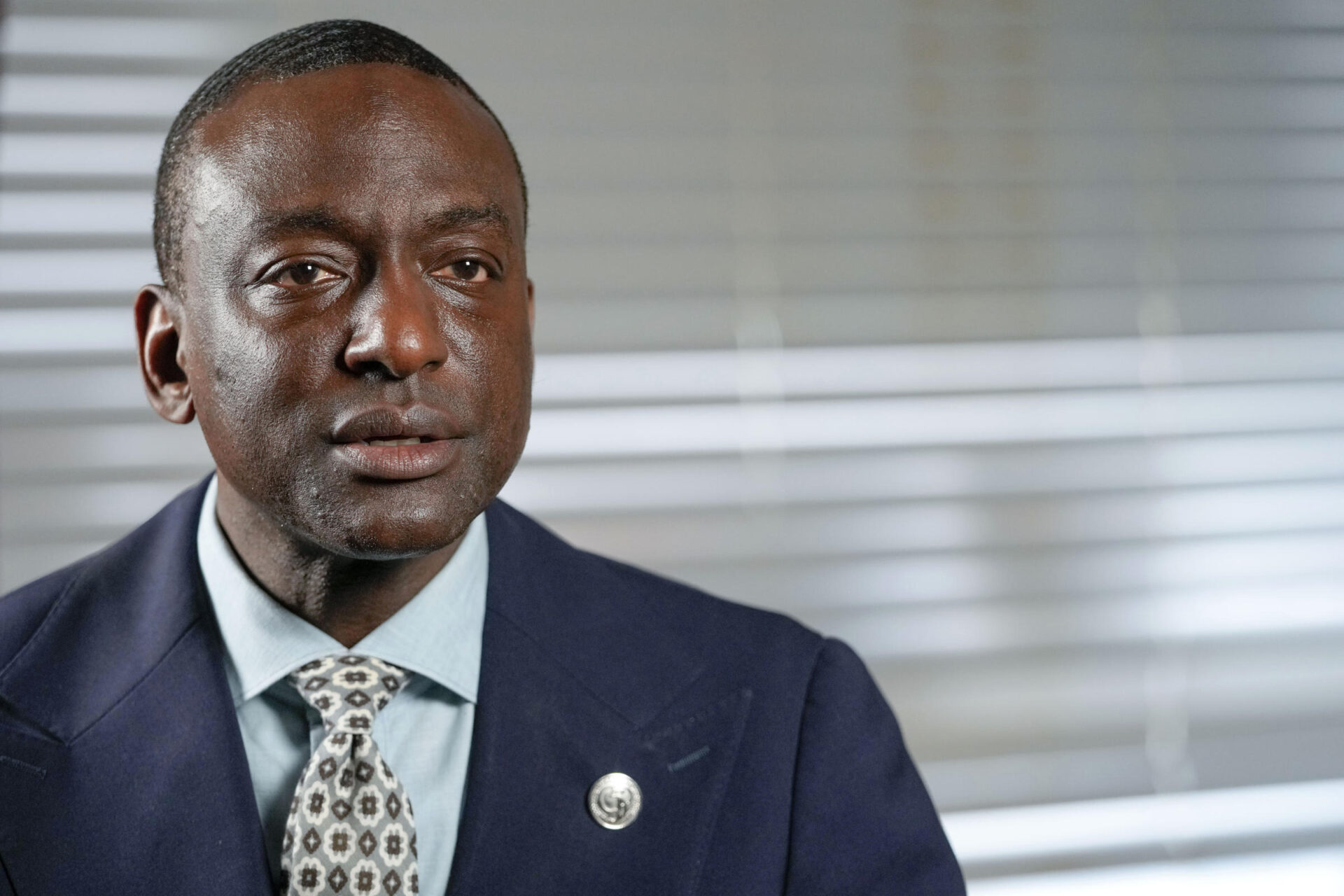
New York City Council candidate Yusef Salaam speaks during an interview with The Associated Press, May 24, 2023, in New York.
New York City Council Member Yusef Salaam, a member of the exonerated group of men known as the Central Park Five, says he was stopped and pulled over by police without being given an explanation. The police stop in New York City on Friday casts a renewed light on a police transparency bill, called the How Many Stops Act, that City Council members are set to vote on Tuesday to override Mayor Eric Adams’ veto. It would require officers to publicly report on all investigative stops, including relatively low-level encounters with civilians. In the encounter with Salaam, which lasted less than a minute at 6:20 p.m., a police officer — heard in body camera footage provided Saturday by the New York Police Department — asks Salaam to roll down the back windows of his car.
But after Salaam identified himself as a council member and asked if everything was okay, the officer quickly withdrew without providing further explanation for the stop. What Salaam says next is inaudible. Police later said in a statement that Salaam was stopped for driving with a dark tint beyond legal limits. The police officer conducted himself professionally and respectfully, the NYPD said in the statement, adding that he used discretion to allow the council member to complete his official duties. “This experience only amplified the importance of transparency for all police investigative stops because the lack of transparency allows racial profiling and unconstitutional stops of all types to occur and often go underreported,” Salaam, a Democrat, said in a statement.
City Council Member Sandy Nurse said she was on a video call with Salaam and other people when he was pulled over. Nurse said she heard Salaam ask the officer for the reason for the stop, for which none was given. Salaam and four other Black or Latino men were falsely accused and convicted of raping and beating a white jogger in Central Park in 1989. Salaam was arrested at age 15 and imprisoned for almost seven years. Their convictions were eventually overturned through DNA evidence. Salaam won a seat on the New York City Council in November and represents a central Harlem district. “At a time when Black and Latino New Yorkers continue to be disproportionately subjected to unconstitutional stops that go underreported, and civilian complaints of misconduct are at their highest level in over a decade, the need for basic transparency is clear,” New York City Council Speaker Adrienne Adams said in a statement Friday about the legislation, before the traffic stop.(AP)
Politics sure makes strange bedfellows, they used to say. I’m unsure if the term strange can describe those bedfellows anymore. Take Tim Scott the junior US Senator from South Carolina; Scott served as a Charleston city councilor, a state representative, and a U.S. Representative. Before entering politics, it was reported that Scott worked in the financial services sector. In 2013, then Governor of South Carolina Nimarata Nikki Randhawa (o/c Nikki Haley) appointed Tim to fill a vacant US Senate seat. Scott was elected to a full six-year term in 2014 and was reelected to another in 2022.
Running for president is a thing a candidate feels, I would imagine; I wasn’t born in America, so I can’t say for sure as I do not satisfy the Constitutional requirements to run for president.……Oh, wait, Raphael Cruz was born in Canada, and he ran for President. So too did John McCain, born in the Panama Canal Zone. Anyway, I digress. My initial point was that though Nimarata Nikki Randhawa is from South Carolina, and so is Scott, no one can argue that one should have waited for the other or not run because the other was running. Even though, if I were in Scott’s shoes, which I’m not, thank God, I would have considered what Nimarata Nikki Randhawa did for me, but that’s just me. I’m queasy like that when someone does something for me.
So Tim Scott and Nimarata Nikki Randhawa decided to run for president on the Republican ticket this presidential cycle. Tim Scott is as Black as they come, and Nimarata Nikki Randhawa is dark-skinned. Both grew up in the American South, which has been and remains the breeding ground of the most caustic and degenerative form of racism. Yet both Clowns decided that saying there is no racism in America was the way to be accepted by the virulent racists that dwell within the Republican party and represent the bulk of Republican voters. Vivek Ramaswamy, another Indian-American running for president this cycle, adopted the same approach. Teeth grinning, glib, fast-talking, and argumentative, he believed that if he kissed enough white asses and spoke about how great America is, they would ignore his Black skin.….hahaha. It did not work. There is no racism in America(sic). Still, those Republican primary voters were not about to put a guy named Vivek Ramaswamy in the White House in the same way they would not put a woman named Nimarata Nikki Randhawa.
It is probably a good thing to be who you are. Barack Hussien Obama stayed true to his Muslim-sounding name and won twice. Oh, different political party? Yes, a coalition of progressives elected him, not a monolith of backward racists. And even though there is no racism in America [sic], the brown-skinned people running for high office always ask the republican voters they are courting to look through them like glass and not focus on their dark skin. Vivek could not change his name, but he raised hell and high water to convince everyone that America has no racism. Nimarata, well, she not only changed her name to Nikki and adopted her married name, Haley, but she went full-throttle into the no-racism American screed she convinced herself of. Tim Scott, his white-sounding name was not enough to get white Republican primary voters to ignore his black skin, and no amount of grinning and pretending would either. Oh, Uncle Raphael isn’t running this cycle, but he never mentions that his name is Raphael; he is simply Ted.
Here is the question: why would Tim Scott not endorse Nimarata Nikki Randhawa, who in 2013 sent him to the US Senate? Nikki Haley is as fake as they come; the entire slate of candidates on the Republica ticket was like deceased rats. The question was which one had the most disease. When those opposed to Donald Trump held their breath that Chris Christie would gather some traction, you know the field was trash. If Chris Bridgegae, arrogant, pompous, narcissistic Christie, was the savior they sought, it indicated that we are all royally flushed. Nevertheless, Tim grinning-teeth Scott owed Nimarata. Whoever she appointed to the US Senate would most likely have won a full term and been elected like Tim Scott was. South Carolina is a white Southern State that votes Republican monolithically. Nimarata could have chosen any white man or woman, but she chose Scott. At the very least, Scott owed it to her to support her campaign after he folded his, even if he thought she would eventually lose. But there is no honor among thieves, so Tim Scott endorsed the 91-felony count indicted, twice impeached, single-term insurrectionist who is again running for president to save himself from federal prison. Not only did the c*****g Tim Scott endorse Donald Trump, but he also went out of his way to be extra in delivering his address. Many FOX News Republican viewers said they were embarrassed for him. The look on his dear leader’s face sums it up succinctly. Who is this n****r?
.
.
.
.
Mike Beckles is a former Police Detective, businessman, freelance writer, black achiever honoree, and creator of the blog mikebeckles.com.
The recent arrest of former PNP Member of Parliament Jolyan Silvera for the murder of his wife Melissa, who died late last year, should not elicit any excitement from ordinary Jamaicans. The reality is that no one should be exempt from the reach of the law when they break it. Sadly, the arrest, much less the successful prosecution of high-profile Jamaicans, remains a distant dream rather than a reality. I listened to one very senior member of the JCF relating to the media the arrest specifics, and I could barely listen to the whole thing. The case’s specifics make it so clear-cut that not arresting Silvera would have been a clear abdication of duty. However, the JCF has a history of abdicating its responsibility to the country when it suits them. This has created distrust, disrespect, and a lack of confidence in the agency by most Jamaican people. https://mikebeckles.com/what-are-the-police-afraid-of-why-they-havent-arrested-the-murderers-of-germaine-junior/
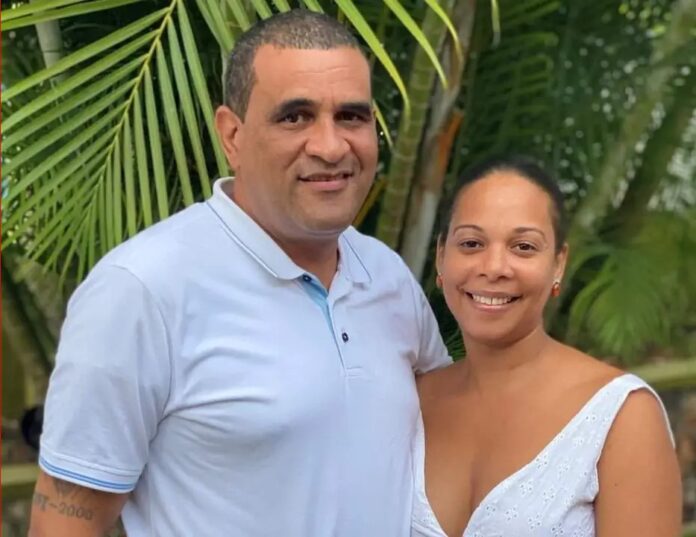
Jolyan and Melissa Silvera. At the time of their marriage, one Jamaican newspaper shamelessly crowed, ” Melissa and Jolyan, a love that’s meant to be.” The gruesome nature of her killing should shame that newspaper. Such is the culture of glorifying politicians and people from uptown.
The caustic comments on social media directed at the police around this arrest can be brushed aside as cop-hating gibberish. However, an agency that requires the public’s participation for much of its success must be mindful of public perceptions. Perceptions are not always facts, but given enough time and no factual correction, perception oftentimes becomes a reality. Far too many well-connected people are committing crimes and facing no consequences. Ordinary Jamaicans are not blind to these things, and so they are in no mood to hear the police crowing about one arrest as if they want medals for doing their jobs. The JCF has fumbled the bag on numerous occasions that involve high-profile cases. Many Jamaicans alive today will recall the allegations surrounding the infamous Dianne Smith case in 1983 by the Constant Spring Police. Dianne Smith, a young student, was allegedly raped and murdered while on her way to school. Allegations arose after the dastardly crime that a well-known upper Saint Andrew man, the son of a well-connected political family, had committed the crime. The man named who himself became and is still a member of parliament has struggled over the decades to convince a skeptical Jamaica that he was innocent. Those struggles included threatening tort action against those who dared to mention his name in the Dianne Smith murder case.
Whether or not this political figure was involved in the rape and murder of Dianne Smith is anyone’s guess because the Constant Spring Police tasked with the murder investigations have yet to arrest anyone, much less gain a conviction for that murder forty-one (41) years later. The perceptions surrounding that crime remain that there have been no real investigations because of who the alleged suspect was. The failure of the police to investigate and arrest the criminal/s in the Dianne Smith case enabled the rumor to continue and has done immense harm to the reputation and good name of the person named by the streets. If the person named in that rape and murder was truly guilty, the incompetence or complicity of those tasked with investigating that crime enabled him to walk away scot-free. I served in the Constant Spring CIB office between 1987 and 1991, and never once did I hear anyone talk about a Dianne Smith case file that was still open. It is important to remember that murder is not a statute; it is against common law. As such, murder has no statutory limitations as to when a guilty murderer must be caught and convicted. I found it odd that though a murderer may be arrested for a murder he committed a hundred years earlier, by the time I arrived at the Constant Spring CIB in 1987, a mere four (4) years later, there was no talk or investigations ongoing in the Dianne Smith rape/murder case. There was absolutely no open, ongoing investigation. Why was that?
WHYHASTHERENOTBEENANARRESTINTHISCASE?
In the link provided above in red, I wrote about a similar case that the Constant Spring CIB office supposedly investigated, similar to the Dianne Smith case. Below is one of several articles I wrote in 2017 about the Germaine Junior case. In 2021, here is what the police had to say. We have not closed their probe into the murder of a man four years ago at the St Andrew home of prominent attorney Patrick Bailey. Germain Junior, a 51-year-old construction worker, was found with stab wounds and a single gunshot wound to the head in the attorney’s living room on September 30, 2016. In an update on the case on February 1st, 2021, at a police press conference, Deputy Commissioner of Police (DCP) in charge of crime, Fitz Bailey, said the probe into the killing is ongoing. “Well, the matter [Junior’s murder case] is ongoing. It is not yet closed, but the truth is we go by the evidence, and I don’t think we have the adequate amount of evidence to advance a criminal prosecution at this time,” he disclosed. “Even since I took over the [crime] portfolio, we have had quite a number of case reviews. We have actually done several lines of enquiries, but at this point we don’t have the evidence to mount a criminal prosecution,” Bailey added. Police reports at the time suggested that Bailey stumbled on the body shortly after 4 am in his living room, and the police were alerted. (How could a police department even mention closing a murder investigation when there are no statutory limitations on murder)?
I generally avoid commenting on cases under police investigations for several reasons. (1) You never know how investigations will turn out; eating crow is not something I particularly relish. (2) the police deserve all the deference they can get to do an already difficult job. That said, one homicide has caught my attention amidst the litany of others, not for any particular defining characteristic except that it seems that particular homicide should not be too difficult to solve. Nevertheless, over a year has passed, and still, the deceased’s family has not gotten closure as the police have not made an arrest.Now I understand that it’s easy to shrug and say, “Join the line; there are thousands of unsolved murders in Jamaica,” but again, the circumstances of this case cause me to second guess my deference to the police on this one.The case involved the death of 51-year-old Germaine Junior at a home supposedly owned by an attorney at law, Patrick Bailey, over a year ago. According to local reporting, the deceased was stabbed several times and shot once in the head. The deceased man was reported to be a naturalized American citizen and was supposedly visiting the Island upon his death. Mister Junior’s family is incensed at the police for good reason. The family insists that the case would have been solved long ago if their loved one had been a prominent person. They bemoan the fact that the police have been in contact with them only once in the last year since mister Junior’s death. A couple of points have stuck out like a sore thumb, in this case, leaving much room for speculation in the absence of better reporting and more information forthcoming from the police.
♦ Patrick Bailey is a prominent attorney who easily fits into the category of the proverbial big man according to Jamaican culture. ♦ Was Mister Junior there as his guest? If not his, then whose? ♦ Who else lives in the home of attorney Patrick Bailey, if anyone? ♦ Police reported that Bailey stumbled upon the body at about 4:30 am in his own house as he was asleep even though Mister Junior was allegedly shot. ♦ If the homicide happened in a section of the residence outside mister Bailey’s earshot (assuming the residence is large enough that Bailey would not have heard a gunshot), nevertheless, who gets up and walks around the house at 4:30 am?
♦ How could Bailey sleep through what must have been a struggle, much less the sound of a gunshot in his house? ♦ The statement that he stumbled upon the body at 4:30 am could only have come from Bailey himself, which gives it little credibility under the circumstances. ♦ A proper coroner’s inquest should nail down approximately what time Mister Junior was killed, as against Patrick Bailey’s assertions. ♦ The Police reported no forced entry to Bailey’s house. This is absolutely critical evidence as it demonstrates that whoever killed mister Junior had access to the residence. ♦ A knife believed to be the one used to stab Mister Junior was allegedly found beside his body. Was it checked for fingerprints?
♦ If Mister Junior was living abroad at the time and was only visiting the Island, why would the police and others allege that he was a caretaker of the residence? ♦ The fact that mister Junior’s body was found with multiple stab wounds suggests a crime of passion coupled with the fact that he was also shot. ♦ Was Patrick Bailey’s person checked for marks indicating whether he was involved in a struggle, or did the police take his word that he slept through a stabbing and a shooting? If not, why was it not done? ♦ Why was Patrick Bailey ruled medically unfit to give statements to police by Doctor Jephthah Ford at the time? ♦ According to local media reports after the incident, Patrick Bailey’s doctor and client, Jephthah Ford, instructed that he be confined to bed after reportedly exhibiting signs of being unwell. Ford also said he was not fit to give a statement at the time.
♦ Why was Bailey given special privileges when even police officers traumatized by instances of fatal encounters are forced to give a quick accounting as to what occurred? ♦ Who else had access to the residence? If anyone, what was their relationship to Mister Junior? ♦ Did the police check Patrick Bailey’s house for bloody clothes or clothes recently washed? ♦ Did the Police check outhouses (if applicable) and garbage receptacles for potential bloody clothes? ♦ If the police determined no forced entry to Bailey’s house, how could they summarily rule him out as a suspect?
I am making no assumptions about who killed this man; I am not saying anyone, in particular, is responsible. I am saying that the Police should get up off their backsides and do the investigative work, and whoever killed Mister Junior should be bangled up and bundled off to jail. When contacted by the media, Bailey was reported to be arrogant, asserting the quote,” Anything dem seh, mek dem seh it. I have no answer; publish whatever they say. My back is broad. I have no comments, no comments, no comments! Just simply, you report whatever you want to,” According to local media reporting, Assistant Commissioner of Police Élan Powell, who had the crime portfolio at the time of the homicide, insisted that the police were hiding nothing, the investigations would be done, and the chips would fall where they may.
This statement does little to assuage the anger and distrust the family of Mister Junior harbors as it relates to the police’s ability to bring the killer of their loved one to justice. Clearly, whatever the underlying assumptions and presumptions in this case are, a human being was murdered, and someone is responsible for his unlawful killing. This cannot be a difficult case to solve one way or the other. If the owner of the premises, a well-heeled lawyer, did not kill the victim, someone else did in his house. It does not require rocket science to figure this case out; if no one broke into the house and there was no one else in the house, then the person in the house is the killer or the person in the house knows who killed Mister Junior and has aided and abetted the coverup of this horrendous murder.
This case is a travesty and should not stand; the police cannot be that incompetent or, worse, pissed-scared that they are unwilling to arrest the killer or killers. Whatever the police know caused them to rule Patrick Bailey out as a suspect ought to be made public or told to the grieving family. Bailey deserves no special treatment or deference under the law over and above anyone else. This would give the police reason not to divulge how they determined he was not a suspect.
In February 2016, Assistant Commissioner Powell told a Gleaner Editor’s forum that the police did not wish to name a suspect but sought to assure the public that the police were actively pursuing the case. Since Powel was in charge of crime at the time, both he and the head of crime must now properly account for this bereaved family as they are duty-bound to do. There should be no more murders swept under the rug because someone knows someone who knows someone. This should not be allowed to stand, and the family should not stand for it; they are right in demanding answers.
It seems that what the Minister of National Security, Horace Chang meant when he said ‘we hafi gi tony a chance’, speaking of Commissioner of Police Antony Anderson, was about effectuating cosmetic changes. What am I yapping about? Well, it seems that one of the things I have supported for a long time, speaking of outfitting police officers in a practical uniform, is coming to fruition. This nice blue uniform adorned with the Jamaican flag and crest insignia above the heart is practical for both male and female officers and something they can be proud of donning each day. But that seems to be all we are getting from Tony’s stewardship.
Officers look spiffy in their new uniforms. Let’s hope the uniforms are not merely for modeling.
I’m told that officers are asked to pay for these nice-looking uniforms. I have not been able to verify whether this is true independently. However, there may be some truth, as many officers wear impractical red-seam black pants and striped grey shirts. Some may argue that that ensemble is not so bad; truthfully, I have not seen any officers wearing that ensemble with the god-awful cummerbund of late. But the fact that officers still wear the red seams seems to indicate that officers may have been asked to pay for the blue ensemble. One last thing of note: how can we have nice highways and no police officers patrolling them? Driving on the nation’s roads, you may see a single cop car parked with the officers out of the car chatting or on their cellphones. All of this while vehicular traffic races by at breakneck speed. The cops are in total oblivion. If we are to be taken seriously, the nation’s premier law enforcement agency must act professionally and give the impression that it is at least one step above Deputy Barney Fyffe of Mayberry. I’m still perplexed whenever I listen to the Prime Minister speak on security inside our country; he refers to the Jamaica Defense Force and then the Jamaica Constabulary Force as an afterthought.
The JCF, As I have written for years, must do a better job at policing. It must demonstrate that it is a force to be reckoned with.… not some empty slogan vis a force for good. By investigating and arresting guilty offenders, catching criminals in the act, and preemptively dismantling criminal networks, the JCF will gain the respect of the Jamaican people. The JCF must retake control of the streets before it expects any respect and support from the people as to its ability to seriously impact crime and violence in any meaningful way. That is a force for good.….. not an empty slogan. The few officers I observed in public on my last visit home did not give me confidence that the JCF is interested in law enforcement but is more interested in flossing and being on their mobile devices. This is a failure of leadership at all levels. The JCF has exponentially more officers than two or three decades ago. It has more up-to-date resources than it did previously. Yet, there are fewer cops visible on the streets, higher levels of violent crimes, and the streets have all but been ceded to unruly drivers. How the agency expects to function this way is a mystery to me.
.
.
.
Mike Beckles is a former Police Detective, businessman, freelance writer, black achiever honoree, and creator of the blog mikebeckles.com.
This writer has called for every single one of those proposals over the last decade-plus, on these very pages. Let us finally stop talking about it and get it done.
Prime Minister Andrew Holness called for the death penalty a while back. Before the words could leave his mouth, the pontificating criminal supporting vultures were already on him, picking apart the carcass of his words. For many, this may have come as a surprise, but for me, it was par for the course. I was already wide awake to the reality that there are factions in our country that celebrate the gun culture and the macabre prospect of the wanton killing of our fellow citizens. There has always been a subset within the Jamaican body politic that feels itself insulated from the realities of having their lives snuffed out at a moment’s notice. That subset, mainly from the Mona incubator, interprets its position in academia as a god-given right to dictate to the rest of us how we should secure our country. Tragically, for the ordinary Jamaican, not corrupted and corroded by the Mona incubator, the gunmen are a reality they know and understand all too well. The average Jamaican is forced to live with the pontification and grandstanding that influence the policies and laws that emanate from them.
The Jamaican Prime Minister himself, a product of the Mona incubator, also harbored the worldview that most Jamaicans fed up with crime and violence understand well. However, Andrew Holness was forced to face the reality that talking out of the side of one’s mouth while looking on from the outside is different than governing. What passes for media on the island managed to pull itself away momentarily from glorifying the dancehall murder culture to label the Prime Minister’s call for the death penalty an act of frustration. It may have been an act of frustration, truthfully. After all, the Prime minister is no dummy. He understands that Jamaica is bound by the British Privy Council’s moratorium on the death penalty in 1998. As a nation, we are subject to that moratorium because the leadership comprising the two political parties still has their collective noses up under Charles’ ass. It follows, therefore, that if Jamaica is to establish clear lines of demarcation on the issue of crime, it must do a couple of things. (a) Decouple itself from the shackles that bind our country to the former slave-owning colonizers. (b) Establish a strong legislative framework of laws that makes murderers and violent offenders wish that we had the death penalty. I believe decoupling from Britain and establishing the aforementioned legislative framework are needed. I would argue that the death penalty is final, and because we do not have the foolproof system to establish guilt beyond doubt, we should probably keep the moratorium on the death penalty. Many people to whom I have spoken on this subject in the diaspora want the death penalty precisely because of the love affair many people have with criminals, even those convicted of heinous murders. They feel that the death penalty ends that once and for all. Though frustrated with the lack of progress on this issue, this writer does not share those views.
The governing Administration can no longer afford to dither on this subject. The voting public gave the Jamaica Labor Party a huge mandate to secure the country. There is this misconception that Jamaicans love criminality. I have always disagreed with this point of view. I do understand that the criminal supporters are high profile. I understand that they have loud bullhorns and are influential. But I also know, as a former police officer, that the people who gave me information hate criminals. I know that the majority of the people in the diaspora (those not engaged in sending back guns and money to further criminal behavior, hate the crime on our island. Everywhere I go in Jamaica, I use the conversations I have with the people as a sounding board on the issue of crime and violence. What I hear from the people is what I heard over three decades ago: they do [not] want crime and violence in their country. The silent majority of the Jamaican people believed the Prime Minister would be serious when he said people would be able to sleep with their windows open if they gave him the mandate to lead. I hardly believe they expected that it would be like waving a magic wand and crime would disappear. The present situation did not develop overnight; it will not disappear overnight. The expectation was that the government would be resolute once given the mandate to lead. The Government cannot lay this at the feet of the opposition party. We know that within that political party are convicted criminals with law degrees and others who would be in prison but for the failures of law enforcement. That is not to say there aren’t criminals in both political parties. We know that the opposition party’s reluctance to let go of the issue of crime as a political football has rendered it useless and worthless. The Government must lead based on the mandate it was given.
In a recent address, the PM laid out a series of no-nonsense legislative measures commensurate with some that this writer has demanded for many years on these same pages as a matter of record. I applaud the recognition by the PM. Notwithstanding, words are just words; we need legislative action from this government. There will be howls coming from the opposition party; there will be howls coming from the Mona incubator; there will be howls coming from the foreign-funded criminal rights organizations that have taken root in our country. I call on the Prime Minister to ignore those mongrel dogs and pass his announced legislative agenda. Jamaica is marching into developed nation status; the single largest issue holding us back is the issue of crime. Those funding the criminal rights agenda in our country want to see us fail. It is in their interest to scare their nationals away from coming to Jamaica because if we are unable to control crime, we will perpetually be a beggar/borrower nation beholden to them. It is time for Jamaican leaders to understand what is at play here. Their state departments and home office quickly issue travel advisories on Jamaica aimed at damaging our nation’s economy. Thankfully, the citizens of those countries are not their governments, and as such, people continue to flood our shores to experience for themselves the beauty and joy of brand Jamaica.
.
.
Mike Beckles is a former Police Detective, businessman, freelance writer, black achiever honoree, and creator of the blog mikebeckles.com.
Israel’s rebuttal against charges of genocide was as weak in offering documented facts as South Africa’s case was powerful.
A TEAMOF Israeli lawyers and officials presented their defense at The Hague on Friday in the second day of the genocide case brought before the International Court of Justice by the government of South Africa. The lawyers portrayed Israel as the actual victim of genocide, not Gaza, accused South Africa of supporting Hamas, and painted South Africa’s government as functioning as the legal arm of the Palestinian militants who led the deadly raids into Israel on October 7.
Israel benefitted greatly from the fact that there was no cross-examination permitted or debate allowed during these proceedings. It embarked on a bold mission to do in a court of international law what its military and political officials have done day and night throughout the course of this war against Gaza: unleash a deluge of what was known within the Trump administration as “alternative facts.”
Israel’s defense was the inverse of South Africa’s case yesterday, and as weak in offering documented facts as South Africa’s was powerful. History began on October 7, the Israelis seemed to say, South Africa is Hamas, South Africa did not give Israel a chance to meet up and chat about Gaza before suing for genocide, and actually the Israel Defense Forces is the most moral entity on Earth. As for the voluminous public statements by senior Israeli officials indicating genocidal intent, those were just “random assertions” by some irrelevant underlings. Prime Minister Benjamin Netanyahu’s statements invoking a murderous story from the Bible about killing the women, infants, and cattle of your enemies? The South Africans just don’t understand theology and presented Netanyahu’s words out of context.
While Israel’s lawyers made legal arguments that the genocide charges leveled against it are invalid, their primary strategy was to appeal to the court on jurisdictional and procedural matters, hoping that they could form the basis for the panel of international judges to dismiss South Africa’s case. Aware of the global audience, Israel also sought to reinforce its claims of righteousness and self-defense in fighting the war in Gaza.
Israel’s representative Tal Becker opened his government’s rebuttal by telling the judges at the ICJ that South Africa’s case “profoundly distorted the factual and legal picture,” claiming it sought to erase Jewish history. He charged that the legal arguments made by South Africa’s team were “barely distinguishable” from Hamas’s rhetoric and accused them of “weaponizing” the term “genocide.”
Becker called October 7 “the largest calculated mass murder of Jews since the Holocaust” and pleaded with the court to factor in the “brutality and lawlessness” of the enemy Israel says it is fighting in Gaza. Israel, he said, has a lawful right to use all available means to respond “to the slaughter of October 7 which Hamas has vowed to repeat.”
He repeatedly attacked the South African government, accusing it of doing Hamas’s bidding and alleging that its true agenda was to “thwart” Israel’s right to defend itself. “South Africa enjoys close relations with Hamas,” Becker said. “These relations have continued unabated even after the October 7 atrocities.” He said that South Africa, not Israel, should be subjected to provisional measures by the ICJ for its alleged support of Hamas. Becker neglected to mention the fact that Netanyahu himself long advocatedOpens in a new tab for Hamas to retain power in Gaza and worked to ensure the flow of money to the group from Qatar continued over the years, believing it to be the best strategy to prevent the establishment of a Palestinian state.
Becker rejected South Africa’s characterization of the historical scale of civilian destruction in Gaza — which has now killed over 10,000 children — arguing that what is actually “unparalleled and unprecedented” in this war is Hamas “embedding its military operations throughout Gaza within and beneath” densely populated areas. Becker spoke as though many of Israel’s most outlandish claims about Hamas’s underground operations have not been proven false or shown to be greatly exaggerated, such as the Israeli claim that there was essentially a Hamas Pentagon under al-Shifa Hospital.
While Israel’s lawyers made legal arguments that the genocide charges leveled against it are invalid, their primary strategy was to appeal to the court on jurisdictional and procedural matters.
Becker also alleged that South Africa’s lawyers had failed to mention how many of the buildings blown up and destroyed in Gaza over the past three months of sustained Israeli bombing were actually “boobytrapped” by Hamas rather than destroyed by Israel. It was a risible claim given not only the scale of the Israeli bombardment of entire neighborhoods, but also because Israeli soldiers have posted videosOpens in a new tab of themselves gleefully hitting the detonate buttonOpens in a new tab to obliterate whole neighborhoods. He dismissed civilian death and injury figures provided by Gaza health authorities, saying that South Africa’s lawyers had failed to mention how many of the dead Palestinians were actually Hamas operatives. It was a striking point given that Israeli officials have openly and repeatedly said that there are no innocents in Gaza, and that United Nations workers and journalists killed by Israel are actually secret Hamas agents.
“The nightmarish environment created by Hamas has been concealed by” South Africa, Becker charged. “Israel is committed to comply with the law, but it does so in the face of Hamas’s utter contempt for the law.” Becker did not bother to address any of the scores of U.N. resolutionsOpens in a new tab over the decades condemning the illegality of Israel’s apartheid régime and its illegal occupations, not to mention its own well-documented use of Palestinian children as civilian shieldsOpens in a new tab and the intentional killing and maimingOpens in a new tab of nonviolent protesters.
Becker also claimed that Israel was complying with international law in all of its operations in Gaza. “Israel does not seek to destroy a people, but to protect a people — its [own] people,” he said, adding that Israel is engaged in a “war of defense against Hamas, not the Palestinian people.” There could “hardly be a charge more false and more malevolent than the charge of genocide.” He accused South Africa of abusing the world court and turning it into an “aggressor’s charter.”
Shaw then addressed the voluminous statements made by Israeli officials introduced in court by South Africa as evidence of “genocidal intent.” Shaw dismissed these statements as “random assertions” that failed “to demonstrate that Israel has or has had the intent to destroy” the Palestinian people. He contended that none of those statements constituted an official policy of the Israeli government and said the only relevant factor for the court to consider is whether such statements reflected official decisions or directives made by the Israeli leaders and its war Cabinet. Shaw declared they did not, citing several official Israeli statements directing armed forces to comply with international laws and to make efforts to protect civilians from harm or death. He neglected to respond to the direct connections drawn, including through video evidence, by South Africa’s legal team showing how Israeli forces on the ground echoed Israeli officials’ statements about destroying Gaza as they laid siege to the strip.
The British lawyer directly addressed Netanyahu’s invocation of the biblical story of the destruction of Amalek, in which God ordered the Israelites to “attack the Amalekites and totally destroy all that belongs to them. Do not spare them; put to death men and women, children and infants, cattle and sheep, camels and donkeys.” Shaw argued there was “no need here for a theological discussion.” South Africa, he charged, took Netanyahu’s words out of context and failed to include the portion of his statement where he emphasized that the IDF was the “most moral army in the world” and “does everything to avoid harming the uninvolved.” The implication of Shaw’s argument is that Netanyahu’s platitudes about the nobility of the IDF somehow nullified the significance of invoking a violent biblical edict to describe a military operation against people Israeli Defense Minister Yoav Gallant described as “human animals.”
After offering a litany of public Israeli statements about protecting civilians and offering humanitarian aid to the Palestinians, Shaw quipped, “Genocidal intent?” as though these words and claims somehow erase the actual actions the entire world has watched daily for more than three months. With no sense of shame, Shaw characterized Israel’s statements directing Palestinians in Gaza to immediately evacuate their homes as a humanitarian gesture. Yesterday, South Africa called the evacuation order for over a million people on short notice an act of genocide in and of itself.
In a moment of supreme gaslighting, Shaw concluded his presentation by accusing the government of South Africa of “complicity in genocide” and failing in its “duty to prevent genocide.” He charged, “South Africa has given succor and support to Hamas at the least.” He said the allegations against Israel “verge on the outrageous” and argued that Hamas’s conduct, not Israel’s, meets the “statutory definition of genocide.” Unlike Hamas, he continued, Israel has made “unprecedented efforts at mitigating civilian harm … as well as alleviating hardship and suffering” to its own detriment.
GALITRAJUAN, ANOTHER Israeli lawyer, argued that Israel was operating within the rules of law in its attacks on Gaza. She spent considerable time accusing Hamas of using hospitals and other civilian sites to operate militarily and to hold Israeli hostages. South Africa, she said, pretended “as if Israel is operating in Gaza against no armed adversary” and said the civilian deaths and destruction caused by Israel’s operations is “the desired outcome” Hamas wants. “Many civilian deaths are caused by Hamas,” she alleged.
She repeated claims that have been debunked about Hamas using hospitals for military operations and holding hostages, claiming that any damage Israel had done to hospitals in Gaza was “always as a direct result of Hamas’s abhorrent method of warfare.”
Responding to South Africa’s assertion that Palestinians were given just 24 hours to flee their homes and hospitals, Rajuan claimed Israel had given the warnings weeks in advance through leaflets, online maps, and social media accounts. She did not mention that Israel has frequently shut down the internet in areas of Gaza and has repeatedly struck areas to which it told people to flee.
After describing what she characterized as Israel’s extensive efforts to deliver aid to the people of Gaza, Rajuan said it was evidence that the charge of genocide is “frankly untenable.” She said she had only told the court of a “mere fraction” of the efforts Israel had made to warn civilians to leave their homes and to deliver aid but that it “is enough to demonstrate … that the allegation of the intent to commit genocide is baseless.” Her portrayal of Israel as a beneficent humanitarian moving mountains to alleviate the suffering Palestinians would be laughable if it wasn’t so deadly. But such statements are easy to offer when your official policy is to portray aid organizations and U.N. workers as Hamas operatives.
For monthsOpens in a new tab, international aid organizations have condemned Israel, which functions as the overlord of what goes in and out of Gaza, for obstructing humanitarian aid deliveries into Gaza. Just this week, U.N. officials saidOpens in a new tab that Israel is blocking it from getting aid to northern Gaza, while the World Health Organization saidOpens in a new tab it is facing “insurmountable” challenges in delivering aid. Nonetheless, Omri Sender, another lawyer for Israel, claimed that Israel is delivering large quantities of aid daily to Gaza, despite “Hamas constantly stealing it.” He told the judges that “Israel no doubt meets the legal test of concrete measures aimed specifically … at ensuring the rights of the Palestinians in Gaza to exist.”
CHRISTOPHERSTAKERCLOSED Israel’s legal arguments by charging that South Africa was trying to force a unilateral ceasefire by Israel and that this would allow Hamas to be “free to continue attacks, which it has a stated [intent] to do.” He said that the civilian carnage and destruction in Gaza cited by South Africa do not inherently constitute genocide and that it is “not within the court’s power” to order provisional measures directing Israel to cease all military operations under the Genocide Convention. He contended that Israel has a legitimate right to engage in military conduct in Gaza that South Africa is seeking to restrain, and that an ICJ order to cease all operations would cause “irreparable prejudice” to the rights of Israel. South Africa, in its argument on Thursday, contended that by refusing to cease its operations, Israel was ensuring that the pile of Palestinian corpses would continue to grow alongside the amputations of limbs without anesthesia and babies dying of treatable illnesses.
Staker took a page from Netanyahu’s well-worn propaganda playbook and compared the Gaza war to World War II, saying an international court ordering Israel to cease operations in Gaza would be akin to a court in the 1940s forcing the Allies in World War II to surrender to the Axis powers in Europe. He said a suspension of military operations would “deprive Israel of the ability to contend with the security threat against it” and allow Hamas to commit further atrocities. Such measures by the ICJ, he alleged, would assist Hamas. He also said the orders requested by South Africa were too broadly framed and, if enforced by the world court, would incapacitate Israeli operations in Palestinian territories other than Gaza. He said this as though Israel is protecting a country club in the West Bank from robbers and vandals rather than presiding over an illegal apartheid régime where Palestinians are subjected to conditions not unlike those found in South Africa decades ago.
Staker also said that South Africa’s request that the court order Israel to preserve evidence of potential crimes had no basis in fact and that no proof was offered that Israel was destroying evidence in Gaza. He said such an order would be an “unprincipled and unnecessary tarnishing of [Israel’s] reputation.” Staker may want to peruse the list of Palestinian libraries, archives, cultural sites, monuments, historic churches, and mosques that Israel has destroyed. Not to mention the academics, poets, storytellers, and historians its forces have erased from the earth.
Israel’s representative Gilad Noam closed his government’s defense by claiming that South Africa portrayed Israel as a “lawless state that regards itself as beyond and above the law. … in which the entire society” has “become consumed with destroying an entire population.” This was remarkable in that it represented an accurate characterization of precisely what South Africa argued in its presentation. Of course, Noam assured the court that this characterization was “patently false.”
South Africa, Noam said, “defames not only the Israeli leadership but also [Israeli] society.” Returning to the statements made by Israeli officials that South Africa’s lawyers said constituted proof of genocidal intent, Noam claimed that some of these “harsh” statements by Israel’s leaders were in response to the “destruction of Jews and Israelis.” He said that Israel’s courts take incitement seriously and are currently investigating such cases.
Noam accused South Africa of engaging in a “concerted and cynical effort to pervert the term ‘genocide’ itself.” He asked the judges to reject the requests to order a halting of Israeli military operations in Gaza and to dismiss South Africa’s case in full. The president of the court, U.S. Judge Joan Donoghue, adjourned the hearing, saying the judges would rule as soon as possible.
During its presentation before the court, Israel made no arguments to defend its conduct in Gaza that it — and its backers in the Biden administration for that matter — has not made repeatedly in the media over the past three months as part of its propaganda campaign to justify the unjustifiable. Each day that passes, more Palestinians will die at the hands of U.S. munitions fired by Israeli forces and the already dire humanitarian situation will deteriorate further. Should the court take Israel’s side and dismiss South Africa’s claims, Israel will point to that as evidence of the justness of its cause. If the judges approve South Africa’s request for an order to halt Israel’s military attacks, the question will be called on whether Israel and its sponsors in Washington, D.C., will respect international law. If history offers any insight on that matter, the future remains grim for the Palestinians of Gaza.
Speaking of alleged tunnels in Gaza. It is essential to understand the context and the connotations attached to the word terrorism. Terrorism in the Western world applies to people of different religions other than Christianity using violent means to defend their position. It also applies to people of color who fight against oppression. Given the same set of circumstances, white Christians using the same methods are not characterized as terrorists. For example, Nelson Mandela and others were branded terrorists by the Western powers as they waged a righteous resistance to white oppression- so too are the Palestinian groups fighting zionist terrorism in Palestine. At the same time, the zionists are seen as justified in their terror, which is hundreds of times greater. In the two instances in South Africa and Palestine, the situation is even more hypocritical as both oppressed parties had and have every right to use whatever means necessary to expel the invaders. (MB) Anyway, as consequential as this was, did you see it on the television newscasts? Now imagine a Black or Muslim group doing exactly the very same thing and envision the faux outrage and outcry.
Hasidic Jewish students observe as law enforcement establishes a perimeter around a breached wall in the synagogue that led to a tunnel dug by students, Monday, Jan. 8, 2024, in New York. A group of Hasidic Jewish worshippers were arrested amid a dispute over a secret tunnel built beneath a historic Brooklyn synagogue, setting off a brawl between police and those who tried to defend the makeshift passageway. (Bruce Schaff via AP)ASSOCIATEDPRESS
A historic Brooklyn synagogue that serves as the center of an influential Hasidic Jewish movement was trashed this week during an unusual community dispute that began with the discovery of a secret underground tunnel and ended in brawl between worshippers and police.
The conflict erupted in the global headquarters of the Chabad-Lubavitch movement in Crown Heights, a deeply revered Jewish site that each year receives thousands of visitors, including international students and religious leaders. Its Gothic Revival façade, immediately recognizable to adherents of the Chabad movement, has inspired dozens of replicas across the world.
But on Tuesday, the synagogue remained closed off by police barricades as New York City building safety agents inspected whether a tunnel dug without official permission may have caused structural damage to the famed property.
Officials and locals said young men in the community recently built the passage to the sanctuary in secret. When the group’s leaders tried to seal it off Monday, they staged a protest that turned violent as police moved in to make arrests.
The exact purpose and provenance of the tunnel that incited the altercation remained the subject of some debate.
The passageway is believed to have started in the basement of an empty apartment building behind the headquarters, snaking under a series of offices and lecture halls before eventually connecting to the synagogue, according to Motti Seligson, a spokesperson for Chabad.
He characterized its construction as a rogue act of vandalism committed by a group of misguided young men, condemning the “extremists who broke through the wall to the synagogue, vandalizing the sanctuary, in an effort to preserve their unauthorized access.”
Those who supported the tunnel, meanwhile, said they were carrying out an “expansion” plan long envisioned by the former head of the Chabad movement, Rebbe Menachem Mendel Schneerson.
Schneerson led the Chabad-Lubavitch for more than four decades before his death in 1994, reinvigorating a Hasidic religious community that had been devastated by the Holocaust.
Supporters of the expansion said the basement synagogue had long been overcrowded, prompting a push to annex additional space that some in the community felt was taking too long. Many of those supporters subscribe to the messianic belief that Schneerson is still alive.
“That’s what the rabbi wants, that’s what everybody wants,” said Zalmy Grossman, a 21-year-old Brooklyn resident. He said the tunnel project began late last year as a way to connect the synagogue with “the whole empty space” behind it.
Chabad leaders declined to say when they discovered the underground connection. But several worshippers said word of the tunnel’s existence had spread through the community in recent weeks.
The situation came to a head Monday, when a cement truck arrived to seal the opening. Proponents of the tunnel then staged a protest and ripped off the wooden siding of the synagogue.
A police department spokesperson said officers were called to the building in the afternoon to respond to a disorderly group that was trespassing and damaging a wall.
For several hours, police pleaded with the young men to leave the entrance to the tunnel, according to witnesses. After they refused, the officers covered the area with a white curtain and entered the dusty crevasse with zip ties to detain the protesters.
“When they took the first person out with zip ties, that’s when the outburst happened,” said Baruch Dahan, a 21-year-old studying at the synagogue who videotaped the congregants fighting. “Almost everyone was against what they did, but as soon as people saw the handcuffs there was confusion and pushing.”
Footage posted to social media shows scores of onlookers, mostly young men, jeering at the NYPD’s community affairs officers. Some lifted wooden desks into the air, sending prayer books scattering. In response, an officer appeared to deploy an irritating spray to disperse the group.
Nine people — between the ages of 19 and 22 — were ultimately arrested on charges that included criminal mischief, reckless endangerment, and obstructing governmental administration, according to police. Another three received summonses for disorderly conduct.
A spokesperson for the Department of Buildings said the inspection results were pending on Tuesday evening.
While the building remained closed, some worshippers completed their prayers outside in the drizzling rain.
“The community feels terrible,” Dahan said. “It’s a disgrace, instead of expanding, they destroyed.”
The most significant contributor to the lawlessness in our country is an obstructionist judiciary that harbors the belief that it should be left to operate outside of the control of the people’s elected representatives. The Judges of the Supreme Court are appointed by the President under clause (2) of Article 124 of the Constitution. The President consults with Supreme Court and High Court judges to make informed appointments. The judiciary of Jamaica is based on the judiciary of the United Kingdom. The courts are organized at four levels, with additional provisions for appeals to the Judicial Committee of the Privy Council in London. The Court of Appeal is the highest appellate court. It is important to cast aside the shackles of British Colonial attachments. We must draft, discuss, and ratify a new Constitution with Jamaicans having the final say in our system of Justice. Having said that, I am fully conversant with the propensity of Jamaican authorities to default to corruption. Therefore, the new Constitution must have guardrails and safeguards to ensure that no one picks up the phone to call a colleague to influence the outcome of a matter before the courts. Guardrails must ensure that the chatter at their little country clubs does not influence justice in our country as much as possible.
It is past time that Jamaica shed this yoke of Colonial residualism and forge ahead on the strength of our own energies and intellect. Allowing a bunch of unelected bureaucrats to determine how justice is administered is tantamount to living under a king and his decrees. We must strongly tell Charles we no longer want to buy what he sells. It is quite okay for the British to cast aside capital punishment; their citizens do not have access to guns. Consequently, some of their cops can opt not to carry guns. Jamaica has no such luxury. Our small nation is flooded with illegal firearms, and there is no shortage of mindless potential murderers who are willing to use them to show power. The state cannot continue to be deferential and submissive to the criminals operating in our country. There is no shortage of potential to get this run-away crime and lawlessness under control. There was no shortage of potential during the 1980s when we made them flee to other countries. The problem lies in a corrupt legislative body that lacks the intestinal fortitude to pass appropriate legislation that puts criminals in prison and keeps them there. The judges argue that they grant bail to murderers because it is unconstitutional not to. Let us then change the constitution and remove that excuse from them. Let us ensure that the people who willfully murder others are put away for life. Let us stop fostering the nonsense that they deserve short sentences, as some on the judiciary believe, so they should be let off lightly. Finally, let us ensure that judges get no say in sentencing dangerous killers; let us enshrine it in law that murderers are put away with no possibility of parole. Hardly anyone forces anyone to commit murder, but if it happens, there are mitigating built-ins in the laws to protect those offenders. It is time to stop the charade and seriously send a message to these bleached-out face killers that they will play by our rules, not the other way around. We owe it to our children and grandchildren. We owe it to the survival of our nation…
.
.
.
Mike Beckles is a former Police Detective, businessman, freelance writer, black achiever honoree, and creator of the blog mikebeckles.com.
“Palestinian people are racist toward Black people, so we should not speak out against the genocide being waged by the Zionist Israelis in Palestine.” So, says some black people as they strut out alleged instances of Palestinians being racist toward black people. We heard the very same arguments at the time Russia invaded Ukraine. Ukrainians are racist toward blacks. True or not, we cannot allow other people’s hatred to change who we are. As a people, we are, by nature, loving people. We cannot afford to allow our enemies to change us into becoming them. It is challenging to find any race of people not prejudiced or biased against Black people. It is impossible to find any race not inherently biased toward their own race. Racial prejudice has always been in the world it will always be here. Must we ignore atrocities because the victims are not our friends or because they would treat us badly? Are we to remain silent in the face of blatant atrocities because the victims aren’t exactly our friends? If we care only about ourselves or those who show us love, we are saying that injustice is fine as long as it is not directed at us or those who support us. Using that logic, it’s only a matter of time before our turn comes around. Who will stand up for us then? Some argue no one stands up for us. That’s not true; many people of varying races have stood up in defense of us as a people. Many have paid the ultimate price for doing so. We do not stand up for rights and justice because it is convenient to do so or because there is no possibility of harm coming to us. We stand up for justice because it is the right thing to do. Not because it’s easy but because it’s necessary. When we remain silent in the face of outrageous injustice and wrong, we are, by default, empowering the oppressors. Eventually, no one is safe.
First, they came for the socialists, and I did not speak out — because I was not a socialist.
Then they came for the trade unionists, and I did not speak out — because I was not a trade unionist.
Then they came for the Jews, and I did not speak out — because I was not a Jew.
Then they came for me — and there was no one left to speak for me.
—Martin Niemöller
It is Christmas time, and those of us who profess to be children of the highest God must remember that we claim to be Christians because of Christ. Let us say a prayer for the innocent men, women and children in Palestine who are suffering at the hands of the powerful oppressors with their fighter jets, bombers, tanks, poison gasses and other weapons of human destruction. Let us stop for one minute and pray for the downtrodden people of Palestine. As Jamaicans, our leaders did not shirk from standing up to the evils of Apartheid in South Africa and other places on the continent. Let us honor their bravery and conviction by speaking out against the Apartheid in Palestine.
.
.
Mike Beckles is a former Police Detective, businessman, freelance writer, black achiever honoree, and creator of the blog mikebeckles.com.
If you know the name Isat Buchanan, you also know what he is. Writing about the twice-convicted drug courier turned lawyer/lecturer in Jamaica highlights the corruption in the criminal justice system more so than the despicable imbecilic traits in this individual. Built in the Isat Buchanan story are the pertinent questions that the Jamaican authorities must answer. https://mikebeckles.com/352873 – 2/ (1) How could a drug convict have his criminal record purged/expunged, allowing him to travel to the United States? Who sanitized Isat Buchanan’s criminal record and why? (2) After committing the same felony in the United States and spending almost a decade in prison, then deported to the Island, how could the GLC allow Isat Buchanan to practice law? (3)His dishonorable behavior shamed the GLC to hand down a two-year suspension and a monetary fine to Buchanan for conduct the body characterized as“offensive, profane, vulgar, foul, and obscene.” Buchanan, on a podcast, quoted from a recording done by Vybz Kartel in which he instructs the DPP to commit a sexual act. He described the justice minister as “a constitutional pedophile” who “finger fucks the constitution.” Buchanan who was chairman of the People’s National Party’s Human Rights Commission resigned after his outrageous comments.
Buchanan’s disparaging comments about the Director Of Public Prosecution (DPP) and Justice Minister are beneath the dignity of an officer of the court. Isat Buchanan is the lead lawyer representing convicted murderer Adija Palmer, popularly known as Vybz Kartel, on appeal before the British Privy Council. How appropriate. This shamed the GLC into action as it wiped the shit of shame from its collective face. This writer thought that even though the GLC bent the rules for its own reasons to allow Isat Buchanan to the bar, its latest action in sanctioning him removes some of the stench of complicity, corruption, and ignominy from the body. I foolishly forgot that the entire system is a shitstem, a cesspool of back-rubbing and nepotism. I forgot the court system, and that was stupid of me. Even though Buchanan’s attorney, Valerie Neita Robertson, argued her client was genuinely contrite and had learned his lesson, she appealed the decision of the GLC, and why not? The court system is a back-scratching club for the wealthy and well-connected. The Appeals court granted the stay. This writer wishes to register again why I oppose Jamaica becoming a Caribbean Court of Justice member. There is not enough character within the Caribbean legal system for us to trust that decisions coming from that body will conform strictly to our constitution and laws. https://mikebeckles.com/isat-buchanan-dish-cloth-to-table-cover-proved-he-is-dish-cloth-finally-suspended/
Those of you who follow my work also know that Buchanan broad-brushed the police department as dunces who did not understand the Constitution. Of course, like any convicted criminal incapable of taking responsibility, he tried to backtrack, arguing that his comments were taken out of context. But the head of the Police Officer’s Association was not about to allow him to get away with it. “Any police officer can become a lawyer if he so chooses, but Isat Buchanan cannot become a police officer with his criminal record,” said the head of the POA, SSP Wayne Cameron. But if you thought Buchanan’s backtracking was pathetic, it paled to his excuse for despicable behavior toward the DPP. In his response summary to the GLC, Buchanan argued that the show he was on caters to a certain class of Jamaicans, the majority of whom are uneducated people, and if he is not animated and not using profanity, he cannot bring the point home to these persons. These are the statements of a subject who believes he is the smartest person in whatever room he is in. He is a narcissist, a liar, and a very dangerous person. Buchanan’s comments against police officers being not smart or educated enough disparaged the thousands of Jamaicans who are risking their lives against the vicious killers he loves and represents. His comments against listeners of the podcast he was on disparage the entire Jamaica. Unfortunately, like the legions supporting him and his client, the Norman Manley Law School-educated Buchanan cannot understand this. This guy represents the worst of our county. No one should be delusional about the fact that he may have earned an undergraduate degree and later a law degree. The true test of a man is his character. Isat Buchanan was nowhere around when those virtues were being handed out. A dish rag can never be a tablecloth; this may be a lesson lost to the GLC.
.
.
.
.
Mike Beckles is a former Police Detective, businessman, freelance writer, black achiever honoree, and creator of the blog mikebeckles.com.
Including the newly revealed $30 million, the NYPD paid out more than $80 million in misconduct cases so far in 2023
THENEWYORK Police Department has been making headlines for the huge settlements paid out by the city in misconduct cases. In the first half of 2023, New York City paid more than $50 million in lawsuits alleging misconduct by members of the NYPD.
That figure is on track to exceed $100 million by the end of the year — but even that total doesn’t capture how much the city has to spend in cases where its cops are accused of everything from causing car accidents to beating innocent people.
The $100 million figure does not include lawsuits settled by the city prior to litigation, which reached $30 million in the first nine months of this year, according to data obtained from the office of the New York City Comptroller through a public records request. Pre-litigation settlements from July 2022 through September of this year totaled $50 million — meaning the city’s payouts in such suits since July 2022, including those settled after litigation, rose to a total of around $280 million.
“It says something that it’s just such a high amount even before people get to file in civil court,” said Jennvine Wong, staff attorney with the Cop Accountability Project at the Legal Aid Society, which provides public defense in New York City. ”And all it does is it helps obscure police misconduct.”
The information about pre-litigation settlements provided to The Intercept through a public records request included settlements ranging from $1.8 million to $119. The comptroller’s office did not have immediately available data on the amount paid in pre-litigation settlements prior to July 2022.
In response to questions, an NYPD spokesperson pointed to a comptroller report that showed an 11 percent decrease in claims from 2021 to 2022, and a 52 percent drop in claims filed with the comptroller against the NYPD since 2013.
“The NYPD carefully analyzes this information as well as trends in litigation against the Department,” said an NYPD spokesperson who did not provide their name. “When it comes to litigation data, the NYPD is seeing similar success in the declining numbers. There has been a nearly 20% reduction in police action filings against the NYPD from 2021 to 2022, and a nearly 65% reduction since 2013.”
The report notes that while the number of tort claims filed against the NYPD declined from 2021 to 2022, the amount of payouts increased by 14 percent, from $208.1 million to $237.2 million.
Earlier this year, The Intercept reportedthat a new NYPD website dedicated to “transparency” around police misconduct and payouts leaves out cops accused of wrongdoing and only covers a fraction of the millions the city pays out in such cases. The website only includes those cases where there are findings of guilt, even as the police pay out millions of dollars precisely to avoid convictions and other findings of wrongdoing.
Some of the police officers left out of the transparency database have been named in multiple misconduct lawsuits. In some of the cases, rather than receiving public scrutiny through the database, the NYPD cops have received promotions.
Polls are a snapshot of people’s opinions at a particular time; the responses pollsters get depend on who they question, what questions they ask, and whether those being polled care to answer truthfully. The results of polls subsequently depend on both the veracity of those polled and the character and intent of the pollsters. Three hundred thirty million people are living in the United States. Each year, hundreds of organizations conduct thousands of polls on various issues. Organizations pump out poll results each presidential cycle hoping to convince us who will win elections and who will lose. After thirty-two years of living in the United States, I have never once been contacted by a single polling organization; it begs the question,’ Who are they polling? ’
From the beginning of Joe Biden’s presidency, pollsters have done their best to convince the American public that they do not like the president they had just elected. Almost three years into his term and despite much success as a president, pollsters continue to tell the American people that they do not like Joe Biden. It is bad enough that pollsters continue to talk Joe Biden into the polls dump; they have done everything in their power, along with the media, to talk the economy into a recession. Of course, inflation has been through the roof, but we have gone through a major pandemic. Major infusions of cash into the economy during the pandemic were sure to fuel the fire of inflation, and it did. As a consequence, interest rates had to be raised to cool down the economy.….…Biden’s Infrastructure bill has been a major victory for the president and the country. Literally, every Republican who voted against it has lined up to take credit for it in their states and districts.
The Biden-Harris administration has yielded much for the American people.
Republican presidential candidate former President Donald Trump gestures as he prepares to depart Manchester-Boston Regional Airport, Monday, Oct. 23, 2023, in Londonderry, N.H. (AP Photo/Charles Krupa)
Pollsters continue to peddle the idea that Joe Biden’s numbers are so in the tank that he will lose to a pussy-grabbing, traitor who incited a Neanderthal horde to attack the Capitol building. The single-term twice-impeached traitor, facing 91 felony counts, who saw his fake university and charity closed down, is supposedly leading in the polls and could be the next president of the United States. If what the pollsters are trying to brainwash the public into believing is true, that the majority of the voting public is willing to overlook Joe Biden’s successes and put Donald Trump back in the White House, then all hope is lost for America. I do not believe it, and neither should you. Joe Biden has been far from perfect. His support for the Zionist régime in Palestine and his support for crooked criminal Benjamin Netanyahu will give pause to many voters. However, those voters must know and understand that if the twice impeached pussy-grabbing felon were the president, the support for the genocide of the Palestinian people would have been ten times greater.
.
.
Mike Beckles is a former Police Detective, businessman, freelance writer, black achiever honoree, and creator of the blog mikebeckles.com.
The whole idea of holding nations responsible for committing war crimes is now a joke and, therefore, cannot be enforced in light of Israel’s continued abrogation of international law and order. (MB)
Three Israeli hostages who were mistakenly shot by Israeli troops in the Gaza Strip had been waving a white flag and were shirtless when they were killed, an Israeli military official said Saturday.
Anger over the mistaken killings is likely to increase pressure on the Israeli government to renew Qatar-mediated negotiations with Hamas over swapping more captives for Palestinians imprisoned in Israel. Hamas has conditioned further releases on Israel halting its punishing air and ground campaign in Gaza, now in its 11th week.
The account of how the hostages died also raised questions about the conduct of Israeli ground troops. Palestinians, on several occasions, reported that Israeli soldiers opened fire as civilians tried to flee to safety.
The military official, who spoke on condition of anonymity to brief reporters in line with military regulations, said it was likely that the hostages had been abandoned by their militant captors or had escaped. The soldiers’ behavior was “against our rules of engagement,” the official said, and was being investigated at the highest level.
The three, all young men in their 20s, were killed Friday in the Gaza City area of Shijaiyah, where troops have engaged in fierce fighting with Hamas militants in recent days. They had been among more than 240 people taken hostage during an unprecedented raid by Hamas into Israel on Oct. 7 in which around 1,200 people were killed, mostly civilians. The attack sparked the war.
Hundreds of protesters blocked Tel Aviv’s main highway late Friday in a spontaneous demonstration calling for the hostages’ return. The hostages’ plight has dominated public discourse in Israel since the Oct. 7 attack. Their families have led a powerful public campaign calling on the government to do more to bring them home.
Hadas Kalderon, whose former partner is still held hostage after their two teenage children were released in November, said the Israeli government must pay any price to free all hostages. “To make a deal, now, that’s what I’m saying. Yesterday, not now,” said.
The military official said the three hostages had emerged from a building close to Israeli soldiers’ positions. They were waving a white flag and were shirtless, possibly in an effort to signal they posed no threat.
Two were killed immediately, and the third ran back into the building screaming for help in Hebrew. The commander issued an order to cease fire, but another burst of gunfire killed the third man, the official said.
Israeli media gave a more detailed account. The mass circulation daily Yediot Ahronot said Saturday that according to an investigation into the incident, a sniper identified the three hostages as suspects when they emerged from the building, despite them not being armed, and shot two of the three.
Soldiers followed the third when he ran into the building and hid, shouting at him to come out and at least one soldier shot him when he emerged from a staircase, Yediot Ahronot said.
The Israeli newspaper Haaretz gave a similar account based on a preliminary investigation, saying the soldiers who followed the third hostage into the building believed he was a Hamas member trying to pull them into a trap.
Hamas released over 100 hostages for Palestinian prisoners during a brief cease-fire in November. Nearly all those freed on both sides were women and minors. Talks on further swaps broke down, with Hamas seeking the release of more veteran prisoners for female soldiers it is holding.
Israeli political and military leaders often say freeing all the hostages is their top aim in the war alongside destroying Hamas. However, they argue that their release can only be achieved through military pressure on Hamas, a claim that has sharply divided Israeli public opinion.
After negotiations broke down, Hamas said it will only free the remaining hostages, believed to number more than 130, if Israel ends the war and releases all Palestinian prisoners. As of late November, Israel held nearly 7,000 Palestinians accused or convicted of security offenses, including hundreds rounded up since the start of the war.
The offensive has killed more than 18,700 Palestinians, the Health Ministry in Hamas-run Gaza said Thursday before a communications blackout that has hampered telephone and internet services in the Gaza Strip. Thousands more are missing and feared dead beneath the rubble.
The ministry does not differentiate between civilian and combatant deaths. Its latest count did not specify how many were women and minors, but they have consistently made up around two-thirds of the dead in previous tallies.
Dozens of mourners held funeral prayers Saturday for Samer Abu Daqqa, a Palestinian journalist working for the Al Jazeera network who was killed Fridayin an Israeli strike in the southern city of Khan Younis. According to the Committee to Protect Journalists, the cameraman was the 64th journalist to be killed since the conflict erupted: 57 Palestinians, four Israelis and three Lebanese.
The war has flattened much of northern Gaza and driven 85% of the territory’s population of 2.3 million from their homes. Displaced people have squeezed into shelters mainly in the south in a spiraling humanitarian crisis. Only a trickle of aid has been able to enter Gaza and distribution is disrupted by fighting.
Residents in northern Gaza meanwhile reported heavy bombing and the sounds of gunbattles overnight and into Saturday in devastated Gaza City and the nearby urban refugee camp of Jabaliya.
“It was a violent bombardment,” Assad Abu Taha said by phone from the Shijaiyah neighborhood. Another resident, Hamza Abu Seada, reported heavy airstrikes in Jabaliya, with non-stop sounds of explosions and gunfire.
An Associated Press journalist in southern Gaza also reported airstrikes and tank shelling overnight in the cities of Khan Younis and Rafah.
The United States, Israel’s closest ally, has expressed unease over Israel’s failure to reduce civilian casualties and its plans for the future of Gaza, but the White House continues to offer wholehearted support with weapons shipments and diplomatic backing.
In meetings with Israeli leaders on Thursday and Friday, United States national security adviser Jake Sullivan discussed a timetable for winding down the intense combat phase of the war. U.S. Secretary of Defense Lloyd Austin was also expected to visit Israel soon to discuss the issue.
The U.S. has pushed Israel to allow more aid into Gaza, and the government said it would open a second entry point to speed up deliveries.
RAMALLAH, West Bank (Reuters) ‑Israeli troops killed a youth at a hospital and read out Jewish prayers at a mosque in the occupied West Bank city of Jenin during raids that Palestinian authorities said on Thursday killed 12 and that Israel said helped capture dozens of militants.
The Palestinian government criticised the operation inside Jenin as a “dangerous escalation” and in a statement said the desecration of the mosque by some Israeli troops fanned religious tension. Israel’s army said it would discipline the soldiers.
Palestinians see the West Bank as central to a future independent state. Allies of Israel backing its war against Hamas militants in Israeli-occupied Gaza have urged restraint, including punishing Israeli settlers in the West Bank accused of armed attacks on Palestinians.
In recent years Israel has greatly expanded settlements in the West Bank, leaving less territory for a viable Palestinian state.
Deadly bloodshed had been worsening in the West Bank even before the Oct. 7 Hamas assault on Israel from Gaza that killed 1,200 Israelis and led to an Israeli offensive that has killed nearly 19,000 Palestinians in Gaza. In the two months since, Israelis have killed at least 287 West Bank Palestinians.
The Israeli military, which says it has been stepping up operations against Palestinian militant groups in the West Bank, confirmed killing “more than 10” people it called terrorists in the Jenin raids.
In a statement, the military said Israeli aircraft killed several of the people after they attacked security forces. It said on Thursday evening that the operation had concluded.
Witnesses in Jenin described gunmen exchanging fire with the soldiers and detonating homemade explosive devices. Army bulldozers damaged streets and water pipes, residents said.
A military statement said soldiers dismantled bomb laboratories and underground tunnel shafts searches in a counter-terrorism operation that began on Dec. 12 in Jenin, a stronghold of Palestinian militants.
Controlled explosions and gunfire from Israel’s own forces slightly injured four soldiers, the statement said.
Images circulating on social media and verified by Reuters showed soldiers inside the mosque in Jenin using a microphone to read a Jewish prayer in the style of an Islamic call to prayer.
The Palestinian foreign ministry condemned what it said was a mockery of the religious sanctum. Asked about the events, the Israeli army told reporters the soldiers were immediately removed from operational activity.
“The behaviour of the soldiers in the videos is serious and stands in complete opposition to the values of the IDF. The soldiers will be disciplined accordingly,” the military said.
HOSPITALSHOOTING
Soldiers operating inside the Khalil Suleiman hospital compound just outside Jenin’s built-up refugee camp killed an unarmed teenager there, according to medical charity Doctors Without Borders (MSF). Soldiers shot the 17-year-old in the chest, the Palestinian health ministry said.
During the raid Israel blocked ambulances from entering the camp to transport seriously ill patients, Mahmoud Al-Saadi, director of the Palestinian Red Crescent in the northern West Bank city, told Reuters.
“The army did not allow us to enter,” despite attempts to coördinate with the International Red Cross and the U.N. Palestinian relief agency, he said, adding soldiers were also stationed outside the hospital.
The military did not respond to a request for comment about the shooting reports of soldiers stopping ambulances reaching the sick.
‘LEAVETHEWESTBANK’
Alaa Al Sadi, who lives in the Jenin camp, said soldiers who came to his home searching for guns smashed his television before taking him blindfolded into detention at an army compound outside the city for about 14 hours, along with hundreds of other people.
The soldiers found no guns but demolished his family home and accused him of being a member of Hamas, telling him he should leave the West Bank and move to Lebanon or Syria, Al Sadi, 44, said in an interview. He denied any links to the Gaza-based Islamist militant group.
The Israeli military did not respond to a request for comment about Alaa Al Sadi’s account.
The majority of the people taken into detention earlier in the raid have since been released, the Palestinian Prisoner’s Club, an advocacy group, said in a statement. The Israeli army said 60 wanted suspects were transferred to security forces for further questioning.
Most countries deem Jewish settlements built on land Israel occupied in a 1967 Middle East war as illegal, and their continued expansion has for decades been among the most contentious issues between Israel, the Palestinians and the international community. (Reuters)