
Bucky Massa Comment Spot On.


The United States is arguably the most powerful nation in the history of the world. There have been powerful empires in the distant past and near modern history.
The Mongols, Ottoman, Spanish, Roman, Russian and British empires readily come to mind. However, in terms of raw power, global reach, and the ability to destroy humanity, no other empire has come close.
According to the Institute for policy studies, the world spent over $2 trillion on militaries for the first time in 2021. Of those 2 trillion dollars, the United States spent more than the next nine (9) countries combined.
That expenditure on defense represents 39 percent of the world’s military spending.
If military spending were the only calculus that defines security, the United States would have nothing to worry about because it has dominated defense spending since the fall of the Soviet Union.
In fact, some have argued that Ronald Reagan helped to accelerate the fall of the former Soviet Empire by accelerating military spending here at home.
That may have some truth, as the Soviets did not have the economy to sustain the massive military buildup that the Americans had initiated. The Soviet Union became a top-heavy brass monster on legs of clay, so it collapsed.
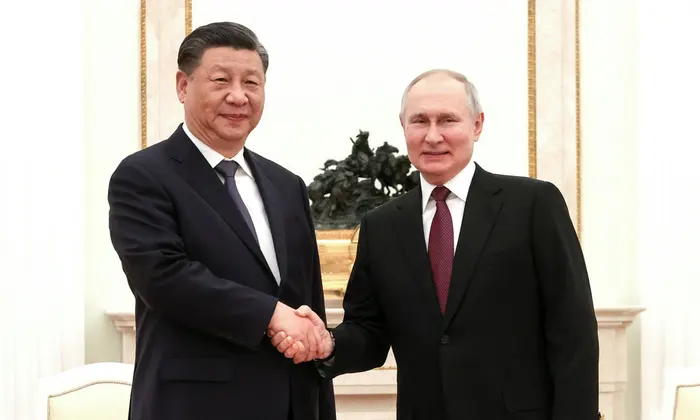
The United States, with its bloated military budgets, along with the rest of the western world, can arrogantly pretend that this alliance between China and Russia is nothing to worry about. Still, deep down, they understand what Xi’s visit means.
Long before Vladimir Putin invaded and annexed Crimea, politicians and talking heads in the United States arrogantly made the case that Russia was a weak regional power with an economy the size of Italy’s.
The statement wasn’t necessarily all wrong. Russia’s economy is about that of Italy’s, but they never bothered to mention that Russia has the world’s largest nuclear arsenal. That is the game changer, and even as they sought to minimize the power of Vladimir Putin and Russia, Putin invaded and annexed Crimea.
When Putin amassed his military on the Ukrainian border, they made the same predictions, ‘this was only a show of force.’ ‘Putin will not invade.’ Until he did.
Vladimir Putin may have miscalculated to some degree, arguably a consequence of bad intelligence and bad advice, which generally affect totalitarian leaders who surround themselves with yes-men and lackeys.
Nevertheless, a year and a month after Russian Tanks rolled over the border into Ukraine, the war still rages; largely because of help from the Americans and other western powers, Ukraine has somehow managed to stay in the fight.
Even so, much of Ukraine has been reduced to rubble.
Putin still has not conquered the nation of Ukraine, but neither has Ukraine been able to expel Russian forces despite western help.
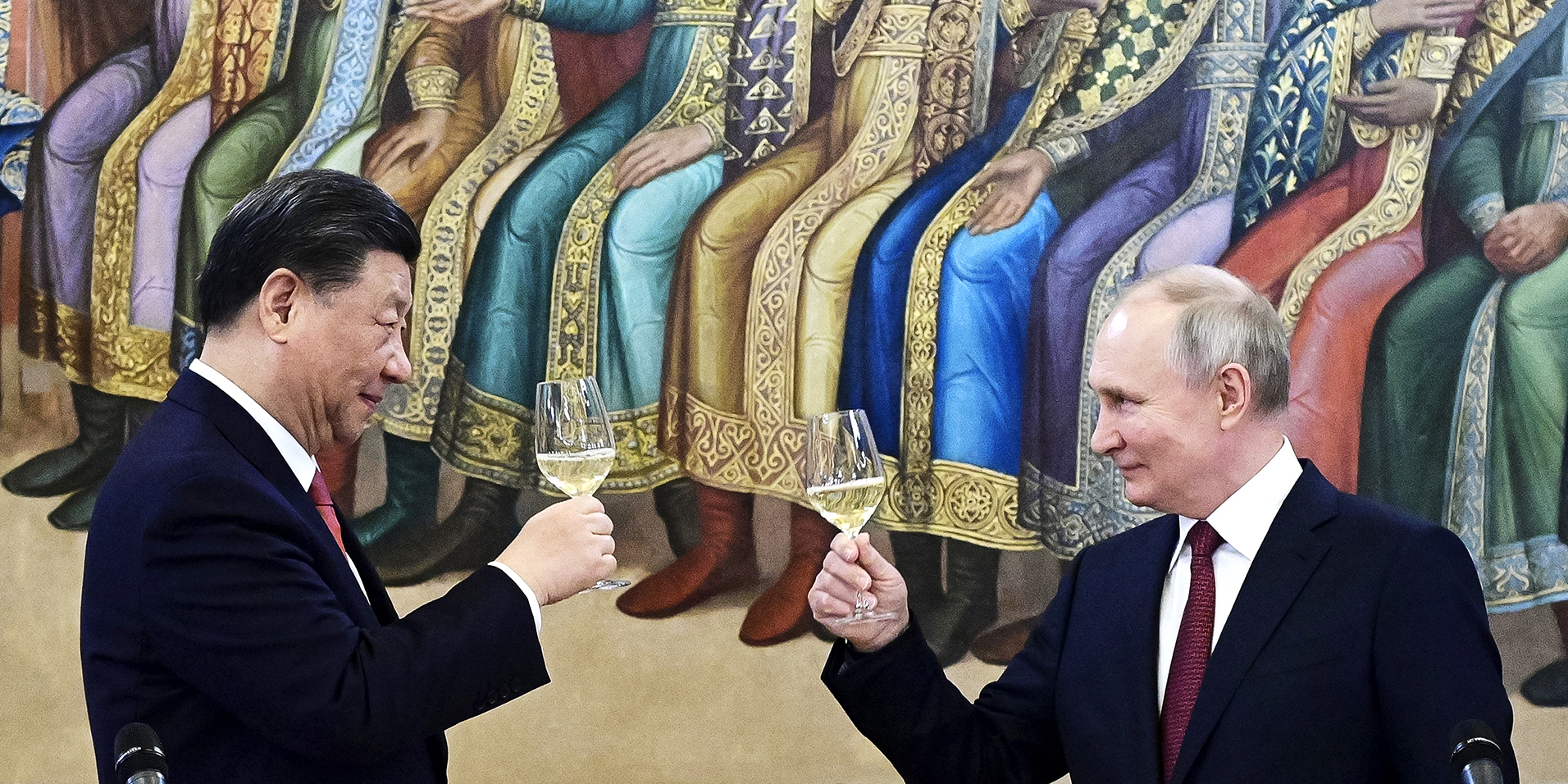
It is fair to say that the United States and NATO are not engaged in a full-scale war with Russia. Still, no one can deny that they are fighting a proxy war with the same regional power with the weak economy they ridiculed. Despite military help and massive economic sanctions, a year later they have not forced Russia to back down. Additionally, the rigid sanctions the western nations imposed against the Russian economy have not achieved the immediate results they hoped to see.
Instead, Russia has forged new alliances with Iran, China, and others in defiance of western help toward Ukraine. Militaries do not fight wars the way they are used to, so manpower is not as important as it used to be. Nevertheless, human resources are still an important part of warfare today.
The United States had a population of 331.9 million (2021). China had a population of 1.412 billion (2021). Russia had a population of 143.4 million (2021). Iran had a population of 87.92 million (2021). And North Korea’population was 25.97 million (2021)
These are the nations that the world needs to pay attention to as this new alignment begins to take shape and as China and Russia assert their alliance and power.

If the Americans learned anything, they should have learned from the many lost wars. From Korea to Vietnam to Iraq, and the disastrous withdrawal that followed the Vietnamese and Afghan conflicts.
During the three years of the Korean conflict, the Americans failed to recognize that it was not only fighting the North Koreans but the Chinese military.
The demilitarized zone that separates the two Koreas is a testament to the fact that the United States did not win that conflict.
The North Koreans, between June 25, 1950 – July 27, 1953, were able to stave off the powerful American military and South Korea with the help of light Chinese infantry units resulting in the stalemate that has been in effect for seven decades.
In the 1950’s China was an impoverished so-called third-world nation. Today, China stands mighty as it fooled the western world into thinking it was a behemoth but one disinterested in world affairs. Consequently, the world moved its manufacturing to China, making that nation a rich and powerful player on the world stage.
China modernized its military, including its nuclear forces, and went around the world building new alliances using dollars as opposed to the western powers who believed alliances were built using bullets.

Instead of understanding the imminent threat posed by this burgeoning alliance between China, Russia, and other players like Iran and South Korea, the United States is embroiled in division, racial animus, and hatred.
No single nation can out-militarize the United States, but they do not need to. America is destroying itself from the inside with Russian disinformation and propaganda inserted in its eco-system and the racial segregation that has characterized America’s DNA from its founding.
Instead of celebrating its diversity, America is weakening itself along racial, gender,s sexual, religious, and other defining lines.
In that regard, America is its own worst enemy.
.
.
.
Mike Beckles is a former Police Detective, businessman, freelance writer, black achiever honoree, and creator of the blog mikebeckles.com.

We brought his case to your attention some time ago; here are some new developments, according to root.com. Everyone knows that in the United States, there are so-called sundown towns in which black people are murdered solely based on the color of their skin. It happened all throughout America’s history it is happening today.
In these godforsaken places populated with heathens, murder people for their skin color; what passes for law enforcement is usually complicit in the killings or are the ones who commit the murders.
It should surprise no one then that the sheriff’s department has created a narrative of an animal attack on this young man.
The sad reality is that based on the emerging evidence, animals did attack Rasheeem Carter, two-legged animals.
Why would a perfectly sane young man text his mother that he was being chased by white men hurling racial slurs
if he wasn’t?
Oh, by the way, I bet you have not seen or heard this case mentioned on mainstream media(mb)
The family of Rasheem Carter, a 25-year-old who was allegedly murdered in the woods of Mississippi, have started trying to unlock the mystery his horrifying death. The family told Insider he was last seen on video “running for his life,” though the sheriff’s office debunked their claim. Carter went missing in October 2022 just after sending a text to his mother, Tiffany, saying a truckload of white men were chasing him.
His mother recalled the text saying, “Me and the owner of this company are not seeing eye to eye… If anything happens to me [he] is responsible for it… he got these guys wanting to kill me.”
She also said her son was working at a welding facility in order to make enough money to reopen his seafood restaurant following its closure during the pandemic. However, she said for some reason he fled from his current work in fear for his life. One month later, his remains (severed head, vertebrae and spinal cord) were found scattered in the woods. The medical examiner’s office couldn’t even determine the cause of Carter’s death because his remains were already decomposing, per CBS42.
Though the Smith County Sheriff’s Department previously killed the notion of foul play being a factor in the incident and even the theory Carter was being chased, one cryptic photo convinces the family that malice was involved.

The mother of the 25-year-old man whose remains were found a month after he disappeared told Insider on Wednesday that the wildlife camera image of her son shows that “something was wrong” and that he was “running for his life.”
“You could see there are bruises on him,” Carter’s mother, Tiffany Carter, told Insider of the October 2, 2022 image with a time stamp of 4:32 p.m. “When I see that picture, I know my son was somewhere struggling, somewhere running for his life.”
Investigators provided the image to Rasheem’s family for verification about a week before his remains were found on November 2, 2022, just south of Taylorsville, Mississippi, in a wooded area, about 300 yards away from where he was seen in the photo, according to Tiffany and police.
Rasheem’s cousin, Tarsha Clark, told Insider she believes Rasheem was “hiding” at the time the image was captured.
The more we learn about the case, the stranger it gets. And the “animal attack” theories from the sheriff’s office don’t seem as convincing.
This was the wild west scene at the Sovereign Plaza in Portmore St Catherine on Sunday that resulted in three security officers being shot.
These abandoned vehicles are believed to be the ones used by the gunmen in the daring daylight attack on the security team.
It is important to reconcile that while these events are unfolding in our country, there are politicians seeking high office and highly placed Judges who oppose stiff penalties for these monsters who continue to prey on the innocent.
These are the killers that the nation’s chief justice and the opposition party care about.
The condition of the injured security officers is not known at this time.

In July 2022, I went on a family trip to the country of Panama. It was fascinating from start to finish. Here are some images I brought back.
I love to take out my camera and capture some of the scenes; truth be told, I no longer use a regular camera because my kids shamed me into using my iPhone instead. I hope my boys are proud of themselves because these pictures look like they were taken using an old iPhone 7 plus.
They were.
Full disclosure, I was forced to ditch my 7plus just days ago as it had reached the end of the road and simply refused to connect calls anymore.
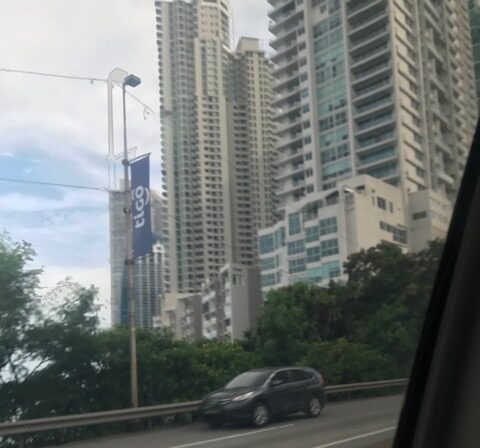

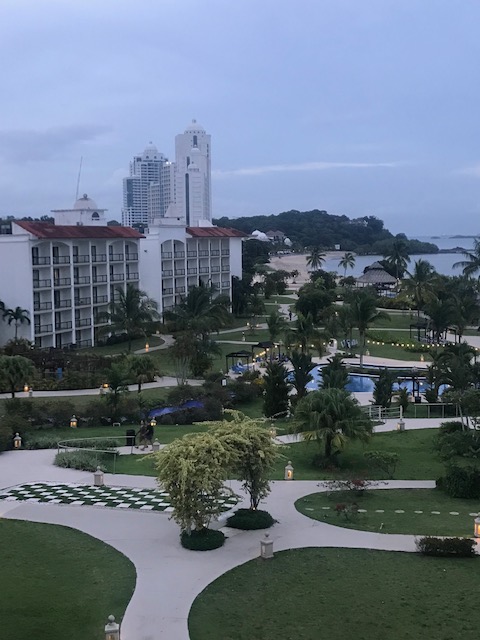
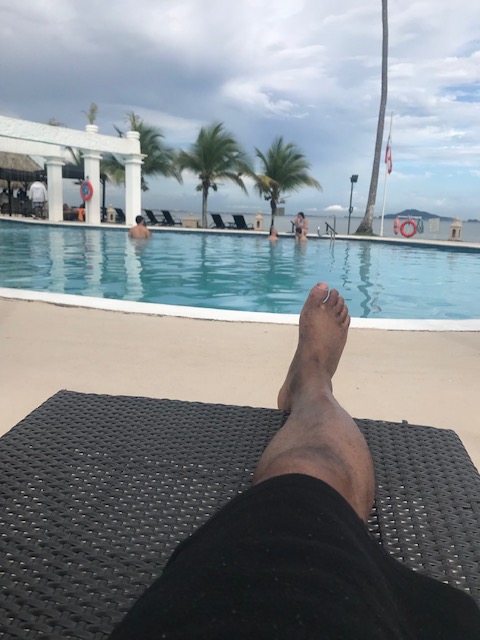



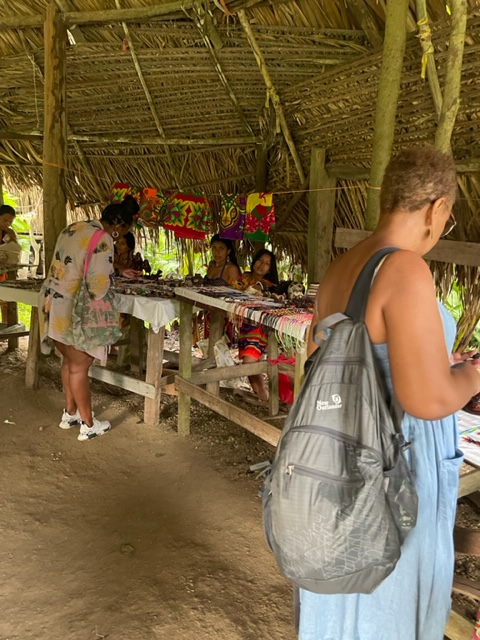


And our guide to the village.
I was impressed with the knowledge of all of the people we interacted with. The Panamanians we interracted with seemed to take great pride in their country and were well-versed in its history.
This reminded me of the guides at the Bob Marley Museum in my own Jamaica, awesome, informed delightful and super informed.
mm
The family of a Black man who was found dead in Mississippi after he warned his mother that he was being chased by white men hurling racial slurs demanded a federal investigation Monday after local authorities said they had “no reason” to suspect foul play in the man’s death. Rasheem Carter, 25, was reported missing Oct. 2 after his mother said he had sought help from police and frantically called her to say white men in three trucks were pursuing him. That was the last day Carter’s family heard from him. On Nov. 2, authorities said they found his remains in a wooded area south of Taylorsville, Mississippi. In a statement on Facebook a day later, the Smith County Sheriff’s Department said it had “no reason to believe foul play was involved” though the case was under investigation.
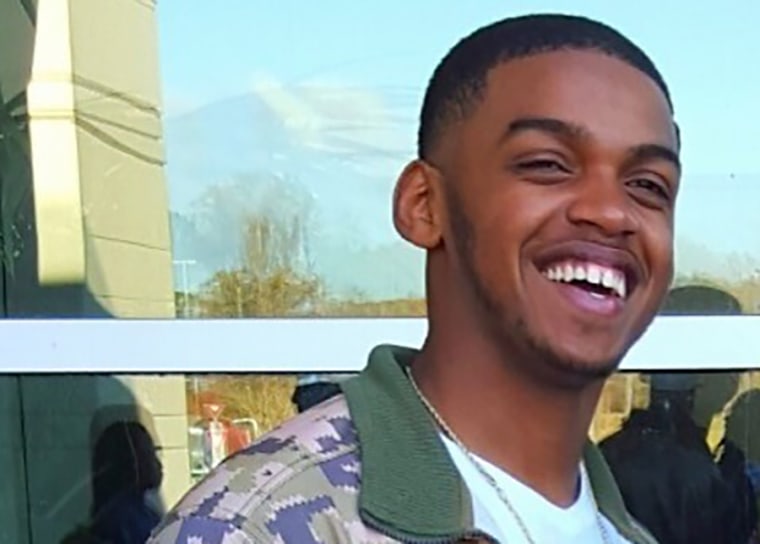
On Monday, Carter’s loved ones and their attorney Ben Crump slammed local authorities for stonewalling them for more than four months and for the initial determination, saying they believe Carter was the victim of a brutal hate crime. “This was a nefarious act. This was an evil act,” Crump said at a news conference. “Somebody murdered Rasheem Carter, and we cannot let them get away with this.”
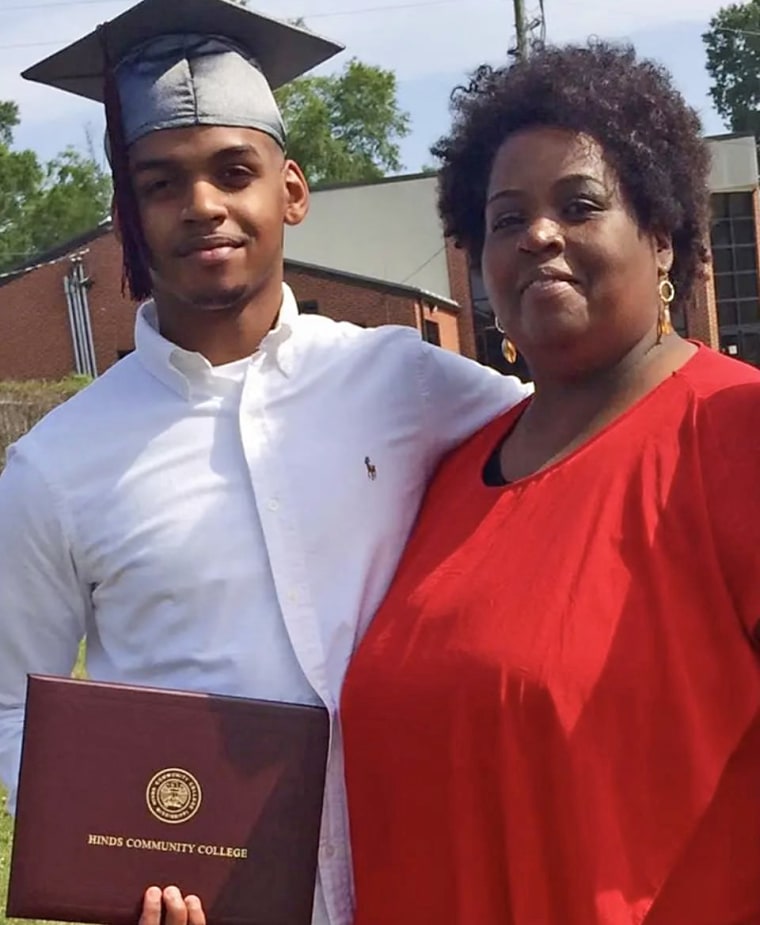
Crump urged the Justice Department on Monday to take over the investigation as a civil rights case as he revealed photographs of Carter’s skeletal remains, including his skull and some vertebrae. “This was not a natural death,” Crump said. “This represents a young man who was killed.” Crump told reporters that he believes Carter’s head was severed from his body and that his spinal cord was found in another location away from his head. “There is nothing natural about this. It screams out for justice,” Crump said. “What we have is a Mississippi lynching.” Carter’s front teeth were missing from the top and bottom rows, which Carter’s family said could indicate that he was assaulted before he died. It’s unclear what prompted authorities to search the wooded area or what led them to determine initially that foul play was not suspected. The Smith County Sheriff’s Department did not reply to requests for comment.
The Laurel Police Department, which put out Carter’s missing person’s report, worked on the case early on after Carter’s family asked for assistance, Chief Tommy Cox told NBC News. But Cox said that Carter had not contacted his department for help before he went missing, and that the Laurel Police Department handed its investigation over to Smith County once it was clear it was outside of its jurisdiction. Cox said his department pulled some phone records and may have interviewed some of Carter’s co-workers, but he declined to elaborate further. “We tried to put ourselves in their shoes. It didn’t hurt us to do a little bit of work on it,” Cox said. “We did what we considered to be the right thing. And then when it became obvious which jurisdiction would be the lead, we turned it over to them.” The Mississippi Bureau of Investigation, which is assisting the sheriff in its probe, said Carter’s autopsy was completed on Feb. 2 but declined to comment further, citing the “open and ongoing investigation.” The FBI is not currently involved in the case, an agency spokesperson said. Three members of Carter’s family said authorities told them wild animals may have torn his body apart.
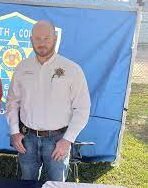
“He was in so many different pieces,” said Yokena Anderson, a cousin to Carter’s mother, Tiffany Carter. “They wanted to tell us that he went there and fell dead and the animals were feeding off him.” But Carter’s mother said that her son was lucid about the threats he faced during their final phone calls, and that he was not under the influence of drugs or alcohol and had no history of mental illness. She had doubts her son’s death was an accident even before she saw where his remains were found. “When I went on the scene, the Holy Spirit hit me and said this is foul play,” she said. “I knew then somebody had done something to him.” Carter, a welder from Fayette, Mississippi, was in Taylorsville, about 100 miles away from home, working a short-term contracting gig. His mother said he was saving money to re-open his seafood restaurant, which closed during the pandemic and which was named after his 7‑year-old daughter, Cali.
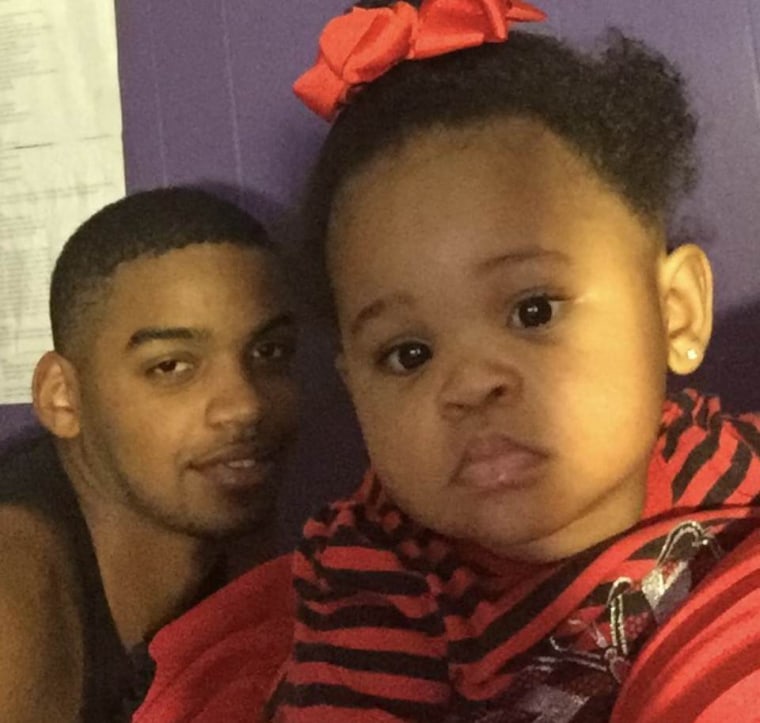
“That was his goal,” she said. “That was why he went back out to work.” But while he was at the job site in October, Carter had a disagreement with at least one co-worker and fled, fearing for his life, his mother said. “He said, ‘I got these men trying to kill me,’ ” Carter’s mother recalled him saying. She advised Carter to go to the nearest police station for help but eventually lost contact with him. Carter’s family and friends led their own search parties until his remains were discovered. “I never imagined going on living without my child,” Tiffany Carter said. “When I lost my son, I lost a part of me.” Carter’s loved ones said he worked hard to provide for his daughter, paid for her private school tuition and made his friends and family proud. “He kept all his promises,” Cali’s mother, Justiss White, said. “He called every day. They stayed on the phone for hours like teenagers. Every day, she brings him up.” Tiffany Carter pledged to continue fighting for answers. “They thought this was going to be a child no one cared anything about,” she said. “They’re clearly mistaken. Because he was somebody.
By Melissa
A Mississippi sheriff said Tuesday that he has not ruled out the possibility of murder in the case of Rasheem Carter, months after initially saying there was “no reason” to suspect foul play in the Black man’s death. Carter, 25, was found dead last fall after he warned his mother that he was being chased by white men hurling racial slurs. In an interview with NBC News, Smith County Sheriff Joel Houston defended his early determination, saying no evidence at the time pointed to homicide. But he said his department is still waiting on search warrants to rule more definitively. For the first time, the sheriff revealed key aspects of the investigation, including the department’s process of ruling out potential suspects. The interview came one day after Carter’s loved ones and their attorney Ben Crump slammed authorities for stonewalling them for more than four months and accused the police of covering up what they believe was a brutal hate crime. “Nothing is being swept under the rug,” Houston said Tuesday. “There’s nothing to hide.”
Carter was reported missing on Oct. 2, after his mother said he had sought help from police and frantically called her to say white men in three trucks were pursuing him. That was the last day Carter’s family heard from him. On Nov. 2, authorities said they found his remains in a wooded area south of Taylorsville, Mississippi. In a statement on Facebook a day later, the Smith County Sheriff’s Department said it had “no reason to believe foul play was involved,” though the case was under investigation. Carter’s loved ones and family attorney were dismayed by that swift decision by the sheriff and urged the Justice Department to take over the investigation as a civil rights case during a news conference Monday. “This was a nefarious act. This was an evil act,” Crump said. “Somebody murdered Rasheem Carter, and we cannot let them get away with this.” The sheriff said Tuesday that his department initially said that no foul play was suspected to ease public concern after finding no early evidence that Carter had been chased. “It was just letting the local or general public know that at this time no one else is believed to be involved,” he said. “It does seem to have caused unnecessary headache, but we only have what the evidence tells us. At that time, the evidence didn’t suggest anything.”
Carter, a welder from Fayette, Mississippi, was in Taylorsville, about 100 miles away from home, working a short-term contracting gig. His mother, Tiffany Carter, said he was saving money to reopen his seafood restaurant, which closed during the pandemic and which was named after his 7‑year-old daughter, Cali. “That was his goal,” she said. “That was why he went back out to work.” But while he was at the job site in October, Carter had a disagreement with at least one co-worker and fled, fearing for his life, his mother said. “He said, ‘I got these men trying to kill me,’” Carter’s mother recalled him saying. She advised Carter to go to the nearest police station for help but eventually lost contact with him. On Tuesday, the sheriff said his department interviewed “everybody involved” with Carter’s last job, including four to five people Carter had mentioned to his mother as possible threats. Houston said police “ruled them out” after determining through phone records and GPS coordinates that their devices were nearly 100 miles away from Taylorsville at another job site when Carter was last seen alive. The sheriff said Carter’s colleagues and supervisor mentioned in their interviews that Carter “had not been himself” for about a week before he went missing. “They said his whole demeanor had changed. They weren’t sure what was going on,” Houston said. “They just said he kept to himself more. He usually joked around, and in the last week or so they weren’t able to do that.”

Houston said Carter had “a couple of verbal altercations” with at least one co-worker. But the sheriff did not say what the disagreement was about or whether the altercation prompted Carter’s behavior change. Carter was last seen captured on a private landowner’s game camera out in the woods on Oct. 2 after 4:30 p.m., Houston said, adding that he was the only person spotted in the footage. The sheriff said the property owner passed the image along to police when he found out about it in mid-October. Houston said it took about two weeks to search several hundred acres, using cadaver dogs. Along with Carter’s scattered remains, authorities found inside his blue jeans some cash, bank cards, a driver’s license, a vape and a phone charger, though they never recovered his phone. The sheriff’s department has submitted a search warrant to Google to determine whether any devices pinged in the area where Carter’s remains were found around the time he went missing. “It’s a last-straw-type deal to determine if anyone else was with him or not,” he said. “It’s not uncommon to use this tool.” However, the process has been going on since mid-November, Houston said, and the department has had to revise, narrow down and resubmit their request several times, including most recently last week. Houston said that he welcomes the Justice Department’s involvement and that he wants justice for Carter’s family “just as much as the family does.” The Carters disagree. Three members of the family said authorities told them wild animals may have torn his body apart. “He was in so many different pieces,” said Yokena Anderson, a cousin to Carter’s mother. “They wanted to tell us that he went there and fell dead and the animals were feeding off him.” Carter’s mother said that her son was lucid about the threats he faced during their final phone calls and that he was not under the influence of drugs or alcohol and had no history of mental illness. “I just know what my son told me,” she said Tuesday. “I don’t believe anything they say. It’s lies after lies.”

Newly released bodycam footage shows that Booker T. Pannell III put his hands up and said, “Please, please, I don’t want to die” before Elk Grove police officers chased him down a hotel hallway and shot him Feb. 21. Pannell was pronounced dead at a hospital later that night. He was 40. In a brief phone conversation, his father — who shares his son’s name — said, “He was a good person. He was a good man. That’s all I can say right now.” The Elk Grove Police Department on Friday night released footage from body-worn cameras and a hotel security camera. An investigation into the officers’ use of force is ongoing. Pannell died during a continued local and national reckoning with policing practices fueled by fatal encounters with law enforcement. In January, the death in Memphis, Tennessee, of Tyre Nichols, a Black man who grew up in Sacramento, renewed scrutiny of police violence; five officers face second-degree murder charges for Nichols’ beating death.
Mapping Police Violence and local news coverage show that police killed six people in use of force incidents in Sacramento County last year. Internal and outside investigators have not determined whether officers followed proper protocols the night Pannell died.
According to the video, someone called police Feb. 21 to report a carjacking near Shana Way and Whitelock Parkway. Dispatch received the report at 10:32. In the 911 excerpt in the video, the caller asks police to come to her house. “My husband had an altercation with his friend, and the friend took our car,” the caller says. “And he pulled a gun out on my husband.” An officer went to the house to take a statement from the husband. In the footage, the husband calmly emerges and speaks to the officer. He explains, “My friend and his girlfriend came by, and I was asleep. And long story short, he was having some type of side effects or whatever — I think he was on meth. So he was out here with his girlfriend … he’s been paranoid, saying the cops is looking into drones, stuff like that. So I said, look, let me take you to the hospital.
He said he was starting to drive to the hospital with his friend, Pannell, and turned on his blinker to make a left turn on Whitelock when the friend said, “You in on it, too.” He said his friend started screaming, and said, “They’re coming to get me.” He said Pannell pulled out his gun, pointed it at him, and then pointed it at his own head. The husband fled the car. He told the officer, “I thought he was gonna kill me.” Around 11:40 p.m., the video says, officers went to the Holiday Inn Express on Stockton Boulevard and Laguna Boulevard, right off Highway 99. A hotel employee had reported a disturbance. A very short clip of security footage from the Holiday Inn shows a man in the lobby leaning over the front desk; that footage has no audio. When police arrived, they saw the car that had been reported stolen sitting empty in the Holiday Inn parking lot. They determined Pannell was the man in the lobby. In the video, four officers walk through the automatic sliding doors of the lobby and three immediately raise their guns. One holsters her weapon and switches to a taser. Body-worn camera footage shows the officers shouting at Pannell: “Hands up.” He puts his hands up. Multiple officers then yell, “Get on the ground” multiple times, and one of the officers directs them, “One person talk.” Pannell says something inaudible, then seems to say, “There’s people trying to kill me.” A female officer shouts, “You will be tased; get on the ground.”
Multiple officers shout more commands at Pannell. He keeps his hands stiffly raised out in front of him. Pannell says, “I don’t want to die. Please, please. I don’t want to die. Listen, please. Please.” In response, the female officer shouts, “Taser, taser, taser,” and deploys it. The interaction from the moment that the sliding door opened to the moment that the officer deployed her taser lasted 35 seconds. It’s unclear whether the taser actually hit Pannell. In the video, he runs away from the officers and they chase him down a hallway. In the footage from the chase, it’s difficult to see what happens. One officer says, “He’s running, he has a gun.” An officer fires his weapon five times down the hotel hallway. The video says officers saw Pannell hold the gun to his own head as he was running away. By the time the officer fires the first shot, a little over a minute has elapsed since they entered the hotel. “Stop moving!” one officer shouts down the hallway. Outside the exit door, which has shattered glass likely caused by the gunfire, a bystander is lying on the ground. Officers shout, “Let me see your hands! Hands!” Pannell is lying on the ground, a few feet farther away. The bystander shakily raises his hands. “Are you shot?” an officer asks the bystander. (The video says the bystander was not hit by a bullet.) When the officers approach Pannell, they see that he has two gunshot wounds — in the leg and the head. As a male officer holds one of Pannell’s arms, the female officer takes away his gun. The video says that police officers found one spent shell casing outside the hotel that matched the ammunition in Pannell’s gun; they concluded that he fired only one shot, outside the hotel, after police started shooting at him. Text in the video says it is uncertain whether the head wound was from the police officer’s gun, or whether Pannell killed himself as police were chasing him. A coroner’s report is still pending. The Elk Grove Police Department said it released the video before the investigation into the incident was concluded “in the interest of transparency with the community we serve.” They published the video on YouTube Friday evening, posting a link to Twitter at 7:15 p.m.

For the record:
7:32 a.m. March 11, 2023: An earlier version of this article said that at a protest on May 30, 2020, in the Fairfax district of Los Angeles, a police car was several blocks away from Deon Jones. The car was across the street from Jones.
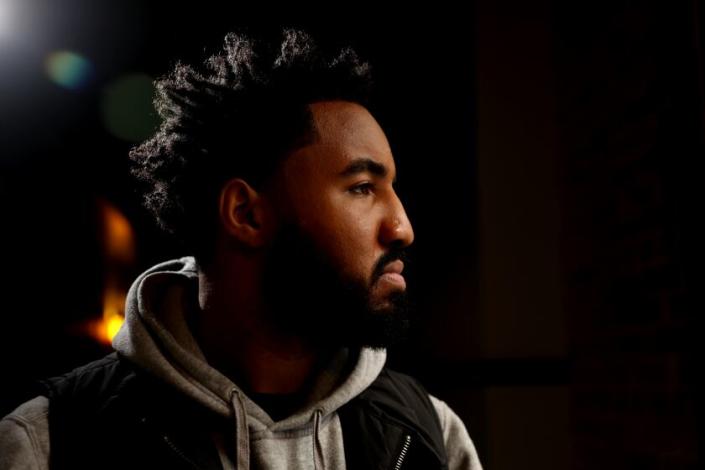
In the first verdict of its kind since mass protests swept Los Angeles in 2020, a federal jury on Thursday found an LAPD officer personally liable, for shooting a protester in the face with a projectile — awarding the man $375,000.
The verdict followed a finding by the jury that the officer, Peter Bueno, violated protester Deon Jones’ civil rights.
Jones listened with his head bowed as a judge read the jury’s decision in a Santa Ana courtroom. Afterward, he said it was “a good day.”
“This victory isn’t just mine. It is for all the folks who historically have went out and protested,” Jones said. “It sends a message that … law enforcement cannot brutalize folks.”
Bueno stared straight ahead as the verdict was read. His attorney, Janine Jeffery, declined to comment afterward.
LAPD officers have rarely been held accountable for force used during the mass protests against police brutality after the murder of George Floyd, despite hundreds of allegations of excessive force lodged with the department.
The jury issued its decision after a week of testimony in which Jones and Bueno offered starkly different descriptions of the chaotic scene where the shooting, which was only partially captured on video, occurred.
Jones, who suffered multiple facial fractures when he was hit with the hard-foam projectile, accused Bueno of firing indiscriminately into crowds in violation of department policy, and of disregarding the clear danger that posed to peaceful protesters like him.
Jones’ attorney, Orin Snyder, said he hoped the case would deter similar force by LAPD officers in the future.
Bueno, assigned to work as a “cover” officer that day, described firing only at specific individuals in the crowd who posed a threat to him and other officers. He denied shooting Jones, and Jeffery questioned whether Jones’ injuries were from a police projectile at all
The eight-member jury deliberated for about four hours Wednesday afternoon. The jurors reconvened Thursday morning and deliberated for under an hour, coming back with their verdict in Jones’ favor shortly after 9 a.m.
The jury ruled that Bueno had violated Jones’ 4th Amendment rights against unreasonable searches and seizures by law enforcement.
It rejected other claims that Bueno had discriminated against Jones and that he had violated Jones’ 1st Amendment rights.
The jury first awarded Jones $250,000 to compensate for his pain, suffering and associated financial losses since the shooting. It then heard additional arguments as to whether it should award Jones additional “punitive” damages, as punishment for Bueno.
Jeffery asked the jury to be fair to Bueno, a 27-year department veteran who she said is “going to continue to protect and serve” as a member of the LAPD.
Snyder said Bueno violated the trust placed in police officers and should be held accountable.
“When things get chaotic on the streets of Los Angeles,” he said, “that’s when we need police to be at their best.”
After deliberating further, the jury awarded Jones another $125,000.
How the damages will be paid remained unclear Thursday.
The city may choose to indemnify Bueno and cover his costs, but Jeffery said there was “no guarantee” of that given the composition of the L.A. City Council, which includes fierce critics of the LAPD and its response to the protests.
The trial, which focused on Jones’ allegations against Bueno, was the first phase of a broader lawsuit that Jones filed. Future proceedings will consider Jones’ allegations that the LAPD and the city of L.A. were negligent in their oversight of officers during the protests, and could result in more damages to be paid out by taxpayers.
Jones’ win in court stands out for several reasons.
Few individual officers have been disciplined by the LAPD for actions taken during the 2020 protests, despite the hundreds of allegations of excessive force and other misconduct, according to LAPD data reviewed by The Times.
A half-dozen protesters have agreed to end their own litigation against the city in exchange for cash settlements that did not include any acknowledgment of wrongdoing by officers or the city.
Jones had turned down a settlement offer from the city. It turned out to be less than what he was awarded Thursday.
He told his lawyers that he wanted to hold Bueno accountable for shooting him, and the city and the LAPD accountable for allowing excessive force against protesters. He wanted them to be found in the wrong and not to silence him using taxpayer dollars.
Jones, 31, who is Black and works in entertainment and brand consulting, was wounded during a massive May 30, 2020, demonstration in the Fairfax district. Activists had gathered to decry the murder of Floyd by police in Minneapolis and the killings of other Black Americans in police custody.
The Times published an article two weeks later outlining Jones’ and other protesters’ claims that police beat them with batons and shot them with projectiles without justification, which prompted an internal investigation by the LAPD that resulted in no discipline for Bueno.
Jones filed his lawsuit in December 2020.
Over the span of two days on the witness stand, Jones recounted the sequence of events, telling jurors he felt a moral duty to join others protesting injustice at Pan Pacific Park.
When other protesters set a police car on fire across the street, he and a friend worried that officers would respond with force and moved to the parking lot of a nearby Trader Joe’s.
Jones was livestreaming the scene with his phone when he noticed an officer, whom he later identified as Bueno, pointing a weapon in his direction. Jones said he turned his face to avoid being struck head-on, and the round struck him in the cheek.
Jones testified that he suffered severe emotional distress and lost job opportunities due to his facial injuries.
“The hurt that you feel because of what happened to you. The flashbacks that you have because of what happened to you. The dreams that you have because of what happened to you,” Jones told jurors. “If I’m being honest, it just flat-out hurts. It’s hurtful. It hurts. It’s something — I didn’t do anything wrong.”
The topic of Black Lives Matter and the worldwide movement against racial injustice that followed Floyd’s death only occasionally surfaced during the trial.
Both Jeffery and Bueno painted a picture for the jury of an out-of-control crowd that pelted officers with rocks and bottles. Jeffery showed video and still images of a squad car on fire and others with windows broken and covered with anti-police graffiti.
“It was chaos out there. I mean, there was people throwing rocks, bottles,” Bueno testified. “They were violent. People coming up to us, they were hostile.”
Bueno admitted that firing a 40-millimeter hard-foam projectile at a person’s head could cause serious injury and that the weapon wasn’t intended for firing into a crowd.
He said he was firing at a “specific target” — an unidentified person who emerged from the crowd and threw a water bottle that landed at his feet.
He recounted how, after he worked more than 20 hours the day before, he and his platoon were ordered to respond to the area of South Fairfax Avenue and West 3rd Street.
He blamed a faulty on/off switch for his body camera being off for 4½ of the six hours that he was on duty that day.
Bueno remains assigned to the LAPD’s Metropolitan Division, an élite unit that, among other duties, handles crowd control.
Jones’ friend Niara Hill broke down in tears on the stand while recounting the moments before and after Jones was shot.
After spending most of the day together at the protest, Hill said, the two of them were briefly separated. She was about 10 feet away when a protester within “touching distance” of Jones hurled a water bottle in the direction of an officer who was holding a green 40-millimeter projectile launcher, she said.
Moments later, that officer fired at Jones, she said.
Later, Jeffery asked Hill whether her social media posts about the case were for publicity.
Hill said no.
“I wanted people to know that there were police officers who were shooting people in the face with rubber bullets,” she said.
In closing remarks, Snyder said that Jones and Hill thought they were doing the right thing by heading to the parking lot after confrontations between some protesters and police turned violent on 3rd Street.
“They did the right thing and removed themselves from the tumult of the street. They did what every parent would want them to do. They sought safety,” Snyder said. “And this is an irony in this case: This is where the police wanted people to go.”
The only defense witness, LAPD tactical flight officer Chad Zipperman, testified that from his vantage point aboard a department helicopter, the situation on the ground had spiraled out of control. He estimated that at one point, the crowd around Bueno and Jones had swelled to 2,000 to 3,000 people, some of whom swarmed and vandalized an MTA bus.
“The vast majority of the crowd that lingered was violent,” he testified.
Jeffery seized on what she deemed were discrepancies in Jones’ description of the officer who fired the 40-millimeter round and of the extent of his injuries. She showed the jury messages from Jones to his friends in the days and weeks after the incident, telling them he was physically OK.
Jones testified that he was never diagnosed with a traumatic brain injury by a physician, saying it was because he lacked health insurance at the time.
Jeffery also argued that there wasn’t enough evidence to show that her client shot Jones, or that Jones was even shot — suggesting that he may have been injured in other ways during the protest.
Snyder accused Bueno and Jeffery of trying to distract the jury by tarnishing Jones’ name without ever explaining why Bueno had fired his weapon — “just attacking, attacking, attacking these young people who came here to share their truth.”
After the award was announced, both Snyder and Jones said their sights were now set on the second part of the case and holding the city and the LAPD accountable, too.
This story originally appeared in Los Angeles Times.
You simply have to see this story. The details are so far-fetched that it tramples every façade America has as a free society where black people can go about their business without fear of the government.
I have said this before and will continue to state this fact. The greatest threat to any Black person in the United States is the police.
A black person walking or driving down any road or highway faces the greatest danger from America’s race soldiers, the police.
The behavior of these cops if allowed to stand, would create a precedent that would make it a crime for any person to pull up to any place and sit in their car. There was absolutely no reason that the cop did not walk away except that he saw a black woman and her two daughters, and he decided that he would unilaterally violate their rights and strip them of their dignity.
But the tragedy is not just with their outrageous actions, which should have gotten them fired and criminally charged; it is that they were promoted and kept on the job to commit more rights violations costing the taxpayers countless millions and potentially killing innocent people. This should send a chill down the spine of every black man who calls himself a man and has a wife and children; I know I do. Do you watch your wife being violated for absolutely no reason?
To top it all, they investigated themselves and found they had done nothing wrong.
Watch the video below.

A federal jury awarded a mother and her two daughters $8.25 million after they were unlawfully searched and handcuffed by Alameda County sheriff’s deputies at a Castro Valley Starbucks on their way to taking one of the young women to a college math test in Berkeley. The women were not physically harmed by law enforcement, but the dollar amount of the award signals that the jurors felt the family’s constitutional rights had been stripped because of their skin color.
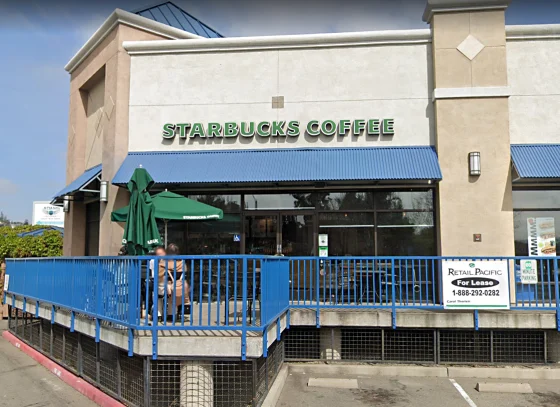
“I think that everybody recognizes we all have implicit bias,” their attorney, Craig Peters of San Francisco, said in an interview on Monday. “I have it. You have it. We’ve all got it. These officers are no different. And so, subconsciously, there was something going on that made them unreasonably suspicious of this family. I think that if this same scenario happened and these were white women, it would have played out very differently.” The verdict was reached on March 1 following a two-day civil trial before U.S. District Court Judge William Alsup in San Francisco. A jury deliberated for 16 hours before awarding the mother and daughters this unprecedented amount from the Alameda County Sheriff’s Office.
Specifically, the jury found Deputy Steven Holland liable for $2.7 million to their mother, Aasylei Loggervale, and $2 million apiece to her daughters, Aaottae Loggervale, then 17, and Aasyeli Hardege-Loggervale, then 19. The jury also found then-Deputy Monica Pope liable for $750,000 to both daughters and that Alameda County is liable for the actions of its deputies. It’s possible the judge could lower the award if the county convinces him to do so. But nothing has been filed in court to indicate that so far. Neither the Alameda County Sheriff’s Office nor Kevin Gilbert, the attorney representing the county, responded for comment on Monday. Both Holland and Pope have since been promoted. The civil trial, also litigated by attorneys Joseph May and Brian Gearinger, alleged false arrest, invasion of privacy, negligence, and violations of the 1st, 4th, and 14th Amendments. The Loggervales declined to be interviewed. Their story has never been publicly told before, and some of their relatives don’t even know what happened to them or that they won a massive jury amount. But they testified during the trial, and jurors found sided with their account, stemming from an encounter on Sept. 20, 2019.

That’s when mother Aasylei Loggervale, who is a tax preparer, and her two daughters were sitting in their rented Cadillac outside of Starbucks in Castro Valley. The trio, all of whom are Black, were at the end of their drive from Nevada. They were parked in a disabled spot, and were at the coffee shop early to take Aasylei Hardge-Loggervale to a statistics test in Berkeley on time. She was attending community college and was planning on transferring her credits to UCLA. Two deputies, Holland and Pope, were on patrol at the time and approached the rented Cadillac. They told the Loggervale family that they were investigating car burglaries committed by unidentified Black men. But in fact, one police report shows that the suspects were identified as one Black man and one Latino man, Peters said. At first, the Loggervales thought they were being warned about the break-ins and they were grateful.
But that feeling quickly soured when the deputies began questioning the mother about whether she was legally able to park in a disabled spot, despite her having a visible placard in her car window. The deputies also demanded to see the elder Loggervale’s identification, which she declined to provide. Under the 4th Amendment, citizens have the right to be free from unreasonable searches, which includes being asked for ID if an officer can’t articulate that a person has committed a crime. “Ms. Loggervale did not want to engage further with defendants because as a Black person, she feared the encounter could result in serious physical harm or death to her and/or her daughters,” the original civil suit stated. Still, the deputies arrested the women, put them in the back of their patrol car and searched their trunk.
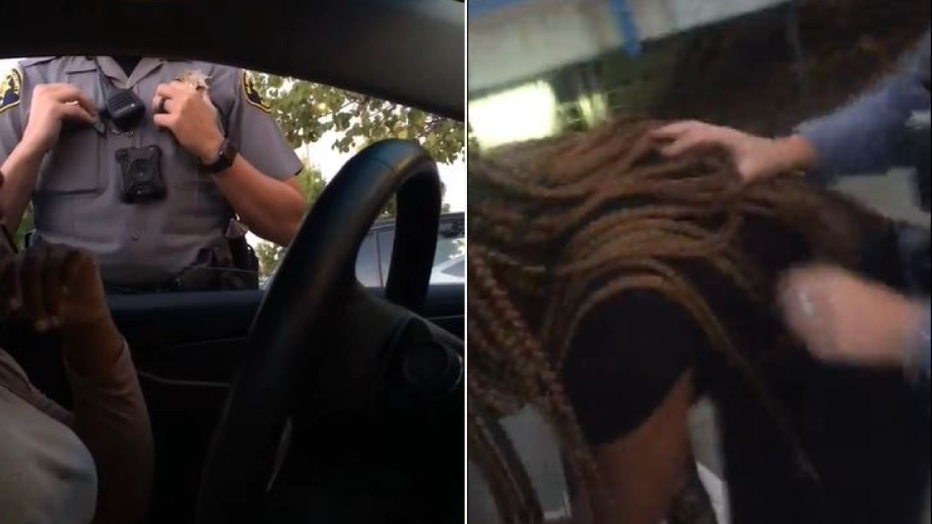
The deputies then claimed that one of the daughters committed “battery” when she opened the car door and struck Holland. But the video presented in court showed that when she tried to open the car door to exit, the deputy pushed it closed on her. Video taken by the daughters, as well as body camera video from the sheriff’s office, showed how the stop escalated into tension and tears. “What am I being detained for?” the elder Loggervale asked. “I’m informed I can’t go to the restroom.” Holland responded: “Sit in the car, or you’re going in handcuffs.” Mother and daughters repeatedly asked what they were being detained for. They never received an answer. “You have to tell me what you’re detaining me for,” the elder Loggervale is heard saying. “I do not,” said Deputy Keith Leeper, who had also showed up at the scene. The deputies placed the family in the back of the patrol car, where they were held for about 70 minutes. They’re heard crying. Loggervale kept asking to use the restroom.
Eventually, the family was let go. None was charged with any crime. During the trial, the deputies testified about their version of events, and how they were out investigating car burglaries. They insisted that they were in the right. “The officers would have been well-served to sort of take a good hard look at what had happened and just acknowledge some of it,” Peters said. “But instead, they kind of doubled down on trying to shade facts to try and make this situation seem not as bad as it was, try to raise some doubt, you know, attacking the women.”

An Internal Affairs investigation found that the deputies did nothing wrong, according to Peters. Both Holland and Pope are now sergeants. “I think what makes me upset is that the Alameda County Sheriff’s Office didn’t take the initiative to correct what to me seems like such an easy thing to have corrected early on,” Peters said. “And instead, they wanted to sweep it under the rug.” Peters said no one in the sheriff’s office seemed to say, “we need to fix this, let’s talk to this family, apologize, say, ‘Hey, we were wrong, we’re working on this,’ do some retraining. That would have been the responsible thing to do.” An analysis of excessive force and wrongful death police payouts from 2015 to 2020 by KTVU revealed that Alamada County has paid out the most of any law enforcement agency in the Bay Area during that time period. The top two awards, before the Loggervale’s, were for $5.5 million and $5 million, respectively, stemming from injuries and the death of a 20-year-old Fremont man. As for Aasylei Hardge-Loggervale, she made it to her math test that day, 40 minutes late. She is about to graduate UCLA this year. But her life, and her sister’s and mother’s lives, will never be the same. “They worked hard,” Peters said. “And then this happens and it just shakes your foundation about the place you live in. I hope that they can recover that at some point, but I suspect they won’t. I suspect that to some extent for the rest of their life, every time they see police officers, every time they’re in a Starbucks parking lot, they’re going to remember this.”(foxla)
Many white people are desensitized to police violence against people of color. Others say just do as they say in a cold, calculated way that is devoid of understanding that police are not operating within the laws but, from what we say daily, are operating as occupational forces in our communities.
Ant to be fair, some conscientious white people understand that what is happening is not policing but murder under the color of law.
On the other hand, when it comes to defunding police departments and using the money for other community uses, and holding police accountable the white population, Republicans and Democrats once again coalesce around the construct of policing.
This writer is a strict law and order person who spent a decade in law enforcement. Nevertheless, I cannot remain silent and pretend that what police are doing under the color of the law is not murder.
It pains my heart to see police officers snuffing out the life of people, using pretextual stops as justification to abuse and murder citizens.
As I have said, white disinterest in police violence and murder of black people and other people of color is a dangerous strategy.
If we are not vigilant in controlling the people we give power to, they will use it against us, who gave it to them in the first place.
No one is safe if police can simply shout ‘gun’, and summarily execute a person in the safe place of their car, home, or any other place.
Whether black or white, we are all one race of people.….the human race. The illicit taking of innocent life in the United States by police is a cancer that threatens us all. (mb)
First, they came for the socialists, and I did not speak out — because I was not a socialist.
Then they came for the trade unionists, and I did not speak out — because I was not a trade unionist.
Then they came for the Jews, and I did not speak out — because I was not a Jew.
Then they came for me — and there was no one left to speak for me.
—Martin Niemöller
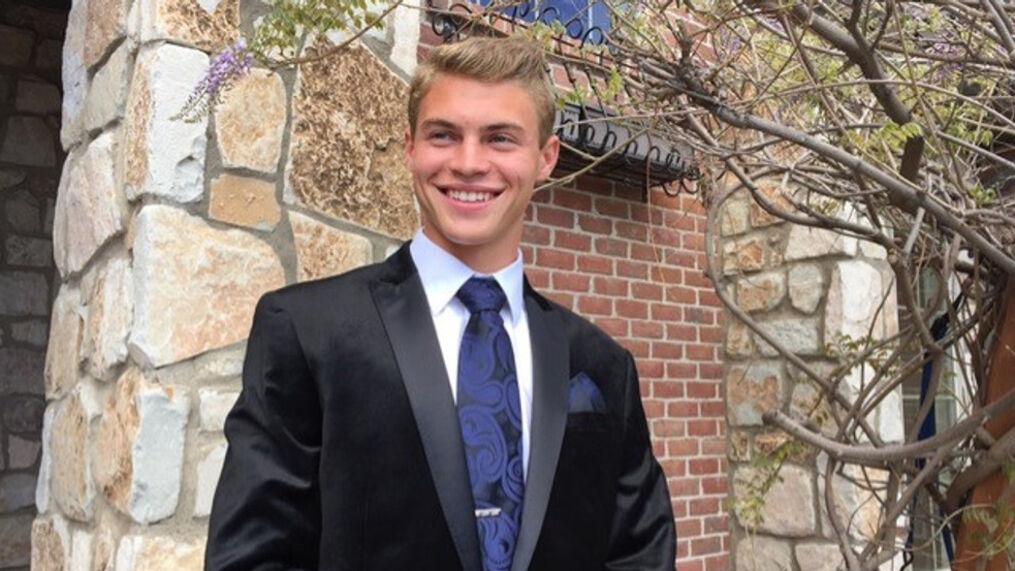
Police in Farmington, Utah, released body camera footage Wednesday that captured the barrage of gunfire which killed a 25-year-old man during a traffic stop last week. Chase Allan was pulled over by Farmington police on March 1 at around 3:20 p.m. near a post office after an officer spotted an illegal license plate — a placard with a flag — on Allan’s blue BMW, Farmington police Chief Eric Johnsen said during a press conference Wednesday. During the press conference, Johnsen told reporters that officers started to shoot after they saw Allan reach down, but also said that it is unclear exactly what happened in those brief seconds because the body camera’s view is unclear.
The footage — a compilation video of five body-worn police cameras and a single dashboard camera — shows a police car following Allan’s BMW into a parking lot. The officer parks behind Allan’s car walks over to it, and taps on the driver’s window. Allan cracks open the window while holding a cellphone. “The reason you were stopped today is there is no registration on your vehicle,” the officer tells Allan in the video. “I don’t need registration and I don’t answer questions,” Allan replies. “Alrighty,” the officer says, and then proceeds to call backup. The officer and Allan go back and forth about why he was pulled over, before the officer tells Allan he is “detained and not free to leave.” He then continues to ask for identification. Allan can be heard citing what he claims are legal arguments for his refusal to provide one. “I understand what you are saying,” the officer replies. “But you are lawfully required to identify yourself.”
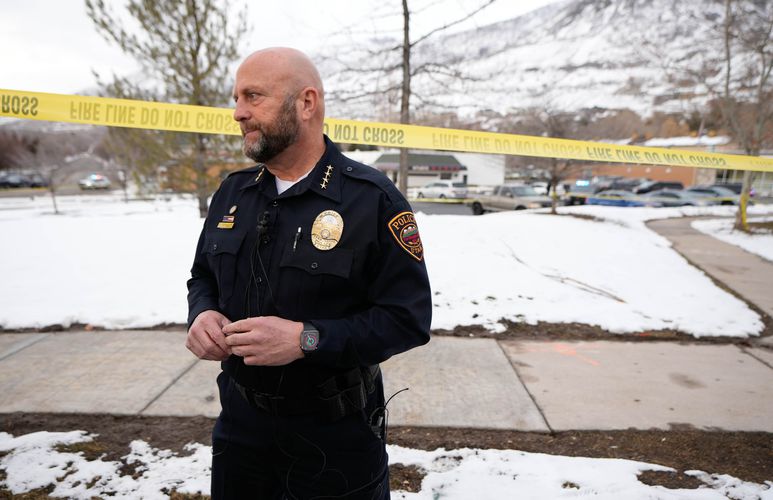
More arguing ensues before Allan hands the officer a passport. The officer then orders Allan to step out of the vehicle. At this point, the video shows other officers have arrived at the scene. Allan is seen refusing to step out of the car. He is still wearing his seatbelt and holding his cell phone. “I am not required to,” Allan tells the police. The bodycam footage then stops and highlights what police allege is a “holster on Mr. Allan’s hip.” The holster is “flexing upward,” as seen through the driver’s window, police said. Allan, wearing a khaki coat and a trucker hat, still refuses to step out when another officer warns him that if he doesn’t comply, “we’re going to break the window and pull you out.” Allan is then seen transferring his cell phone from his left hand to his right hand as an officer opens the driver’s door. The police video then stops to highlight what it claims is Allan’s right hand moving toward the holster. As another officer wearing a beanie leans into the front seat and tries to get Allan, one of the officers yells, “gun! gun! gun!”

The police officer slams the door shut, and five officers are seen drawing their guns and rapidly firing several rounds at the BMW. An officer then yells, “cease fire,” and the shooting stops. The officers pull Allan’s body out of the car. The footage again stops to highlight an “empty” holster on his hip. The video then shows a gun on the floor, partially visible under the mat of the driver’s seat. The five officers involved in the shooting have not been identified. “I feel like they deserve privacy right now,” Johnsen said Wednesday. Allan’s family has accused the police of “brutal murder,” saying they have been “stonewalled” by the department, according to a statement released to local media last week. Allan’s family said he was “studying law the last few years and was a patriot doing what he could to defend the people’s freedom and liberty in his community,” according to the Salt Lake Tribune. Four of the five officers have been with Farmington police for between seven and eight months, and the fifth officer is a 12-year veteran of the department, Johnsen said. The status of the officers was not clear, but Johnsen said he was down 20% of his force and thanked other police departments for helping with daily operations. Allan’s family has said the officer who pulled him over “requested multiple other officers to the scene a couple of blocks prior to the stop,” according to the Salt Lake Tribune. At the press conference, Johnsen disputed the family’s statement. “I want to point out there has been a statement, an allegation made that back-up was called for before this, that is absolutely untrue,” the police said. “It’s a tragic ending to what started out as an everyday traffic stop,” Johnsen said.

Testifying before the Parliament Internal and External Affairs Committee Deputy Indecom Commissioner Hamish Campbell, In response to the PNP’s Lisa Hanna’s question, why most officers involved in fatal shootings were not charged, responded, “.A great majority of the [police] shootings, to use an American term, are ‘lawful but awful.’
Not sure where Hamish Campbell saw that characterization, but first, I would like to address Lisa Hanna’s question of why most cops are not charged when they are engaged in police-related shootings.
Was her question a real question? Did she ask the question for the edification of the public? It is difficult to tell when one understands the ignorance and pomposity of these so-called legislators, but I will let this one slide.
Before I go any further, I would like to highlight what the Bucky massa said.
The vast majority of officers are not charged because the shootings are legitimate.
Before we move forward, however, let us dissect this issue to gain some clarity. As a writer who opines on the issue of police violence daily, it is important to appreciate the dynamic differences between Jamaican policing and what passes for policing across the United States.
https://mikebeckles.com/351727 – 2/
https://mikebeckles.com/defund-the-police-sound-principle/
Literally every issue in the United States is colored by race, policing chief among those issues. Jamaican policing is free from racial baggage. Some would argue that there is classism in Jamaican policing. However, the lack of support Jamaican cops receive from the political leadership makes it less likely that officers would engage in classism in performing their duties in Jamaica. In the United States, the police are backed up by the courts, the legislatures, and the executive, not to mention the vast majority of the white population.
Jamaican police violence must also be contextualized, ie that the nation has a high rate of violence, is a world leader in homicides and is a country with an inordinate amount of illegal weapons in the hands of violent criminals.
It is impossible to rule out that there are strains of extrajudicial killings due to the judiciary’s refusal to follow the laws related to violent criminals.
Hamish Campbell then went on: “So the use of force has been necessary, and the individual officer is concerned for his own life or safety of himself or another.” “But what is happening for a lot of these cases, the tactics and approach could be different in some of the circumstances because, once a police officer draws the gun, there is almost an inevitability about what will happen; he will certainly use it and resulting in death and injury.”

Most of the research and writings I have done have centered on American police, one of the observations I have made is that the defund the police call is legitimate because cops should not be handling mental health calls. Simply put, we ask police officers to do too much. In the United States, cops are asked to do far less than in Jamaica, yet they are given far more to get the job done. Still, across the United States, police officers resort to lethal violence in many situations where a different approach would have sufficed with less traumatic results.
And so, I have argued that a police officer should not strive to be only lawful but should also be morally justified in their use of force, particularly in utilizing lethal force.
An officer should not use lethal force because the law will exonerate him; his conscience should also exonerate him.
There are non-lethal tools that will reduce police shootings, Tasers and even nets to corral a person experiencing a mental episode. Under no circumstances should a person experiencing a mental episode become a victim of police bullets.
In the same breath, it is critically important to reconcile in Jamaica that the police do not have enough tools to avoid using lethal force in such circumstances as with individuals experiencing mental episodes or who are considered mad.
Many police officers have been seriously injured and killed trying to avoid using lethal force on violent street people, some of whom had already seriously wounded civilians.
Politicians living in little bubbles in Jamaica who would ask silly questions would be better-served reading instead of pontificating on subjects they do not know about.
INDECOM has come a long way since the days of demagoguery under Terrence Williams; thank God he crawled under a rock, hopefully never to be heard from again.
Police do need oversight. I am happy to see that the agency is evolving by publishing facts and making recommendations on how it feels the public may be better served. In the same breath, those who make policy must recognize that there is a big difference between those who sit and analyze after the fact and those who actually face the dangers.
We know that common sense and the ability to critical-think are in short supply in many who pass for legislators.
.
Mike Beckles is a former Police Detective, businessman, freelance writer, black achiever honoree, and creator of the blog mikebeckles.com.


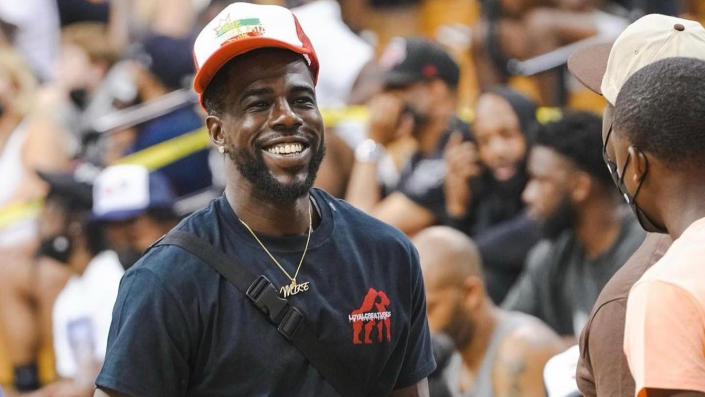
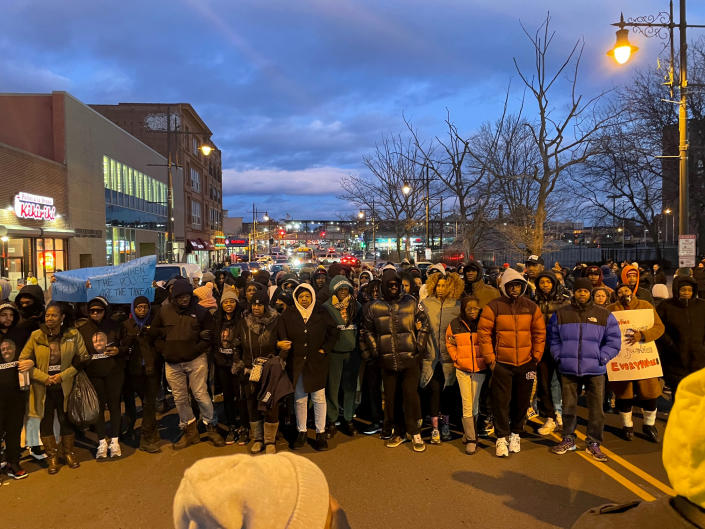
More than four days after Najee Seabrooks was shot and killed by Paterson police during a mental health crisis, his loved ones expressed outrage at a vigil Tuesday evening in Seabrooks’s hometown of Paterson, N.J. In a tragic twist of irony, the 31-year-old father of a little girl worked as a violence intervention activist to keep the most at-risk youth in his community safe, but became a victim of violence himself. “He did everything he could to serve his people,” Seabrooks’s best friend, Terrance Drakeford, said at the event, held outside the offices of the Paterson Healing Collective (PHC), a group dedicated to providing support for survivors of violence, where the two worked together. Upwards of 300 members of the community and constituents from anti-violence groups statewide gathered as temperatures dropped to bone-chilling levels. Following the prayer vigil, the group marched two blocks down the street to City Hall to hold a second demonstration on the steps outside where city leaders were meeting to discuss how the city would move forward.
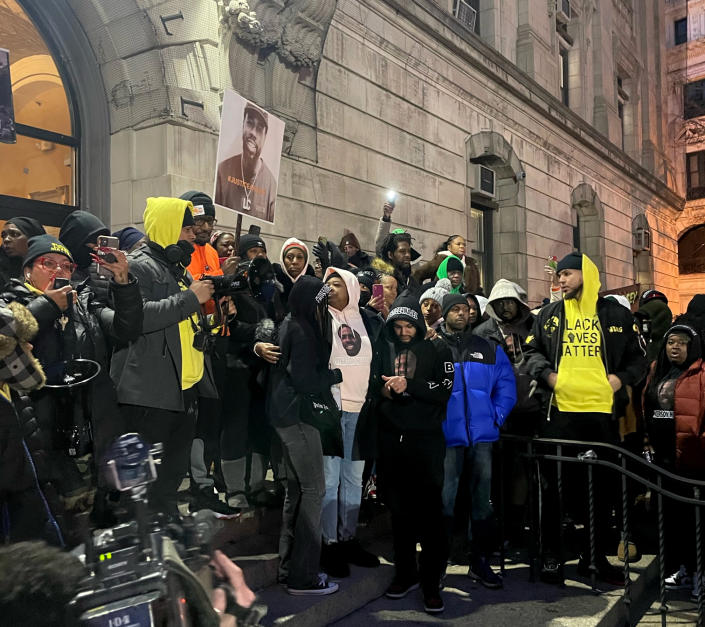
There was anger, frustration and passion emanating from attendees as speeches intertwined with chants of “Justice for Najee,” “No justice, no peace,” and “Stop police brutality in the Black community.” “We want justice,” Drakeford said. “We want whatever that comes with this.”
The shooting last Friday followed a standoff between Seabrooks and police that lasted more than four hours, according to Paterson Press. Police had responded to calls of a mentally disturbed person in his home, and when they arrived at the scene Seabrooks had allegedly barricaded himself inside the apartment. After prolonged negotiations, police claim, Seabrooks let officers into his homeand then charged at them with a knife. According to the New Jersey Attorney General’s Office, two officers fired their weapons at Seabrooks, striking him. He was later pronounced dead at St. Joseph’s Regional Medical Center in Paterson. On Wednesday, the attorney general’s office released the names of the officers who deployed their weapons: Anzore Tsay and Jose Hernandez. Both were members of the emergency response team. Officials say they could not deploy their Tasers because Seabrooks had broken pipes in the apartment and started a small fire that left significant amounts of water on the floor, making the use of the electrical device too dangerous. “The police was here for hours trying to calm him down and bring him out of the apartment, but he decided to turn the apartment on fire,” Councilman Luiz Velez told NBC New York. Paterson police did not respond to several requests for comment from Yahoo News.
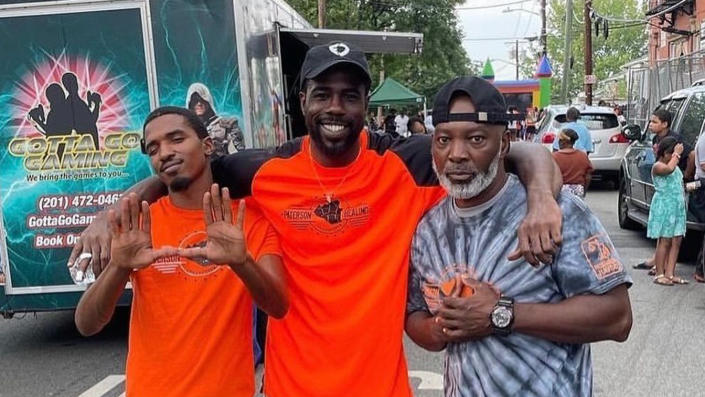
But those who knew Seabrooks best are skeptical of the police account of what happened and are urging the immediate release of body camera recordings of the incident so the public can see for themselves what took place. “We want full transparency, the names of all the officers released and body camera footage released,” Seabrooks’s brother Eli Carter said Tuesday. Seabrooks had contacted members of the PHC during his crisis, but police refused to let them intervene. Law enforcement said they could not allow civilians to involve themselves in crisis prevention and shot Seabrooks only after he wielded a knife and moved toward the officers. Officials told Paterson Press that one of Seabrooks’s relatives who works as a police officer in another city was brought to the scene to try to deescalate the situation. “I keep playing Friday over and over in my head,” Liza Chowdhury, project director of the PHC, said Tuesday, fighting back tears. “Police refused to let us intervene despite helping more than 250 residents throughout this city. I pleaded with them, and I know if they let us intervene he would still be alive. … He called us to help.” Teddie Martinez, violence interventions coördinator for the PHC, said he also pleaded with police to allow him to help on Friday, but to no avail. “We train the officers [on deescalation tactics], and how ironic they didn’t let us help,” Martinez said. “All I said was, ‘Let me see his face and I’ll go.’ They wanted to make it their show.”
.…
The state attorney general’s office is currently investigating the shooting. “Any loss of life is a tragedy, and we express our deepest condolences to the family, loved ones and friends, and colleagues of the decedent,” Dan Prochilo, a spokesperson for the attorney general’s office, told Yahoo News. “Our office is committed to thoroughly, fairly and independently investigating fatal police encounters.” Prochilo added that the office will make all information available, including video, when the investigation is complete. Paterson Mayor André Sayegh has been quiet since Friday’s shooting, according to local residents. On Saturday he issued his only statement on the incident, welcoming the attorney general’s review and saying that “prayers and condolences are with Mr. Seabrook’s [sic] family, friends and our impacted community.” When contacted by Yahoo News, his office shared the same statement, adding that it had “no further comment at this time.” During one of the speeches Tuesday night, an attendee shouted, “Where is the mayor? He knocked on my door to vote for him during election time, but I don’t see him here!
For many critics in the community already on edge following Seabrooks’s killing, each passing day with no additional information only adds to the angst and frustration. “In Memphis, they fired the cops within two weeks,” Larry Hamm, chairman of the People’s Organization for Progress, a social justice advocacy group, said, referencing Tyre Nichols, the 29-year-old Black man fatally beaten by Memphis police following a traffic stop in January. “If they had let the Paterson Healing Collective intervene, he would be alive today.” “How many Black men need to be killed before they take us seriously?” Councilman Michael Jackson said before entering a City Council meeting where only 20 residents were allowed inside.
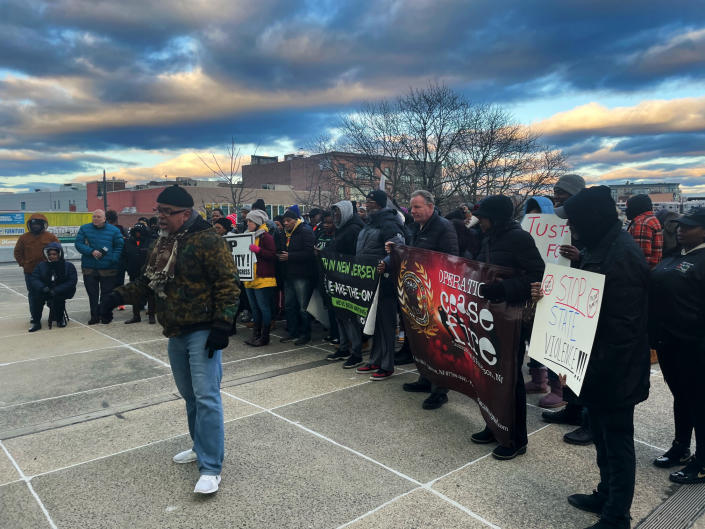
The Black Lives Matter chapter in Paterson has presented a list of demands for the city, which include the immediate release of police body camera footage of the incident and placing the officers involved in the shooting on administrative leave. The group, spearheaded by leader Zellie Thomas, also demands a restructuring of the city’s police department that would include creating a civilian complaint review board to investigate allegations of police wrongdoing in addition to investing more money in community groups that give Paterson residents positive outlets. “We have to open up people’s eyes that police officers are not the only solution to crises,” Thomas told Yahoo News, noting that conversations about actual change come to a halt once the conversation about the reallocation of police funding comes up. The Paterson Police Department represents more than 16% of the city’s budget, receiving more than $43 million last year, which is more than double the percentage that New York City allocates to its police department.
Seabrooks’s death isn’t the first case in which Paterson police have come under scrutiny for their handling of people having a mental health crisis. In January 2019, 27-year-old Jameek Lowery died after consuming illegal drugs and expressing feelings of “paranoia” before being repeatedly struck by police officers trying to restrain him on an ambulance gurney. A lawsuit filed by Lowery’s family cites at least three other instances — two of them fatal — since 2012 in which Paterson police shot individuals experiencing mental health episodes. There was also the death of 25‑year-old Thelonious McKnight, who was killed in late 2021 while fleeing police. Hamm believes that the issue of race cannot be ignored. Paterson has just over 157,000 residents, made up of 87% Black and Hispanic residents and 8% white residents, according to the latest census data. Meanwhile, 1 in 3 Paterson officers are white, while about 62% are Black or Hispanic. “There is a different way that they treat Black people in distress from white people in distress,” Hamm said. Michael Mitchell, an assistant professor of African American studies and criminology at the College of New Jersey, told Yahoo News that the need for transparency is urgent. “It is no secret that the Paterson Police Department is inundated in a legitimacy crisis due to the city’s toxic cop culture,” he said in an email, pointing to a recent Paterson police corruption case. “Therefore, the urgency in releasing publicly the body-worn camera footage from the police emergency responders involved cannot be overstated. A time lag in transparency only exacerbates community distrust in the institution publicly funded to protect and serve them.”
While many mental health advocates believe that officers need additional training to deal with individuals experiencing mental health crises, other advocates say police should not be involved at all unless the person is armed and an immediate threat to others. They say police are simply unqualified to handle the nuances of such situations. In New Jersey, Mitchell notes, the pilot program ARRIVE Together, which pairs police with mental health professionals during crisis calls, is showing promise, and Gov. Phil Murphy recently announced a $10 million investment in expanding the program statewide. “It is critical that police agencies and officers understand and operate under the recognition that you cannot respond to every person the same,” Mitchell said. “There can be no ‘one size fits all’ approach to policing, especially when dealing with individuals experiencing a mental health crisis.” Last year a three-digit National Suicide Prevention Lifeline number, 988, officially launched, allowing anyone witnessing or experiencing a mental health crisis to call, text or chat to talk to someone. But a Yahoo News report found that many states did not have the resources to staff and support the line adequately.
Over the last few years, several cities, including New York, Chicago and Denver, have launched programs that replace police response with mental health emergency responders and have seen success. But critics argue that the movement exists in far too few places and is expanding far too slowly. In Paterson, progress on the implementation of a task force has been inconsistent at best. Mayor Sayegh introduced a citizens’ de-escalation task force in December 2021, but, according to Thomas, the group has never met and has not rolled out a single new regulation. “This task force was supposed to be able to research best practices and best policies for officers to be equipped with de-escalation practices and policies, and over a year later, that de-escalation task force still has not met,” Thomas said. “What if that task force had met and was already researching some of the things we are proposing now and implemented it? It could have saved his life.”
According to those who knew him best, Seabrooks will be remembered by the community as someone who would do anything for those in need. His family started a GoFundMe to cover funeral expenses and create a trust fund for his daughter. His mother, Melissa Carter, told the CBS News local affiliate in New York that her son loved his city so much that he gave of himself in spite of his own personal circumstances. “He planned toy giveaways, he donated, he had homeless drives,” Carter said. “All he wanted to do was help the community.”
_____
mmm
A Tulare County police officer was sentenced Tuesday for a series of rapes he did while on duty, including one in uniform, prosecutors said. Oscar Robles, 30, raped two different victims between April 2017 and January 2018, threatening to use his official powers as a Woodlake officer to arrest them if they did not submit to the sexual assault, the Tulare County District Attorney’s Office said.
The United States is a Republican-run country with breaks for Democratic executive leadership when the voters are tired or dissatisfied with Republican leadership at the top.
Ultimately, however, the country is ruled by Republican policies at the state level legislatively and bookended by the Supreme Court on the other end.
The manifestation of this is evident in even good policies created and enacted in the best of times for Democrats, à la, laws like the Affordable Care Act enacted under the popular Democrat Obama come under continuous assault by Republicans and was saved the last time by Republican John McCain, in his now famous thumbs down vote.
Other Democratic initiatives passed under exigent circumstances during Democratic leadership have also come under increased Republican assault and have either been repealed by Congress or destroyed by the Supreme Court.
In 2016 while a popular Democrat, Barack Obama, was in the white house, the John Roberts Supreme Court eviscerated the 1965 Voting Rights Act passed under another Democratic President, Lyndon Johnson, in its (Shelby County V Holder) decision.
On January 21, 2010, the Supreme Court ruled Citizens United v. Federal Election Commission, overruling an earlier decision, Austin v. Michigan State Chamber of Commerce (Austin), that allowed prohibitions on independent expenditures by corporations.
The decision (citizens united) was a crushing blow to the work of many, including the late Republican US Senator from Arizona, John McCain, and former Democratic US Senator Russ Feingold and others, to stem the flood of dark money into political campaigns.
The Roberts court ruled that large corporations are people, and therefore they were allowed to flood political campaigns with endless streams of cash, drowning out the voices of the little man.
On Friday, June 24, 2022, the John Roberts Supreme Court overturned Roe v. Wade, the landmark piece of legislation that made access to abortion the law of the land. This legislation has been in effect since 1972.
Many in the punditry class bemoaned that flagrant act of raw judicial power as unprecedented, representing the first time in modern history that the court had rolled back rights that generations of Americans had previously enjoyed.
That assessment was incorrect and flawed. The court had only six (6) years earlier destroyed the firewall around voting rights in the Shelby County V Holder decision, thereby allowing a flood of anti-voting laws all across Republican-run states.
Years ago, having noticed some of the trends emerging from the political right, I commented to some associates and family members that Black Americans were in deep peril of being returned to slavery.
My assertions were based two-fold, (1) the anti-black posture adopted by the Republican party and (2) the sense a large part of the African-American community seemed to have that the civil rights fights were won and over with.
The problem with having that sense of comfort is that the people teaching their children to hate are doing so with a renewed sense of urgency based largely on their sense of entitlement, grievance, fear, and their dwindling population numbers.
As a consequence, African-Americans adopting a posture that all is well are in grave danger of having all the gains they were handed by their ancestors reversed.
Black history is being removed from schools and Universities. Teachers risk losing their jobs and even going to prison for teaching the truth about black history, that black people were here Hundreds of years before the Europeans.
African-Americans are forced to pay huge poll taxes to secure the right to vote. Long lines mean that voters in urban areas must stand in lines for up to 8 hours to vote.
Standing in line for 6 – 8 hours is a full workday. It is a poll tax. White voters in suburban and rural areas are not forced to undergo those indignities to exercise their franchise.
The Continuation and escalation of police brutality and murder against African-Americans are a manifestation of a process created from slavery to keep Blacks in their place.
Even as I write this article, state legislatures are working assiduously to degrade the will of voters in urban areas by removing powers from progressive Mayors and Prosecutors and handing them to Republican governors.
They will not stop until they return all Black people to chains on corporate plantations (farms).
.
.
.
.
Mike Beckles is a former Police Detective, businessman, freelance writer, black achiever honoree, and creator of the blog mikebeckles.com.

