I Can’t Die Like This’: Video Shows Trans Man Beaten By Deputy During Stop

YouTube player

Emmett Brock thought he was dying, and his mind raced. This isn’t sup­posed to hap­pen to me. This doesn’t hap­pen this way. I can’t die like this. He tast­ed the blood inside his mouth. He felt the fists land on his head. And he heard the shouts of the sheriff’s deputy on top of him, press­ing him into the pave­ment of the 7‑Eleven park­ing lot. Three min­utes lat­er, the 23-year-old teacher sat in the back of a Los Angeles County Sheriff’s Department cruis­er not even know­ing, he said, why the deputy had stopped him. Brock was sent to the Norwalk sta­tion lock­up and booked for three felonies. When he told the staff he is a trans­gen­der man, he said, they asked to see his gen­i­tals before decid­ing which hold­ing cell to send him to. That was in February. Brock is now job­less and still fac­ing crim­i­nal charges, all stem­ming from a traf­fic stop the deputy said was based on an air fresh­en­er he’d spot­ted hang­ing from Brock’s rearview mir­ror. The Sheriff’s Department has been under intense scruti­ny in recent weeks for two oth­er use-of-force inci­dents caught on cam­era, includ­ing one in which a deputy punched a woman in the face while try­ing to take her child. In that case, Sheriff Robert Luna con­demned the inci­dent as “com­plete­ly unac­cept­able” and relieved the deputy of duty. The FBI is now inves­ti­gat­ing.

YouTube player

Luna ran on promis­es of reform and has imple­ment­ed sev­er­al changes in the depart­ment since tak­ing office in December. He restored the abil­i­ty of over­sight offi­cials to access sher­if­f’s data­bas­es, turned over con­tro­ver­sial inves­ti­ga­tions to out­side agen­cies, ordered his deputies to coöper­ate with inves­ti­ga­tions and cre­at­ed an office to “erad­i­cate” deputy gangs. Citing the pos­si­bil­i­ty of lit­i­ga­tion, the depart­ment declined to com­ment specif­i­cal­ly on the Feb. 10 inci­dent involv­ing Brock, issu­ing a state­ment that said: “We take every use of force seri­ous­ly, and we do inves­ti­gate.” To Brock’s lawyer, Thomas Beck, that under­scores how far the Sheriff’s Department has to go when it comes to mean­ing­ful­ly hold­ing deputies accountable.
“They have not changed — in fact, they’ve become more stiff­ened against crit­i­cism,” he said. “The sys­tem that they have in place that they tell the pub­lic guar­an­tees account­abil­i­ty is a farce.” Before his run-in with the deputy, Brock already was hav­ing a mis­er­able day. He said he’d left his high school teach­ing job ear­ly after a co-work­er had harassed him for being trans­gen­der. It was­n’t the first time, and he was get­ting fed up. A few blocks from the school, Brock spot­ted a deputy who appeared to be hav­ing a heat­ed con­ver­sa­tion with a woman on the side of the road. As he drove by, Brock threw up his mid­dle fin­ger. He didn’t even think the deputy would see it, he said.

A few sec­onds lat­er, he spot­ted a patrol cruis­er fol­low­ing close behind him. It made Brock uneasy. He turned down one side street and then anoth­er, try­ing to fig­ure out whether the cruis­er was fol­low­ing him or just going in the same direc­tion. The deputy didn’t turn on his lights or siren, but made every turn Brock did. Growing unnerved, he called 911. “Hi, um, I’m being fol­lowed by a police car,” he said in a record­ing shared with The Times. He told the dis­patch­er that the car was copy­ing his turns, but not pulling him over. He said he want­ed to make sure it was a “real police car” and that he was­n’t being stalked. The two kept talk­ing, and even­tu­al­ly the dis­patch­er asked: “What is it that you want us to do? If he hasn’t pulled you over, he hasn’t pulled you over.” Two min­utes into the call, Brock cursed and hung up. He kept dri­ving, pulling up out­side the 7‑Eleven on Mills Avenue in Whittier, plan­ning to buy a Coke before head­ing to a ther­a­py appoint­ment. The cruis­er pulled in behind him, and the store’s sur­veil­lance cam­era cap­tured what fol­lowed. The deputy’s body-worn cam­era cap­tured the sound. As Brock stepped out of his car, Deputy Joseph Benza approached and told him: “I just stopped you,” offer­ing no expla­na­tion as to why. Confused, Brock replied, “No, you didn’t.” “Yeah, I did,” the deputy said. Then he grabbed Brock’s arm and forced him to the ground.

Still unsure what he’d done, Brock said, he began to scream. “What — what are you doing? Oh, my god. What the f— is hap­pen­ing?” For the next three min­utes, Brock strug­gled and screamed as the deputy held him down and punched him in the head. “You’re going to kill me,” Brock told him. “You’re going to f – -ing kill me. Help! Help! Help! I’m not resist­ing!” His mind raced, turn­ing over thoughts of all the things he’d nev­er get to do in life: Finish grad school. Be a father. Become a pro­fes­sor. “Help! Help! Help! I’m not resist­ing!” At one point, the deputy ordered him to put his arms behind his back — but Brock’s arms were already pinned under his chest. “Even when I did get them out the way he want­ed, he con­tin­ued to punch me,” Brock told The Times. “He just kept say­ing, ‘Stop resist­ing, stop resist­ing.’ I didn’t under­stand why he was shout­ing that because I wasn’t resist­ing.” According to the Sheriff’s Department, two wit­ness­es saw Brock exit his car and strug­gle with the deputy. One of those wit­ness­es claimed that Brock punched the deputy, which cam­era footage does not show and the deputy did not allege. After Brock was in hand­cuffs, the deputy put him into the back seat of his cruis­er. At that point, Brock said, he was try­ing to make sense of what had hap­pened and why he was on the deputy’s radar in the first place.

It was only lat­er that he learned from the paper­work he was giv­en: The deputy said he’d spot­ted an air fresh­en­er hang­ing from the rearview mir­ror, sup­pos­ed­ly obstruct­ing the view of the road from Brock’s black Honda Civic. If Benza saw Brock flip him off, he made no men­tion of it in his report. According to the deputy’s ver­sion of events, the force was jus­ti­fied. “It appeared he was about to walk away from the car and myself,” Benza wrote as part of an 11-page inci­dent report. “His rejec­tion of my traf­fic deten­tion and his appar­ent intent to dis­tance him­self from his vehi­cle fur­ther raise safe­ty con­cerns. I know from my train­ing and expe­ri­ence that those who pos­sess con­tra­band items inside vehi­cles com­mon­ly attempt to dis­as­so­ci­ate them­selves from their vehi­cles when law enforce­ment is present.” Though he admit­ted grab­bing Brock’s arm, he said that Brock pulled away and “cocked his right hand back into a fist, indica­tive of some­one about to throw a punch.” Deciding Brock was “at the onset of assault­ing me,” Benza said he tack­led him to the ground, adding that Brock had “con­tin­u­ous­ly tried to bite” him. Benza then punched him “approx­i­mate­ly eight times in rapid suc­ces­sion.” “My punch­es had their intend­ed effect,” he added. He made no men­tion of Brock’s cries for help, or that he repeat­ed­ly told the deputy that he couldn’t breathe and wasn’t resist­ing. Instead, Benza’s report not­ed that Brock “attempt­ed to rip my skin from my hand,” which he said “could result in per­ma­nent disfigurement.”

A paramedic’s report from the scene did not men­tion any bite marks. And when Benza went to the hos­pi­tal lat­er, the emer­gency room report not­ed that he’d told them the bite hadn’t bro­ken the skin and there was no bleed­ing. A physician’s assis­tant wrote that there were “no bite marks at this time.” Medical records do show that Benza frac­tured his right hand in a “punch­ing injury.” In inter­views with The Times, Brock denied bit­ing the deputy, and his lawyer said it would have been near­ly impos­si­ble. “There is no moment that Emmett is not shout­ing or scream­ing,” Beck said. “And you can’t talk when your teeth are clamped onto some­one’s hand.” Benza did not respond to a request for com­ment. To Ed Obayashi, a for­mer Northern California sheriff’s deputy who is a nation­al use-of-force expert, the inci­dent rais­es red flags. “I just don’t see why this esca­lat­ed as quick­ly as it did,” he told The Times after review­ing the 7‑Eleven footage. “It just goes from zero to 100 imme­di­ate­ly, and there’s no expla­na­tion.” And after the vio­lence began, Obayashi said, the appar­ent lack of attempt to de-esca­late the sit­u­a­tion — espe­cial­ly once Brock start­ed to show signs of seri­ous dis­tress — was anoth­er point of con­cern. “There’s always a prob­lem when you have an indi­vid­ual telling an offi­cer he can’t breathe,” Obayashi said, adding that he didn’t see or hear any indi­ca­tion that Brock threat­ened the deputy. “This is a minor traf­fic offense at the most,” he said, “and we’re talk­ing about air freshener.”

Given Brock’s asser­tion that he flipped off the deputy, Obayashi sug­gest­ed that the minor traf­fic infrac­tion might have been a pre­text to pull Brock over. “This could very well be con­tempt of cop,” he added, ref­er­enc­ing a term some in law enforce­ment use to describe sit­u­a­tions in which offi­cers respond with vio­lence when they per­ceive someone’s behav­ior as dis­re­spect­ful. In California, he added, it can be grounds for deputies and police offi­cers to lose their state peace offi­cer cer­ti­fi­ca­tion. In Los Angeles, such behav­ior could also vio­late the depart­ment pol­i­cy ban­ning retal­ia­to­ry forceDeputies took Brock to Coast Plaza Hospital, where he was treat­ed for scrapes, bruis­es and a con­cus­sion. Once he was med­ical­ly cleared, deputies took him to the sta­tion for book­ing. There, staff took his mug shot and fin­ger­prints. They took his shoes and direct­ed him to take off any jew­el­ry. He strug­gled to pull his rings off over his swollen knuck­les. By that point, he said, the pain was begin­ning to set in. “My head was just explod­ing. I felt like I got hit by a truck.” It was­n’t long before author­i­ties asked Brock for a state­ment, dur­ing which he explained that he is trans­gen­der. “So you’re a girl?” he said one jail­er asked. Brock said he wasn’t. Then the man asked whether he had a penis — and Brock said he did. He explained what surg­eries exist­ed, and said that he’d been on hor­mones for years. After one jail­er asked for proof, Brock said, he spent a few awk­ward min­utes in a bath­room show­ing her his gen­i­talia and explain­ing the effects of testos­terone. He was placed in a women’s hold­ing cell. It was a Friday after­noon and, with the courts closed, he wor­ried he’d be stuck behind bars all week­end. It was after dark when one of the jail­ers told him his fam­i­ly and his girl­friend had pulled togeth­er enough mon­ey for bail.

He was fac­ing three felonies — may­hem, resist­ing arrest and obstruc­tion — plus mis­de­meanor fail­ure to obey a police offi­cer. Four days lat­er, he lost his job after state author­i­ties noti­fied the school of his pend­ing charges. “I lost so much of myself that day in the park­ing lot,” he said. “But I love what I do, and it is kind of how I define myself — and for that to be tak­en away? It felt like I had just lost every­thing.” When the inci­dent went through the department’s nor­mal force review process, offi­cials cleared Benza of wrong­do­ing. One sergeant wrote that Brock was assaultive “with threat of seri­ous bod­i­ly injury.” Another sergeant, list­ed as the watch com­man­der, con­curred, say­ing the inci­dent was with­in pol­i­cy and the force used was “objec­tive­ly rea­son­able.” The sergeant also checked “no” on the paper­work next to the ques­tion: “Could offi­cer safe­ty, tac­ti­cal com­mu­ni­ca­tion, or de-esca­la­tion tech­niques have been improved?” The sta­tion cap­tain agreed with the two sergeants below him. Only once the mat­ter went up to the divi­sion com­man­der did the report note room for improve­ment. “This sit­u­a­tion was very dynam­ic and evolv­ing, which required a split-sec­ond deci­sion to be made by Deputy Benza, since it appeared sus­pect Brock was try­ing to avoid being con­tact­ed. Officer safe­ty is para­mount,” Cmdr. Allen Castellano wrote. But since Benza’s vehi­cle had Brock’s blocked in, Castellano said, he could have tak­en the time to call for back­up while keep­ing tabs on the sit­u­a­tion before con­fronting Brock. Overall, he wrote, “based on Deputy Benza’s artic­u­la­tion that sus­pect Brock was bit­ing his right hand,” the punch­es “appeared to be justified.”

In March, Brock’s lawyer asked depart­ment offi­cials to crim­i­nal­ly inves­ti­gate Benza. In April — after send­ing a sec­ond let­ter — he received a reply assur­ing him the depart­ment would inves­ti­gate “in a time­ly man­ner.” That month, Brock had his first court appear­ance. Though he’d been booked on three felonies and a mis­de­meanor, pros­e­cu­tors ulti­mate­ly decid­ed to move for­ward with two mis­de­meanor charges: resist­ing arrest and bat­tery on an offi­cer. A judge reduced his bail from $100,000 to noth­ing. The case is still mov­ing for­ward. In a May email to the depart­ment, Brock’s attor­ney accused the deputy of false impris­on­ment and kid­nap­ping. “There is now proof Benza man­u­fac­tured the bit­ing claim upon learn­ing that the 7‑Eleven video caught him vio­lent­ly assault­ing and punch­ing Mr. Brock,” Beck wrote. “I would love to see the depart­ment turn a new leaf with this evi­dence,” he wrote. “My chief crit­i­cism of LASD over the decades has been the will­ful­ly blind eyes that apply to cit­i­zen com­plaints, no mat­ter what the proof. Let this case not be one of them.”

Judge Rules Kansas Highway Patrol ‘waged War On Motorists,’ Violated Constitutional Rights

Big Whoppie. Police in the United States are not account­able to any­one but them­selves. Qualified immu­ni­ty, a pol­i­cy craft­ed by the Supreme Court, not an act of Congress or direc­tive of the Executive Branch of the Government, has giv­en police blan­ket immu­ni­ty. As a result of that immu­ni­ty, they act with total impuni­ty. They are the law.
America’s police Departments con­tin­ue to seek out new ways to vio­late the US Constitution and the rights of ordi­nary Americans dai­ly. Unfortunately, the love affair that America has with the con­cept of polic­ing that keeps eth­nic minori­ties sub­ju­gat­ed under white suprema­cy, the nation’s lead­ers will con­tin­ue to twist them­selves into pret­zels to cir­cum­vent the US Constitution and cit­i­zens’ rights in order not just to main­tain con­trol but keep the mass­es subjugated.
Perhaps the great­est threat to the civ­il order in the coun­try is the lack of jus­tice per­pet­u­at­ed by Prosecutors and Judges who are in the pock­ets of Police Unions and there­fore con­strained from cit­ing in the inter­est of jus­tice for all citizens.
Police depart­ments have no rea­son to change their behav­ior. There are enough racist Republican politi­cians and some Democrats who will con­tin­ue to pour resources into these morass swamps of racism on ginned-up fears of esca­lat­ing crime sta­tis­tics. Instituted into some depart­ments are so-called Office of Professional Standards, which are oxy­morons, in sim­ple terms, bull­shit (mb)

One would have thought that as a black-skin folk this c**n, Herman Jones would be fight­ing to ensure that this kind of behav­ior is not tol­er­at­ed, but his behav­ior direct­ly con­tra­dicts the idea of empow­er­ing blacks to posi­tions like the one Jones held before he stepped down…

The Kansas Highway Patrol “has waged war on motorists,” a fed­er­al judge wrote in a scathing rul­ing against the agency’s prac­tice of extend­ing car stops in hopes of dis­cov­er­ing drugs. In the order filed Friday, U.S. District Judge Kathryn H. Vratil wrote that the patrol’s tac­tics in traf­fic stops vio­lat­ed the Constitution.
The prac­tice called the “Kansas two-step” is a maneu­ver in which troop­ers at the end of a traf­fic stop take a cou­ple of steps toward their patrol car before turn­ing around to ini­ti­ate a vol­un­tary inter­ac­tion with the driver.
The strat­e­gy would buy the patrol extra time to probe for incrim­i­nat­ing infor­ma­tion or get a drug-sniff­ing dog to a location.
“As wars go, this one is rel­a­tive­ly easy,” Vratil wrote. “It’s sim­ple and cheap, and for motorists, it’s not a fair fight. The war is basi­cal­ly a ques­tion of num­bers: stop enough cars, and you’re bound to dis­cov­er drugs. And what’s the harm if a few con­sti­tu­tion­al rights are tram­pled along the way?”

The Kansas Highway Patrol did not imme­di­ate­ly respond to The Star’s request for com­ment. In 2019, the American Civil Liberties Union sued the patrol on behalf of sev­er­al indi­vid­u­als who were sub­ject­ed to the “two-step” strategy.
Sharon Brett, legal direc­tor for the ACLU of Kansas, called the rul­ing a “huge win” for those dri­ving on Kansas’ highways.
“Today’s deci­sion val­i­dates that motorists’ con­sti­tu­tion­al rights can­not be cast aside under the guise of a ‘war on drugs’. It also demon­strates that courts will not tol­er­ate the cow­boy men­tal­i­ty of polic­ing that sub­jects our cit­i­zens to con­di­tions of humil­i­a­tion, degra­da­tion, and, in some trag­ic cas­es, vio­lence,” Brett said in a statement.
The ACLU had argued the “two-step” vio­lat­ed dri­vers’ con­sti­tu­tion­al rights pro­tect­ing them from unrea­son­able search and seizure and alleged. They argued the tac­tic was used to tar­get dri­vers com­ing from or head­ing to states where mar­i­jua­na is legal, despite pre­vi­ous court rul­ings lim­it­ing how police can use infor­ma­tion about a vehicle’s ori­gin and destination.

Kansas is one of just three states with no form of legal mar­i­jua­na or THC. Possession of the drug remains a Class B mis­de­meanor even as the state is sur­round­ed on three sides by states that either allow recre­ation­al mar­i­jua­na or have an exten­sive med­i­c­i­nal pro­gram. “As a result, all dri­vers on I‑70 have mov­ing tar­gets on their backs,” Vratil said, adding that troop­ers tar­get­ed out-of-state dri­vers and sub­ject­ed them to a dis­pro­por­tion­ate num­ber of search­es based on where they were trav­el­ing to or from. She also con­clud­ed that a few sec­onds of dis­en­gage­ment was insuf­fi­cient “for rea­son­able dri­vers to feel free to leave.” Earlier this year, two juries found that indi­vid­ual troop­ers employ­ing the strat­e­gy had vio­lat­ed con­sti­tu­tion­al rights. This is the first rul­ing to hold the agency itself, specif­i­cal­ly for­mer Superintendent Herman Jones, cul­pa­ble for the prac­tice. Testifying in this case in May, Jones said the two troop­ers who were found to have vio­lat­ed rates had not yet faced dis­ci­pline. He could not recall whether the trooper’s super­vi­sors had been dis­ci­plined. He said at the time that troop­ers had no incen­tive to search vehi­cles illegally.

Jones retired from the patrol last month after a tenure marked by alle­ga­tions of sex­u­al harass­ment and gen­der dis­crim­i­na­tion. This week, a fed­er­al judge ruled in favor of Jones in a sex­u­al harass­ment law­suit brought by sev­er­al cur­rent and for­mer female employ­ees. While the judge did not rule on the alle­ga­tions them­selves, she said Jones had qual­i­fied immu­ni­ty and that the alle­ga­tions against him were not severe enough to mer­it legal action. Democratic Gov. Laura Kelly appoint­ed Erik Smith, a for­mer top offi­cial at the U.S. Drug Enforcement Administration, to take over for Jones lead­ing the agency. The Kansas State Senate will vote on his con­fir­ma­tion next year. The lawsuit’s par­ties have until Aug. 14 to respond to the terms of a pos­si­ble injunc­tion. The injunc­tion would require troop­ers to doc­u­ment all stops, deten­tions, and search­es. That report would require troop­ers to include infor­ma­tion about the dura­tion of the stop and how it concluded. 
Troopers would also have to noti­fy and get approval from a super­vi­sor for con­sen­su­al search­es and let the dri­ver know they can revoke con­sent at any time. Troopers would have to under­go 24 hours of annu­al train­ing on inves­ti­ga­to­ry stops. The injunc­tion would remain in effect for four years unless KHP met the require­ments sooner.

Teen left in ‘excruciating pain’ by officer during traffic stop, California suit says.


A teenag­er was left in “excru­ci­at­ing pain” after her fam­i­ly says a police offi­cer used “exces­sive force” dur­ing a traf­fic stop in California, accord­ing to a law­suit. The 17-year-old was dri­ving with friends on March 8 when offi­cers with the Chico Police Department pulled her over, says the law­suit, which was filed on June 5. The offi­cer told the teen, who is only iden­ti­fied by her ini­tials in the law­suit, that he pulled her over for not using her blink­er and for “yelling racial slurs out of her car,” the law­suit says.
According to the law­suit, the teen told the offi­cer she would nev­er use racial slurs. Police had been look­ing for a woman in a dark blue Ford who was accused of shout­ing racial slurs out of her car, but the teen was dri­ving a gray Toyota Tacoma, the law­suit says. The law­suit says the teen called her moth­er, who came to the scene and parked about 5 feet away. When the teen tried to go over to talk to her mom, an offi­cer shout­ed that she wasn’t allowed to leave and grabbed her arms “with a lot of force,” the law­suit says.

He then “twist­ed her arms behind her back,” caus­ing “excru­ci­at­ing pain,” the law­suit says. The teen was recov­er­ing from a bro­ken hand and was still heal­ing after surgery and told the offi­cer he was hurt­ing her, the law­suit said.
The offi­cer then kicked her leg out from under her and “pushed her to the floor with sig­nif­i­cant force,” the law­suit says. The Chico Police Department told McClatchy News it could not com­ment on pend­ing lit­i­ga­tion. The teen told offi­cers that the hand­cuffs were hurt­ing her injured arm and hand, but offi­cers said “they didn’t care,” refused to loosen her hand­cuffs and told her she’d be checked lat­er at a hos­pi­tal, the law­suit says. The teen said in a state­ment that she is scared every time she sees a police car dri­ve by.
“I nev­er know if they will ‘like me or not’ and what they will do to me even when I am doing no wrong,” the teen said. “I hope to get the offi­cers that did this off the streets so cops are held account­able for their actions and not hide behind a badge.” In the state­ment, she said that the plates in her arm are still aching and that her arm now makes a pop­ping sound. “The expe­ri­ence for me was extreme­ly scary to see that these peo­ple have this much pow­er and will still try to hide every­thing even when they are wrong,” she said. Her moth­er said in a state­ment that it was “trau­ma­tiz­ing” to watch her daugh­ter be treat­ed this way by police.

Her father is a cop with the same depart­ment, and I didn’t expect this kind of behav­ior from his col­leagues,” she said. “I felt help­less. To watch my daugh­ter suf­fer this unpro­voked bru­tal­i­ty, beg­ging for help, and just be told to just sit and watch, was absolute­ly hor­ri­fy­ing.” The family’s lawyer, Stanley Goff, said the teen was charged after the inci­dent but declined to name the charge. He said they are fight­ing the charge in juve­nile court and antic­i­pate that it will be dis­missed. The law­suit accus­es offi­cers of using exces­sive force and seeks dam­ages of an unspec­i­fied amount. The teen’s moth­er said in a state­ment that she hopes the law­suit will help bring more account­abil­i­ty to the police force and allow peo­ple to rebuild their con­fi­dence in law enforce­ment. “It breaks my heart when the peo­ple we rely on to pro­tect us are the ones harm­ing us,” she wrote. “This has got to change.”

Antioch officers referred to the police chief as ‘gorilla’ in texts: DA

So even when they have the doc­u­men­tary evi­dence and know deci­sive­ly who the scum­bags are, they are still not free and decertified.

YouTube player

I’m only stop­ping them cuz they are black. F**k them.” This offi­cer’s text was uncov­ered in the FBI’s inves­ti­ga­tion of the Antioch Police Department. The report revealed more racist texts and exchanges that demon­strat­ed how offi­cers used racial pro­fil­ing while on patrol.

LPD officer placed on administrative leave after reportedly dragging arrestee through park

Lubbock Police Department offi­cials placed an offi­cer on admin­is­tra­tive leave Thursday as they inves­ti­gate a video cir­cu­lat­ing on social media that appears to show the offi­cer drag­ging a woman across the ground dur­ing an arrest Wednesday morning.
A video was post­ed on the Facebook page Lubbock County Mugshots Wednesday after­noon that shows an LPD patrol offi­cer drag­ging a woman by her arms to his patrol car while she screams. LPD said in a news release Thursday the depart­ment became aware of the video Wednesday evening and placed the offi­cer — who was not iden­ti­fied — on leave Thursday morn­ing while the Office of Professional Standards inves­ti­gates. The arrest stems from a 7:33 a.m. check sub­ject call report­ed to Lubbock police for a per­son act­ing sus­pi­cious­ly in the 1600 block of 24th Street, accord­ing to the news release. A police report obtained by the Avalanche-Journal states the offi­cer was not dis­patched to the call until more than an hour lat­er, and he found 48-year-old Mary Ramirez report­ed­ly rolling in the grass at Hood Park, near 24th Street and Avenue Q. The report states the offi­cer believed Ramirez was the sus­pi­cious sub­ject ref­er­enced in the check sub­ject call.

According to the report, the offi­cer attempt­ed to ask Ramirez about her behav­ior but she report­ed­ly ignored him and tried to crawl away from him. The offi­cer wrote in his report that he sus­pect­ed Ramirez “was intox­i­cat­ed on some type of stim­u­lant” and “undoubt­ed­ly under the influ­ence of some drug dur­ing this event.” The offi­cer wrote, “I believed her to be a dan­ger to (her­self), unable to defend her­self, and with no option before me, I placed her under arrest.” The report states the offi­cer hand­cuffed Ramirez, who report­ed­ly tried to fight and kick the offi­cer and refused to walk to the police car. The offi­cer said he “pulled her in the soft grass” to the patrol car, but Ramirez report­ed­ly “bar­rel-rolled” down a hill and the offi­cer “had to drag her back to the vehi­cle again.”

Finally, as I was drag­ging her, her pants came off so she was embar­rassed enough to get into my patrol vehi­cle, where she put her clothes back on,” the offi­cer wrote. “The Lubbock Police Department’s Office of Professional Standards is cur­rent­ly inves­ti­gat­ing the video and the cir­cum­stances sur­round­ing the arrest to deter­mine if there were any pol­i­cy vio­la­tions,” the department’s news release states. Ramirez was booked into the Lubbock County Detention Center on charges of pub­lic intox­i­ca­tion and resist­ing arrest, both mis­de­meanors. No injuries were report­ed in the inci­dent, LPD said. The A‑J request­ed footage from the officer’s body-worn cam­era, but offi­cials denied the request, cit­ing an ongo­ing investigation.

Gunman Who ‘ambushed’ Fargo Officers Had 1,800 Rounds Of Ammunition And A Grenade, AG Says

The gun­man who ambushed three Fargo, North Dakota, police offi­cers in an unpro­voked attack Friday had an arse­nal that includ­ed 1,800 rounds of ammu­ni­tion and a home­made hand grenade, the state attor­ney gen­er­al said Wednesday.

Mohamad Barakat, 37, “absolute­ly ambushed” the offi­cers, firing a .223-cal­iber rifle from inside his vehi­cle Friday as police were respond­ing to a car acci­dent, Attorney General Drew Wrigley said.

One offi­cer, Jake Wallin, 23, was killed and two oth­ers were shot and wound­ed. Barakat was shot and killed by Police Officer Zach Robinson, offi­cials said.

Barakat also shot a woman who was stand­ing on the street after the unre­lat­ed car acci­dent. She was struck twice as she ran from the gun­fire, Wrigley said.

Official por­traits of Fargo, N.D., police offi­cers involved in a shoot­ing a day ear­li­er are dis­played dur­ing a news con­fer­ence, Saturday, July 15, 2023, at Fargo City Hall. Officer Jake Wallin, far left, was fatal­ly shot. Officers Andrew Dotas and Tyler Hawes were both crit­i­cal­ly injured. Officer Zachary Robinson, who killed the sus­pect and is on paid admin­is­tra­tive leave, is also pic­tured. Authorities have said a civil­ian was also injured. (AP Photo/​Ann Arbor Miller )This pho­to pro­vid­ed by The City of Fargo, N.D., on Saturday, July 15, 2023 shows police offi­cer Zach Robinson. On Saturday, Fargo’s police chief said a gun­man opened fire on police and fire­fight­ers as they respond­ed to a traf­fic crash in North Dakota. One offi­cer was killed and two oth­ers were wound­ed before a fourth offi­cer, Robinson, killed him. 

In the wake of Mohamad Barakat’s mur­der­ous, unpro­voked attack, Officer Zach Robinson’s use of dead­ly force was rea­son­able, it was nec­es­sary, it was jus­ti­fied, and in all ways it was law­ful,” he said.

Robinson, who was in the road around 75 feet away, radioed for help and returned fire, and one of the bul­lets he fired dis­abled Barakat’s .223-cal­iber rifle, Wrigley said.

Barakat, who was wound­ed and now out­side his vehi­cle, got a 9 mm hand­gun and was “wav­ing it around” before Robinson even­tu­al­ly shot and killed him, Wrigley said.

The shoot­ing is under inves­ti­ga­tion, and offi­cials have said a motive is unknown.

Wrigley said the offi­cers, who were there for a traf­fic acci­dent, were shot with­out warn­ing or reason.

He absolute­ly ambushed them from inside that vehi­cle. They had no way to know,” he said.

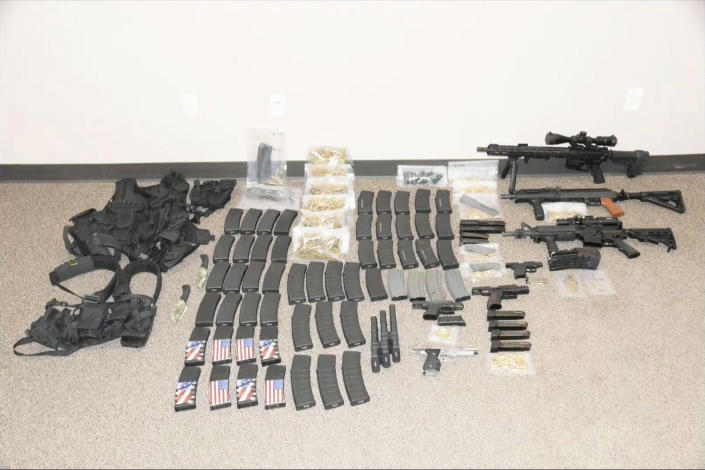
Inside the vehi­cle, inves­ti­ga­tors found the 1,800 rounds of .223-cal­iber ammu­ni­tion, explo­sives, gas can­is­ters and a home­made grenade with a fuse out of the top that was oper­a­tional, Wrigley said.

There were three long guns in all, one of which had a scope, as well as four hand­guns and a vest car­ry­ing mag­a­zines, he said.

This photo released by the North Dakota Bureau of Criminal Investigation on Wednesday, July 19, 2023, shows the cache of weapons and ammunition that authorities recovered from the car of a man who opened fire on Fargo, N.D., police officers on Friday, July 14. One officer, Jake Wallin, was killed and two others were injured before a fourth officer shot and killed 37-year-old Mohamad Barakat. (North Dakota Bureau of Criminal Investigation via AP)

The rifle used in the attack had two mag­a­zines that were attached side by side, car­ry­ing 60 rounds total, Wrigley said. Barakat fired 40 or 41 rounds before the rifle was struck and dis­abled, he said.

Mayor Tim Mahoney said that had police not killed Barakat, “we would have had many more casualties.”

Police Chief David Zibolski said it was remark­able that Robinson, armed with a hand­gun, was able to shoot Barakat and dis­able his rifle from 75 feet away while being shot at.

The inci­dent and the gun­fight last­ed around two min­utes, he said.

Wrigley said Robinson gave Barakat 16 direc­tives to raise his hands or put the gun down before he shot Barakat.

Officials are expect­ed to release more infor­ma­tion Friday.

The shoot­ing was cap­tured on police body-worn cam­eras, which Wrigley said were reviewed along with oth­er evidence.

He said that the gun­fire by Barakat was so rapid that it sound­ed like ful­ly auto­mat­ic fire and that Robinson believed it was ful­ly automatic.

It will fool any­body who lis­tens to it,” Wrigley said.

Officials believe that Barakat legal­ly acquired all the weapons and that he was not pro­hib­it­ed from hav­ing firearms, but the inves­ti­ga­tion con­tin­ues, Wrigley said.

In addi­tion to the guns in the car, addi­tion­al firearms were found in a search of his res­i­dence, he said. Barakat car­ried the guns to his car in a rolling suit­case, he said.

Gov. Doug Burgum ordered Tuesday that flags be flown at half-staff through Saturday in hon­or of Wallin, the offi­cer who was killed.

The two offi­cers who were wound­ed were still hos­pi­tal­ized in crit­i­cal but sta­ble con­di­tion Wednesday and are improv­ing, said Zibolski, the police chief.

This arti­cle was orig­i­nal­ly pub­lished on NBCNews​.com

A Stray Bullet Hit A Woman Lying In Bed. A Federal Judge Dismissed Her Lawsuit Against Police

YouTube player

Time and again, I write that the cri­sis of police vio­lence in the United States is not just an issue of vio­lent, poor­ly-trained, big­ot­ed igno­ra­mus­es in uni­form; but a com­plete struc­ture of racism that we see man­i­fest­ed large­ly in police action.
The crim­i­nal jus­tice sys­tem is far­ci­cal. It will not deal appro­pri­ate­ly and in a just way with its own foot­sol­diers, the police.
The Black com­mu­ni­ty should not expect to get jus­tice from this flawed sys­tem that was not cre­at­ed t be just and fair but designed to be exact­ly what it is.(mb)

Thomas Lee

A fed­er­al judge has dis­missed a law­suit filed by a Mississippi woman who says she was hit by a stray police bul­let while lying in bed. Latasha Smith, 49, was in bed on Dec. 11 when an offi­cer from the state-run Capitol Police fired sev­er­al bul­lets at a sus­pect run­ning through her Jackson apart­ment com­plex, accord­ing to her fed­er­al com­plaint. A stray bul­let entered Smith’s apart­ment and struck her arm. Smith, who said her teenage daugh­ter was home dur­ing the episode, was tak­en to a hos­pi­tal. In April, Smith sued Mississippi Public Safety Commissioner Sean Tindell and Capitol Police Chief Bo Luckey, argu­ing that police offi­cers under their watch vio­lat­ed her con­sti­tu­tion­al rights by act­ing with “delib­er­ate indif­fer­ence” for her life. She also claimed that Tindell and Luckey failed to prop­er­ly train officers.
In a Wednesday rul­ing, U.S. District Judge Tom Lee grant­ed Tindell and Luckey’s request to dis­miss the law­suit, writ­ing that they can­not be liable because they are not alleged to have par­tic­i­pat­ed in the shoot­ing inci­dent and because state offi­cials can­not be sued for vio­la­tions of state law in fed­er­al court.

NBC News obtained sur­veil­lance video from Smith’s apart­ment com­plex that appeared to show an offi­cer fir­ing on a man who was flee­ing after jump­ing out of a sus­pect­ed stolen car. Tindell told the news out­let that the offi­cer was ini­tial­ly placed on leave but lat­er returned to active duty after an inter­nal inves­ti­ga­tion deter­mined the offi­cer did not break any laws.
A spokesper­son for Tindell did not imme­di­ate­ly respond to a request for com­ment. In a phone inter­view, Smith’s attor­ney, Dennis Sweet IV, said that he and Smith are con­sid­er­ing an appeal.
“We’re dis­ap­point­ed,” Sweet said. “The truth is they went into the com­mu­ni­ty, there was a high-speed chase, a lady in bed got shot, and there is no recourse. And that’s going to be the new police force in Jackson.”

Officers from the Capitol Police have been patrolling around state gov­ern­ment build­ings in and near down­town, while the Jackson Police Department patrols the entire city. A new Mississippi law would expand the patrol ter­ri­to­ry of the Capitol Police Department with­in Jackson. Critics say Capitol Police are aggres­sive and expand­ing the ter­ri­to­ry could endan­ger lives in the major­i­ty Black city. Smith is Black. Her com­plaint said the Capitol Police use “dis­pro­por­tion­ate and unnec­es­sary force against African American cit­i­zens.” Members of the major­i­ty-white and Republican-con­trolled Legislature said they passed the law to improve safe­ty in Jackson, which has had more than 100 homi­cides for each of the past three years. U.S. District Judge Henry Wingate has tem­porar­i­ly blocked the law from tak­ing effect.
On Wednesday, the same day Lee dis­missed Smith’s law­suit, the U.S. Department of Justice said it was seek­ing to join a fed­er­al law­suit the NAACP filed against the state to block the new law.

Connecticut Police Allegedly Issued 26,000 Fake Tickets To Cover Up Racism

YouTube player

This web­site, and oth­ers, has been laser-like focused on bring­ing you the many ways American police oper­ate with total impuni­ty. This impuni­ty comes from rul­ings by the high­est court that, at best, is ille­git­i­mate and, worse, corrupt.
American police are not only gangs that oper­ate out­side the law at heart. They are, for the most part, unac­count­able and deeply corrupt.
There is real­ly no good police depart­ment in the United States that is not taint­ed by racism and prej­u­dice. As I have said before, this prob­lem can­not be reme­di­at­ed. The entire con­struct of polic­ing obtained from slave patrols must be reimag­ined to have any sem­blance of authen­tic­i­ty to con­scious peo­ple who are not Caucasians.

A Connecticut State Police Ford Taurus Crusier.

An inves­ti­ga­tion is report­ed­ly being launched in Connecticut after an audit found a “high like­li­hood” that hun­dreds of Connecticut State Police troop­ers have been fal­si­fy­ing tens of thou­sands of traf­fic tick­et records over the past decade to hide ram­pant racism, accord­ing to CT Insider.
The report found that there was a “high like­li­hood” that at least 25,996 tick­ets were com­plete­ly made up between 2014 and 2021. A fur­ther 32,587 records dur­ing that same peri­od show “sig­nif­i­cant inac­cu­ra­cies,” and audi­tors feel those may also be false. Remember that the audi­tors empha­sized that their analy­sis was extreme­ly con­ser­v­a­tive and “the num­ber of fal­si­fied records is like­ly larg­er than we con­fi­dent­ly iden­ti­fied.” The false reports were sub­mit­ted by about one-quar­ter of the 1,301 troop­ers who wrote tick­ets in the time period.

The out­let also reports that the find­ings alleged a sys­tem­at­ic vio­la­tion of state laws and that the mis­re­port­ing skewed racial pro­fil­ing data to make it appear as though troop­ers were tick­et­ing more white dri­vers and few­er non-white dri­vers than they real­ly were.
“This report sug­gests a his­tor­i­cal pat­tern and prac­tice among some troop­ers and con­sta­bles of sub­mit­ting infrac­tion records that were like­ly false or inac­cu­rate,” CT Insider reports the audit read.
Now, Governor Ned Lamont’s admin­is­tra­tion is said to be con­duct­ing an “inde­pen­dent inves­ti­ga­tion.” However, he also urged the pub­lic not to rush to judg­ment and took issue with the tick­ets being labeled as “false.” He report­ed­ly empha­sized that the issues had been declin­ing over the years.

From CT Insider:

Auditors said the mis­re­port­ing they uncov­ered had “a sub­stan­tive and sta­tis­ti­cal­ly sig­nif­i­cant impact” on pre­vi­ous­ly pub­lished analy­ses of racial pro­fil­ing of police traf­fic stops in Connecticut. Overreported records were more like­ly to be report­ed as white dri­vers and less like­ly to be report­ed as Black or Hispanic dri­vers, the audi­tors found.

While under­re­port­ed records were more like­ly to be Hispanic or some oth­er race and less like­ly to be white, the audit said.

Previous annu­al analy­ses of state police traf­fic stops by the racial pro­fil­ing project have doc­u­ment­ed con­cern­ing pat­terns in recent years, includ­ing troop­ers were more like­ly to stop Hispanic motorists dur­ing day­light hours and more like­ly to search dri­vers of color.

The out­let says that the part of the audit that focused on traf­fic stops that took place in 2018 war­rants “con­cern that the Connecticut State Police have appeared each year as hav­ing sta­tis­ti­cal­ly sig­nif­i­cant dis­par­i­ty in either or both of minor­i­ty traf­fic stops and vehic­u­lar search­es.” At this point, I sug­gest head­ing over to CT Insider for the full sto­ry. You’ll get a great break­down of who exact­ly was fal­si­fy­ing the reports and how the audit came to be back in the late 2010s.

California Man Paralyzed From Run-in With Police Gets $20 Million Settlement(taxpayers Money)

YouTube player

A California man who was left par­a­lyzed after he was slammed to the ground dur­ing a traf­fic stop won a $20 mil­lion set­tle­ment, one of the largest in the state’s his­to­ry, offi­cials announced Tuesday. Gregory Gross, an Army vet­er­an who lives in Yuba City, sued the police depart­ment in 2022 after police offi­cers used “pain com­pli­ance” tech­niques and expressed dis­be­lief when he repeat­ed­ly cried out, “I can’t feel my legs.” Police offi­cers also dis­missed Gross when he said, “I can’t breathe,” while being held face­down on the lawn out­side a hos­pi­tal, video released by Gross’s lawyers shows.
Gross was accused of dri­ving drunk and caus­ing a slow-speed col­li­sion in April 2020. Gross was left with a bro­ken neck and under­went two surg­eries to fuse his spine. He said the offi­cers’ use of force left him unable to walk or care for him­self, and he now needs round-the-clock nurs­ing care for the rest of his life.

FILE — Gregory Gross looks at an enlarge­ment of a video frame of his arrest by Yuba City, Calif., Police, dur­ing a news con­fer­ence in Sacramento, Calif., on Jan. 5, 2022. Gross’s attor­ney announced Tuesday, July 11, 2023, that Gross has set­tled a case with police for $20 mil­lion. Gross filed a law­suit against Yuba City and the police offi­cers involved in the injuries he says he suf­fered dur­ing his arrest in April 2020. (AP Photo/​Rich Pedroncelli, File) (ASSOCIATED PRESS)

We are not against the police,” said Attorney Moseley Collins, who rep­re­sents Gross. “We are for the police, but we are against police bru­tal­i­ty when it occurs.”
The set­tle­ment is among one of the largest police mis­con­duct set­tle­ments in California his­to­ry. In May, the state agreed to pay $24 mil­lion to the fam­i­ly of a man who died in police cus­tody after scream­ing, “I can’t breathe,” as mul­ti­ple offi­cers restrained him while try­ing to take a blood sample.
The set­tle­ment will also result in some reforms in the Yuba City police depart­ment. Yuba City Police Chief Brian Baker will be at a news con­fer­ence Tuesday to pro­vide details.

Yuba City Police Chief Brian Baker

In the police body cam­era video sup­plied by Gross’ lawyers, an offi­cer is seen twist­ing Gross’ already hand­cuffed arms and forcibly seat­ing him on a lawn. At one point, offi­cers slammed him on the ground and held him face­down as Gross repeat­ed­ly cried out that he could­n’t feel his legs and he could­n’t breathe.
“Mr. Gross, we are done with your sil­ly lit­tle games,” an offi­cer tells him.
In September 2021, Democratic Gov. Gavin Newsom signed a law bar­ring police from using cer­tain face­down holds that have led to mul­ti­ple unin­tend­ed deaths. The bill was aimed at expand­ing on the state’s ban on choke­holds in the wake of George Floyd’s murder.

Former NYPD Violent Thug With 50 Complains Was Cop Who Abused Pregnant Black Woman

YouTube player

The ques­tion is not that a police offi­cer can and most cer­tain­ly will make mis­takes on the job. As a for­mer cop, I will tell you it is not only pos­si­ble but assured. Like every oth­er cat­e­go­ry of work­ers, police offi­cers make mistakes. 
So it is not that we expect police offi­cers to be per­fect; it is that as cit­i­zens, we should expect that police depart­ments mon­i­tor offi­cers for pat­terns of abuse and take dras­tic reme­di­al action to retrain or remove prob­lem officers.
But, con­trary to pop­u­lar belief and the spiel that police depart­ments put out in their canned respons­es when out­rage erupts, American cops are allowed to oper­ate on their own and in groups and do what­ev­er they want.
The trag­ic irony is that cit­i­zens are usu­al­ly forced to lodge com­plaints to the very police depart­ment that has abused them, which is usu­al­ly met with opti­mum hos­til­i­ty and intimidation.

In the final analy­sis, it is designed this way to ensure state and local con­trol of the peo­ple, par­tic­u­lar­ly those they wish to dom­i­nate and control.
In the case below, a for­mer New York City Cop, who served 20 years left for Florida, one of the many vio­lent crim­i­nals with badges whom Ron Desantis encour­aged to come to Florida to police that state. In oth­er words, Desantis called mur­der­ers and oth­er abusers to come to that state to abuse and kill cit­i­zens there, and they re-elect­ed him with a large plu­ral­i­ty of the vote.

Florida’s Nazi Governor Ron DeSantis

The NYPD is the world’s largest police force, with an esti­mat­ed 36.000 cops on their pay­roll. I sus­pect there are many more, but the cit­i­zens are forced to pay for this mon­strous force large­ly of indis­ci­pline thugs whether they like it or not.
Imagine a sin­gle cop with­in that large army amass­ing 50 com­plaints over a peri­od of two decades. How vio­lent and abu­sive was this cop? He aver­aged 2.5 com­plaints each year and was still allowed to remain on the force to abuse cit­i­zens of the city.
Do you know why he was allowed to remain in the NYPD and was wel­comed to Boca Raton with open arms? He was not allowed to remain in New York and wel­comed to Florida despite being a vio­lent thug, but because of it.
His supe­ri­ors knew he was vio­lent, but they also knew that the sub­ject of this crim­i­nal’s vio­lent ten­den­cies were black peo­ple in New York City, so he was retained for twen­ty years.
To add insult to injury, the cit­i­zens of New York City will be forced to pay a pen­sion and oth­er ben­e­fits to this ani­mal and his fam­i­ly for the remain­der of their mis­er­able lives.
That has always been the game plan for the NYPD and NYFD. To the mem­bers of these two depart­ments, these pub­lic jobs belong to them s a sort of fam­i­ly busi­ness. So fir­ing this low-life thug was not going to happen

Matthew McNichol

Public out­rage over police con­duct and the amount of force used dur­ing the arrest of a preg­nant Black woman has shed light on a new rev­e­la­tion about the offi­cer involved. Viral clips of the May 22 inci­dent have cir­cu­lat­ed online in recent days, draw­ing atten­tion to the ongo­ing police inves­ti­ga­tion and the now-retired mem­ber of the force.
Former Boca Raton police offi­cer Matthew McNichol and his part­ner respond­ed to a call about a pos­si­ble domes­tic dis­pute at a Mobil gas sta­tion two months ago. When they arrived on the scene, they encoun­tered Nerillia Laurent and her boyfriend, Harry Hardy. Laurent, who was around five months preg­nant at the time, con­firmed to ABC 25 that she and Hardy were involved in a heat­ed dis­agree­ment after the car stalled.
“My boyfriend was stand­ing in front of the car try­ing to get me to open the hood, but I don’t know any­thing about cars,” said the expec­tant moth­er. Calls to 911 alleged that Hardy had been observed bang­ing his fists on the car’s hood, but claims of a full-out domes­tic sit­u­a­tion were misconstrued.

Bodycam footage showed McNichol, who is white, request­ing that Laurent hand over her license and reg­is­tra­tion, but she refused. Instead, she insist­ed that they wait until her moth­er arrived. “How aggres­sive he was — he was scar­ing me. I didn’t want to piss him off any­more. I didn’t want to reach for some­thing, and then he thinks I’m reach­ing for some­thing else,” she explained. The moth­er of four was pulled from the vehi­cle after she failed to comply.
After being thrown to the ground, she screamed, “I’m preg­nant! Get off my stom­ach.” McNichol con­tin­ued to place her under arrest as he respond­ed, “I don’t care. You don’t have a right not to give me a license and reg­is­tra­tion.” Days after the inci­dent, Police Chief Michele Miuccio issued a state­ment: “While the respond­ing offi­cers had a duty to iden­ti­fy the peo­ple involved and inves­ti­gate if a crime took place or any­one was at risk, one of our officer’s actions did not help to de-esca­late the sit­u­a­tion. I take our com­mit­ment to pro­fes­sion­al police ser­vice seri­ous­ly and hold that expec­ta­tion for all of our per­son­nel in all inter­ac­tions with the com­mu­ni­ty we serve.

In a report pub­lished by the Sun Sentinel on Friday (July 7), it was revealed that McNichol was retired and that his notice was sub­mit­ted on June 1, only a week after the inci­dent occurred. Prior to work­ing in Florida, he had been with the New York Police Department for 20 years, amassed 50 civil­ian com­plaints, and been for­mal­ly dis­ci­plined five times.

New Rochelle Police Shot Man Over Fruit, Family Alleges.

YouTube player

I am hes­i­tant to speak on the argu­ments being used around this, anoth­er police killing of anoth­er Black man. As a peo­ple, we must rec­og­nize the soci­ety in which we live-that it is vio­lent­ly anti-Black. As such, there can be no jus­ti­fi­ca­tion for steal­ing any­thing, regard­less of the val­ue or how jus­ti­fied we may feel about tak­ing some­thing to sat­is­fy hunger or thirst.
We must rec­og­nize that ask­ing for some­thing to eat is always a bet­ter approach if the prop­er­ty own­er says no; that answer must be the end of the con­ver­sa­tion. The own­er of the prop­er­ty has every right to say no.
On the issue of police and their reac­tion, speak­ing about American police vio­lence is like shout­ing in the wind. Either the Black com­mu­ni­ty is going to rise up and put an end to police vio­lence, all forty-one mil­lion of us, or we are going to keep pump­ing our fists and yelling at this monster.
Neither will bring change. As the great Jamaica Barrister and Politician Norman Manley once said. “There can be no vic­to­ry with­out a few bro­ken skulls.”
No bul­ly will stop bul­ly­ing sim­ply because you yell and complain.……There is only one way to deal with bullies.

New Rochelle police shot man over fruit, fam­i­ly alleges.

The fam­i­ly of the 37-year-old man New Rochelle police shot this week called Friday for wit­ness­es to come for­ward to piece togeth­er the events that left him on life sup­port. A police detec­tive shot Jarrell Garris, a New Rochelle native, on Monday while attempt­ing to arrest Garris after accus­ing him of steal­ing food, said New York State Police, who are inves­ti­gat­ing the shoot­ing. Some footage pre­ced­ing the shoot­ing has been released by the New Rochelle Police Department. On a swel­ter­ing sum­mer after­noon, Rev. Kevin McCall, Garris’ fam­i­ly spokesper­son, told reporters the shoot­ing was over a banana and grapes Garris ate.

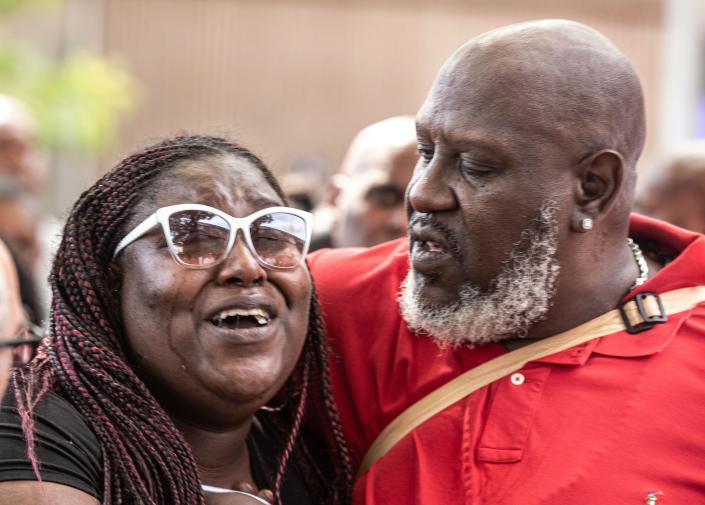
Raymond Fowler, the father of Jarrell Garris, comforts his daughter Tiana Fowler as Fowler and others spoke to the media July 7, 2023 about the shooting of Garris by New Rochelle police this past Monday. Garris was shot by police during a scuffle on Lincoln Ave. in which police were attempting to arrest him after a nearby market called the police about Garris possibly stealing food.

The fam­i­ly held an emo­tion­al press con­fer­ence in the shade, sur­round­ed by dozens of com­mu­ni­ty mem­bers, many of whom knew Garris and his fam­i­ly for years. Garris went by ”Jarrel” on his Facebook page, while some fam­i­ly mem­bers used the spelling ”Jarrell” and law enforce­ment used ”Jerrel.” “If you had the oppor­tu­ni­ty to meet my son, you would love him,” said Garris’ father, Raymond Fowler, 58, out­side St. Catherine A.M.E. Zion Church, just feet from where police shot Garris in the street on Lincoln Avenue. “To know my son is to love him.” Earlier on Friday, some fam­i­ly and com­mu­ni­ty mem­bers said Garris had died, but lat­er Fowler, a long­time New Rochelle native, clar­i­fied that Garris is on life support. 
Garris was in the area to pick up his son and take him back to Greensboro, North Carolina, where Garris had been liv­ing for less than a year. They planned to head home Monday evening. But at around 4:30 p.m. on Monday, police respond­ed to reports of a per­son steal­ing food at New Rochelle Farms, a gro­cery store on Lincoln and North avenues. Bodycam footage released by the New Rochelle Police Department shows police offi­cers Kari Bird and Gabrielle Chavarry, along with Det. Steven Conn, con­fronting Garris on Lincoln Avenue and ask­ing about stolen food.

Raymond Fowler, left the father of Jarrell Garris, along with fam­i­ly mem­bers and sup­port­ers, demands jus­tice as they speak to the media about the shoot­ing of Garris by New Rochelle police this past Monday. Police shot Garris dur­ing a scuf­fle on Lincoln Ave. in which police attempt­ed to arrest him after a near­by mar­ket called the police about Garris pos­si­bly steal­ing food.

State Police released the offi­cers’ names Wednesday, and all three offi­cers have been placed on admin­is­tra­tive leave pend­ing the results of the State Police inves­ti­ga­tion. Westchester County District Attorney Mimi Rocah’s Office is also inves­ti­gat­ing the shoot­ing. In the body­cam footage, Garris doesn’t appear to respond to the offi­cers. Bird and Chavarry fol­low him across the street while a third offi­cer, Conn, approach­es. The video then shows Garris in a scuf­fle with the offi­cers as they attempt to place him under arrest. In the phys­i­cal strug­gle, Garris reach­es in the direc­tion of one of the officer’s hol­stered firearms, the video shows, though it’s unclear which offi­cer he reached toward. He then top­ples over a female offi­cer, and one offi­cer shouts, “He’s got a gun, he’s got a gun,” the video shows. In a press release Monday night, the police depart­ment said Garris reached at the officer’s gun “in an attempt to remove it from the hol­ster.” The video pro­vid­ed by the police depart­ment ends before Conn shoots his weapon. It is unclear why the video ends, and the USA Today Network has filed a Freedom of Information request for the full body cam­era footage from all three offi­cers. While Conn attempt­ed to arrest Garris, he fired one round from his depart­ment-issued firearm and hit Garris, said State Police. Bodycam video shows a hand­cuff on Garris’ right hand dur­ing the strug­gle. No addi­tion­al rounds were fired, State Police said. Officers used life­sav­ing tech­niques, State Police said. Garris was ulti­mate­ly trans­port­ed to Westchester Medical Center. He was in a coma in the days fol­low­ing the shooting.

Jarrel Garris’ family calls for full video, witnesses

Garris’ fam­i­ly, through their spokesper­son McCall, dis­put­ed the events police recount­ed. They called for an inde­pen­dent inves­ti­ga­tion with Attorney General Letitia James and for a full video to be released of the encounter.“You want to be trans­par­ent, release the whole video to show the pic­tures of the truth,” McCall told reporters. “The video does not lie. This young man should be here today. His death sen­tence should not be his eat­ing fruit, grapes, and a banana.” In the mean­time, the fam­i­ly also request­ed help from wit­ness­es of the shooting.

A New Rochelle police detec­tive fatal­ly shot Jarrell Garris, 37, on Lincoln Avenue after Garris was accused of steal­ing from a near­by gro­cery store.

If you’re a mem­ber of the com­mu­ni­ty and you saw what hap­pened,” fam­i­ly attor­ney Sanford Rubenstein said, “come for­ward and share that with the Attorney General’s office. This fam­i­ly wants jus­tice, and this fam­i­ly pleads for the com­mu­ni­ty to come for­ward.” They called for all three police offi­cers to be fired, and they also called on New Rochelle Farms, the store where police accused Garris of tak­ing food, to be closed down. Ahead of the press con­fer­ence, City of New Rochelle offi­cials issued a state­ment on the shoot­ing. “We are ful­ly com­mit­ted to a trans­par­ent, thor­ough inves­ti­ga­tion and will con­tin­ue to work dili­gent­ly with out­side agen­cies in their inde­pen­dent review while also address­ing the legit­i­mate con­cerns and ques­tions that arise when­ev­er a police offi­cer is involved in a shoot­ing,” said the state­ment by Mayor Noam Bramson, City Manager Kathleen Gill, Police Commissioner Robert Gazzola, and Councilmember Yadira Ramos-Herbert, the pre­sump­tive next may­or after June’s Democratic primary.

Mental illness known in community, father says

Fowler said his son strug­gled with men­tal health, includ­ing schiz­o­phre­nia, and had been con­tact­ed by New Rochelle police before for well­ness checks. “My thing is they knew who he was, and then they know me as well,” Fowler pre­vi­ous­ly told USA TODAY Network New York. “There’s no jus­ti­fi­ca­tion.” Garris grew up just min­utes walk­ing from the scene of the shoot­ing, Fowler said. The area where police shot Garris was in the Lincoln Avenue cor­ri­dor, a his­toric African American com­mu­ni­ty in New Rochelle.

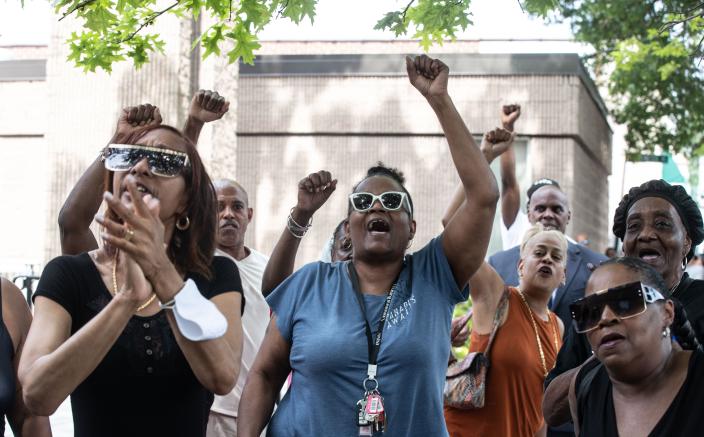
Family members and supporters of of Jarrell Garris yell demands of justice July 7, 2023 as GarrisÕs father Raymond Fowler speaks to the media about the shooting of Garris by New Rochelle police this past Monday. Garris was shot by police during a scuffle on Lincoln Ave. in which police were attempting to arrest him after a nearby market called the police about Garris possibly stealing food.

As a com­mu­ni­ty, we are deter­mined to see a change, not just talk about it,” said the Rev. Wallace Noble, the lead min­is­ter at St. Catherine, the church just feet from where police shot Garris. “But even if we have to orga­nize and do some­thing our­selves, we want to see a change in the com­mu­ni­ty. There has to be a bet­ter rela­tion­ship between police and the com­mu­ni­ty.” In North Carolina, Garris had been work­ing as a care­giv­er for a res­i­dent home, his girl­friend, Hadiyyah Harrell, 32, said in a text mes­sage. “He was doing good,” his sis­ter, Tiana Fowler, who lived with him in Greensboro, said as she fought through tears. “He worked sev­en days a week, sev­en days a week and came home.” Garris — known in the neigh­bor­hood as CeeTwo, the same nick­name his dad uses — has extend­ed fam­i­ly and friends still liv­ing in New Rochelle.

He was one of the good guys’

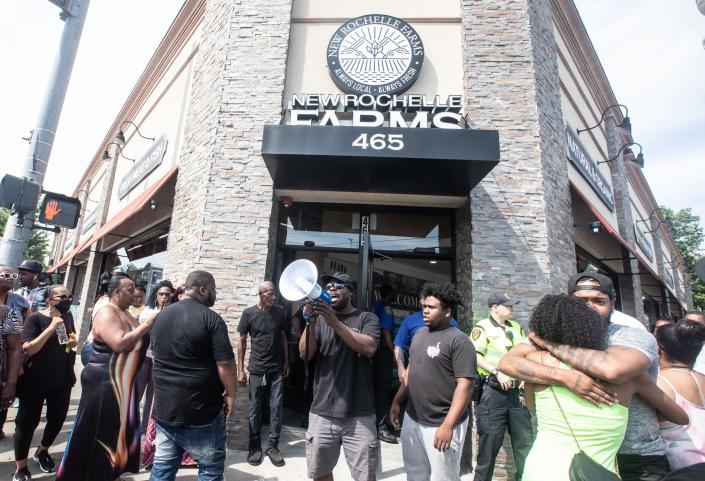
After the press con­fer­ence, peo­ple marched to New Rochelle Farms and held a ral­ly in the street out­side. They were both protest­ing the store, which called police, and police’s action. At one point, sev­er­al peo­ple went inside the store and knocked over pro­duce dis­plays. No arrests were made, New Rochelle Police said.

Protestors demonstrate outside New Rochelle Farms on North Ave. in New Rochelle July 7, 2023 after Raymond Fowler the father of Jarrell Garris, spoke to the media about the shooting of his son by New Rochelle police this past Monday. Garris was shot by police during a scuffle on Lincoln Ave. in which police were attempting to arrest him after an employee of the market called the police about Garris possibly stealing food.

On Saturday, two days before the shoot­ing, Garris knocked on the win­dow of Ivin Harper’s new black Cadillac Escalade to com­pli­ment him on his truck. Harper, 44, grew up with Garris’ fam­i­ly and went to school with Garris. Before their five-minute con­ver­sa­tion, he hadn’t seen Garris since his move to North Carolina. “He was one of the good guys,” he said. On Monday, Robin Cowart, 59, saw Garris about an hour before the police shoot­ing on Horton Avenue, just blocks away from the scene. He was alright, she said, laugh­ing with old friends, before he left down toward Lincoln Avenue. Cowart has known his moth­er and father from the Heritage Homes, pub­lic hous­ing for­mer­ly known as Hartley Homes that is locat­ed just around the cor­ner from where police shot Garris. Cowart lat­er saw him on Lincoln Avenue, on the ground, not respon­sive, as emer­gency med­ical per­son­nel tried to resus­ci­tate him. “He was a good dude, had a good heart,” said Cowart, who stood on the cor­ner of Lincoln and North avenues, ral­ly­ing with oth­er com­mu­ni­ty mem­bers. “I don’t know why they would do this.”

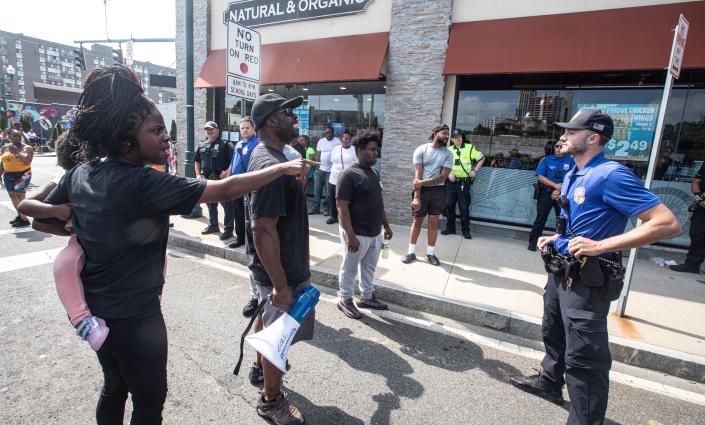
Protestors yell at New Rochelle police outside New Rochelle Farms on North Ave. in New Rochelle July 7, 2023 after Raymond Fowler the father of Jarrell Garris, spoke to the media about the shooting of his son by New Rochelle police this past Monday. Garris was shot by police during a scuffle on Lincoln Ave. in which police were attempting to arrest him after an employee of the market called the police about Garris possibly stealing food.

In front of New Rochelle Farms, Henderson Clarke, 46, led chants oppo­site police offi­cers. New Rochelle police killed Clarke’s broth­er, Kamal Flowers, 24, on June 5, 2020, about a mile from where police shot Garris. A New Rochelle police offi­cer fatal­ly shot Flowers after Flowers ran from police dur­ing a traf­fic stop. Police said Flowers point­ed a gun at the offi­cer before he was shot. The attor­ney gen­er­al did not inves­ti­gate the shoot­ing, her office said then, because it did not fall under her juris­dic­tion. The attor­ney gen­er­al’s office can inves­ti­gate cas­es in which an unarmed civil­ian is killed by police. Later that year, a grand jury vot­ed not to indict Officer Alec McKenna. Clarke dis­put­ed this account. He also ques­tioned the account by police that Garris reached for a gun, cit­ing the video. “This hap­pens, it’s the same thing,” he said. “The broth­er was eat­ing fruit. He was hun­gry.” During the protest, peo­ple dis­trib­uted ice-cold water in the July heat.

Unchecked Police Violence Wreaking Havoc On The Lives Of The Poor

YouTube player

Driving down a stretch of the Taconic Parkway in Dutchess County some­time after sev­en one morn­ing recent­ly, we came upon a state police traf­fic stop on a nar­row strip of the two-lane road with no guardrail on either side.
It is a time of the morn­ing when work­ing peo­ple rush to get to work so they can take care of their fam­i­lies. The salaries they earn are hijacked even before they receive them, and tax­es are removed, and there­after, almost every pen­ny they spend is taxed to pay for goods and ser­vices they often­times do not receive.
The traf­fic stop cre­at­ed a dan­ger­ous sit­u­a­tion for the dri­ving pub­lic based on its loca­tion as motorists head­ing south hap­pened upon it and had to brake sud­den­ly after round­ing the corner.
My wife and I simul­ta­ne­ous­ly won­dered why it was so impor­tant to effec­tu­ate a traf­fic stop at that time of the morn­ing, let alone at that loca­tion, jeop­ar­diz­ing lives to col­lect rev­enue. What traf­fic offense could have neces­si­tat­ed that lev­el of igno­rance and abuse of state power?
To top it off, New York has a “move over’ law that forces motorists to move over and away from emer­gency vehi­cles when they are stopped on the roadways.
Motorists had nowhere to go except over the embank­ment or careen into each oth­er just so some lousy cop could exer­cise authority.
But the New York State Legislature isn’t done. When the morons behold­en to the police unions you elect have noth­ing to do, they find ways to give more pow­er to the police state and take away more of your rights.
They are already plan­ning to broad­en the ‘move-over’ law to include oth­er vehi­cles, not just fire, ambu­lance, and police.
They argue that there are road fatal­i­ties year­ly from motorists crash­ing into emer­gency vehi­cles. They do not include in their nar­ra­tive that the actions of [Police], in par­tic­u­lar, con­tin­ue to jeop­ar­dize the lives of the trav­el­ing pub­lic con­trary to the lying nar­ra­tive they spout.
The rapa­cious desire to fleece the American cit­i­zen of their hard-earned resources have seen state and local leg­is­la­tures ramp­ing up non­sen­si­cal laws aimed at fill­ing rev­enue cof­fers, all while lying to a gullible and igno­rant pop­u­la­tion that it is about their safety.
The fact of the mat­ter is that on any bright and sun­ny sum­mer day, dri­ving down Taconic Parkway into the Bronx, you will encounter State and County Police hid­den in des­ig­nat­ed spots and patrolling the park­way. Driving on the Taconic Parkway and Routes 84 and 684, I usu­al­ly count the num­ber of them I see.
However, if there is a lit­tle rain show­er, they all dis­ap­pear. They are not there to help the pub­lic. A fend­er ben­der will result in a long wait. You will be told there is only one troop­er on duty, and he is at anoth­er acci­dent scene. Where did all the rest of them go?
Fewer peo­ple are dri­ving above the speed lim­it; they pre­sume few­er oppor­tu­ni­ties to extract stu­pid tax­es from motorists who speed or fail to wear a seatbelt.
It is all about rev­enue col­lec­tion and has noth­ing to do with your safe­ty or mine. So they will con­tin­ue jeop­ar­diz­ing your safe­ty and mine to pro­tect the rev­enue collectors.

Protesters in Nanterre, the sub­urb of Paris where Nahel was shot and killed by a police offi­cer, lit flares and climbed road signs at a marchImage cap­tion: Protesters in Nanterre, the sub­urb of Paris where Nahel was shot and killed by a police offi­cer, lit flares and climbed road signs at a march. Courtesy of the BBC

A cou­ple of days ago, two French motor­cy­cle cops stopped a 17-year motorist Nahel M in a yel­low BMW motor­car; two oth­er occu­pants were in the car with the young dri­ver. What tran­spired still remains murky, but things esca­lat­ed quick­ly, with one cop threat­en­ing to shoot the young man dead.
He did just that!!!
Since then, vio­lent clash­es have occurred in the sub­urbs around the French Capital, Paris. Thousands of demon­stra­tors have clashed night­ly with French police, and cars and busi­ness­es have been torched, result­ing in many arrest­ed and many cops injured. The traf­fic stop is rumored to have been over a minor traf­fic infrac­tion. Across the Western world, we see the mass mil­i­ta­riza­tion of police and the heap­ing up of pow­er, includ­ing the right to use dead­ly force on civilians.

Nahel’s moth­er Mounia led a march today, demand­ing jus­tice for her son. Courtesy of the BBC

Police ini­tial­ly sug­gest­ed Nahel drove his car towards them to injure them, but footage lat­er showed he was shot at point-blank range by an offi­cer point­ing his weapon at him through the dri­ver’s win­dow.
Those of you who recall the mur­der of George Floyd will remem­ber Minneapolis police lied that mis­ter Floyd suf­fered a med­ical emer­gency until a video tak­en by a teenage girl sur­faced show­ing Derek Chauvin and the oth­er mur­der­ers assist­ing him end­ed George Floyd’s life.
As it is in the United States, where police are giv­en wide lat­i­tude to act as judge, jury, and exe­cu­tion­er, French police are allowed to shoot when a dri­ver ignores an order to stop and is like­ly to risk oth­er peo­ple’s life or phys­i­cal safety.
Of course, allow­ing police to shoot in those sit­u­a­tions opens the door for the types of killings that hap­pened to Nahel M.
If that cop did not feel he could get away with mur­der­ing anoth­er human being over a minor traf­fic infrac­tion, he would not have threat­ened death to the young­ster, and he cer­tain­ly would not have pulled the trigger.

Panot has presided over the par­ty, found­ed by Jean-Luc Melenchon, since 2021Image cap­tion: Panot has presided over the par­ty, found­ed by Jean-Luc Melenchon, since 2021, cour­tesy of the BBC.

When career politi­cians seek­ing to cur­ry favor with police unions do not have any­thing pro­duc­tive to do, they default to cre­at­ing laws like the one in France that result­ed in the death of a 17-year-old teenag­er. Driving away from a traf­fic stop is com­plete­ly wrong, but the penal­ty [can­not] be to mur­der the offend­er. What kind of soci­eties are we fos­ter­ing if the gov­ern­ment can end the life of cit­i­zens for such frivolities?
[In 2016, at a Paris hous­ing estate, a male cop suf­fered seri­ous burns and was put in an induced coma after a group of youths pelt­ed petrol bombs at his patrol car. Police unions protest­ed and demand­ed a strong response from the gov­ern­ment. Following that inci­dent, the law on the use of firearms by police was amend­ed. Officers were allowed to shoot when faced with one of five sit­u­a­tions — one being when a dri­ver ignores an order to stop and is like­ly to pose a risk to oth­er peo­ple’s life or phys­i­cal safe­ty]. Knee-jerk appease­ment to police union cost lives.
Mathilde Panot, pres­i­dent of the left-wing polit­i­cal par­ty La France Insoumise (France Unbowed), crit­i­cizes the gov­ern­ment for send­ing anti-ter­ror police into work­ing-class areas and says President Emmanuel Macron “knows only repression”.
Writing on Twitter, she adds the gov­ern­ment must repeal the law’s “license to kill” and rebuild the police from the ground up.

Last night’s unrest saw build­ings and cars set on fire. (Courtesy BBC)

This writer con­tin­ues to make the case that hir­ing more police, mil­i­ta­riz­ing them, and empow­er­ing them by pass­ing more bru­tal laws do noth­ing to elim­i­nate crime. Governments have a sacred duty to elim­i­nate injus­tice, pover­ty, and oth­er social mal­adies, which are all ampli­fied by over-polic­ing and white cops who vio­lent­ly inter­act with those under­served com­mu­ni­ties with racial animus.
Hatred for the poor and pow­er­less is not a strat­e­gy. Ultimately the tears and frus­tra­tion of those who are down­trod­den will boil over, cul­mi­nat­ing in a dan­ger­ous envi­ron­ment for everyone.
Jobs, some­thing to live for, and equal oppor­tu­ni­ties go much fur­ther in cre­at­ing soci­etal har­mo­ny than anti-ter­ror cops and weapons of war…

.

.

Mike Beckles is a for­mer Police Detective, busi­ness­man, free­lance writer, black achiev­er hon­oree, and cre­ator of the blog mike​beck​les​.com.

If We Attend To Poverty & Injustice We Won’t Need So Many Cops

YouTube player

We have all been duped by politi­cians, Police, and their cor­rupt Unions into believ­ing that hir­ing more offi­cers is the solu­tion to the per­cep­tion of grow­ing or esca­la­tion in vio­lent crime statistics.
In many cas­es, the fear and appre­hen­sion ginned up by politi­cians about increas­es in vio­lent crime do not match the real data. Nevertheless, with a large part of the pop­u­la­tion steeped in the roman­ti­cized Hollywood idea of polic­ing, every­one is forced to dole out more tax­es to hire more police, which pro­duces no rec­og­niz­able dividend.
Republicans have used the smoke­screen of esca­lat­ing vio­lent crime to gen­er­ate fear among white vot­ers. Of course, many of these peo­ple do not read or have the com­pre­hen­sion skills to think for them­selves. The way the nar­ra­tive is framed is that Black crim­i­nals in large cities are on a tear; they must be stopped before they devour the frag­ile and inno­cent white population.
When the nar­ra­tive is framed that way, there is no need for it to be fac­tu­al; entrenched racial big­otry is enough to get them to do what­ev­er the par­ty wants, includ­ing rais­ing tax­es to hire more police officers.
Democrats, for their part live in fear of being brand­ed weak on crime, so they too run on the fic­ti­tious idea that vio­lent crime [must] be con­tained, and the way to do it is to hire more offi­cers and con­tin­ue to mil­i­ta­rize the police.
This plays right into the hands of the cor­po­rate pow­ers who need the police, which has become a pri­vate army behold­en to those who con­trol the ‘prison indus­tri­al complex.’

There needs to be an under­stand­ing that peo­ple kill who they are around. Blacks kill Blacks. Whites kill whites, and so on. At the same time, when we look at crime data, the great­est threat to America does not come from Blacks killing Blacks in under­served com­mu­ni­ties. It does not come from Islamic ter­ror­ists seek­ing to exact Jihad on America. The great­est threat posed to American secu­ri­ty comes from the very peo­ple who frame them­selves as patri­ots. People who would have you believe that attack­ing the United States House of Representatives, destroy­ing prop­er­ty, and shit­ting in the hall­ways are acts of patriotism.
From this group comes young men who feel a sense of enti­tle­ment, and when they are not allowed to extract what they feel is owed them, they go out and kill, usu­al­ly slaugh­ter­ing defense­less chil­dren, peo­ple of col­or in places of wor­ship, super­mar­kets, movie the­aters, and oth­er pub­lic places. Young white males gen­er­al­ly car­ry out those killings.
It is gen­er­al­ly under­stood that no mat­ter how wealthy a soci­ety is, some peo­ple will decide to engage in crim­i­nal con­duct. In fact, even rather wealthy peo­ple with enor­mous resources are some­times drawn to the lure of the dark side. Some become wealthy by evad­ing the long arms of the law because of their skin col­or; oth­ers of a dif­fer­ent hue are not so lucky. The pris­ons and ceme­ter­ies are filled with the bod­ies and remains of the latter.

In January 2012, the con­ser­v­a­tive pub­li­ca­tion The Christian Science Monitor not­ed: The last time the crime rate for seri­ous crime – mur­der, rape, rob­bery, assault – fell to such low lev­els, gaso­line cost 29 cents a gal­lon and the aver­age income for a work­ing American was $5,807.……That was 1963.
In the past 20 years, for instance, the mur­der rate in the United States has dropped by almost half, from 9.8 per 100,000 peo­ple in 1991 to 5.0 in 2009. Meanwhile, rob­beries were down 10 per­cent in 2010 from the year before and 8 per­cent in 2009.
The report went on, how­ev­er: Despite strong evi­dence of crime drop­ping over recent decades, the pub­lic sees the reverse. “Recent Gallup polls have found that cit­i­zens over­whelm­ing­ly feel crime is going up even though it is not,” says Professor Fox. “This is because of the growth of crime shows and the way that TV spot­lights the emo­tion­al. One case of a ran­dom, hor­rif­ic shoot­ing shown repeat­ed­ly on TV has more vis­cer­al effect than all the sta­tis­tics print­ed in a newspaper.”
That report also went on to cred­it tech­nol­o­gy and what it char­ac­ter­ized as more effec­tive polic­ing. I dis­agree then, as I do now. Police had no idea what caused the decades-long drop in crime.
The fact is that since the 1980s, there has been a rev­o­lu­tion­ary change across America with the advent of the inter­net and the ush­er­ing in of the dig­i­tal age. As new oppor­tu­ni­ties abound, peo­ple’s lives have been expo­nen­tial­ly changed for the bet­ter, at least for a few decades.
Unfortunately, like every­thing else, there is a down­side to the growth the nation expe­ri­enced, begin­ning large­ly dur­ing the Clinton years, through and despite Bush and through the Obama years.
The COVID pan­dem­ic changed that tra­jec­to­ry, and we are back to the per­cep­tion that the sky is falling, so we need more police.
If the growth of crime shows on tele­vi­sion and the way TV spot­light­ed the emo­tion­al was a fac­tor dur­ing the 1980s, imag­ine what social media has done in ampli­fy­ing crime sto­ries today and why there is the per­cep­tion that crime is going up.

It is exact­ly what pow­er­ful police unions want us to think. The NYPD, the nation’s largest police gang, is very hap­py with the per­cep­tion that the sky is falling, so more mon­ey is made avail­able to pur­chase new toys like more Robos con­trolled by arti­fi­cial intel­li­gence, drones, and all kinds of gad­gets. And, of course, the oblig­a­tory more police bodies.
In the mean­time, home­less­ness con­tin­ues to increase among the poor in major cities, usu­al­ly run by Democrats who fell for the hok­ie doke of build­ing out large police depart­ments. Or the fake Democrats like the wolf in sheep­’s cloth­ing in New York City who still thinks he is a cop.
All of this, while the large behe­moth of a police force 37,000 strong swarms poor, under­served minor­i­ty com­mu­ni­ties among the city’s 8.5 mil­lion res­i­dents and arbi­trar­i­ly stops and frisks men as if the laws and their con­sti­tu­tion­al rights mean nothing.
In the Subway, the home­less lives on the trains, and white vig­i­lantes kill a home­less man who asks for food. All around the city, poor home­less peo­ple sleep on bench­es at the sides of buildings.
No one cares about the poor, but they keep hir­ing more cops.

.

.

.

Mike Beckles is a for­mer Police Detective, busi­ness­man, free­lance writer, black achiev­er hon­oree, and cre­ator of the blog mike​beck​les​.com.

Mother Pleads For Justice After Cop Who Shot Her Son Is Not Indicted…

YouTube player

The moth­er of a man shot and killed by police says she can’t under­stand why a grand jury decid­ed not to indict the offi­cer who pulled the trig­ger. Vakelvion Holmes staged a one-woman protest out­side the cour­t­house where the grand jury met to raise aware­ness about what she calls an injustice.
“Justice for Eric is all I want. 19 years old,” Holmes shout­ed from a bull­horn near the steps to the cour­t­house recent­ly. “I miss my son. I real­ly do,” she said, with Eric’s 3‑year-old son rest­less and agi­tat­ed near­by. Holmes used her voice to voice con­cern over the grand jury choos­ing not to indict the Clayton County police offi­cer who shot her son, Eric Holmes, back in November.

I’m going to come here, and I’m going to make sure that you guys do your jobs,” she said while look­ing at the win­dows of the cour­t­house. Holmes says she still can’t believe the grand jury decid­ed the offi­cer shouldn’t face charges. “He walked out of court. Free. With no charge, I don’t get it,” she offered. The GBI says the offi­cer locat­ed a stolen car at a busi­ness on Commerce Road near Morrow that day. Eric Holmes was at work and came out and talked to the offi­cer. Agents say he then jumped in the stolen car. “The next thing you know, the offi­cer gets out with his gun raised. Get out (of) the car. Get out (of) the car. Eric did pull off, and he just opened up shots in the back,” Holmes described. Investigators say there were two guns in the car, one stolen. Police allowed the offi­cer to resign in lieu of ter­mi­na­tion for how he han­dled the shooting.

Clayton County District Attorney Tasha Mosley says she took the case before the grand jury because she believed at the time a crime had been com­mit­ted. She says she is going through the grand jury tran­scripts and body­cam video to see if there’s some­thing her office missed. Mosley says she is also decid­ing whether to take the case back before a grand jury. Holmes had a mes­sage for Mosley dur­ing her protest at the cour­t­house. “Tasha Mosley I thank you. I thank you too to the pros­e­cu­tor. But I’m ask­ing that when you guys go back in front of that grand jury that you explain to them the truth,” Holmes said in her bull­horn. Holmes says the truth is her son wasn’t a threat that day. “We want jus­tice. That’s all I want,” she said. Community activist Meia Ballinger was there to sup­port Holmes. Mosley says she can take the case before the grand jury one more time. She did not offer a time­line for when she would make a deci­sion. Meanwhile, Holmes says she will keep protest­ing until some­one hears her cry.

Cop Shoots Wife In The Face With Rifle

YouTube player

A police offi­cer accused of shoot­ing his wife in the face has been arrest­ed and relieved of his duties, accord­ing to a Texas police chief. Houston Police Chief Troy Finner said in a news brief­ing the shoot­ing hap­pened just after mid­night Monday, June 12, at an apart­ment on the north­west side of the city. 
Officers found the 30-year-old female vic­tim had been shot in the face by her hus­band, an offi­cer with the Houston Police Department, Finner said.
The woman was tak­en into surgery, and her con­di­tion is unknown. “We pray that she’s going to be alright and recov­er,” the police chief said.

Houston Police Department video screengrab

It’s believed that a rifle was used in the shoot­ing, accord­ing to the police chief. The Houston Police Department does not issue rifles, so the weapon may have been pur­chased by the offi­cer, Finner said. Police said it’s unclear what led to the shoot­ing. The accused shoot­er and gun­shot vic­tim were the only peo­ple inside the apart­ment, the chief said. The offi­cer, who has been with the depart­ment for two years, was arrest­ed and faces a charge of aggra­vat­ed assault with a dead­ly weapon, Finner said. Because for­mal charges have not been filed, his name has not been pub­licly released. Finner said the offi­cer was “imme­di­ate­ly relieved of duty.” An inves­ti­ga­tion will be con­duct­ed. “We all took an oath of office to serve and pro­tect, but we’re human as well. This hurts. It hurts all of us,” Finner said.

We all took an oath of office to serve and pro­tect, but we’re human as well. This hurts. It hurts all of us,” Finner said.
This sounds like a weak defense, I hope they have more that we are all human as a defense.

Two Police Officers Arrested In Connection With Robbery Of Chinese Businessmen

YouTube player

Two police­men were arrest­ed for the rob­bery at the Norman Manley International Airport in Kingston as they attempt­ed to flee the Island. The two cops were arrest­ed in con­nec­tion with charges of Robbery with aggra­va­tion. The two were arrest­ed in con­nec­tion with a mul­ti-mil­lion dol­lar rob­bery of two Chinese nation­als in Kingston.
According to reports about 1:30 p.m. on Tuesday, June 6, the two Chinese nation­als were at their whole­sale when they were vis­it­ed by the two police offi­cers dressed in plain clothes.
The police offi­cers showed their ID and pre­sent­ed a doc­u­ment that they said was a war­rant from the Constant Spring Police for the prop­er­ty to be searched for uncus­tomed goods. They were grant­ed access to the busi­ness estab­lish­ment. One of the Chinese nation­als was led to the fam­i­ly’s liv­ing quar­ters upstairs, where a search was conducted.
The police offi­cers found and took J$8.5 mil­lion, along with US$40,000, from a met­al fil­ing cab­i­net and an iPhone 14.
 The vic­tims object­ed and told the offi­cers not to take the fam­i­ly’s mon­ey because it was to pay for cred­it­ed goods.

The offi­cers report­ed­ly told them the mon­ey would be returned and that he should dri­ve behind them to the police station.
However, as the vic­tim was about to get into his vehi­cle to fol­low the police­men, the offi­cers sped off with the mon­ey. The iPhone was tracked and was found dam­aged in the Queensbury com­mu­ni­ty in Kingston. The two cops,Constable Adian Howard Dawkins, 36, of the Saint Andrew South Division and Cons. Norval Warren, 44 years old, also of the Saint Andrew South Division.
The two were arrest­ed as they sought to board a flight for the John F Kennedy Airport in New York.

NYC Prosecutor Drops Over 300 Convictions Tied To Officers Found Guilty Of Crimes

YouTube player

Yesterday I wrote about the cor­ro­sive cor­rup­tion that poi­sons polic­ing in the United States that is not being addressed in any sys­temic way. There are some­times con­sci­en­tious District Attorneys who are not total­ly afraid of the police or are too deeply com­pro­mised by their Unions to deal with the prob­lem of police cor­rup­tion. Exceptions, like Larry Krasner in Philadelphia and a few oth­ers who are try­ing to do the right thing by address­ing this seri­ous problem.
The fight is not with­out mas­sive push­back from the right wing in the coun­try that has man­aged to suc­cess­ful­ly con­vince a large swath of impres­sion­able peo­ple that integri­ty in the crim­i­nal jus­tice sys­tem is the equiv­a­lence of being soft on criminals.
Of course, the peo­ple they dis­par­age as crim­i­nals are usu­al­ly poor, Black, and deemed disposable.
For those peo­ple, the sys­tem is work­ing just fine. The Black peo­ple ensnared and incar­cer­at­ed and even sent to death row is a sys­tem work­ing as intend­ed. https://​mike​beck​les​.com/​u​n​c​o​r​r​o​b​o​r​a​t​e​d​-​p​o​l​i​c​e​-​t​e​s​t​i​m​o​n​y​-​a​-​t​r​a​v​e​s​t​y​-​t​o​-​j​u​s​t​i​ce/

Writing this arti­cle a mere day ago, I had no idea that this move was afoot to redress this can­cer of police cor­rup­tion. But I also rec­og­nize that this move by these New York City top pros­e­cu­tors is mere­ly the tip of the ice­berg and mere­ly a tiny drip in the buck­et across the country.
It is also impor­tant to process this vic­to­ry with the somber real­i­ty that none of these actions will hap­pen in coun­ties with Republican District Attorneys here in New York State. That includes the racist Staten Island, which is a bas­tion of white suprema­cy right here in New York City. None of this will hap­pen in states run by Republicans because Prosecutors who attempt to do jus­tice to the wrong­ful­ly con­vict­ed cit­i­zens in those states are hound­ed out of office by the fas­cist Republicans who run those states.
Even with the actions of DA Alvin Brag and oth­ers in New York City, this does pre­cious lit­tle to rat­tle the cage of the cor­rupt NYPD that has oper­at­ed as a crime syn­di­cate since its incep­tion. The idea that adding col­or to this behe­moth will change its char­ac­ter is the same as say­ing that adding new wall­pa­per to rot­ten walls makes a bet­ter house.

Manhattan District Attorney Alvin Bragg speaks to reporters dur­ing a news con­fer­ence at police head­quar­ters, April 18, 2023, in New York.

Manhattan’s top pros­e­cu­tor on Tuesday dis­avowed over 300 con­vic­tions tied to police offi­cers who were them­selves found guilty of crimes, the lat­est in over 1,000 dis­missals city­wide of cas­es con­nect­ed to offi­cers who were charged or con­vict­ed. The lat­est aban­doned con­vic­tions, almost all mis­de­meanors, date back as far as 1996. Each involves one of nine offi­cers who were lat­er con­vict­ed of on-the-job offens­es — among them tak­ing bribes, ille­gal­ly sell­ing guns, lying under oath, and plant­i­ng drugs on sus­pects — and are no longer on the force. The cas­es put more than 50 peo­ple behind bars and imposed fines on 130, Manhattan District Attorney Alvin Bragg said.
“We can­not stand by con­vic­tions that are built on cas­es brought by mem­bers of law enforce­ment who have vio­lat­ed the law,” Bragg, a Democrat, said in a state­ment after 308 mis­de­meanor cas­es were thrown out Tuesday. A sim­i­lar pro­ceed­ing was planned for eight felony cas­es Wednesday.

Since the start of 2021, Bragg and at least three of New York City’s four oth­er dis­trict attor­neys — in Brooklyn, the Bronx and Queens — have arranged the dis­missal of a total of more than 1,200 cas­es con­nect­ed to offi­cers who had been con­vict­ed or charged, accord­ing to a tal­ly com­piled by The Associated Press. The dis­missals began with drug con­vic­tions built by a for­mer nar­cotics detec­tive, Joseph Franco, who was charged with per­jury — until the case against him was thrown out, mid-tri­al, this January. The case col­lapsed when Bragg’s office acknowl­edged fail­ing to turn over evi­dence as required to his defense. By then, pros­e­cu­tors in Brooklyn, Manhattan and the Bronx had got­ten hun­dreds of Franco-relat­ed con­vic­tions thrown out, and sev­er­al pub­lic defense and exon­er­a­tion advo­ca­cy groups had writ­ten a let­ter urg­ing the city’s DAs to do like­wise with cas­es involv­ing 22 oth­er offi­cers. Twenty had been con­vict­ed of crimes and two oth­ers engaged in seri­ous mis­con­duct relat­ing to their duties, accord­ing to the legal groups. Their list includ­ed the nine offi­cers linked to the cas­es that Bragg is get­ting tossed out this week. One of the let­ter-writ­ers, Elizabeth Felber, of the Legal Aid Society, applaud­ed the dis­missals and urged Bragg and his fel­low DAs to keep going. “The same lens used on our clients charged with crim­i­nal con­duct must be applied to those in law enforce­ment,” she said in a statement.

Uncorroborated Police Testimony A Travesty To Justice…

YouTube player

Judges are expect­ed to “ensure due process, order, and deco­rum, and always act with dig­ni­ty and respect to pro­mote the integri­ty and impar­tial­i­ty of the judi­cia­ry.”
Hmmm, if only.
Well, it is at least what one States Judicial Qualifications Commission had to say about the con­duct of one Judge it was inves­ti­gat­ing. The alle­ga­tions are that the judge was extreme­ly def­er­en­tial to the pros­e­cu­tion team and simul­ta­ne­ous­ly dis­re­spect­ful and con­fronta­tion­al to the defense team in a sen­tenc­ing phase of a tri­al in which she was the judge picked to over­see the case.
The com­mis­sion com­pris­es judges, lawyers, and ordi­nary cit­i­zens, who review the judge’s con­duct, after which the supreme court of that state gets to make a final decision.
After tes­ti­fy­ing before the com­mis­sion, the judge announced that she would be retir­ing from the bench on June 30. The com­mis­sion said her deci­sion had noth­ing to do with the com­mis­sion’s work.
The com­mis­sion report­ed that the judge acknowl­edged dur­ing her tes­ti­mo­ny that her con­duct dur­ing the tri­al “fell short” of what’s expect­ed of judges and that “her treat­ment of mem­bers of the defense team was at times not patient, dig­ni­fied or courteous.”

I includ­ed the fore­gone para­graph in this short arti­cle because it demon­strates that jus­tice is not always served in the court­room. Even with a team of lawyers, defen­dants are not guar­an­teed a fair tri­al or sen­tenc­ing. In fact, judges are some­times biased even in the motions they grant dur­ing tri­als. A moun­tain of data points to the dis­parate way tri­al judges oper­ate with obvi­ous bias, usu­al­ly to the detri­ment of crim­i­nal defen­dants. This is in addi­tion to pros­e­cu­tors who go out of their way to pros­e­cute cas­es they know are weak and with­out mer­it out of def­er­ence and fear of police and their unions.
One of the dilem­mas the crim­i­nal jus­tice sys­tem faces today is the irrefutable truths of police vio­lence, lies, cor­rup­tion, and out­right bla­tant vio­lent crim­i­nal­i­ty being exposed thanks to social media.
The trav­es­ty is that despite the out­cry and pain of the vic­tims of police cor­rup­tion and vio­lence, courts con­tin­ue to rely on uncor­rob­o­rat­ed police evi­dence to arrive at guilty verdicts.
Instead of uphold­ing the laws equal­ly and fair­ly against cit­i­zens and police alike, begin­ning with the Supreme Court at the top, courts have sought to restrict the rights of the American cit­i­zen to broad­en the pow­ers of the police state.
A cit­i­zen caught lying under oath faces the full force and wrath of the crim­i­nal jus­tice system.
A cop caught lying under oath faces absolute­ly no penal­ty at all.

In a 2010 Abstract on the Department of Justice’s web­site, Melanie D Wilson wrote; The U.S. legal sys­tem regards police offi­cers as impar­tial fact gath­er­ers, trained to col­lect facts that sup­port guilt and inno­cence. This per­cep­tion is far from the truth, and in real­i­ty, police offi­cers are biased advo­cates attempt­ing to dis­prove inno­cence.
Unfortunately, this real­i­ty con­tin­ues every day in court­rooms across the United States. Police lie, and courts use their lies to con­vict inno­cent cit­i­zens. Black cit­i­zens are at the great­est risk of being vic­tim­ized by this inher­ent bias in most judges and prosecutors.
Some prison reform and abo­li­tion sup­port­ers have argued that race and gen­der are the top rea­sons for the dis­par­i­ty in sen­tenc­ing. Blacks receive almost 10 per­cent longer sen­tences than whites arrest­ed and con­vict­ed for the same crimes.
Some argue that the dis­par­i­ty comes from the way police gin up charges on black arrestees and the way pros­e­cu­tors choose to pros­e­cute those charges. Of course, this expla­na­tion does lit­tle to assuage the claims of racism and fur­ther reveals the intri­ca­cy and sys­temic nature of the racism woven into the crim­i­nal jus­tice system.
It is impor­tant to process this infor­ma­tion with the knowl­edge that this injus­tice is not some­thing being done to for­eign­ers, which it was would be inher­ent­ly wrong, but that has been this way against American cit­i­zens, albeit of a dif­fer­ent col­or than white.
In one year, more than 50 mil­lion per­sons in the U.S. have come in con­tact with police dur­ing traf­fic stops, street stops, arrests, traf­fic acci­dents, or res­i­dent-ini­ti­at­ed con­tacts, and 1 mil­lion expe­ri­ence the use of or threat of force. I encour­age cit­i­zens to con­tin­ue to film police action uti­liz­ing the court’s guid­ance by allow­ing them space to do their jobs effec­tive­ly and safe­ly. However, do not be bul­lied when they tell you that you must move so far away that you can­not see what they are doing. They will also tell you they do not mind if you record them. Well, it does­n’t mat­ter whether they mind; they do not get to make those decisions.
If the young lady who stu­dious­ly record­ed George Floyd’s mur­der had been afraid and not record­ed the event, Derek Chauvin and his cronies would still be patrolling the streets of Minneapolis.
Remember, they lied that he died from a med­ical emer­gency before they changed their sto­ry after her video sur­faced. America’s pris­ons and jails are filled with crim­i­nals and inno­cent peo­ple. People the police fal­si­fied reports on and per­jured them­selves in court to gain con­vic­tions. In many cas­es, the pros­e­cu­tors know the infor­ma­tion is rid­dled with lies, and so does the judges.
This is what pass­es for justice.

.

.

.

Mike Beckles is a for­mer Police Detective, busi­ness­man, free­lance writer, black achiev­er hon­oree, and cre­ator of the blog mike​beck​les​.com.

Massachusetts Cop Convicted For Violent Attack On Innocent Handcuffed Victim

YouTube player

In the fol­low­ing arti­cle, you will see a vio­lent cop who was allowed to remain unchecked for his entire career, con­tin­ued to bru­tal­ize inno­cent civil­ians until tech­nol­o­gy caught up with him. It was only then that the pow­ers that pro­tect offi­cers like him had no choice but to take action.
You will also see a pros­e­cu­tor bemoan the fact that the cop was con­vict­ed for his crimes even as he pledged that he would pro­ceed with oth­er crim­i­nals against the con­vict­ed cop, declar­ing it a somber moment, speak­ing of the ver­dict. The pros­e­cu­tor also bent over back­ward in oblig­a­tory praise of police, usu­al­ly a sign that they are afraid of the wrath of the police unions that are sup­port­ers of the vio­lent thugs in uni­form regard­less of their crimes against the public.
You will also see the police chief mak­ing the regres­sive argu­ment that it was his depart­ment that inves­ti­gat­ed the com­plaints, which led to the charges against the crim­i­nal cop. It is impor­tant to jux­ta­pose that asser­tion with the pros­e­cu­tor’s state­ment; with­out the video­tape evi­dence, there would have been no case’.
They were forced to act because of the irrefutable evi­dence enshrined in the video evi­dence. That is why it is crit­i­cal­ly impor­tant to record these crim­i­nals when­ev­er you encounter them. Had the young woman not stu­dious­ly record­ed Derek Chauvin’s mur­der, George Floyd Chauvin would not have faced any con­se­quences. In fact, the police depart­ment lied that Floyd suf­fered a med­ical emer­gency and died before know­ing that the video­tape exist­ed of the day­light murder.
The abu­sive cop was found guilty, but the ver­dict is what matters.
The good old boys’ net­work of cops, pros­e­cu­tors, and juries, is what gives rise to cops like this one. It should come as no sur­prise if he receives a slap on the wrist. Judges are a large part of the impuni­ty that char­ac­ter­izes police vio­lence in the United States.
Instead of expand­ing the rights of ‘we the peo­ple’, the courts, start­ing with the Supreme Court, have sys­tem­at­i­cal­ly con­strict­ed the rights of cit­i­zens while expand­ing the police state. (mb)

»»»»»»»»»»»»»»»

Former Fall River police offi­cer Michael Pessoa has been found guilty of assault and bat­tery with a dan­ger­ous weapon, wit­ness intim­i­da­tion, civ­il rights vio­la­tions and fil­ing false reports in the case involv­ing city res­i­dent David Lafrance.

Michael Pessoa in court Wednesday, May 24.

The for­mer city cop was tak­en out of the court­room in hand­cuffs Wednesday after the jury deliv­ered the ver­dict slight­ly after 1 p.m. fol­low­ing a five-day tri­al. Bristol County Deputy District Attorney William McCauley asked Superior Court Judge Renee Dupuis if they could post­pone sen­tenc­ing until Thursday because the vic­tim in the case, David Lafrance, was not at the cour­t­house. Both sides agreed to a June 7 sen­tenc­ing date.

Pessoa’s bail revoked

Defense Attorney Frank Camera asked Dupuis to allow Pessoa to remain free on the $5,000 cash bail. He has been out on bail since his indict­ment in June 2019. “He comes in with no record, he has ties to the com­mu­ni­ty, and he’s not been in any vio­la­tion of pre­tri­al con­di­tions, and he’s been in con­tact with pro­ba­tion for the past four years. I would ask that the court allow him to remain with his lib­er­ty,” said Camera. “Mr. Pessoa has been found guilty of very seri­ous charges,” said Dupuis before revok­ing the vet­er­an city police offi­cer’s bail 
On February 2019, Fall River police respond­ed to Lafrance’s South Main Street apart­ment to inves­ti­gate a neigh­bor dis­pute. Lafrance was detained and hand­cuffed for a few min­utes, and when police offi­cer Thomas Roberts was uncuff­ing him to release him with­out fil­ing any charges, he and Pessoa exchanged insults. 
The inci­dent was cap­tured on a sur­veil­lance cam­era. Video footage shown in court cap­tured Pessoa tak­ing Lafrance to the ground. Lafrance said Pessoa struck him in the face with a closed fist. Pessoa steps off a stoop, stands in front of Lafrance, and lunges at him, where Lafrance tum­bles to the ground backward.
Pessoa ini­tial­ly failed to fill out a required “use of force” report and was called back to the sta­tion by Lt. John Martins after see­ing Lafrance’s mugshot, which revealed he had a bloody lip and a facial contusion.

Bristol County District Attorney Thomas M. Quinn III speaks out­side of the Fall River Justice Center after the jury deliv­ered the guilty ver­dict in the Michael Pessoa case.

In June 2019, Pessoa was indict­ed on 15 counts for alleged­ly assault­ing four men in sep­a­rate inci­dents, all while they were in cus­tody. One case was dis­missed, and Dupuis ordered that the remain­ing cas­es be sep­a­rat­ed. This is the first of three tri­als he will face. After the ver­dict, Bristol County District Attorney Thomas Quinn III said, “The evi­dence showed that Mr. Pessoa crossed the line in his behav­ior that night and he and oth­er offi­cers par­tic­i­pat­ed in a cov­er-up to con­ceal what happened.
All evi­dence is impor­tant, but the video­tape is sig­nif­i­cant because with­out the video­tape, there would have been no case.” Quinn said his office will be pur­su­ing the two oth­er pend­ing cases.
Quinn, after the ver­dict, called it a “somber moment.” “Because a major­i­ty of police offi­cers are serv­ing their com­mu­ni­ty and try to pro­tect them when they do with­in an appro­pri­ate way. He had to be held account­able based on the evi­dence, but it’s still not a reflec­tion on the vast major­i­ty of police offi­cers.” Fall River Police Chief Paul Gauvin said the Pessoa ver­dict is “cer­tain­ly a sad day in the depart­men­t’s his­to­ry.” “But I think it’s impor­tant to note that the Fall River Police Department inves­ti­gat­ed this mat­ter inter­nal­ly, lead­ing to his ter­mi­na­tion. We inves­ti­gat­ed this mat­ter crim­i­nal­ly and assist­ed through all phas­es of the pros­e­cu­tion,” said Gauvin. Despite the fact that the pros­e­cu­tion of Pessoa is over in this case, “we need to move for­ward and con­tin­ue the all-impor­tant work of regain­ing trust and con­fi­dence of this com­mu­ni­ty and restor­ing pride, dig­ni­ty and hon­or of the Fall River Police Department.”

.

.

This arti­cle orig­i­nal­ly appeared on The Herald News: Former Fall River cop found guilty in police bru­tal­i­ty case

The Highest Court Rules By Decree And Gives Police Immunity Resulting In Impunity…

YouTube player

Ex-Hutchinson Cop Sentenced For Sexually Assaulting Women, Girls For Years

YouTube player

A for­mer Hutchinson police offi­cer guilty of prey­ing on women and girls for a decade will serve 23 12 years in prison, a Reno County judge ruled Monday.

Todd W. Allen, 52, worked for the Hutchinson Police Department for more than 24 years, serv­ing in posi­tions that includ­ed school resource offi­cer and patrol­man, before his January 2019 res­ig­na­tion. Last month, he admit­ted com­mit­ting a dozen felonies and five mis­de­meanors linked to sex­u­al assault, prowler and peep­ing tom reports involv­ing at least 15 vic­tims rang­ing in age from 15 to 28. He was arrest­ed in August 2022.

Police and pros­e­cu­tors have said in some of the cas­es, Allen posed as an on-duty secu­ri­ty guard at local parks, ordered vic­tims out of their vehi­cles under the guise of ques­tion­ing them about drugs and sex­u­al­ly assault­ed them while their boyfriends or friends were in the car. Allen often wore a mask and shined a flash­light inside of or tapped on a victim’s car win­dow to get their atten­tion, author­i­ties have said. He would flee after they yelled for help.

Police also linked Allen to a series of prowler and win­dow peep­ing com­plaints in north­west Hutchinson, near his home.

He was caught after a secu­ri­ty cam­era record­ed him peer­ing over a fence on June 19, 2022, court records say.

The 17 crimes Allen plead­ed guilty to on April 10 include:

  • An aggra­vat­ed sex­u­al bat­tery on Oct. 9, 2012
  • Rapes on July 5, 2013, and Oct. 8, 2015
  • Attempted rapes on Aug. 16, 2013, and Feb. 18, 2014
  • Attempted aggra­vat­ed sex­u­al bat­ter­ies on Oct. 3, 2013, and Oct. 19, 2014
  • Aggravated inde­cent lib­er­ties with a child on Nov. 17, 2016
  • Kidnappings and aggra­vat­ed sex­u­al bat­ter­ies on Nov. 2, 2018, and in July 2018
  • Misdemeanor breach­es of pri­va­cy that occurred in May of 2019, 2020, 2021 and 2022 and on June 19, 2022

Reno County District Attorney Thomas Stanton told The Eagle last month that he was seek­ing the 23 1/​2‑year prison term.

Allen’s lawyer, Chrystal Krier, asked for five years of pro­ba­tion instead, argu­ing in a writ­ten motion that the harm caused was “less than typ­i­cal” because “the vic­tims did not require med­ical atten­tion for any injury” and that Allen had done well on bond wait­ing for the case to resolve.