Tom Cotton Goes Nuclear: The Neocon’s Obama Derangement Syndrome Reaches New Heights

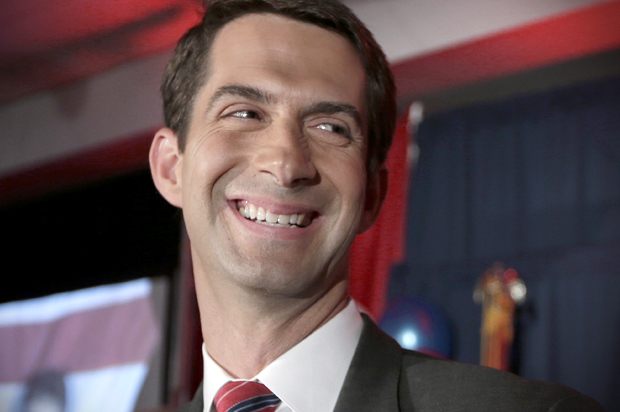
Tom Cotton (Credit: AP/Danny Johnston)
Tom Cotton (Credit: AP/​Danny Johnston)

Right-wing Obama hatred and hawk­ish for­eign pol­i­cy instincts can clash in all sorts of col­or­ful, unex­pect­ed ways, but cred­it to fresh­man sen­a­tor and not­ed piece of work Tom Cotton for this lat­est twist: neo­con­ser­v­a­tive Neville Chamberlain apol­o­gism. If your goal is to describe President Obama as the most naïve ama­teur in the his­to­ry of for­eign pol­i­cy, that means you have to mas­sage Chamberlain’s rep­u­ta­tion ever so slight­ly. (Another idea would be to find a more applic­a­ble ana­logue to Obama’s Iran pol­i­cy than Munich 1938, but we can only ask for so much his­tor­i­cal flex­i­bil­i­ty from neoconservatives.)

Cotton flesh­es out the line first pro­vid­ed by Sen. Mark Kirk — that the Obama admin­is­tra­tion is worse than Chamberlain — in a new inter­view with The Atlantic’s Jeffrey Goldberg. Lest any­one think that was just an over-the-top expres­sion of frus­tra­tion from Kirk, Cotton is prov­ing that they intend to work and expand this argu­ment. It’s not a new strain of thought to sug­gest that his­to­ry has giv­en Chamberlain an unnec­es­sar­i­ly bum rap, but it’s rare to see a neo­con­ser­v­a­tive like Tom Cotton mak­ing it. That’s where hyper­bol­i­cal­ly anti-Obama pos­tur­ing brings us today.

Wait,” a shocked, SHOCKED Jeffrey Goldberg asks Cotton, “this is the 1930s to you?” Is it ever not?

Cotton: It’s unfair to Neville Chamberlain to com­pare him to Barack Obama, because Neville Chamberlain’s gen­er­al staff was telling him he couldn’t con­front Hitler and even fight to a draw — cer­tain­ly not defeat the German mil­i­tary — until prob­a­bly 1941 or 1942. He was oper­at­ing from a posi­tion of weak­ness. With Iran, we nego­ti­at­ed pri­vate­ly in 2012 – 2013 from a posi­tion of strength, not a posi­tion of weak­ness. The secret nego­ti­a­tions in Oman. This ulti­mate­ly led to the Joint Plan of Action of November 2013. So we were nego­ti­at­ing from a posi­tion of strength — not just inher­ent mil­i­tary strength of the United States com­pared to Iran, but also from our strate­gic position.

Neville Chamberlain oper­at­ed from a posi­tion of weak­ness and had lit­tle choice but to give all the good­ies to ol’ Hitler. Obama is oper­at­ing from a posi­tion of strength, and yet he still is giv­ing all the good­ies to Hitler, or what­ev­er the new Hitler thing is. Cotton can­not even bring him­self to call the pre­lim­i­nary frame­work a “deal.” He refers to it again and again as a “list of con­ces­sions.” When Goldberg tries to bring up just one of the con­ces­sions that Iran is mak­ing — reduc­ing “their stock­pile from 10,000 kilo­grams to 300 kilo­grams of high­ly enriched ura­ni­um” — Cotton brush­es it aside as, well, we don’t real­ly know the par­tic­u­lars of that and besides, they are lying liars. He sim­i­lar­ly dis­miss­es the pro­vi­sion that the under­ground cen­ter at Fordow won’t be enrich­ing ura­ni­um. It would have been nice if Goldberg had made him respond to the fact that Iran went into nego­ti­a­tions hop­ing to main­tain a capac­i­ty of 50,000 cen­trifuges and will walk away with 6,000, pend­ing a final agreement.

Sometimes dur­ing the course of a long con­ver­sa­tion, a politi­cian will for­get that he’s staked out a sur­pris­ing posi­tion — defend­ing Neville Chamberlain, for exam­ple — and revert back to a con­tra­dic­to­ry but famil­iar com­fort zone. And sure enough, by the end of the con­ver­sa­tion, Cotton is back to trash­ing Chamberlain for the “dis­hon­or” he showed at Munich:

Cotton: The world prob­a­bly wish­es that Great Britain had rebuilt its defens­es and stopped Germany from reoc­cu­py­ing the Rhineland in 1936. Churchill said when Chamberlain came back from Munich, ‘You had a choice between war and dis­hon­or. You chose dis­hon­or and you will there­fore be at war.’ And when President Obama likes to say, ‘It’s this deal or war,’ I would dis­pute that and say, ‘It’s this deal or a bet­ter deal through stronger sanc­tions and fur­ther con­fronta­tion with [Iran’s] ambi­tions and aggres­sion in the region.’ And if it is mil­i­tary action, I would say it’s more like Operation Desert Fox or the tanker war of the 1980s than it is World War II. In the end, I think if we choose to go down the path of this deal, it is like­ly that we could be fac­ing nuclear war.

Helloooo, final sen­tence! Because that’s the oth­er thing about this inter­view, is how Cotton mat­ter-of-fact­ly drops hints about the impend­ing nuclear war to which the Obama admin­is­tra­tion is set­ting the world on a path. This is anoth­er area where Cotton takes con­trast­ing posi­tions depend­ing on the moment: is Iran a ratio­nal actor, or is it not? Is it con­cerned about self-preser­va­tion or is it not?

For the most part Cotton treats Iran as a ratio­nal actor. “They react to threats that are severe enough,” he says. To him that means not just pre­serv­ing sanc­tions, but the cred­i­ble threat of mil­i­tary action if Iran doesn’t tear apart its nuclear pro­gram. Even though the Obama admin­is­tra­tion has been say­ing con­sis­tent­ly for years that it will take mil­i­tary action against Iran if it isn’t will­ing to nego­ti­ate, Cotton doesn’t buy this, because Tom Cotton doesn’t like Barack Obama.

But then, because the imagery of a mush­room cloud is too effec­tive to pass up, Cotton reverts to treat­ing Iran like an irra­tional actor, one intent for reli­gious pur­pos­es on nuk­ing Israel (and thus bring­ing about the instant, retal­ia­to­ry nuclear destruc­tion of itself.) Here, too, Cotton finds him­self defend­ing an unlike­ly part­ner — the Soviet Union! — as a con­ve­nient con­trast to Iran. He argues that ”we could always count on the Soviet lead­er­ship to be con­cerned about nation­al sur­vival in a way that I don’t think we can count on a nuclear-armed Iranian lead­er­ship to be sole­ly con­cerned about nation­al sur­vival.” Why not? Well, some­thing about how Iranians say a lot of mean things. “I think it” — Iran obtain­ing a nuclear bomb — “will prob­a­bly lead to the det­o­na­tion of a nuclear device some­where in the world, if not out­right nuclear war.”

The argu­ment of how Iran would act as a nuclear pow­er is hypo­thet­i­cal, because there’s a deal being nego­ti­at­ed right now that would pre­vent it from becom­ing a nuclear pow­er, and nei­ther Cotton nor his fel­low crit­ics are able to offer a clear expla­na­tion for their fre­quent asser­tion that this deal ensures Iran gets the bomb. But hey, let’s enter­tain it any­way. What’s an argu­ment for Iran becom­ing a nuclear pow­er and this lead­ing to nuclear war? Maybe that Iran going nuclear wouldn’t stop the likes of Tom Cotton and his fel­low hawks from pur­su­ing Iranian régime change. That would be a provoca­tive recipe for fire­works, indeed, and it’s some­thing that leads me to believe that the Obama admin­is­tra­tion is seri­ous when it says that it will do any­thing to pre­vent Iran from get­ting a bomb. Can we be trust­ed to be the ratio­nal actor?
Read more @ http://​www​.salon​.com/​2​0​1​5​/​0​4​/​1​3​/​t​o​m​_​c​o​t​t​o​n​_​g​o​e​s​_​n​u​c​l​e​a​r​_​t​h​e​_​n​e​o​c​o​n​s​_​o​b​a​m​a​_​d​e​r​a​n​g​e​m​e​n​t​_​s​y​n​d​r​o​m​e​_​r​e​a​c​h​e​s​_​n​e​w​_​h​e​i​g​h​ts/

Al Sharpton On Arrest Of Cop For Walter Scott Shooting: ‘In The Deep South, A Mayor And Police Chief Did What We Couldn’t Get Mayors In The North And The Midwest To Do’

“What this mayor did is what we’ve asked mayors to do all over the country,” Sharpton said of North Charleston mayor Keith Summey, adding, “(Summey) said it best when he said, ‘Wrong is wrong.’”
“What this may­or did is what we’ve asked may­ors to do all over the coun­try,” Sharpton said of North Charleston may­or Keith Summey, adding, “(Summey) said it best when he said, ‘Wrong is wrong.’”

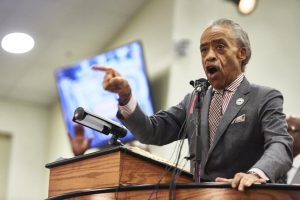
The Rev. Al Sharpton took to the podi­um in a South Carolina church Sunday to praise the mayor’s swift response to the police shoot­ing of unarmed black man Walter Scott.

Keith Summey, North Charleston’s may­or, was inside the Charity Missionary Baptist Church along with Police Chief Eddie Driggers as Sharpton hailed them for swift­ly fir­ing the offi­cer charged with killing Scott. “What this may­or did is what we’ve asked may­ors to do all over the coun­try,” Sharpton said.

(Summey) said it best when he said, ‘Wrong is wrong,’” the rev­erend con­tin­ued. “In the Deep South, a may­or and police chief did what we couldn’t get may­ors in the North and the Midwest to do,” he added.

He lat­er led the fam­i­ly in a small vig­il at the grassy spot along a seclud­ed path where Scott died April 4. The man charged in his death, Police Officer Michael Slager, 33, was dis­missed when video sur­faced that showed him pump­ing five bul­lets into Scott. Scott, 50, had tried to flee after Slager pulled him over in a rou­tine traf­fic stop. Slager, 33, has been jailed with­out bond and charged with mur­der.

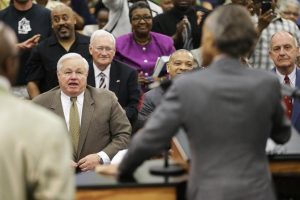
North Charleston, S.C., Mayor Keith Summey (l.) watches as Rev. Al Sharpton (foreground) speaks at Charity Missionary Baptist Church on Sunday in the wake of the killing of Walter Scot
North Charleston, S.C., Mayor Keith Summey (l.) watch­es as Rev. Al Sharpton (fore­ground) speaks at Charity Missionary Baptist Church on Sunday in the wake of the killing of Walter Scot

The seem­ing­ly cold-heart­ed crime only became pub­lic knowl­edge because a wit­ness — unseen by Slager — cap­tured it on his cell­phone and lat­er shared the video with Scott’s dev­as­tat­ed fam­i­ly. Slager told police Scott grabbed for his Taser — prompt­ing the bar­rage of bul­lets. “Shots fired, sub­ject is down,” Slager said into his radio as Scott lay unmov­ing on the grass. “He grabbed my Taser,” Slager said.

Video from Slager’s dash cam was released to the media Thursday. It showed the offi­cer pulling Scott over, and then Scott’s abrupt flight. The dash cam kept record­ing and lat­er caught an exchange between Slager and an offi­cer who respond­ed to the scene. The offi­cer advised him to “kind of jot down your thoughts on what hap­pened … once the adren­a­line quits pump­ing,” accord­ing to The Guardian, a British news­pa­per. Slager respond­ed with an audi­ble chuck­le of agree­ment. “It’s pump­ing,” he said, with a short burst of laugh­ter. “What hap­pens next?” he asked. The offi­cer told him he’d be brought to police head­quar­ters and then home.

It’ll be real quick. … They’re not going to ask you any kind of ques­tions right now. They’ll take your weapon, and we’ll go from there. That’s pret­ty much it,” said the offi­cer, who was not iden­ti­fied on the tape. The National Bar Association, a pre­dom­i­nant­ly African-American group of attor­neys and judges, last week also called for the arrest and indict­ment of the sec­ond offi­cer to respond to the shoot­ing. That offi­cer, Clarence Habersham, filed false infor­ma­tion on his police report in an attempt to help Slager’s coverup, the Bar Association claimed.

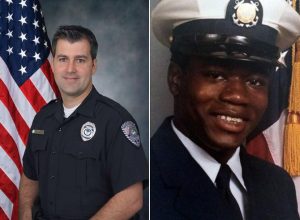
A video shows South Carolina police Officer Michael Slager (l.) fatally shot Walter Scott (r.), in the back while the victim ran away.
A video shows South Carolina police Officer Michael Slager (l.) fatal­ly shot Walter Scott (r.), in the back while the vic­tim ran away.

Slager told offi­cials Scott tried to take his Taser — prompt­ing his bar­rage of bul­lets. Habersham in his brief report said he tried to give Scott emer­gency med­ical aid — but the video does­n’t back that up, the National Bar Association said. Habersham is also seen stand­ing near Scott as Slager walks up and appar­ent­ly drops an object near the body — pos­si­bly the Taser he said Scott tried to grab from him.

Officials did­n’t imme­di­ate­ly com­ment on the demand for fur­ther police arrests. Sharpton called for an increase of black police offi­cers in an effort to improve com­mu­ni­ty rela­tions and stop the vio­lence. “This is not about black and white, it’s about right and wrong,” he said. “There must be an increase in black offi­cers. … We got­ta encour­age our young­sters that our com­mu­ni­ty is a com­mu­ni­ty that breeds peo­ple that do the right thing. We are not thugs and gang­sters,” he told the packed pews. But he also made an effort to keep emo­tions in check — telling the con­gre­gants not to judge all cops by Slager’s actions.

I’m not anti-police. We’re anti-police bru­tal­i­ty,” he said. “I did­n’t come to start trou­ble. I come to help stop trou­ble,” Sharpton stressed.Scott’s fam­i­ly held a 3 p.m. vig­il at the scene of his shooting.
Read more @http://www.nydailynews.com/news/national/al-sharpton-praises-north-charleston-mayor-police-chief-article‑1.2182592

Police Murder And Abuse Is A National Epedemic..

Whenever there are glar­ing inde­fen­si­ble proof that many of America’s cops are mur­der­ous sociopaths there is the oppos­ing argu­ment of only a tiny amount of cops are bad.
Really ?
We have con­sis­tent­ly stat­ed in this pub­li­ca­tion, if you wit­ness a crime by your col­league and you do noth­ing that makes you an acces­so­ry to the crime, if you fal­si­fy report to sub­stan­ti­ate the lie your crim­i­nal col­league prof­fer, you are equal­ly as guilt as the pri­ma­ry offender.
Civilians are pros­e­cut­ed to the full extent of the law, if they com­mit perjury.
All across America there are inmates sit­ting in state and fed­er­al pri­ons for lying to investigators.
Why are cops allowed to fal­si­fy reports,plant evi­dence, and lie to pro­tect their col­leagues with­out consequence?
Is the objec­tive to get to the truth in crim­i­nal mat­ters, or is it sim­ply about fill­ing jail and prison cells?
If this is so the pub­lic needs to be told that the police do not have to obey laws like every­one else.

YouTube player

Philly Cops Caught on Camera Beating Man Like a Drum #NajeeRivera.

Ganja Reform May Not Be Silver Bullet, Says Obama

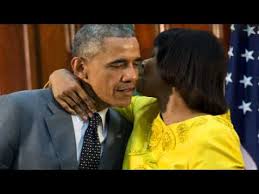
Portia and the Prez
Portia and the Prez

The con­tro­ver­sial mar­i­jua­na issue was one of many hot-but­ton top­ics United States President Barack Obama spoke on yes­ter­day dur­ing a youth town hall forum held in the Assembly Hall at the University of the West Indies (UWI). Arriving at the hall to a thun­der­ous uproar at 2:55 p.m., Obama showed how infec­tious the Jamaican cul­ture can be, as after just a few hours into his first vis­it to the island, he was quite ‘Jamaicanised’ and almost flu­ent in the island’s patois dialect.

Greetings, mas­sive! Wha a gwaan, Jamaica? Big up, UWI!” he exclaimed after burst­ing on stage, receiv­ing deaf­en­ing laugh­ter and applause. “I have been mak­ing myself at home. It is great to be in beau­ti­ful Jamaica . I just like the vibe here. I feel right at home and grate­ful for the warm Jamaican hos­pi­tal­i­ty.” After address­ing the gath­er­ing for about 15 min­utes, he opened the floor to ques­tion and answers, as he was deter­mined to engage the young lead­ers of Jamaica and CARICOM in an inter­ac­tive ses­sion for the just over an hour he spent with them.

Of course, he was ques­tioned on his views on the legal­i­sa­tion and decrim­i­nal­i­sa­tion of mar­i­jua­na and the US’s pol­i­cy on the issue. But he cau­tioned that legal­is­ing gan­ja was not a “sil­ver bul­let” for solv­ing prob­lems asso­ci­at­ed with the drug, not­ing that there are seri­ous con­sid­er­a­tions which must be giv­en to such a move.

WARNING

He added that although there appears to be many pos­i­tive out­comes which could result from decrim­i­nal­i­sa­tion, a con­ver­sa­tion must be held on pos­si­ble reper­cus­sions, includ­ing its impact on the illic­it drug trade, and even warn­ing that if legalised, a con­sid­er­a­tion must be giv­en that big com­pa­nies could very well take over and squeeze out the small man. He said poli­cies must first be devel­oped to decrease the flow of ille­gal drugs and guns across the region. Jamaica recent­ly passed a law to decrim­i­nalise the pos­ses­sion and cul­ti­va­tion of small quan­ti­ties of gan­ja. The pres­i­dent promised that once he leaves office, he hopes to island hop in the Caribbean.

anastasia.​cunningham@​gleanerjm.​com

See also : BEFORE YOU START COUNTING THAT GANJA MONEY:here’s Something To Think About.

South Carolina Officer Is Charged With Murder In Black Man’s Death By MICHAEL S. SCHMIDT And MATT APUZZOAPRIL 7, 2015

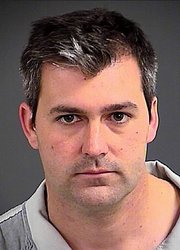
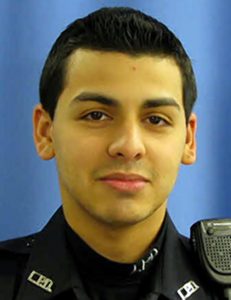
Michael T. Slager, 33

WASHINGTON — A white police offi­cer in North Charleston, S.C., was charged with mur­der on Tuesday after a video sur­faced show­ing him shoot­ing and killing an appar­ent­ly unarmed black man in the back while he ran away.

The offi­cer, Michael T. Slager, 33, had said he feared for his life because the man took his stun gun in a scuf­fle after a traf­fic stop on Saturday. A video, how­ev­er, shows the offi­cer fir­ing eight times as the man — Walter L. Scott, 50 — fled.

The North Charleston may­or announced the state charges at a news con­fer­ence Tuesday evening.

The shoot­ing comes on the heels of high-pro­file inci­dents of police offi­cers using lethal force in New York, Cleveland, Ferguson, Mo., and else­where around the coun­try. The deaths have sparked a nation­al debate over whether police are too quick to use force, par­tic­u­lar­ly in cas­es involv­ing black men.

A White House task force has rec­om­mend­ed a host of changes to the nation’s police poli­cies, and President Obama dis­patched Attorney General Eric H. Holder Jr., to cities around the coun­try to try to improve police rela­tions with minor­i­ty neighborhoods.

North Charleston is the state’s third-largest city with a pop­u­la­tion of about 100,000. African-Americans make up about 47 per­cent of res­i­dents, and whites account for about 37 per­cent. The city police depart­ment is about 80 per­cent white, accord­ing to data col­lect­ed by the Justice Department in 2007, the most recent peri­od available.

When you’re wrong, you’re wrong,” Mayor Keith Summey said of the shoot­ing dur­ing the news con­fer­ence. “And if you make a bad deci­sion, don’t care if you’re behind the shield or just a cit­i­zen on the street, you have to live by that decision.”

The shoot­ing unfold­ed after Officer Slager stopped the dri­ver of a Mercedes-Benz with a bro­ken tail­light, accord­ing to police reports. Mr. Scott ran away, and Officer Slager chased him into a grassy lot that abuts a muf­fler shop. He fired his Taser, an elec­tron­ic stun gun, but it did not stop Mr. Scott, accord­ing to police reports.

Moments after the strug­gle, Officer Slager report­ed on his radio, “Shots fired and the sub­ject is down. He took my Taser,” accord­ing to police reports.

But the video, which was tak­en by a bystander and pro­vid­ed to The New York Times by Mr. Scott’s lawyer, presents a dif­fer­ent account. The video begins in the vacant lot, appar­ent­ly moments after Officer Slager fired his Taser. Wires, which car­ry the elec­tri­cal cur­rent from the stun gun, appear to be extend­ing from Mr. Scott’s body as the two men tus­sle and Mr. Scott turns to run.

Something — it is not clear whether it is the stun gun — is either tossed or knocked to the ground behind the two men and Officer Slager draws his gun, the video shows. When the offi­cer fires, Mr. Scott appears to be 15 to 20 feet away and flee­ing. He falls after the last of eight shots.

The offi­cer then runs back toward where the ini­tial scuf­fle occurred and picks some­thing off the ground. Moments lat­er, he drops an object near Mr. Scott’s body, the video shows.

The South Carolina Law Enforcement Division, the state’s crim­i­nal inves­tiga­tive body, has begun an inquiry into the shoot­ing. The F.B.I. and the Justice Department, which has opened a string of civ­il rights inves­ti­ga­tions into police depart­ments under Mr. Holder, is also investigating.

The Supreme Court has held that an offi­cer may use dead­ly force against a flee­ing sus­pect only when there is prob­a­ble cause that he “pos­es a sig­nif­i­cant threat of death or seri­ous phys­i­cal injury to the offi­cer or others.”

Officer Slager served in the Coast Guard before join­ing the force five years ago, his lawyer said. The police chief of North Charleston did not return repeat­ed calls. Because police depart­ments are not required to release data on how often offi­cers use force, it was not imme­di­ate­ly clear how often police shoot­ings occur in North Charleston, a work­ing-class com­mu­ni­ty adja­cent to the tourist des­ti­na­tion of Charleston.

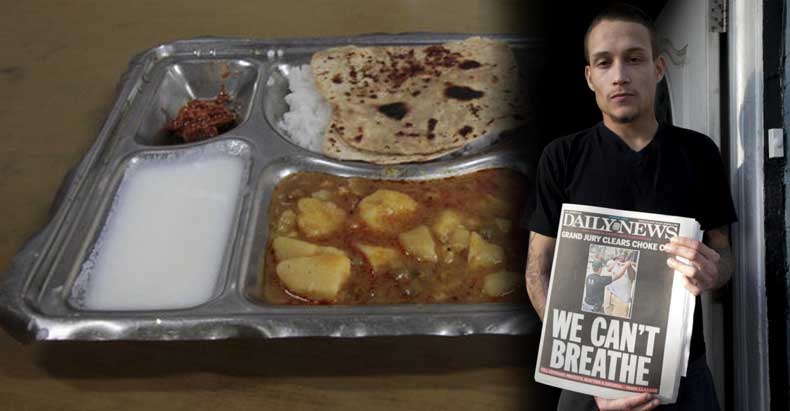
Shocking /​Man Imprisoned After Filming Eric Garner’s Death, Refusing To Eat, Rat Poison Found In Jail Food

22-year-old Ramsey Orta, the young man who filmed the NYPD killing Eric Garner,  Read more at http://thefreethoughtproject.com/man-jailed-filming-eric-garners-death-eat-rat-poison-prisons-food/#d01Zq2hGz1H5RWSI.99
22-year-old Ramsey Orta, the young man who filmed the NYPD killing Eric Garner,
Read more at http://​the​freethought​pro​ject​.com/​m​a​n​-​j​a​i​l​e​d​-​f​i​l​m​i​n​g​-​e​r​i​c​-​g​a​r​n​e​r​s​-​d​e​a​t​h​-​e​a​t​-​r​a​t​-​p​o​i​s​o​n​-​p​r​i​s​o​n​s​-​f​o​o​d​/​#​d​0​1​Z​q​2​h​G​z​1​H​5​R​W​S​I​.99

New York, New York – 22-year-old Ramsey Orta, the young man who filmed the NYPD killing Eric Garner, was arrest­ed short­ly after on trumped up charges. He has since been locked up at the noto­ri­ous Rikers prison in New York.

Immediately fol­low­ing the killing of Eric Garner, Orta was stalked and tar­get­ed by police. They alleged­ly scru­ti­nized Orta’s dai­ly life until they were able to find some­thing to charge him with. Eventually, he was con­front­ed by police who ille­gal­ly searched him and arrest­ed him for the non-vio­lent crime of car­ry­ing an unreg­is­tered firearm.

Orta had expressed con­cern for his safe­ty after his arrest because he was sure that the police were retal­i­at­ing against him for expos­ing what they had done to Eric Garner.

While in prison, Orta has tak­en seem­ing­ly dras­tic mea­sures to ensure that he is not killed by the gang he wit­nessed mur­der Eric Garner. Orta has been refus­ing to eat, as he fears that guards may poi­son him because he is a high-pro­file oppo­nent of police bru­tal­i­ty. Sadly, Orta’s fears were well-found­ed. While he has been behind bars at Rikers, dozens of oth­er inmates have report­ed traces of rat poi­son in their food, a claim that was actu­al­ly recent­ly admit­ted by prison officials.

It was report­ed by the New York Post last month that 19 dif­fer­ent inmates were denied med­ical test­ing after bluish green pel­lets were found in their food. The prison admit­ted that these pel­lets were rat poi­son, but failed to give the inmates med­ical atten­tion, and failed to offer any kind of expla­na­tion as to why the prison’s food was taint­ed with rat poison.

Orta has been refus­ing to eat, so he has not ingest­ed any of the food laced with rat poi­son and is not one of the 19 inmates in ques­tion. However, his health is dete­ri­o­rat­ing and he is becom­ing mal­nour­ished due to the lack of food.

Speaking in an exclu­sive inter­view with The Free Thought Project, Danette Chavis, orga­niz­er and founder of National Action Against Police Brutality (NAAPB) point­ed out that Orta’s search and arrest were com­plete­ly unjustified.

It’s imper­a­tive that each and every one of us watch this case close­ly, for what is being done to Ramsey Orta is being done across the United States to those who would resist the oppres­sive forces of police. When police have to reach back into the his­to­ry of a per­son to jus­ti­fy their actions of “today,” some­thing is very wrong. For the actions com­mit­ted by the per­son at the time of arrest should be suf­fi­cient. And when it isn’t they ought not be charged with a crime. Because if “his­to­ry” is enough to “con­vict” the United States itself is guilty, for crimes unable to be enu­mer­at­ed here,” Chavis said.

Orta’s sit­u­a­tion is dire, there is only so long that a per­son can go with­out ade­quate nutri­tion. It has now been proven that the food in prison can­not be trust­ed, not for your aver­age inmate, and espe­cial­ly not for con­tro­ver­sial ones. His bail has been set at $16250, and his fam­i­ly can­not afford to pay it. This is tru­ly a life and death sit­u­a­tion, so his fam­i­ly has start­ed a fundrais­er to help with the legal fees. Unfortunately, how­ev­er, the cam­paign has only raised a frac­tion of its goal. Please con­sid­er donat­ing to the fundrais­er if you have the means, even if it is only a few dollars.

Orta was not the only per­son to be tar­get­ed for film­ing the Garner mur­der either, as we report­ed last month, Taisha Allen, who also filmed the death of Eric Garner, is speak­ing out and say­ing that her involve­ment with the case has put a tar­get on her back with the NYPD.
Read more at.http://​the​freethought​pro​ject​.com/​m​a​n​-​j​a​i​l​e​d​-​f​i​l​m​i​n​g​-​e​r​i​c​-​g​a​r​n​e​r​s​-​d​e​a​t​h​-​e​a​t​-​r​a​t​-​p​o​i​s​o​n​-​p​r​i​s​o​n​s​-​f​o​o​d​/​#​D​e​2​L​i​c​A​2​t​W​4​I​q​r​g​R​.01

Netanyahu: Any Final Iran Deal Must Include Recognition Of Israel’s Right To Exist

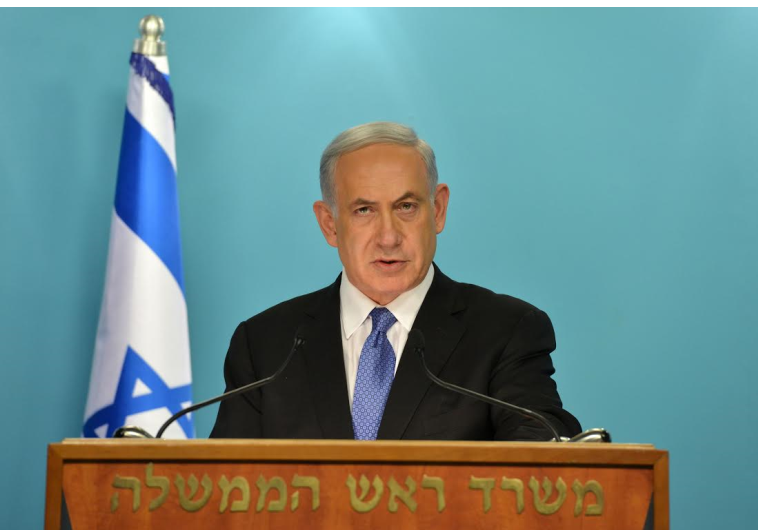
Benjamin Netanyahu, April 3, 2015. (photo credit:KOBY GIDEON/GPO)
Benjamin Netanyahu, April 3, 2015. (pho­to credit:KOBY GIDEON/​GPO)

Any final deal with Iran must include a clear and unam­bigu­ous recog­ni­tion by Tehran of Israel’s right to exist, Prime Minister Benjamin Netanyahu said Friday.
Netanyahu’s com­ments came after a meet­ing of the secu­ri­ty cab­i­net called to dis­cuss the frame­work agree­ment agreed upon Thursday between the world pow­ers and Iran in Lausanne. This was the first time he has called for an explic­it recog­ni­tion of Israel by Iran.
Netanyahu said that Israel would not accept an agree­ment that “allows a coun­try that vows to anni­hi­late us to devel­op nuclear weapons, peri­od.” In recent days senior Israeli offi­cials have spo­ken open­ly about pos­si­ble Israeli mil­i­tary action if need be to pre­vent Iran from get­ting a bomb.

Iran is a régime that open­ly calls for Israel’s destruc­tion and open­ly and active­ly works towards that end.” he said. “Just two days ago, in the midst of the nego­ti­a­tions in Lausanne, the com­man­der of the Basij secu­ri­ty forces in Iran said this: The destruc­tion of Israel is non-nego­tiable.’ Well, I want to make clear to all. The sur­vival of Israel is non-nego­tiable. Netanyahu, while not threat­en­ing mil­i­tary action, said that the secu­ri­ty cab­i­net is “unit­ed in strong­ly oppos­ing the pro­posed deal.” He said it would pose a grave dan­ger to the region, the world, and threat­en Israel’s sur­vival. Netanyahu said the deal “would not shut down a sin­gle nuclear facil­i­ty in Iran, would not destroy a sin­gle cen­trifuge in Iran and will not stop R&D on Iran’s advanced cen­trifuges. On the con­trary. The deal would legit­imize Iran’s ille­gal nuclear pro­gram. It would leave Iran with a vast nuclear infra­struc­ture. A vast nuclear infra­struc­ture remains in place.” Furthermore, he said the deal would lift sanc­tions almost imme­di­ate­ly, giv­ing Iran a huge eco­nom­ic boost just as it is step­ping up its ter­ror and aggres­sion in the region and elsewhere.

In a few years, the deal would remove the restric­tions on Iran’s nuclear pro­gram, enabling Iran to have a mas­sive enrich­ment capac­i­ty that it could use to pro­duce many nuclear bombs with­in a mat­ter of months,” he added. Echoing com­ments he made to Congress last month and repeat­ing what he said to US President Barack Obama dur­ing a con­ver­sa­tion overnight, Netanyahu said this deal does not block Iran’s path to a bomb, but rather paves it. In addi­tion, he said, it may spark a nuclear arms race through­out the Middle East and increase the risks of “ter­ri­ble war.” Rejecting argu­ments made by Obama that the alter­na­tive to the deal is war, Obama said there is anoth­er alter­na­tive: “stand­ing firm, increas­ing the pres­sure on Iran until a good deal is achieved.”

Basis For Iran Nuclear Agreement Reached, EU Official Says

The basis for an agree­ment for a peace­ful Iranian nuclear pro­gram and a lift­ing of sanc­tions against that nation has been reached, EU for­eign pol­i­cy chief Federica Mogherini announced Thursday in Switzerland. “We have reached solu­tions on key para­me­ters of a joint com­pre­hen­sive plan of action,” she said.

• Iran’s enrich­ment capac­i­ty and stock­pile would be lim­it­ed, and Iran’s sole enrich­ment facil­i­ty would be at the Natanz nuclear facil­i­ty, Mogherini said. Other nuclear facil­i­ties would be con­vert­ed for oth­er uses, she said.

• Under the agree­ment, the nuclear facil­i­ty at Fordow would be con­vert­ed to a nuclear physics and tech­nol­o­gy cen­ter and the facil­i­ty at Arak would be redesigned as a heavy-water research reac­tor that will not pro­duce weapons-grade plutonium.

• The European Union would ter­mi­nate all nuclear-relat­ed eco­nom­ic and finan­cial sanc­tions against Iran, and the United States would do the same once Iran’s imple­men­ta­tion of the agree­ment is con­firmed, accord­ing to announce­ments of the deal.

• The United Nations would ter­mi­nate all pre­vi­ous res­o­lu­tions sanc­tion­ing Iran, and would incor­po­rate oth­er restric­tions for an agreed-upon peri­od, accord­ing to Thursday’s announcements.

Significant agree­ments have been reached regard­ing Iran’s nuclear pro­gram, accord­ing to tweets by offi­cials ahead of a planned joint statement.

Found solu­tions,” Iranian Foreign Minister Javad Zarif tweet­ed. “Ready to start draft­ing immediately.”

Solutions on key para­me­ters” reached, Iranian President Hassan Rouhani said on Twitter. The European Union’s for­eign pol­i­cy chief, Federica Mogherini, tweet­ed, “Good news,” regard­ing the talks.

U.S. Secretary of State John Kerry sent a tweet say­ing that “para­me­ters to resolve major issues” have been reached.

The flur­ry of tweets basi­cal­ly amount­ed to a leak of the upcom­ing state­ment. The mes­sage: expect a break­through from the marathon talks in Lausanne.

Mogherini is expect­ed to make a state­ment, which will also be read in Farsi by Zarif.

U.S. Secretary of State John Kerry is also expect­ed to make a statement.

The goal had been to agree on a frame­work for a future final nuclear agree­ment by Tuesday. The talks stretched well past the orig­i­nal deadline.

The state­ment will mark the end of a round of talks that start­ed last week.

Earlier Thursday, as Zarif was walk­ing back to the hotel where the nego­ti­a­tions were being held, he told reporters that a state­ment was in the works.

Issuing a state­ment sounds like some­thing less sig­nif­i­cant than the frame­work of under­stand­ing that the par­ties were aim­ing for.

What we expect today is a state­ment and the fact that we have all reached com­mon under­stand­ing on how to resolve the issues,” Zarif said. “But the agree­ment, a writ­ten agree­ment, is some­thing that needs to be draft­ed by all par­tic­i­pants and agreed upon in a mul­ti­lat­er­al process. And that would take, hope­ful­ly, three months, to final­ize, and hope­ful­ly less.”

Asked if an under­stand­ing has been reached on all issues, Zarif replied, “that’s what we think we have, but noth­ing is agreed until every­thing is agreed.”

World pow­ers — the United States, Russia, China, France, the United Kingdom and Germany — were exam­in­ing the results of the overnight talks with­out Iran present, he said.

The talks, aimed at reach­ing a pre­lim­i­nary polit­i­cal deal on Iran’s nuclear pro­gram, blew past their ini­tial, self-imposed dead­line of late Tuesday as Iranian and U.S. nego­tia­tors strug­gled to find com­pro­mis­es on key issues.

But the nego­tia­tors have dogged­ly con­tin­ued their work in Lausanne, try­ing to over­come decades of mis­trust between Tehran and Washington.

The mutu­al mis­trust has been a seri­ous prob­lem in the talks, Zarif said.

I believe respect is some­thing that needs to be exer­cised in prac­tice and in deeds, and I hope that every­one is engag­ing in that in mutu­al respect,” he said.

A few meters from the finishing line’

We are a few meters from the fin­ish­ing line, but it’s always the last meters that are the most dif­fi­cult. We will try and cross them,” French Foreign Minister Laurent Fabius said as he returned to the talks late Wednesday. “We want a robust and ver­i­fi­able agree­ment, and there are still points where there needs to be progress, espe­cial­ly on the Iranian side.”

Iran wants swift relief from pun­ish­ing sanc­tions that have throt­tled its econ­o­my. And Western coun­tries want to make sure any deal holds Iran back from being able to rapid­ly devel­op a nuclear weapon.

It’s unclear what kind of accord might emerge from this round of talks — Iran appears to be resist­ing too many specifics, while the U.S. side wants to put hard num­bers on key points.

Whatever it might turn out to be, the inter­im deal will need to be fleshed out into a full deal by June 30. Some of the thorni­est issues could end up being left for that final phase.

But in the mean­time, the Obama admin­is­tra­tion needs some­thing sol­id enough it can sell to a skep­ti­cal Congress, which has threat­ened to impose new sanc­tions on Iran. The poten­tial deal is also com­ing under sus­tained attack from Israeli Prime Minister Benjamin Netanyahu.

http://​www​.cnn​.com/​2​0​1​5​/​0​4​/​0​2​/​w​o​r​l​d​/​i​r​a​n​-​n​u​c​l​e​a​r​-​t​a​l​k​s​/​i​n​d​e​x​.​h​tml

Over 100 People Were Killed By Police In March. How Many More Will It Take?

Kanya Bennett  Legislative Counsel, ACLU Washington Legislative Offic
Kanya Bennett
Legislative Counsel, ACLU Washington Legislative Offic

Here’s a sta­tis­tic for you: It’s been 31 days since the release of the White House Task Force on 21st Century Policing report, but the num­ber of fatal police encoun­ters is already over 100 and count­ing. That’s an aver­age of more than three peo­ple killed each day in March by police in America.

Too many of this mon­th’s vic­tims fit a pro­file we know all too well — unarmed men of col­or, some of whom have psy­chi­atric dis­abil­i­ties. Victims like Charly Keunang in Los Angeles, California; Tony Robinson in Madison, Wisconsin; Anthony Hill in DeKalb County, Georgia; and Brandon Jones in Cleveland, Ohio; con­firm that the prob­lems with polic­ing are nation­al in scope.

This isn’t a prob­lem con­cen­trat­ed in a few rogue police depart­ments. Even those police depart­ments with the best of inten­tions need reform. Take, for exam­ple, last week’sDepartment of Justice report that Philadelphia police shot 400 peo­ple — over 80 per­cent African-American — in sev­en years. This is in a city where the police com­mis­sion­er is an author of the very same White House task force report call­ing for police reform.

So clear­ly we must do more than read — or even write — these reports. Report rec­om­men­da­tions, sev­er­al of which are adopt­ed from ACLU rec­om­men­da­tions, must be imple­ment­ed. The task force report makes 63 rec­om­men­da­tions, but let’s focus on just two. Neither one is nov­el, but both are crit­i­cal to real police reform.

Deescalate Situations

This is stat­ing the obvi­ous, but clear­ly it needs to be repeat­ed — police depart­ments should adopt use-of-force poli­cies that empha­size de-escalation.

Excessive and dead­ly use of force, dis­pro­por­tion­ate­ly against peo­ple of col­or and peo­ple with psy­chi­atric dis­abil­i­ties, is dri­ving nation­al dis­course. Jaywalking and sell­ing indi­vid­ual cig­a­rettes should not result in death — nor should fail­ing to take your med­ica­tion.

The ACLU told the task force that de-esca­la­tion, train­ing, and inci­dent review are nec­es­sary com­po­nents to any use-of-force pol­i­cy. The task force agreed, rec­om­mend­ing that, “Law enforce­ment agency poli­cies for train­ing on use of force should empha­size de-esca­la­tion and alter­na­tives to arrest or sum­mons in sit­u­a­tions where appropriate.”

DOJ’s Community Oriented Policing Services office must con­tin­ue work­ing with local police depart­ments to imple­ment appro­pri­ate use-of-force stan­dards. The fed­er­al gov­ern­ment must com­mit the appro­pri­ate resources for this.

And par­tic­u­lar atten­tion must be paid to how these poli­cies are impact­ing peo­ple of col­or, peo­ple with dis­abil­i­ties, and oth­er mar­gin­al­ized pop­u­la­tions. Otherwise police will con­tin­ue to be seen as an oppres­sive force in cer­tain com­mu­ni­ties, there­by mak­ing com­mu­ni­ty polic­ing impossible.

Collect Data

The pub­lic needs legit­i­mate data col­lec­tion prac­tices that pro­mote trans­paren­cy and account­abil­i­ty when police use unrea­son­able force. We need some­thing a lit­tle more thought­ful than a Google search to give us the stats on the num­ber of police shoot­ings — fatal or non­fa­tal — in any giv­en peri­od of time.

As the ACLU explained to the task force, data col­lec­tion and report­ing is the eas­i­est sin­gle thing any police depart­ment can do start­ing today. And it will offer the best depic­tion of what polic­ing in the 21st cen­tu­ry looks like.

Over 100 People Were Killed by Police in March. How Many More Will It Take?
Over 100 People Were Killed by Police in March. How Many More Will It Take?

Both the ACLU and the task force rec­om­mend data col­lec­tion on a range of police and cit­i­zen encoun­ters — from stops and arrests to non­fa­tal and fatal police shoot­ings. “Policies on use of force,” the task force writes, “should also require agen­cies to col­lect, main­tain, and report data to the Federal Government on all offi­cer-involved shoot­ings, whether fatal or non­fa­tal, as well as any in-cus­tody death.” And data must be inclu­sive not just of race and gen­der but dis­abil­i­ty as well.

In order for local law enforce­ment to get seri­ous about data col­lec­tion, it may take the dan­gling of fed­er­al dol­lars. The recent­ly enact­ed Death in Custody Act, which requires data col­lec­tion on what the title sug­gests, is tak­ing that approach by penal­iz­ing non­com­pli­ant agen­cies through Department of Justice funds. Earlier man­datesaround data col­lec­tion — ones that allow law enforce­ment tovol­un­tar­i­ly report data with­out penal­ty –aren’t working.

The task force report — like so many oth­ers before it — has spelled out what’s need­ed for police reform. How many more reports or police shoot­ings do we need before we get to work?

This post first appeared on the ACLU’s “Blog of Rights.”

Holness Survive.…

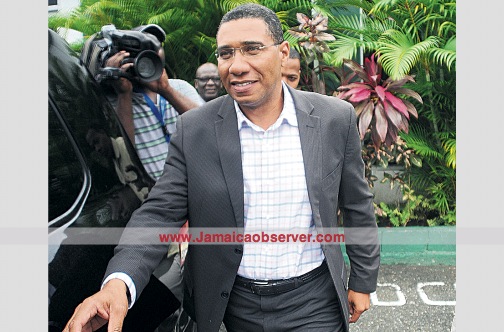
Opposition Leader Andrew Holness wears a broad smile as he walks to his motor vehicle to leave the Jamaica Labour Party headquarters yesterday afternoon after Opposition MPs voted to have him remain as leader of the party. (PHOTO: GARFIELD ROBINSON)
Opposition Leader Andrew Holness wears a broad smile as he walks to his motor vehi­cle to leave the Jamaica Labour Party head­quar­ters yes­ter­day after­noon after Opposition MPs vot­ed to have him remain as leader of the par­ty. (PHOTO: GARFIELD ROBINSON)

OPPOSITION Leader Andrew Holness tri­umphed again over inter­nal rivals by eas­i­ly win­ning a secret bal­lot among Jamaica Labour Party (JLP) mem­bers of par­lia­ment (MPs) at a cau­cus called yes­ter­day to decide his future.

Twenty of the JLP’s 21 MPs took part in the poll at the par­ty’s Belmont Road head­quar­ters in Kingston, with Holness being the only one with­out a vote. The result of the bal­lots showed that he had the sup­port of approx­i­mate­ly two-thirds of the MPs.

Thirteen of the MPs sup­port­ed him remain­ing as their leader, while sev­en were opposed. Deputy Leader JC Hutchinson, the only MP absent fol­low­ing med­ical surgery, sent in his bal­lot in a letter.

However, the rebel MPs could take some solace in the fact that the votes against Holness were two more than the five expected.

Yesterday’s vote also sig­nalled that the anti-Holness fac­tion is declin­ing among those who favoured his rival in the bit­ter 2013 lead­er­ship race, Audley Shaw.

Leader of Opposition Business in the House of Representatives, Derrick Smith, admit­ted yes­ter­day that his inten­tion in call­ing the meet­ing was not to seek a vote among MPs, but to allow for dis­cus­sions on the issues gen­er­at­ed by two recent court deci­sions against Holness.

The Constitutional Court had ruled that Holness’ request for and use of undat­ed pre-signed res­ig­na­tion let­ters to oust Arthur Williams and Dr Christopher Tufton from the Senate was unconstitutional.

Holness appealed the rul­ing but lost in the high­er court.

Smith said that after dis­cus­sions on a num­ber of issues at the meet­ing, he was will­ing to allow the dis­senters to put Holness’ pop­u­lar­i­ty to a test.

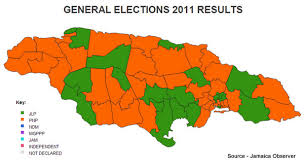
Jamaica's electoral map
Jamaica’s elec­toral map

It was obvi­ous that the par­ty now has to put this lead­er­ship issue behind us and move on,” Smith said, point­ing to the need to get the JLP machin­ery ready for both upcom­ing local gov­ern­ment and gen­er­al elections.

Smith said that, despite the vote, he picked up at the meet­ing that the two sides were mov­ing ahead as one.

I am very con­vinced that, based on the mood of the meet­ing, and the final result of the meet­ing, that we all will be togeth­er; we will sing from the same hymn book,” Smith said.

The dis­sent­ing mem­bers refused to speak with the media fol­low­ing the bal­lot, acknowl­edg­ing that Smith was appoint­ed to make press statements.

Veteran MP Edmund Barlett, who had sup­port­ed Shaw in 2013 but now sup­ports Holness, said that he was con­fi­dent that the par­ty would move ahead, united.

We are one. We agreed on a posi­tion and now we are going out there to beat the PNP: We are going out there to beat the PNP, that is the mis­sion,” Bartlett said.

Holness, who also chaired last night’s meet­ing of the pow­er­ful Standing Committee, put on a show of how this elu­sive uni­ty could be achieved, when he led a large team of JLP MPs, includ­ing sev­er­al of his detrac­tors, to a polit­i­cal ral­ly and gospel con­cert host­ed by Everald Warmington’s South Western St Catherine con­stituen­cy in Old Harbour on Sunday night.

Holness intro­duced to sup­port­ers a num­ber of MPs, includ­ing Karl Samuda, Mike Henry, Pearnel Charles, Olivia ‘Babsy’ Grange, Shahine Robinson, Dr Andrew Wheatley, Rudyard Spencer, James Robertson, and Warmington.

Finance spokesman Shaw was also sched­uled to speak, but was said to be unavoid­ably absent.

The theme of the ral­ly was polit­i­cal uni­ty, and Holness, in his effort to pro­mote that theme, used sev­er­al quotes from the Bible, includ­ing Romans chap­ter 12, vers­es 4 – 5 which reads:

For just as each of us has one body with many mem­bers, and these mem­bers do not all have the same func­tion: So in Christ we, though many, form one body, and each mem­ber belongs to all the others.”

Holness said that the JLP can­not remain a divid­ed house.

MPs To Decide On Holness’ Fate Monday

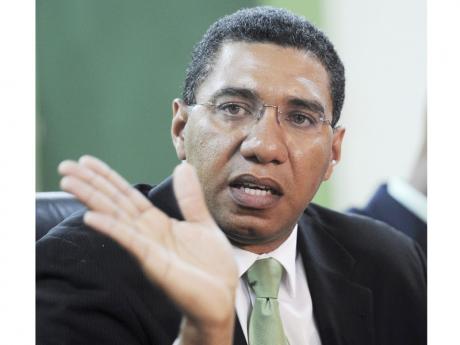
Andrew Holness  Gleaner photo
Andrew Holness
Gleaner pho­to

Members of the par­lia­men­tary oppo­si­tion are to meet on Monday to decide on the fate of Andrew Holness fol­low­ing his loss in the Appeals Court ear­li­er this week. The meet­ing was orig­i­nal­ly planned for today.

It was called by Leader of Opposition Business in the House, Derick Smith, who says he will pledge his sup­port for Holness. The Court of Appeal threw out an appeal by Holness in the Senate seat saga and made it abun­dant­ly clear that Senators Arthur Williams and Dr Christopher Tufton did not resign in 2013 and must retake their posi­tions in the Senate. Minutes after the rul­ing Wednesday, Delroy Chuck resigned from the Shadow Cabinet and urged Holness to do the same. The par­ty was thrown into tur­moil last month when the Constitutional Court ruled that Holness act­ed uncon­sti­tu­tion­al­ly when he used undat­ed, unsigned res­ig­na­tion let­ters to oust Tufton and Williams from the Senate. There were reports that the par­ty was divid­ed on what was to become of the Opposition Leader. Several heat­ed meet­ings were held with­in the par­ty to deter­mine his fate. Meanwhile, Senators Williams and Tufton are expect­ed to retake their seats in the Upper House this morning.

Deconstructing Netanyahu

Daoud Kuttab  Palestinian journalist
Daoud Kuttab
Palestinian jour­nal­ist

Pundits are won­der­ing why two state­ments by Israeli Prime Minister Benjamin Netanyahu pri­or to the Israeli elec­tions and on the day of the elec­tions drew so much atten­tion. After the elec­tions, Republican leader and for­mer pres­i­den­tial con­tender John McCain told US pres­i­dent Barack Obama to “get over your tem­per tantrum.”

For Israel sup­port­ers like McCain, Netanyahu’s state­ments are mere­ly elec­tion rhetoric that can eas­i­ly be resolved and even erased. In fact, Netanyahu already slight­ly back­tracked from his pre-elec­tion oppo­si­tion to the two-state solu­tion and also tech­ni­cal­ly apol­o­gized to Israel’s Arab cit­i­zens. So some might won­der why the big fuss over these two state­ments. Well, to under­stand the depth of the prob­lems caused by these two state­ments, it is impor­tant to under­stand the two basic com­po­nents of the world (i.e., US) pol­i­cy towards Israel.

Washington and many European coun­tries con­sid­er Israel a demo­c­ra­t­ic coun­try that fair­ly and hon­est­ly rep­re­sents all its cit­i­zens, and not just the Jewish pop­u­la­tion. If the US and oth­er Western coun­tries reached the con­clu­sion that Israel is unde­mo­c­ra­t­ic and a reli­gious state, they could not have giv­en it the kind of sup­port (finan­cial, polit­i­cal and mil­i­tary) they have. Based on this assump­tion that Israel is a demo­c­ra­t­ic state rep­re­sent­ing all of its cit­i­zens, the world always takes the side of Israel in jus­ti­fy­ing its decades-old occu­pa­tion. Israelis have fooled the world for so long say­ing that they want peace and a civ­il end to the occu­pa­tion, but it is some­how those bar­bar­ic ter­ror­ist Palestinians who refuse to deal hon­est­ly with Israel.

When the issue was fur­ther pressed on Israel as to what kind of a solu­tion it is will­ing to accept, Netanyahu reluc­tant­ly accept­ed the idea of a two-state solu­tion, putting two con­di­tions on such a state in order for benev­o­lent Israel to accept. But as US-spon­sored talks began and end­ed with­out a solu­tion, Washington start­ed to ques­tion Israel’s com­mit­ment. Secretary of State John Kerry pub­licly blamed Israelfor mak­ing peace talks fail because of its set­tle­ment expan­sion and reneg­ing on the promise to release pris­on­ers. Yet the US con­tin­ues to give Israel the ben­e­fit of the doubt and to believe that, some­how, the nor­mal cycle of democ­ra­cy will resolve this prob­lem. Americans real­ly believed that the Israeli pub­lic, like any oth­er democ­ra­cy, will make the need­ed adjust­ments at the polls when the time comes to decide whether they want peace or not.

The US had good rea­son to think that way. In the past, Israeli lead­ers, includ­ing Netanyahu in the first term, were oust­ed by the pub­lic in sim­i­lar cir­cum­stances. The Americans believe that the Israelis would take into con­sid­er­a­tion their rela­tion­ship with Washington when they go to the polls. After all, no oth­er ally in the world has stood by Israel and pro­tect­ed Israeli pol­i­cy more than Washington. The two state­ments by Netanyahu, there­fore, must have come as a dis­ap­point­ment for some. All of a sud­den, the Americans were faced with the real­i­ty that Israel is a democ­ra­cy only for Jewish cit­i­zens. When the non-Jewish cit­i­zen, i.e., Palestinian Arab cit­i­zens, unit­ed in one bloc and attempt­ed to prop­er­ly use their legal right to vote, Netanyahu and com­pa­ny got upset and showed where they real­ly stood on the issues of democ­ra­cy as a mech­a­nism work­ing to the ben­e­fit of the people.

The United States does not need to change its pol­i­cy. It sim­ply needs to hon­our its own com­mit­ments and hold all coun­tries, includ­ing Israel, account­able. The idea that Israel and the US have shared val­ues in terms of democ­ra­cy and the right to self-deter­mi­na­tion proved fake. The truth is com­ing out and Netanyahu’s attempts to cor­rect his errors will do lit­tle to change what the world has now final­ly come to under­stand, name­ly that Israel is nei­ther a democ­ra­cy nor that its five-decades old occu­pa­tion of four mil­lion Palestinians is the fault of the occu­pied rather than the occu­pi­er. huff​in​g​ton​post​.com

See also NO NICE WAY TO SAYLIAR”.

Fleece Force: How Police And Courts Around Ferguson Bully Residents And Collect Million

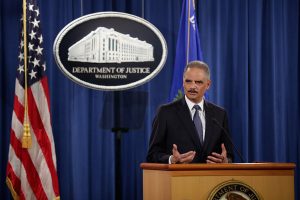
Attorney General Eric Holder discusses the Justice Department's Ferguson investigations on March 4, 2015. (Photo: Chip Somodevilla/Getty Images
Attorney General Eric Holder dis­cuss­es the Justice Department’s Ferguson inves­ti­ga­tions on March 4, 2015. (Photo: Chip Somodevilla/​Getty Images

ASADENA HILLS, Mo. — “Lacee Scott?” the judge called. The 23-year-old rose from a hard black plas­tic chair, walked past the fire­place and stood before the table at the front of the liv­ing room.

From the out­side, the house is bare­ly dis­tin­guish­able from oth­ers on the street — brick, three bed­rooms, built in 1948. Over the entrance, how­ev­er, there is a sign iden­ti­fy­ing it as City Hall. Once a month, the liv­ing room, with its lamps, hard­wood floors and clock on the man­tle, becomes a court­room. Those with busi­ness before the judge first check in with the clerk in the din­ing room before tak­ing a seat among the rows of chairs set up in the fam­i­ly room.

Scott, a senior at Alabama A&M University, had lived in Pasadena Hills dur­ing high school. Her father, a for­mer St. Louis County police offi­cer, works for Walgreens. Her moth­er is the prin­ci­pal of a local ele­men­tary school. Last sum­mer, when Scott was home vis­it­ing her fam­i­ly, a notice was placed on her car.

Parking had nev­er been an issue in her qui­et, sub­ur­ban com­mu­ni­ty. Pasadena Hills is small, with a pop­u­la­tion of less than 1,000. But the munic­i­pal­i­ty had recent­ly passed an ordi­nance requir­ing those park­ing overnight to dis­play a $10 res­i­den­tial park­ing stick­er on their vehi­cles. The notice ordered Scott to come to City Hall to obtain the sticker.

The city office has exteme­ly lim­it­ed busi­ness hours, how­ev­er. The sev­en-hour dri­ve from Huntsville, Alabama, back to Pasadena Hills also made it dif­fi­cult for Scott to appear in per­son. Soon, the city began mail­ing her threat­en­ing letters.

They sent me a let­ter and said there would be a war­rant out for my arrest if I didn’t come back for this,” Scott told The Huffington Post of her court appear­ance. “For $10. For park­ing in front of my house.”

Such expe­ri­ences are not uncom­mon in St. Louis County. According to ascathing report from the U.S. Department of Justice released this month, author­i­ties in near­by Ferguson rou­tine­ly abused the rights of res­i­dents, who were viewed “less as con­stituents to be pro­tect­ed than as poten­tial offend­ers and sources of rev­enue.” Attorney General Eric Holder said the Ferguson Police Department had essen­tial­ly served as a “col­lec­tion agency,” with offi­cers com­pet­ing to see who could issue the largest num­ber of cita­tions.

A num­ber of Ferguson offi­cials have resigned in the wake of the DOJ report, includ­ing the police chief, Thomas Jackson, and the munic­i­pal court judge, Ronald Brockmeyer. Yet the prob­lems with munic­i­pal courts in St. Louis County extend far beyond Ferguson.

In dozens of inter­views with The Huffington Post over the past sev­er­al months, res­i­dents have called the sys­tem “out of con­trol,” “inhu­mane,” “crazy,” “racist,” “unpro­fes­sion­al” and “sick­en­ing.” Some have told sto­ries of being slapped with large fines for minor vio­la­tions and threat­ened with jail if they couldn’t pay.

Everyone’s got a hor­ror sto­ry about the police,” for­mer St. Louis County Police Chief Tim Fitch told HuffPost in a recent inter­view. “And most of that hor­ror sto­ry relates back to being tick­et­ed for some minor violation.”

Even before the DOJ released its report, the need to change the way St. Louis County’s many tiny munic­i­pal­i­ties oper­ate had become a ral­ly­ing cry among pro­test­ers, law­mak­ers and even mem­bers of law enforcement.

Last year, Missouri’s attor­ney gen­er­al filed suit against sev­er­al munic­i­pal­i­ties for vio­lat­ing state law regard­ing the col­lec­tion of rev­enue through traf­fic fines.

In December, St. Louis Metropolitan Police Chief Sam Dotson said he believed some munic­i­pal­i­ties “vic­tim­ize those whom they are designed to pro­tect.” In February, St. Louis County Police Chief Jon Belmar called some of the cur­rent prac­tices “immoral.”

If you think that tax­a­tion of our cit­i­zens through traf­fic enforce­ment in St. Louis County is bad, you have no idea how bad it is,” Belmar said.

There are 90 sep­a­rate munic­i­pal­i­ties in all, home to 11 per­cent of Missouri’s total pop­u­la­tion. The largest is Florissant, an area of 12 square miles with over 52,000 res­i­dents. The small­est, the vil­lage of Champ, has just six hous­es. Population: 13.

Police are an over­whelm­ing pres­ence in St. Louis County. Nationally, the United States has rough­ly 2.4 police offi­cers for every 1,000 res­i­dents, accord­ing to FBI sta­tis­tics. In many parts of St. Louis County, the ratio is much high­er. Beverly Hills, Missouri, with few­er than 600 peo­ple cov­er­ing just 13 blocks, has 14 offi­cers on its police force.

As in Ferguson, many of these police depart­ments and local courts gen­er­ate mas­sive amounts of rev­enue for city cof­fers. Municipalities in St. Louis County took in $45 mil­lion in fines and fees in 2013 — 34 per­cent of the amount col­lect­ed statewide — accord­ing to Better Together St. Louis, a non­prof­it work­ing to improve munic­i­pal gov­ern­ment in the St. Louis region.

The munic­i­pal courts lie at the heart of this sys­tem. There are 81 in all. Some are housed in gov­ern­ment build­ings that were built for pub­lic use. Others, like the ones in Pasadena Hills or near­by Country Club Hills, have been set up in build­ings designed as res­i­den­tial homes. Kinloch holds court in the cafe­te­ria of an aban­doned ele­men­tary school. In Beverly Hills, the police depart­ment and court share a build­ing with a phar­ma­cy. There’s an ATM in the lob­by, and a pay­day loan out­let is con­ve­nient­ly locat­ed next door.

The reach of these courts extends beyond traf­fic and park­ing vio­la­tions. Some munic­i­pal­i­ties require occu­pan­cy per­mits for those who live in their juris­dic­tions, which in prac­tice means peo­ple can be fined for sleep­ing over at their boyfriend or girl­friend’s house. In some munic­i­pal­i­ties, over­grown grass or fail­ing to sub­scribe to a des­ig­nat­ed trash col­lec­tion ser­vice are offens­es that can ulti­mate­ly lead to an arrest record.

Even cloth­ing choic­es can be a tar­get. Pine Lawn has a munic­i­pal code thatbans sag­gy pants. One man received a $50 fine in 2012 for wear­ing pants that were too big for his waist, accord­ing to court doc­u­ments. After he missed two court dates asso­ci­at­ed with his fash­ion crime, he was slapped with two addi­tion­al $125 fines, and for a time, there was a war­rant out for his arrest.

The ways in which St. Louis County’s munic­i­pal courts have abused their author­i­ty have unit­ed a bipar­ti­san coali­tion of state leg­is­la­tors, activists and law enforce­ment offi­cials who agree on the need for reform.

Last month, the state Senate passed leg­is­la­tion that would crack down on munic­i­pal­i­ties that use their courts to gen­er­ate rev­enue. That leg­is­la­tion is cur­rent­ly being debat­ed in the state House. The state Supreme Court has also stepped in to help fix the munic­i­pal court in Ferguson. Federal civ­il rights law­suits have been filed against some munic­i­pal­i­ties. And the Justice Department has said that munic­i­pal­i­ties across St. Louis County should take its report on Ferguson as a warning.

There are many oth­er munic­i­pal­i­ties in the state of Missouri, and in fact in the coun­try at large, that are engaged in the same kind of prac­tices,” one DOJ offi­cial told reporters this month. “They are now on notice.”
Read more here: huff​in​g​ton​post​.com/​2​0​1​5​/​0​3​/​2​6​/​s​t​-​l​o​u​i​s​-​c​o​u​n​t​y​-​m​u​n​i​c​i​p​a​l​-​c​o​u​r​t​s​_​n​_​6​8​9​6​5​5​0​.​h​tml

A Bewildering Crash BY PHILIP GOUREVITCH

A French helicopter departs for the site where Germanwings Flight 9525 crashed. CREDIT PHOTOGRAPH BY MUSTAFA YALCIN/ANADOLU AGENCY/GETTY
A French heli­copter departs for the site where Germanwings Flight 9525 crashed.
CREDIT PHOTOGRAPH BY MUSTAFA YALCIN/​ANADOLU AGENCY/​GETTY

Flying time from Barcelona to Dusseldorf is an hour and fifty-six min­utes — not a long haul — so there’s no rea­son to imag­ine that Andreas Lubitz, the co-pilot of Germanwings Flight 9525, could have antic­i­pat­ed that his com­man­der, Captain Patrick Sondenheimer, would get up and leave him alone in the cock­pit, as the cap­tain did, a lit­tle more than twen­ty min­utes after take­off on Tuesday, while the plane, an Airbus 320, cruised over the French Alps. There is no rea­son to imag­ine, in oth­er words, that Lubitz could have fore­seen, on that route, or on that day, much less in that pre­cise air­space, that he would find him­self, with­out any strug­gle, in a posi­tion to lock him­self in the cock­pit and take con­trol of the plane, ini­ti­at­ing its descent, and con­tin­u­ing to fly it steadi­ly down, down, down over eight min­utes that must have seemed to any­one con­scious of the tra­jec­to­ry a god-awful eter­ni­ty, espe­cial­ly after the cap­tain began knock­ing, then shout­ing, then pound­ing at the barred cock­pit door — fly­ing down, down out of the sky, down into the moun­tains, down into death: his death and the deaths of the hun­dred and forty-nine oth­er souls whose fate he had become.

But that, we’re told, is what hap­pened to that plane. That’s the sto­ry that emerged from the recov­ered cock­pit voice recorder, by way of Brice Robin, the chief pros­e­cu­tor of Marseille, who lis­tened to the full thir­ty min­utes of audio, from take­off to obliv­ion. There was noth­ing wrong with the plane. There was noth­ing iden­ti­fi­ably wrong with the pilots: their con­ver­sa­tion, until the cap­tain stepped away, was per­fect­ly genial, col­le­gial, banal. But the cock­pit door could only be secured like that inten­tion­al­ly, from with­in, and the plane’s loss of alti­tude, its steady dive into the teeth of the Rhone Alpes, too, could only be the result of delib­er­ate indi­vid­ual action. Asked if Lubitz had com­mit­ted sui­cide, Robin said he did not call it that but that it was a log­i­cal the­o­ry to con­sid­er. Robin would only go so far as to say that Lubitz had evi­dent­ly intend­ed “to destroy the air­craft,” and that he was upgrad­ing the case from invol­un­tary to vol­un­tary manslaugh­ter. In the final moments before anni­hi­la­tion, the recorder reg­is­tered the ham­mer­ing of the captain’s fists and feet against the door, the screams of pas­sen­gers, and the qui­et, steady rhythm of Lubitz’s last breaths.

The hor­ror. It’s all there in the sound of Lubitz breath­ing. The wind of life, the wind of death. That steady sough­ing tells us all that we know so far, and all that we don’t yet — and may nev­er — know, about this atroc­i­ty, the dead­liest avi­a­tion cat­a­stro­phe in France in more than three decades. Just as the brevi­ty of the flight, and the appar­ent spon­tane­ity of the captain’s deci­sion to leave the cock­pit — to stretch a leg? or take a piss? or have a chat? We do not know — tells us that Lubitz could not have planned before he flew that day to crash the plane that way; and just as the lock­ing of the door, and the push­ing of the but­ton that brought the plane down, tell us that he act­ed con­scious­ly and delib­er­ate­ly, so Lubitz’s breath­ing, unbro­ken by any attempt at speech, tells us that he chose not to explain him­self. He knew that he was on the record. What did he think he was doing? What came over him? What pos­sessed him? And why?

Assuming, for now, that Robin has got the sto­ry right, Lubitz’s vic­tims — high-school stu­dents and opera stars, vaca­tion­ers and busi­ness com­muters, young lovers and old mar­ried cou­ples, fam­i­lies and soli­tary trav­ellers, cit­i­zens from at least fif­teen coun­tries — meant noth­ing to him. They could have been any of us, any­where — who­ev­er flies or rides a train or takes a bus or in any way entrusts her life to strangers, as we all must reg­u­lar­ly and rou­tine­ly to get through this world. That sense of invest­ment in calami­ty — it could have been me — is true, of course, of acci­dents and tar­get­ed acts of ter­ror­ism as well. But to be told that a scene of mass death is the result of an acci­dent or ter­ror­ism is to be giv­en not only an expla­na­tion of the cause but also an idea of how to reck­on with the con­se­quence – through jus­tice, or revenge, or mea­sures meant to pre­vent a recur­rence. After the mas­sacre at Sandy Hook, we could at least dream of gun con­trol. But the sto­ry of Lubitz, sud­den­ly in con­trol of a plane fly­ing all those aboard to their deaths, offers us only a cos­mic mean­ing­less­ness and bewilderment.

Around the same time that the pros­e­cu­tor, Robin, was telling a press con­fer­ence in Marseille what he had heard on the Germanwings flight recorder, the news wires were report­ing from England on the grand cer­e­mo­ni­al rebur­ial, at Leicester Cathedral, of Richard III, the blood-soaked fif­teenth-cen­tu­ry king, whose remains were recent­ly exhumed from a local park­ing lot. The Bishop of Leicester, pre­sid­ing, laid the cut­throat monarch to rest with the words “All our jour­neys lead to this place where rep­u­ta­tion counts for noth­ing.” You could take that to mean that all world­ly action and ambi­tion is in vain, or that the void of death that awaits us makes it irrel­e­vant whether we do good or bad on Earth. But why let the Bishop have the last word? Thinking of the mys­tery of Lubitz’s last breaths, and the bones of Richard, I turned to my idea of a high­er author­i­ty, Shakespeare, and his imag­i­na­tion of Richard reck­on­ing his own bloody mean­ing and mean­ing­less­ness as a force of nature:
What do I fear? Myself? There’s none else by.
Richard loves Richard; that is, I and I.
Is there a mur­der­er here? No. Yes, I am.
Then fly! What, from myself? Great rea­son why:
Lest I revenge. What, myself upon myself?
Alack, I love myself. Wherefore? For any good
That I myself have done unto myself?
O, no! Alas, I rather hate myself
For hate­ful deeds com­mit­ted by myself.
I am a vil­lain. Yet I lie. I am not.
Fool, of thy­self speak well. Fool, do not flatter:
My con­science hath a thou­sand sev­er­al tongues,
And every tongue brings in a sev­er­al tale,
And every tale con­demns me for a villain.
This week, the King of Spain, the President of France, the German Chancellor — all said that they will stop at noth­ing to make sure that the Germanwings crash is thor­ough­ly inves­ti­gat­ed. But what com­fort is there in such assur­ances? When death strikes with­out the rhyme or rea­son of coher­ent human agency, in the form of a tsuna­mi or an earth­quake, a flood, or light­ning bolt, or falling tree, the insur­ance com­pa­nies, god­less agen­cies of cap­i­tal though they be, describe the blow as an “act of God.” Even those who like to believe in a divin­i­ty that loves us and means us well can grasp, and take some sort of solace in, the aware­ness that cre­ation is ran­dom and incom­pre­hen­si­ble and indif­fer­ent; that — turn, turn, turn — there is a time to every pur­pose under heav­en; that, in short, it is not per­son­al. Still it seems to go against our grain to accept that we are part of this nat­ur­al order of dis­or­der our­selves — and that the whole­sale mur­der of inno­cents by some­one as appar­ent­ly motive­less as Lubitz (as far as we know so far) might also best be under­stood as an act of God.newyork​er​.com

I Was On My Last Breath’: Detroit Man Put In Chokehold, Pummeled, Shocked By Cops In Traffic Stop

A Detroit man was pulled from his Cadillac at gun­point, thrown to the pave­ment and put in a choke­hold by police in a shock­ing­ly famil­iar scene caught on dash­board cam­era video. An offi­cer put Floyd Dent, 57, in a choke­hold with one arm and began throw­ing right-hand­ed hay­mak­ers to the man’s head. Video shows the full, vicious assault: 16 blows to the head and a kick to the arm, and anoth­er offi­cer shock­ing Dent with a stun gun three times, Click On Detroit report­ed. “I’m lucky to be liv­ing,” Dent told reporters Wednesday about what was a sim­ple traf­fic stop. “I think they were try­ing to kill me, espe­cial­ly when they choked me. I was on my last breath. I told them, ‘Officer please, I can’t breathe.’”

I can’t breathe” became a nation­al catch­phrase for police bru­tal­i­ty after Staten Island man Eric Garner died after being placed in a choke­hold dur­ing a July 17 NYPD arrest gone wrong. Police fol­lowed Dent’s car in a sub­ur­ban Detroit area known for drug deal­ing and pulled him over Jan. 28 for not prop­er­ly stop­ping at a stop sign. The police report claims Dent was try­ing to flee in his car, but the video shows oth­er­wise. “Next thing I know, he took out his gun. He’s talk­ing about blow­ing off my head,” Dent said. “Then he grabbed me out the car and start­ed beat­ing on me. I just couldn’t believe it.”

YouTube player

Officers said Dent yelled, “I’ll kill you.” But police micro­phones were off.

Cops arrest­ed Dent on a slew of charges, includ­ing dri­ving with sus­pend­ed license and pos­ses­sion of crack cocaine they allege was found in the car, accord­ing to Click On Detroit. Dent has no crim­i­nal past and a blood test at the hos­pi­tal revealed no drugs or alco­hol in his sys­tem. State police told Dent’s attor­ney this week they were inves­ti­gat­ing the inci­dent. William Melendez, the Inkster, Mich., offi­cer who placed Dent in the choke­hold, was accused of mis­con­duct as a Detroit police offi­cer in 2004 as part of a group of cops acquit­ted in a fed­er­al tri­al for civ­il rights abus­es, the Detroit Free Press report­ed. A judge dis­missed all but the drug charge against Dent, who faces an April 1 court date. He refused a plea deal for pro­ba­tion, his attor­ney said.“I get tears think­ing about it,” Dent told reporters. “I don’t want to watch the tape of them beat­ing me because I get upset.”newyork​dai​lynews​.com

New Jersey Cop Driving Wrong-way In Fatal Staten Island Crash Was Busted For Drunk Driving In 2011, When He Smashed Car Into Deli

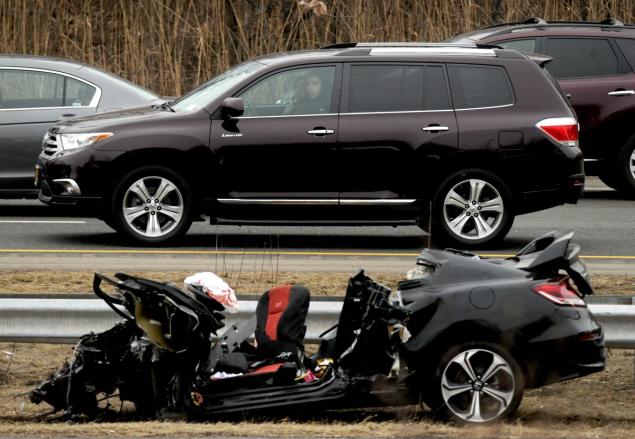
Linden, N.J., Police Officer Pedro Abad Jr. was behind the wheel of a wrong-way driving Honda Civic that smashed head-on with a tractor-trailer.
Linden, N.J., Police Officer Pedro Abad Jr. was behind the wheel of a wrong-way dri­ving Honda Civic that smashed head-on with a tractor-trailer.

The off-duty Jersey cop at the wheel dur­ing a wrong-way fatal acci­dent on Staten Island had been bust­ed for drunk­en dri­ving after crash­ing into a deli in 2011, police records reveal.

Pedro Abad Jr., a Linden police offi­cer, swerved off the road in a black 2010 Audi A5 and hit a bus stop sign, a street sign and a stop sign before slam­ming through the side of New Way Supermarket in Roselle, N.J., at 3:46 a.m. on Jan. 22, 2011, accord­ing to a police report.

His car end­ed up inside the store, caus­ing heavy dam­age to the building.

Ravi Patel, 26, who co-owns the deli with his dad, recalled get­ting a call in the mid­dle of the night that the store’s alarms had been triggered.

We did­n’t know it was a crash,” Patel told the Daily News Wednesday.

It was­n’t until we got to the cor­ner. We saw the car inside — the whole car!”

It took three months for all the dam­age to be fixed and the dam­age was so exten­sive the store was closed for the first three weeks of repairs.

Everything was messed up,” Patel said. “The reg­is­ter was on the ground, every­thing. The door does­n’t even shut still because of the crash.”

Reeking of alco­hol, Abad, 27, was rushed from the scene to University Hospital in Newark, where he was charged with dri­ving while intox­i­cat­ed and care­less driving.

Inside the ambu­lance he admit­ted to hav­ing two mixed drinks at a local club, accord­ing to the police report.

He should have learned his les­son,” Patel said. “You don’t screw up again. That’s just wrong. Look at how many lives he took.”

Investigators are con­tin­u­ing to probe whether Abad was drink­ing with his three pas­sen­gers at Staten Island strip club Curves before Friday’s crash. Abad was dri­ving a Honda north­bound in the south­bound lanes of the West Shore Expressway when he hit a trac­tor-trail­er head-on at 4:50 a.m., killing two men in the car.

Hours before the dead­ly crash, Abad recount­ed in an online post his toast at a Roselle, N.J., bar ear­li­er that night, beneath a pho­to of three glass­es filled with 70-proof Jack Daniel’s Tennessee Fire.

The Civic seen in the aftermath of the crash ...
The Civic seen in the after­math of the crash …

Killed in the grue­some Staten Island crash were Linden cop Frank Viggiano, 28, and pas­sen­ger Joseph Rodriguez, 28. Another Linden cop in the car, Patrik Kudlac, 23, and Abad remain hos­pi­tal­ized in crit­i­cal condition.

Rodriguez’s funer­al was held Wednesday morn­ing at St. Elizabeth Church in Linden.

Abad also received vio­la­tions for drunk­en dri­ving and refus­ing a Breathalyzer test on Feb. 26, 2013, after he crashed in Rahway, N.J., New Jersey Motor Vehicle Commission records show.

During that inci­dent, Abad was caught on cam­era stum­bling and slur­ring his words while ask­ing for an offi­cer he said he knew from the acad­e­my, NJ​.com report­ed.

His license was sus­pend­ed for sev­en months in the wake of the Rahway crash, records show.

In addi­tion to the two drink­ing-relat­ed crash­es, Abad was involved in six oth­er acci­dents going back to 2005, state records show​.nydai​lynews​.com

We Saved Jews 3 Times, Netanyahu Should Revise History Lessons – Iranian FM

Iranian Foreign Minister Mohammad Javad Zarif (Reuters / Ahmed Saad)
Iranian Foreign Minister Mohammad Javad Zarif (Reuters /​Ahmed Saad)

Speaking with NBC, Zarif slamed the Israeli prime min­is­ter, Benjamin Netanyahu, after he once again said in his Monday’s speech before the US Congress that Iran open­ly threat­ened to wipe Israel off the map.

The Iranian FM urged Netanyahu to refresh his knowl­edge of his­to­ry as his com­ments have not only “distort[ed] real­i­ties of today,” but also go against the Bible and Jewish sacred texts.

He even dis­torts his own scrip­ture. If you read the book of Esther, you will see that it was the Iranian king who saved the Jews…” Zarif said.

The Iranian Minister called Netanyahu’s accu­sa­tions “tru­ly regret­table” stress­ing that they refer to “an entire nation which has saved Jews three times.”

It is tru­ly, tru­ly regret­table that big­otry gets to the point of mak­ing alle­ga­tions against an entire nation which has saved Jews three times in its his­to­ry: Once dur­ing that time of a prime min­is­ter who was try­ing to kill the Jews, and the king saved the Jews; again dur­ing the time of Cyrus the Great, where he saved the Jews from Babylon, and dur­ing the Second World War, where Iran saved the Jews,” he said.

We’re not about the anni­hi­la­tion of Jews,” Zarif stressed, remind­ing the chan­nel that 20,000 Jews reside in Iran “in peace” and even have their own rep­re­sen­ta­tive in parliament.

We have a his­to­ry of tol­er­ance and coöper­a­tion and liv­ing togeth­er in coex­is­tence with our own Jewish peo­ple, and with Jews every­where in the world. If peo­ple want to espouse fear mon­ger­ing to fan such hys­te­ria in the world, that’s to their detri­ment,” Zafir said.

On the con­trary, he stressed, the cur­rent Israeli régime “is a threat” to Iran as it’s a régime “that engages in the killing of inno­cent chil­dren, a régime that engages in acts of aggression.”

Israel threat­ens to use force against Iran almost on a dai­ly basis… Of course, if they did use force against Iran, we would defend our­selves, as we have done with great sac­ri­fice in the past. But we are not invad­ing, we are not threat­en­ing any­body. We have not threat­ened any­body for 250 years,” the Iranian FM said.

While Netanyahu only has “a record full of infan­ti­cide, full of killing of inno­cent peo­ple, full of aggres­sion against his neigh­bor, full of occu­pa­tion,” he added.

Tehran and the P5+1 pow­ers (the US, Russia, China, Britain and France, plus Germany) are cur­rent­ly in the deci­sive stage of talks, hop­ing to reach com­pro­mise over Iran’s con­tro­ver­sial nuclear pro­gram by mid-summer.

Zarif has once again turned down accu­sa­tions by the West that the Iranian author­i­ties are try­ing to devel­op nuclear-weapons capa­bil­i­ties, but Tehran insists that its pro­gram is for peace­ful purposes.

We nev­er had the bomb. We will nev­er have a bomb. We’re not look­ing to have a bomb. We do not believe a bomb is in our inter­est. Whereas [Netanyahu] does have a bomb. He has 200 nuclear weapons,” he said.

Zarif then went on to say that Israeli Prime Minister “has stood against a Middle East free from weapons of mass destruc­tion” and he still accus­es Iran of prepar­ing one.

He’s in no place to do that. He doesn’t have the author­i­ty, the moral author­i­ty, to do that,” Zarif said.

According to the FM, Iran and the six world pow­ers are “very close” to reach­ing a deal, but “there are details that need to be worked out.”

On Tuesday the Israeli Prime Minister once again voiced his fierce oppo­si­tion to Iran’s nuclear pro­gram in front of a joint ses­sion of the US Congress, call­ing Tehran “the fore­most spon­sor of ter­ror­ism” that threat­ens not only the Israel and the Middle East, but the world, includ­ing the America.

Netanyahu urged for Iran to cease a “march of con­quest, sub­ju­ga­tion and terror.”

Yet, on Monday, US President Barack Obama defend­ed nuclear nego­ti­a­tions with Iran and main­tained that a favor­able set­tle­ment was still possible.

While Iran is still “more like­ly than not” to reject a deal, Obama stressed to Reuters that the odds of suc­cess are bet­ter today than three or five months ago.

The so-called P5+1 group of Britain, China, France, Russia, the United States and Germany is amid nego­ti­a­tion hop­ing to strike a frame­work deal with Iran before a late March deadline.
Read more here @http://​rt​.com/​n​e​w​s​/​2​3​8​1​7​7​-​i​r​a​n​-​i​s​r​a​e​l​-​h​i​s​t​o​r​y​-​n​e​t​a​n​y​a​hu/

Obama Admin ‘won’t Be Around Forever’ — Israeli Minister On W. Bank Settlement Stall

Israeli Defense Minister Moshe Ya'alon.(Reuters / Mandel Ngan)
Israeli Defense Minister Moshe Ya’alon.(Reuters /​Mandel Ngan)

The Obama admin­is­tra­tion has led the charge against Jewish set­tle­ment con­struc­tion in the con­test­ed West Bank, Israel’s defense min­is­ter has said, adding that he hopes the slow­down will be “tem­po­rary”.

Israeli Defense Minister Moshe Ya’alon said Israel wants to con­struct more set­tle­ments in the West Bank, but an out­pour­ing of glob­al con­dem­na­tion — spear­head­ed by the United States — has side­lined those aspirations.

READ MORE: Palestinian min­is­ter dies after run-in with IDF sol­diers in West Bank protest

I real­ly want to approve plans and build more – right now this issue pro­vokes a reac­tion first and fore­most from the Americans, and then threats from var­i­ous sources,” Ya’alon said, as quot­ed by Haaretz, on Tuesday address­ing high school stu­dents in a Jewish West Bank settlement.

According to Ya’alon, the United States has “led the charge” and Israel has been “very, very care­ful not to push the enve­lope too much.” The con­struc­tion will even­tu­al­ly begin again because the Obama admin­is­tra­tion “won’t be around for­ev­er.” The com­ments, also broad­cast on Israeli Army Radio, may fur­ther strain rela­tions between the gov­ern­ment of Prime Minister Benjamin Netanyahu and the Obama administration.

Reuters / Baz Ratner
Reuters /​Baz Ratner

In October, top-rank­ing offi­cials in the Obama admin­is­tra­tion, includ­ing Vice-President Joe Biden and Secretary of State John Kerry refused to meet Ya’alon dur­ing a vis­it to Washington.

The snub should not have come as a sur­prise, how­ev­er, con­sid­er­ing the Israeli min­is­ter had ear­li­er been quot­ed in Israeli news­pa­per Yedioth Ahronoth as accus­ing Kerry of being “obses­sive and mes­sian­ic” in regard to his stren­u­ous efforts to bro­ker a peace agree­ment between Israelis and Palestinians, an elu­sive objec­tive that has evad­ed US lead­ers for decades.

READ MORE: Israel approves plan to build 1,000 set­tler homes in E. Jerusalem

The human rights group Peace Now said that while there have been no new set­tle­ment projects since a meet­ing between Obama and Netanyahu in October, the con­struc­tion of pre­vi­ous­ly announced hous­ing con­tin­ues, AP cit­ed the group as say­ing. Israel attract­ed the crit­i­cism of the glob­al com­mu­ni­ty when it accept­ed ten­ders — short­ly after a 50-day con­flict in the Gaza Strip that left some 2,200 peo­ple dead, the major­i­ty of them Gazans — to con­struct over 1,000 new set­tler homes in East Jerusalem.
Read more @http://​rt​.com/​n​e​w​s​/​2​1​3​0​9​5​-​i​s​r​a​e​l​-​o​b​a​m​a​-​u​s​-​s​e​t​t​l​e​m​e​n​ts/