Investigators Probe Fires At 6 Black Churches In 5 Southern States
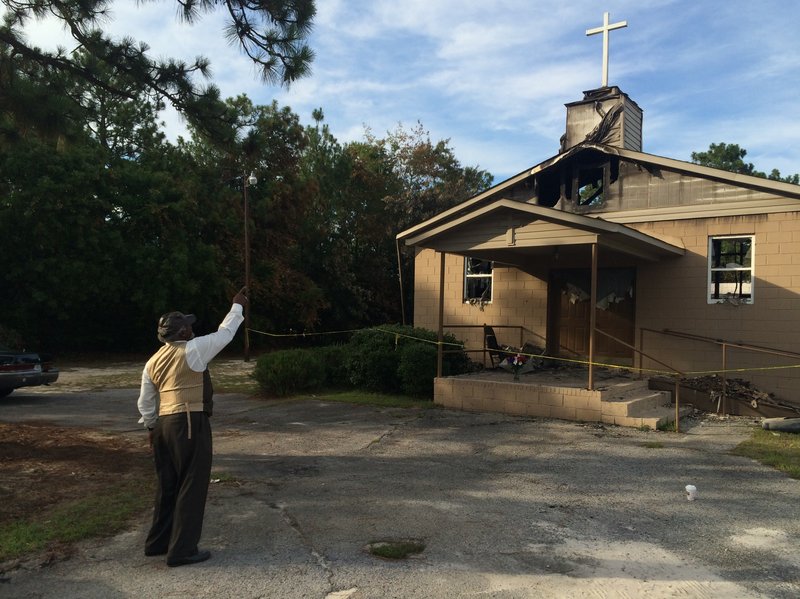
Pastor Bobby Jones points to the cross on top of Glover Grove Baptist Church in Warrenville, S.C., where he has preached for more than 30 years. The steeple was one of the only parts of the church left standing.
Pastor Bobby Jones points to the cross on top of Glover Grove Baptist Church in Warrenville, S.C., where he has preached for more than 30 years. The steeple was one of the only parts of the church left standing.

Investigators con­tin­ue their exam­i­na­tion of a fire at the Glover Grove Baptist Church of Warrenville, S.C.

Fires dam­aged Glover Grove and some oth­er black church­es in the days fol­low­ing nine shoot­ing deaths at Emanuel AME Church in Charleston, rais­ing con­cerns that the inci­dents were hate-inspired arsons.

Flowers left at the front door of Glover Grove Baptist Church in Warrenville, S.C.

Will Huntsberry/​NPR

Now, in the case of Glover Grove, the South Carolina Law Enforcement Division has released the fol­low­ing state­ment, say­ing it still does­n’t know how the blaze started.

Based upon the scene exam­i­na­tion and the evi­dence col­lect­ed, agents were unable to deter­mine an exact ori­gin or fire cause. As a result, agents were unable to elim­i­nate all acci­den­tal igni­tion sources. Investigators observed no ele­ment of crim­i­nal intent. The cause of the fire was best clas­si­fied as undetermined.”

Here is our orig­i­nal post:

Glover Grove Baptist Church is nes­tled in a woody, qui­et part of Warrenville, S.C., sur­round­ed by trail­er homes and old cars. The con­gre­ga­tion is small, about 35 peo­ple, accord­ing to local reports. You have to look hard online just to find a phone num­ber or an address.

Hours before President Obama spoke to a packed house in Charleston last Friday in anoth­er black church, deliv­er­ing the eulo­gy for state Sen. Clementa Pinckney, Glover Grove Baptist Church burned to the ground.

It is one of at least six black church fires in the South, all of which have tak­en place in the week-and-a-half since nine peo­ple were killed in Emanuel AME Church.

Fires in Charlotte, N.C., and Knoxville, Tenn., are both being inves­ti­gat­ed as arson. Authorities in Macon, Ga., are inves­ti­gat­ing anoth­er there as “sus­pi­cious.” A fire at aTallahassee, Fla., church was like­ly caused by elec­tri­cal prob­lems, author­i­ties have said. Another in Gibson County, Tenn., may have been caused by light­ning. One burn­ing in Charlotte is being inves­ti­gat­ed to deter­mine if it could have been a hate crime.

Adonica Simpkins lives in a trail­er home right next to Glover Grove Baptist Church. “I actu­al­ly think it might be a hate crime,” she said, look­ing across a field to the church’s remains on a sticky, sun­ny South Carolina after­noon. “The way things are hap­pen­ing these days, you nev­er can say. Look how they went up there and shot some­one in the church, or oth­er church­es burn­ing down. It’s just so much going on in the world. You nev­er know.”

The burn­ing actu­al­ly woke Simpkins up that Friday morn­ing, and she was one of the first to call 911, right before she walked down the road to the pas­tor’s house to make sure he saw it, too.

You could actu­al­ly feel the heat from the church,” she said. “The actu­al pow­er lines, just start­ed, pop, pop, pop! Then the pow­er went off. It was ter­ri­ble. You could see straight through the church, how it was burning.”

Another near­by res­i­dent, George Mack, said of the flames, “It was like stand­ing inside of a vol­cano, with the lava flow­ing. It was so hot.”

The pas­tor of Glover Grove, Bobby Jones, walked around the charred build­ing Sunday evening with NPR, point­ing out every­thing that used to be.

The pul­pit, the high­est place, that’s the pul­pit,” he said as he gazed past the cau­tion tape. “My office used to be right there. And it’s gone. All my robes, and every­thing, all my stuff is in that room right there, it’s gone.” He vac­il­lat­ed between tears and dec­la­ra­tions of his faith as he spoke, assur­ing us, and per­haps him­self as well, that every­thing would be OK. “When you see me cry­ing,” he said, “it’s not sad. It’s joy. I just thank God for what he’s done, and what he’s going to do, and what he did in the past.”

Only two walls and the steeple still stood, with a large, unscathed white cross on top. The roof was gone. And just about all of the inside of Glover Grove Baptist Church was black­ened and charred. Some things remained, cov­ered in ash: the hol­lowed-out shell of a snare drum, a few chairs in the kitchen. You could still make out lyrics and notes on some pages of hym­nals. Some church pews were still stand­ing, but they were total­ly burnt as well.

When asked if he thinks the fire was a hate crime, Jones hedges. “I hope not. I hope from the bot­tom of my heart that it’s not. I’m 72 years old, and I’ve nev­er had a prob­lem out of anybody.”

When pushed, Jones says he doubts it was an elec­tri­cal fire. He’s an elec­tri­cian him­self, and he says all of the equip­ment in the church was work­ing fine before the fire. He thinks a per­son may very well have set the blaze. “If it’s a hate crime, it had to be some­body that’s not from here.”

Richard Cohen is the pres­i­dent of the Southern Poverty Law Center, and he says the recent burn­ings of black church­es through­out the South are “very, very suspicious.”

Black church­es have long been the focus of civ­il rights activ­i­ty,” Cohen told NPR. “And for this rea­son they’ve been tar­get­ed historically.”

There was a string of them in the ’50s and the ’60s, dur­ing the civ­il rights move­ment. Perhaps the most noto­ri­ous was the bomb­ing of the 16th Street Baptist Church in Birmingham, Ala., on Sept. 15, 1963, which killed four young black girls.

A wave of church burn­ings swept the nation again in the ’90s, prompt­ing then-President Bill Clinton to sign the Church Arson Prevention Act, a law that increased jail time for peo­ple who burn churches.

As to this recent wave of church burn­ings, Cohen said, “It’s not unrea­son­able to sus­pect that what we’re see­ing [now] is a back­lash to the tak­ing down of the Confederate flag, the deter­mi­na­tion of our coun­try to face its racial problems.”

Whatever the cause of the Glover Grove fire, Adonica Simpkins says she will still be afraid. We asked her what it’s like to be a black per­son in South Carolina.

I tell you what, I would­n’t walk down this road. I would­n’t walk down this road,” she said, sigh­ing as she point­ed down the road where Glover Grove sits. “It’s so much hate. You might walk down the road and hear the word n*****, for noth­ing. People used to be rid­ing by, and just throw bot­tles at black folks.”

Less than half a mile from the church and Simpkins’ home, a Confederate flag waves on a front porch.

State inves­ti­ga­tors told NPR on Sunday that they have not yet deter­mined a cause in the Glover Grove Baptist Church fire. The Aiken County Sheriff’s Office has turned over its inves­ti­ga­tion to the South Carolina Law Enforcement Division, and the FBI is inves­ti­gat­ing as well.

Jones is con­fi­dent he’ll rebuild. But this kind of tragedy isn’t total­ly new to him.

We had anoth­er church that burned down, over across the woods there,” he said. “That’s been, what, maybe 30, 32 years ago, no 34 years ago. I believe that was an arson.”

Jones says before that church burned, he’d often find offen­sive mes­sages writ­ten on the out­side walls. Often, three let­ters, he said. “They put KKK.”

This sto­ry first appeared here. Investigators Probe Fires At 6 Black Churches In 5 Southern States
Bad Lawyers Banned For Life!

Antoinette-Haughton Cardenas

Almost 50 of the coun­try’s more than 4,000 attor­neys-at-law have been banned for life from prac­tis­ing law in Jamaica.

The list of banned lawyers includes some mul­ti­ple repeat offend­ers of var­i­ous infrac­tions unbe­com­ing of the legal profession.

Last updat­ed on April 1, 2015, the web­site of the General Legal Council (GLC) lists the names of the

attor­neys and the date(s) on which dis­ci­pli­nary action was tak­en and the rea­son for the action taken.

Disciplinary action is tak­en after “exten­sive” inves­ti­ga­tion and adju­di­ca­tion by the Disciplinary Committee of the GLC of the Jamaican Bar Association, accord­ing to the chair of the Disciplinary Committee, Walter Scott.

He said less than five per cent of the lawyers who have been sub­ject­ed to dis­ci­pli­nary action involves clients money.

Most of the cas­es involved pro­fes­sion­al neg­li­gence, fail­ure to com­mu­ni­cate with the clients, fail­ing to deal with mat­ters expe­di­tious­ly, delays, things like that,” Scott toldThe Sunday Gleaner.

A dis­barred attor­ney is barred for life, and a struck-off attor­ney is struck off for life. There is no dif­fer­ence in the ter­mi­nol­o­gy of dis­barred or struck off. The ter­mi­nol­o­gy used in the legal pro­fes­sion is struck off.

Americans like to use dis­barred, but it amounts to the same thing. It sim­ply means that the per­son is no longer entered on the roll and is, there­fore, not enti­tled (to prac­tise),” said Scott.

To all intents and pur­pos­es, that per­son is a civil­ian once they have been struck off,” he clarified.

Struck Off Multiple Times

He explained that in the cas­es where lawyers have been struck off mul­ti­ple times, cas­es brought against an attor­ney must be heard even if the per­son is already barred.

If some­one had mul­ti­ple offences and you were first struck off on March 30, and the oth­er offences came up for tri­al after that, we would still make a strik­ing-off order. So you could then be struck off on the

sev­er­al dates after that ini­tial struck-off dates.

The first struck off is it, but if sub­se­quent cas­es war­rant a strike-off order, it is real­ly of no effect, because the first one stands,” added Scott.

Among the repeat offend­ers are for­mer talk-show host Antoinette Haughton Cardenas, who had mat­ters before the com­mit­tee 10 times between December 2007 and December 2012.

According to a recent Happy Valley immi­gra­tion lawyer blog post, she was struck off four times and she also faced fines, and ordered to repay funds. She exer­cised her right to appeal in at least one instance.

Another repeat offend­er is Derrick Darby, who faced the com­mit­tee eight times between 2003 and 2005. He was struck off four times between April 2003 and July 2005. There were orders also for repay­ment of funds as well as a fine.

Leeland Playfair faced the com­mit­tee six times and was struck off twice between 1995 and 2012. He was fined twice.

Shaun Reynolds also faced the com­mit­tee six times, and was first struck off in March 2007.

Former Deputy Police Commissioner Owen Clunie was struck off twice between September 2013 and January 2015.

Scott does not believe that “mul­ti­ple offend­ers” have any chance of redemp­tion, and he was care­ful to point out that many lawyers’ names are not on the list of those per­mit­ted to prac­tise, because they have stopped prac­tis­ing, and not because of any wrongdoing.

Lawyers who work in the gov­ern­ment ser­vice are not required to present finan­cial reports or make account­ing dec­la­ra­tions to the GLC as they are under the purview of pub­lic sec­tor mon­i­tor­ing and sub­ject to those rules. Bad Lawyers Banned For Life!

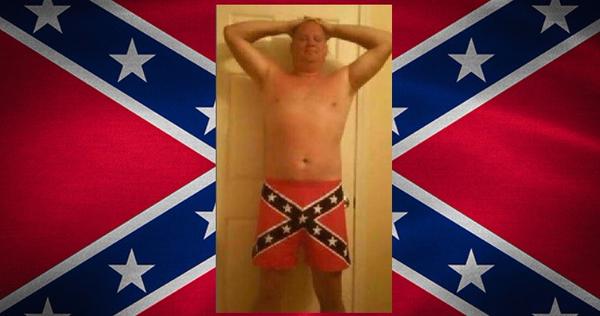
Rebel Without A Job: South Carolina Cop Fired After Posting Photo Wearing Confederate Flag Underwear

Shannon Dildine, Leader of South Carolina Boxer Rebellion, Sacked

A cop who post­ed a pic­ture of him­self wear­ing Confederate bat­tle flag box­er shorts on Facebook has been fired.

Sgt. Shannon Dildine was sacked after the pho­to was spread across the Internet, WCIV report­ed.

It showed him bare-chest­ed, with his arms behind his head and wear­ing Southern pride as underwear.

Dildine served as an offi­cer in North Charleston.

Police Chief Eddie Driggers said the pho­to under­mined Dildine’s “abil­i­ty to improve trust and install con­fi­dence when work­ing with our citizens.”

Your post­ing in this man­ner led to you being pub­licly iden­ti­fied as a North Charleston police offi­cer and asso­ci­at­ed both you and the Department with an image that sym­bol­izes hate and oppres­sion to a sig­nif­i­cant por­tion of the cit­i­zens we are sworn to serve,” Driggers wrote in a ter­mi­na­tion letter.

This is the same police depart­ment where white cop Michael Slager was indict­ed on a mur­der charge ear­li­er this month in the fatal shoot­ing of Walter Scott, an unarmed black man who was run­ning away from the offi­cer after an April traf­fic stop.

Dildine has 10 days to appeal the decision.

After the Charleston church mas­sacre which left nine dead, dis­play­ing the Confederate flag has become an increas­ing­ly sen­si­tive issue.

Retailers, from Apple to Walmart, have announced they will stop sell­ing the flag.

Police Blast INDECOM In Parliamentary Submission Police Claim INDECOM Actions Impacting Criminal Investigations

thCAWTXLPMA sub­mis­sion, pre­sum­ably orig­i­nat­ing from the Jamaica Constabulary Force (JCF) sup­port­ing addi­tion­al lim­i­ta­tions on the Independent Commission of Investigations (INDECOM), has raised con­cerns among mem­bers of the joint select com­mit­tee (JSC) review­ing the oper­a­tions of the commission.

The sub­mis­sion claimed that INDECOM has exhib­it­ed “overzeal­ous actions” from incep­tion, which has result­ed in a “strained rela­tion­ship” between the police and its investigators.

It said that the approach adopt­ed by INDECOM over the years “has erod­ed the con­fi­dence of a crit­i­cal mass of police offi­cers, in their pur­suit of hard­ened and vio­lent crim­i­nals, and the con­duct of crim­i­nal inves­ti­ga­tions in very seri­ous cas­es, where INDECOM side­lines the police inves­ti­ga­tors by assert­ing its priv­i­leged posi­tion of pri­ma­cy in the investigations”.

Therefore, in some instances, the actions of INDECOM have impact­ed neg­a­tive­ly on crim­i­nal inves­ti­ga­tions, there­by risk­ing the pos­si­bil­i­ty of crim­i­nals escap­ing pros­e­cu­tion and pos­si­ble con­vic­tion,” the sub­mis­sion stated.

This is pri­mar­i­ly due to the adver­sar­i­al approach tak­en by INDECOM inves­ti­ga­tors, in the con­duct of their inves­ti­ga­tions into inci­dents in which the police used dead­ly force in the line of duty,” it added.

The sub­mis­sion was titled “JCF Contribution to the delib­er­a­tion of the Joint Select Committee of Parliament on the Proposed Oversight Mechanism for the Independent Commission of Investigations”.

However, Senator Tom Tavares-Finson, leader of Opposition busi­ness in the Senate and a mem­ber of the JSC, not­ed that it did not iden­ti­fy the mem­bers of the JCF respon­si­ble for its sub­mis­sion, nor did­n’t have a sig­na­ture to it.

The Opposition sen­a­tor felt that, for the sub­mis­sion to be dealt with for­mal­ly by the com­mit­tee, it required some clarification.

We need to know who are respon­si­ble for it, and we need to invite them here to explain their posi­tion,” Tavares-Finson suggested.

Chairman of the JSC and Minister of Justice Mark Golding not­ed that it was sub­mit­ted to the sec­re­tary of the com­mit­tee, with­out a name or sig­na­ture. It was even­tu­al­ly cir­cu­lat­ed to mem­bers and the sup­port staff of civ­il ser­vants, yesterday.

After the meet­ing, the Jamaica Observer sought a com­ment from INDECOM Commissioner Terrence Williams. However, he said he had just received the sub­mis­sion and could not respond.

The JSC has been divid­ed recent­ly on the ques­tion of addi­tion­al over­sight for INDECOM. Senator Gording and his col­league, Minister of National Security Peter Bunting, have sup­port­ed pro­pos­als for addi­tion­al over­sight for INDECOM.

This com­mis­sion, if overzeal­ous, can com­plete­ly demor­alise and demo­ti­vate the police force,” Bunting warned the JSC recent­ly. He said that, in the cir­cum­stances, there should be no fear about anoth­er lay­er of oversight.

But the major­i­ty of mem­bers of the com­mit­tee, includ­ing Opposition mem­ber Delroy Chuck, Senator Tavares-Finson and Government sen­a­tors Lambert Brown and Wensworth Skeffery, have strong­ly object­ed to a lay­er of over­sight between INDECOM and the Houses of Parliament, of which it is a commission.

The JCF and the Jamaica Defence Force (JDF) have con­sis­tent­ly called for the pow­ers of INDECOM to be limited.

Golding said that since the mat­ter was raised again last month, the com­mit­tee’s sec­re­tari­at has received sev­er­al sub­mis­sions on the sub­ject. The sub­mis­sions came from INDECOM, The Norman Manley Law School (NMLS), Jamaicans for Justice (JFJ), The Office of the Director of Public Prosecutions (ODPP), The Jamaica Defence Force (JDF), as well as legal advice from the Office of the Attorney General. The JCF sub­mis­sion was received later.

He said that, while the JDF and the ODPP sup­port­ed pro­pos­als for addi­tion­al over­sight, the NMLS and JFJ were opposed.

INDECOM was estab­lished in 2010 to inves­ti­gate actions by mem­bers of the secu­ri­ty forces and oth­er agents of the State, which result in death or injury to per­sons or the abuse of the rights of persons.

Vendors Gripped With Fear..

SOME VENDORS at Jamaica’s largest food mar­ket, Coronation, are express­ing seri­ous con­cerns about their safe­ty, charg­ing that crim­i­nals have been rob­bing and attack­ing sell­ers who dare to defy them.

One ven­dor who spoke on con­di­tion of anonymi­ty told The Gleaner that the sit­u­a­tion has become increas­ing­ly dan­ger­ous, with crim­i­nals rob­bing peo­ple in broad daylight.

I am scared. I don’t know what is going to hap­pen. We just have to pray and trust in God,” the ven­dor lamented.

According to the con­cerned sell­er, the recent shoot­ing in the down­town Kingston mar­ket has fur­ther height­ened fears among ven­dors and shoppers.

The ven­dor said that many cus­tomers have indi­cat­ed that they are con­cerned about the ten­sion in west Kingston and reports of per­sons being robbed in the market.

In addi­tion, the ven­dor said there appears to be a con­sid­er­able decline in the num­ber of peo­ple who usu­al­ly turn up at the mar­ket on Thursdays and Saturdays to pur­chase ground provisions.

Another ven­dor at the mar­ket report­ed being robbed of about $70,000 at the Coronation Market.

Challenging To Police

Town Clerk Robert Hill said the mar­ket is sit­u­at­ed in a chal­leng­ing loca­tion in west Kingston where com­pet­ing gangs operate.

Whereas we have secu­ri­ty pro­vid­ed with­in the mar­ket, we still are not ful­ly capa­ble of man­ag­ing the types of things that go on in there in terms of rob­bery, because it is a porous area,” he said.

Historically, where the mar­ket is locat­ed it is a dif­fi­cult place — it is just dif­fi­cult to man­age. We can­not con­trol the social con­struct around the mar­ket because those vari­ables are out­side the remit of the KSAC (Kingston and St Andrew Corporation), but we are doing all we can, along with the police, to secure the area,” the town clerk asserted.

He said the KSAC and the city engi­neer have been work­ing to cre­ate more order­ly access to the market.

Several calls were made to the Darling Street police for com­ment but the offi­cer in charge was in a meet­ing. Subsequent calls to the offi­cer proved futile, as his phone rang with­out an answer.

Haley : Flag Should Come Down

Nikki Haley
Nikki Haley

South Carolina Gov. Nikki Haley has called for the Confederate flag to be removed from the state capi­tol in the wake of the racial­ly charged killing of nine church­go­ers in a his­toric Charleston congregation.

Today we are here in a moment of uni­ty… with­out ill will to say it’s time to move the flag from capi­tol grounds,” she said, and was met with applause.

The removal of the flag from the lawn of the gov­ern­ment build­ing, if it is approved by the leg­is­la­ture, would have no affect on those who wish to fly it on their own pri­vate prop­er­ty, Haley said.

Many respect the flag as a reminder of ances­tors who died in the Civil War, not­ing that such feel­ings do not rep­re­sent “hate nor is it racism. At the same time, for many oth­ers in South Carolina, the flag is a deeply offen­sive sym­bol of a bru­tal­ly oppres­sive past,” she said.

We do not need to declare a win­ner and a los­er here,” she said.

According to The Associated Press, the flag has flown in front of the state capi­tol for the past 15 years, and it was flown atop the state­house dome since 1962.

While Haley’s dec­la­ra­tion means that she is join­ing the host of local lead­ers as well as both of the state’s sen­a­tors in the call, it is not actu­al­ly her deci­sion whether or not the flag will stay.

State law dic­tates that two-thirds of the the South Carolina gen­er­al assem­bly will have to call for the flag’s removal, and before that they will have to have two-thirds of the assem­bly vote to extend their ses­sion, accord­ing to state Sen. Marlon Kimpson, who spoke at the press con­fer­ence ear­li­er today.

The debate over the Civil War-era flag comes after the shoot­ing spree at Emanuel AME Church, alleged­ly by Dylann Roof.

The time has come to remove this sym­bol of hate and divi­sion from our state capi­tol,” said the Rev. Nelson Rivers, who is a mem­ber of the National Action Network and the pas­tor at a local Baptist church.

The South Carolina state leg­is­la­ture is under pres­sure to remove the flag after a 21-year-old believed to have been moti­vat­ed by racism shot and killed nine peo­ple in a his­tor­i­cal­ly black church in Charleston last week.

The state capi­tol’s American flag was low­ered to half-staff after of the shoot­ings, but the Confederate flag also flown there remained at full-staff because only the state’s gen­er­al assem­bly is allowed to order it down.

ABC News can also con­firm that both of the state’s Senators, Sen. Tim Scott and Sen. Lindsey Graham, who is cur­rent­ly run­ning for pres­i­dent, were expect­ed to call for the flag to be removed.

Charleston Mayor Joe Riley said that while the flag was orig­i­nal­ly used to com­mem­o­rate South Carolina res­i­dents who died dur­ing the Civil War, “years and years ago [it] was appro­pri­at­ed as a sym­bol of hate,” he said today.

Riley said that it should be removed and put in a his­toric site or muse­um, because it “sends the wrong message.”

The group of lead­ers announced that there will be a ral­ly in front of the state capi­tol on Tuesday.  http://​abc​news​.go​.com/​U​S​/​s​o​u​t​h​-​c​a​r​o​l​i​n​a​-​p​o​l​i​t​i​c​i​a​n​s​-​c​a​l​l​-​c​o​n​f​e​d​e​r​a​t​e​-​f​l​a​g​/​s​t​o​r​y​?​i​d​=​3​1​9​4​4​646

Church Shooter Identified…Caught .

DYLANN STORM ROOF.
DYLANN STORM ROOF.

A white man opened fire dur­ing a prayer meet­ing inside a his­toric black church in down­town Charleston on Wednesday night, killing nine peo­ple, includ­ing the pas­tor, in an assault that author­i­ties described as a hate crime.

Police have iden­ti­fied the alleged shoot­er as Dylann Storm Roof.
In an ear­li­er press con­fer­ence, Charleston Police Chief Greg Mullen iden­ti­fied the vic­tims of the Wednesday church night shoot­ing as six females and three males. He says names won’t be released until fam­i­lies are notified.

Mullen said the sus­pect attend­ed a meet­ing at the Emanuel AME Church and stayed for almost an hour before gun­fire erupted.

The shoot­er remains at large and police released pho­tographs from sur­veil­lance video of a sus­pect and a pos­si­ble get­away vehicle.Mullen said he could not offer a make and mod­el on the dark col­ored sedan because inves­ti­ga­tors were not cer­tain about what is shown in the video.

Roof is described as a white man thought to be in his ear­ly 20s and is con­sid­ered to be a “very dan­ger­ous individual.“Earlier, Mullen said he had no rea­son to think the sus­pect has left the Charleston area, but is dis­trib­ut­ing infor­ma­tion about him and the vehi­cle around the country.

We want to iden­ti­fy this indi­vid­ual and arrest him before he hurts any­one else,” the chief said.
Mullen said the scene at the church was chaot­ic when police arrived, and the offi­cers thought they had the sus­pect tracked with a police dog, but he got away.

We will put all effort, we will put all resources and we will put all of our ener­gy into find­ing this indi­vid­ual who com­mit­ted this crime tonight,” he said.

The FBI will aid the inves­ti­ga­tion, Mullen told a news con­fer­ence that was attend­ed by FBI Special Agent in Charge David A. Thomas.

Charleston Mayor Joseph P. Riley called the shoot­ing “the most unspeak­able and heart­break­ing tragedy.”

The only rea­son that some­one could walk into a church and shoot peo­ple pray­ing is out of hate,” Riley said. “It is the most das­tard­ly act that one could pos­si­bly imag­ine, and we will bring that per­son to jus­tice. … This is one hate­ful person.“State House Minority leader Todd Rutherford told The Associated Press that the church’s pas­tor, state Sen. Clementa Pinckney, was among those killed.

State Sen. Clementa Pinckney, right, is pictured in a file photo. Pinckney was among the nine people killed when a gunman opened fire in a Charleston church. Photo/Jeffrey Collins
State Sen. Clementa Pinckney, right, is pic­tured in a file pho­to. Pinckney was among the nine peo­ple killed when a gun­man opened fire in a Charleston church. Photo/​Jeffrey Collins

Pinckney 41, was a mar­ried father of two who was elect­ed to the state house at age 23, mak­ing him the youngest mem­ber of the House at the time.

He nev­er had any­thing bad to say about any­body, even when I thought he should,” Rutherford, D‑Columbia, said. “He was always out doing work either for his parish­ioners or his con­stituents. He touched everybody.”

The attack came two months after the fatal shoot­ing of an unarmed black man, Walter Scott, by a white police offi­cer in neigh­bor­ing North Charleston that sparked major protests and high­light­ed racial ten­sions in the area. The offi­cer has been charged with mur­der, and the shoot­ing prompt­ed South Carolina law­mak­ers to push through a bill help­ing all police agen­cies in the state get body cam­eras. Pinckney was a spon­sor of that bill.

In a state­ment, Gov. Nikki Haley asked South Carolinians to pray for the vic­tims and their fam­i­lies and decried vio­lence at reli­gious institutions.

We’ll nev­er under­stand what moti­vates any­one to enter one of our places of wor­ship and take the life of anoth­er,” Haley said.

Soon after Wednesday night’s shoot­ing, a group of pas­tors hud­dled togeth­er pray­ing in a cir­cle across the street​.Community orga­niz­er Christopher Cason said he felt cer­tain the shoot­ings were racial­ly motivated.

I am very tired of peo­ple telling me that I don’t have the right to be angry,” Cason said. “I am very angry right now.”

Even before Scott’s shoot­ing in April, Cason said he had been part of a group meet­ing with police and local lead­ers to try to shore up relations.

The Emmanuel AME church is a his­toric African-American church that traces its roots to 1816, when sev­er­al church­es split from Charleston’s Methodist Episcopal church.

One of its founders, Denmark Vesey, tried to orga­nize a slave revolt in 1822. He was caught, and white landown­ers had his church burned in revenge. Parishioners wor­shiped under­ground until after the Civil War.

SUSPECT IN CHARLESTON CHURCH SHOOTING IDENTIFIED

Police Killed An Unarmed White Man In Iowa And His Community Didn’t Seem To Notice

Ryan Keith Bolinger was killed in Des Moines for "walking with a purpose".
Ryan Keith Bolinger was killed in Des Moines for “walk­ing with a purpose”.

A few min­utes before Des Moines police killed Ryan Keith Bolinger Tuesday night, the 28-year-old white man was danc­ing in the street, accord­ing to an offi­cer. Police did­n’t find the dis­play fun­ny. In a news con­fer­ence Wednesday, Des Moines Police Sgt. Jason Halifax said Bolinger had ear­li­er pulled up beside the squad car of an offi­cer who was con­duct­ing an unre­lat­ed traf­fic stop, park­ing his 2000 Lincoln sedan so close that he blocked the police cruis­er’s dri­ver’s side door. Bolinger then left his vehi­cle and danced around before get­ting back in and dri­ving away.

Officer Vanessa Miller, a sev­en-year vet­er­an of the force, gave pur­suit, fol­low­ing Bolinger in a low-speed chase that hov­ered around the 35 miles-per-hour lim­it, offi­cials said. The Des Moines Register reports that Officer Ian Lawler, who had ear­li­er been boxed in by Bolinger, radioed that he was join­ing Miller in the pur­suit. He also sug­gest­ed that they may be deal­ing with a drunk or men­tal­ly ill suspect.

About two min­utes into the chase, Miller cut Bolinger off as he attempt­ed to make a U‑turn, forc­ing his car to a stop. Bolinger exit­ed his vehi­cle and approached Miller’s squad car “walk­ing with a pur­pose,” Halifax said. As he advanced, Miller, who is white, fired a sin­gle bul­let through her rolled up dri­ver’s side win­dow, shat­ter­ing the glass and strik­ing Bolinger in the tor­so. He lat­er died from the gun­shot wound at a local hospital.

Halifax has said Bolinger was unarmed, and the Register reports that he had no crim­i­nal record. It remains unclear why he was behav­ing errat­i­cal­ly. Halifax said he expects the case will even­tu­al­ly be con­sid­ered by a grand jury, though in the mean­time, the Des Moines Police Department is con­duct­ing its own inves­ti­ga­tion. While Miller was equipped with a micro­phone that should have picked up audio of the con­fronta­tion, her vehi­cle’s dash­board cam­era did­n’t record the shoot­ing, Halifax said. His offi­cers are not yet equipped with body cam­eras, though in Miller’s case, such a cam­era may not have pro­vid­ed use­ful footage, depend­ing on her posi­tion at the time of the shooting.

The inci­dent comes as much of the nation’s atten­tion remains focused on the issue of police killings and account­abil­i­ty, espe­cial­ly since the fatal shoot­ing of black 18-year-old Michael Brown in Ferguson, Missouri, last August. Bolinger’s death was one of a string of offi­cer-involved shoot­ings this week that brought the total num­ber of peo­ple killed by police nation­wide to more than 500 so far this year, accord­ing to data com­piled by The Guardian. At least two more peo­ple have been killed since Bolinger died.

Cop struggles to explain how a cop secure in squad car fired through car glass to kill unarmed man.
Cop strug­gles to explain how a cop secure in squad car fired through car glass to kill unarmed man.

Much of the grass­roots out­cry around the issue of police vio­lence has been orga­nized under the Black Lives Matter umbrel­la, as protests sur­round­ing the killings of black men and women — and the sub­se­quent deci­sions not to charge, much less con­vict, the offi­cers respon­si­ble for those deaths — have arisen around the nation. Data shows that black Americans, par­tic­u­lar­ly young black men, face a high­er like­li­hood of being killed by police than their non-black peers. The Guardian’s report­ing sup­ports that find­ing, show­ing that 28.2 per­cent of all peo­ple killed by police this year have been black, despite mak­ing up just 13.2 per­cent of the population.

So how do white peo­ple in Iowa respond when police kill a white per­son under ques­tion­able cir­cum­stances in a heav­i­ly white neigh­bor­hood? If Des Moines is any exam­ple, they don’t: A sin­gle pro­test­er showed up out­side the police press con­fer­ence on Wednesday, accord­ing to the Register. There was no wall-to-wall media cov­er­age of large-scale demon­stra­tions, because there were no demon­stra­tions to cover.

The city’s appar­ent apa­thy is about more than racial demo­graph­ics. Iowa gen­er­al­ly has lit­tle expe­ri­ence with fatal police shoot­ings. Bolinger is only the third per­son killed by police in the state in 2015, accord­ing to The Guardian. One was an armed rob­bery sus­pect killed after alleged­ly point­ing a gun at police fol­low­ing a car chase. The oth­er was a woman report­ed­ly killed by an errant bul­let fired by an offi­cer who slipped while attempt­ing to shoot a dog that had jumped on him. Both were white. (For com­par­i­son, the Los Angeles Police Department alone has killed more than three times Iowa’s total so far this year, which speaks to long­stand­ing con­cerns about the LAPD’s use of force.)

Unlike New York or Ferguson, sites of protests fol­low­ing deci­sions not to charge police offi­cers in killings of black men, Des Moines is more than 76 per­cent white, accord­ing to Census data. And the state of Iowa as a whole is 92.5 per­cent white, near­ly 30 per­cent­age points high­er than U.S. pop­u­la­tion, which is 62.6 per­cent white. But so was Bolinger, for that mat­ter, and so were near­ly 50 per­cent of all peo­ple killed by police this year, accord­ing to The Guardian.

Bolinger’s death did­n’t hap­pen against a back­drop of ten­sion between law enforce­ment and the com­mu­ni­ty — a ten­sion that, in oth­er places, forms an essen­tial part of the Black Lives Matter mes­sage. But the out­come of his shoot­ing is ulti­mate­ly the same: an unarmed per­son is dead under cir­cum­stances that appear unnec­es­sary and per­haps even avoidable.

While Black Lives Matter indeed focus­es on the black expe­ri­ence, Bolinger’s death under­scores that many of the issues at the move­men­t’s core apply to peo­ple of all races. Many of the changes activists are cham­pi­oning would ben­e­fit all communities.

This point is all too often lost on white crit­ics of the Black Lives Matter move­ment. But it’s time for all peo­ple, in any com­mu­ni­ty touched by a police killing, to wake up.

Though Des Moines has not felt the impact of police vio­lence in the way many cities have, it has­n’t been com­plete­ly insu­lat­ed from the ongo­ing debate over polic­ing, nor from the racial nar­ra­tives that have right­ful­ly accom­pa­nied it. In May, a group of pro­test­ers gath­ered under the Black Lives Matter man­tle in Des Moines, call­ing for police reform and increased account­abil­i­ty. Photos from the event show that a num­ber of the atten­dees were white.

Amid the push for police reform and the broad­er rein­ing in of the use of force, Bolinger’s death is a reminder that while these issues affect some com­mu­ni­ties dis­pro­por­tion­ate­ly, they can also affect any com­mu­ni­ty at any time.

UPDATE: 615 — More than 100 pro­test­ers gath­ered out­side of the Des Moines Police Station on Saturday to protest Bolinger’s death.

The event, orga­nized by an edi­tor at CopBlock​.org, a grass­roots group that aims to increase police account­abil­i­ty, was peace­ful and did not lead to any arrests.
Police Killed An Unarmed White Man In Iowa And His Community Didn’t Seem To Notice

CAPI Warns Against Diminishing INDECOM’s Independence

Dennis Meadows
Dennis Meadows

Kingston, Jamaica – Citizens’ Action for Principles and Integrity (CAPI) is warn­ing that a pro­posed over­sight body for the Independent Commission of Investigation (INDECOM) will dimin­ish the intend­ed inde­pen­dence of the inves­tiga­tive body and may ren­der its effectiveness.

The joint-select com­mit­tee of Parliament exam­in­ing the INDECOM Act pro­posed an over­sight body for the inves­tiga­tive and pros­e­cu­to­r­i­al body as its zeal­ous pros­e­cu­tion of mem­bers of the secu­ri­ty force is hav­ing a demor­al­is­ing effect.

In a news release Friday, CAPI’s co-con­venor Dennis Meadows argued that INDECOM as a com­mis­sion of Parliament already has par­lia­men­tary over­sight in addi­tion to judi­cial scruti­ny. He added that, INDECOM’s finances and oper­a­tions are over­seen by the Auditor General and the Office of the Contractor General.

The gen­e­sis of INDECOM was out of an urgent need for an inde­pen­dent body to inves­ti­gate the mis­con­duct of police and oth­er agents of the State”, Meadows insisted.

CAPI rejects any effort on the part of the joint-select com­mit­tee and the min­is­ter of nation­al secu­ri­ty to dimin­ish the inde­pen­dence of INDECOM in [ful­fill­ing] its intend­ed man­date under the Act.

The real dan­ger is Parliament pan­der­ing to the wish­es of the police at the expense of the pro­tec­tion of the rights of Jamaicans, whose cries for jus­tice occa­sioned the cre­ation of INDECOM”, said Meadows.
http://​www​.jamaicaob​serv​er​.com/​l​a​t​e​s​t​n​e​w​s​/​C​A​P​I​-​w​a​r​n​s​-​a​g​a​i​n​s​t​-​d​i​m​i​n​i​s​h​i​n​g​-​I​N​D​E​C​O​M​-​s​-​i​n​d​e​p​e​n​d​e​nce

Rachel Dolezal’s Parents Say She Has A History Of ‘Seeking To Reinvent Reality’

 Rachel Dolezal's

Rachel Dolezal’s

The par­ents of Rachel Dolezal spoke to HuffPost Live on Friday after reveal­ing to the media that their daugh­ter, the pres­i­dent of the Spokane chap­ter of the NAACP, had been dis­guis­ing her­self as African American for years.

Larry and Ruthanne Dolezal told hosts Marc Lamont Hill and Nancy Redd that their daugh­ter has a his­to­ry of “seek­ing to rein­vent real­i­ty,” accord­ing to her moth­er. She had “expec­ta­tions of her­self that were not real­is­tic, and also just a neg­a­tive sort of view of peo­ple and fam­i­ly –- that sort of thing was also con­cern­ing,” Ruthanne added.

The cou­ple told HuffPost Live their daugh­ter “had a hap­py child­hood, grew up in a lov­ing home” along­side four adopt­ed African American sib­lings. The two claim that Rachel’s sib­lings “were warned not to let it out — not to blow her cov­er” by Rachel herself.

They’re puz­zled, but [her sib­lings] told us that they are basi­cal­ly feel­ing that she’s basi­cal­ly been out­ed,” her father said.

The chil­dren did not enjoy hav­ing to be secre­tive about Rachel’s real iden­ti­ty,” her mom added.

The Dolezals view their daugh­ter’s dis­hon­esty about her iden­ti­ty as a way of dis­own­ing them as par­ents, which “is the painful part of this,” they said.

We’re very fond of our African American friends. We’ve always enjoyed eth­nic­i­ty and diver­si­ty and had friends, and Rachel grew up that way. Adopting the four chil­dren was an exten­sion of that as well. [Rachel’s] iden­ti­fi­ca­tion with African Americans is not hurt­ful to us, but for her to reject us as par­ents, that is what hurts, and the dis­hon­esty is very con­cern­ing,” her moth­er said.

Still, they have pos­i­tive and lov­ing mem­o­ries of Rachel that are not reflect­ed in the false­hoods about her iden­ti­ty. Ruthanne began to choke up as she recalled how, as a child, their daugh­ter “was always car­ing about oth­er peo­ple and spoke well of her fam­i­ly and want­ed to be iden­ti­fied with us” — a depar­ture from the Rachel they see now.

We rec­og­nize her, obvi­ous­ly, but this isn’t the Rachel that we know,” Larry affirmed. “It hurts us deeply, and we’re quite sad­dened by that.”

Despite the strains this deceit has tak­en on their rela­tion­ship, the Dolezals have a mes­sage for their daugh­ter: “Rachel, we love you,” her moth­er declared. “Please tell the truth.“Rachel Dolezal’s Parents Say She Has A History Of ‘Seeking To Reinvent Reality’

G7 Leaders Escalate War Threats Against Russia

During their sec­ond day of dis­cus­sions in the resort town of Garmisch-Partenkirchen in the German Alps on Monday, the lead­ers of the major impe­ri­al­ist pow­ers affirmed their com­mit­ment to a pol­i­cy of

Vladimir Putin
Vladimir Putin

esca­lat­ing strate­gic and mil­i­tary pres­sure against Russia.

We need to keep push­ing Russia,” Obama said. “Russian forces con­tin­ue to oper­ate in east­ern Ukraine, vio­lat­ing Ukraine’s sov­er­eign­ty and ter­ri­to­r­i­al integrity.”

The G7 is mak­ing it clear that if nec­es­sary we stand ready to impose addi­tion­al sig­nif­i­cant sanc­tions against Russia,” Obama declared.

An offi­cial com­mu­niqué released by the G7 pow­ers — the United States, Japan, Germany, Britain, France, Italy, and Canada — reaf­firmed Obama’s anti-Russia com­ments. It warned that the assem­bled pow­ers would devise “fur­ther restric­tive mea­sures in order to increase cost on Russia.”

The hypocrisy and reck­less­ness of Obama and his G7 coun­ter­parts is breath­tak­ing. They are denounc­ing Russian “aggres­sion” in Ukraine, which they plunged into civ­il war by back­ing a fas­cist-led putsch last year that top­pled a pro-Russian gov­ern­ment. Now, US and NATO armed forces are con­duct­ing air, sea and ground exer­cis­es all along Russia’s bor­ders. In Eastern Europe, the Caucasus, Scandinavia, the Baltic Sea, and the Black Sea, the US and its allies are rehears­ing the open­ing stages of an all-out war with Russia.

Last week, US defense offi­cials tes­ti­fy­ing before the US House of Representatives indi­cat­ed that the Pentagon is con­sid­er­ing launch­ing pre-emp­tive strikes against Russian tar­gets, includ­ing with nuclear weapons (see: US offi­cials con­sid­er nuclear strikes against Russia). These state­ments are no doubt now being care­ful­ly stud­ied by the Russian military.

NATO’s recent­ly-formed Rapid Response Force, which has been assem­bled to serve as the spear­head of a NATO ground war against Russian forces, is set to con­duct mil­i­tary exer­cis­es in Poland start­ing today. The so-called “Baltops” exer­cis­es are to involve thou­sands of US-NATO troops and will take place simul­ta­ne­ous­ly in Sweden, Germany and the Baltic Sea.

A quar­ter cen­tu­ry after the Stalinist dis­so­lu­tion of the Soviet Union and the end of the “Cold War,” Washington is prepar­ing new for­ward-deploy­ments of its nuclear arse­nal to Europe. In an inter­view with the BBC giv­en the pre­ced­ing day, British Foreign Minister Philip Hammond made clear that plans for new US nuclear deploy­ments to Europe are far advanced.

Hammond told the BBC Sunday that Britain may soon with­draw from the INF treaty, clear­ing the way for Britain to serve as a stag­ing area for an American nuclear build-up against Russia, just as it did pri­or to 1991, when US nuclear weapons were sta­tioned at the Royal Air Force’s Greenham Common base.

There have been some wor­ry­ing signs of step­ping up lev­els of activ­i­ty both by Russian forces and by Russian-con­trolled sep­a­ratist forces,” Hammond said. “We have got to send a clear sig­nal to Russia that we will not allow them to trans­gress our red lines.”

The US and European rul­ing elites’ strat­e­gy of end­less­ly bul­ly­ing Russia by threat­en­ing it with war and nuclear strikes pos­es immense dan­gers to the world’s pop­u­la­tion. Even assum­ing that the rul­ing elites of the NATO pow­ers are not imme­di­ate­ly seek­ing to pro­voke out­right war with Russia, the con­stant drum­beat of NATO threats and mil­i­tary exer­cis­es immense­ly height­ens the dan­ger of war break­ing out accidentally.

With thou­sands of jet fight­ers, war­ships, and armored units on height­ened alert through­out the region, the world is only a few mis­cal­cu­la­tions away from a clash between NATO and Russian forces that could rapid­ly esca­late into war.

The immense dan­gers posed to the world’s pop­u­la­tion aris­ing from the US and NATO war dri­ve against Russia are being hid­den from mass­es of work­ers in the United States and world­wide. No one in the offi­cial media is ask­ing how many peo­ple would die if the mil­i­tary maneu­vers being prac­ticed by Russian and NATO forces in their exer­cis­es turned into the real thing. Instead, much of the media cov­er­age of the G7 sum­mit focused on con­tro­ver­sy over whether Obama was drink­ing alco­hol-free beer yesterday.

The relent­less mil­i­tary esca­la­tion at this G7 sum­mit tes­ti­fies to the break­down and his­toric bank­rupt­cy of cap­i­tal­ism. Without the uni­fi­ca­tion and mobi­liza­tion of the inter­na­tion­al work­ing class in rev­o­lu­tion­ary strug­gle against impe­ri­al­ism and war, it is not only like­ly, but inevitable, that NATO war threats will at some point unleash all-out war.

Russian lead­ers have already warned that they are on alert for signs of an immi­nent first strike by NATO and are hold­ing Russian nuclear forces ready to respond to such an attack, should it come (see: Russian President Putin says Ukraine cri­sis threat­ens nuclear war).

The sec­ond main pri­or­i­ty of the assem­bled lead­ers was to coör­di­nate the impo­si­tion of aus­ter­i­ty mea­sures that have already set in motion the col­lapse of large parts of the European economy.

Even as Obama denounced Putin for “wreck­ing his country’s econ­o­my,” the social cuts, mass lay­offs and oth­er “eco­nom­ic restruc­tur­ing” mea­sures dic­tat­ed by the Western banks and finan­cial insti­tu­tions are push­ing mil­lions into pover­ty and rav­aging key social infra­struc­ture across Southern and Eastern Europe.

In its offi­cial com­mu­niqué, the G7 pow­ers demand­ed that the Ukrainian gov­ern­ment con­tin­ue to imple­ment aus­ter­i­ty poli­cies that, as in Greece, are push­ing broad lay­ers of the pop­u­la­tion into pover­ty. The Kiev régime must “deci­sive­ly con­tin­ue the nec­es­sary fun­da­men­tal trans­for­ma­tion in line with IMF and EU com­mit­ments,” the joint G7 com­mu­niqué demand­ed Monday.

In remarks after Monday’s G7 ses­sion, German Chancellor Angela Merkel threat­ened Greece, insist­ing that it “does not have much time left” to reach a deal with the International Monetary Fund (IMF), European Union and European Central Bank (the “troi­ka”). Such a deal would trans­fer a new loan of some €7 bil­lion to Athens in exchange for new social cuts to the Greek econ­o­my, which has already been evis­cer­at­ed by years of bru­tal austerity.

The pre­cise make­up of the social cuts, which are to be direct­ed large­ly against the salaries and pen­sions of gov­ern­ment work­ers, were a major top­ic of dis­cus­sion at the G7 talks, Merkel said. The German chan­cel­lor will report­ed­ly meet for infor­mal dis­cus­sions with Greek Prime Minister Alex Tsipras dur­ing EU meet­ings with heads of state from Latin America sched­uled for lat­er in the week.

Despite crit­i­ciz­ing the European Commission’s pro­pos­als for the Greek econ­o­my as “bor­der­line insult­ing,” Greek Finance Minister Yanis Varoufakis nonethe­less affirmed his deter­mi­na­tion to “come to an agree­ment” with the troi­ka (the European Union, the International Monetary Fund and the European Central Bank) and the big banks.

It is time to stop point­ing fin­gers at one anoth­er and it is time that we do our job,” he said.
G7 Leaders Escalate War Threats against Russia

G7 Summit Without Russia: Problem For The West, But Not For The Kremlin

G7 Summit Without Russia: Problem for the West, But Not for the Kremlin

Moscow’s absence at the G7 sum­mit in Germany does not mean that Russia is polit­i­cal­ly iso­lat­ed in the world. Moreover, it helps the Kremlin to pur­sue a more inde­pen­dent pol­i­cy, die Zeit wrote.

The prox­im­i­ty to the Western world is no longer an absolute val­ue for mod­ern Russia, the German news­pa­per wrote. Moscow seeks to fol­low a sov­er­eign for­eign pol­i­cy and is not will­ing to impose itself on Western coun­tries, the arti­cle said, refer­ring to the upcom­ing G7 sum­mit, which will be held in Germany on Sunday with­out the par­tic­i­pa­tion of the Russian leader. “Will the Russian President sit on Sunday in the Kremlin and grieve about the fact that the G7 lead­ers met in the Elmau cas­tle with­out him? Unlikely. The days when the Russian President want­ed to just stand next to his Western col­leagues are over,” the news­pa­per wrote.

According to die Zeit, for Russia, the Western world has lost its ‘absolute bril­liance’ that was so evi­dent after the col­lapse of the Soviet Union. Russia became dis­il­lu­sioned with Europe and the United States due to their hypocrisy and inde­ci­sive poli­cies, the arti­cle said. Russia’s cur­rent posi­tion has noth­ing to do with the world’s iso­la­tion, the news­pa­per wrote. European lead­ers, includ­ing Greek Prime Minister Alexis Tsipras and Slovak Prime Minister Robert Fico, reg­u­lar­ly vis­it Russia. In a few days, Russian pres­i­dent Vladimir Putin is expect­ed to vis­it the Russian pavil­ion at the inter­na­tion­al exhi­bi­tion “EXPO-2015” in Italy. In the Vatican, he will have a pri­vate meet­ing with Pope Francis.

German Politicians Want Putin at G7 Summit

Let’s agree that lone­li­ness and iso­la­tion look a lit­tle bit dif­fer­ent,” the arti­cle said ironically.

Russia is also expand­ing its con­tacts with­in the Shanghai Coöperation Organization (SCO) and main­tains fruit­ful coöper­a­tion with Asian coun­tries. With this regard, the Kremlin’s non-par­tic­i­pa­tion in the G7 sum­mit is just a lit­tle episode in its for­eign pol­i­cy activ­i­ties, Die Zeit noted.

The news­pa­per also stressed that the cur­rent sit­u­a­tion could be ben­e­fi­cial for the Kremlin as the lat­ter will gain more free­dom in con­duct­ing its own inde­pen­dent policy.

Read more: http://​sput​niknews​.com/​r​u​s​s​i​a​/​2​0​1​5​0​6​0​5​/​1​0​2​2​9​8​3​6​8​6​.​h​t​m​l​#​i​x​z​z​3​c​a​i​l​k​MDc

How College Admissions Are Affected By Racially Biased School Discipline

POSTED ON

CREDIT: AP PHOTO/JIM MONE
CREDIT: AP PHOTO/​JIM MONE

College admis­sions take a cru­cial fac­tor into account that could be cre­at­ing enor­mous racial bias, but it’s not grades or extracur­ric­u­lar activ­i­ties or even SAT scores. It’s a student’s dis­ci­pli­nary record.

A new sur­vey by The Center for Community Alternatives shows that 46 per­cent of col­leges gath­er infor­ma­tion on dis­ci­pli­nary records on their indi­vid­ual appli­ca­tion mate­ri­als and 27 per­cent col­lect that infor­ma­tion from Common Applications. Only 27 per­cent of the 408 col­leges and uni­ver­si­ties that respond­ed did not use that information.

The inclu­sion of dis­ci­pli­nary records in col­lege admis­sions is impor­tant, in part, because the extent to which teach­ers dis­ci­pline stu­dents often depends on the stu­dents’ race. Numerous stud­ies show that stu­dents of col­or are like­ly to be pun­ished more severe­ly than white stu­dents. Children as young as 6 years-old have been arrest­ed by police offi­cers after throw­ing tantrums in the class­room and eighth grade stu­dents have even been threat­ened by offi­cers for minor incidents.

Racial bias­es become clear­er in sit­u­a­tions that involve less severe, more sub­jec­tive offens­es, said Max Marchitello, pol­i­cy ana­lyst for pre-K-12 edu­ca­tion pol­i­cy at the Center for American Progress.

Being sus­pend­ed or expelled real­ly increas­es the like­li­hood you’ll drop out. It’s a huge prob­lem and a lot of stud­ies show that the dis­par­i­ty, the dis­pro­por­tion­al­i­ty, only hap­pens with sub­jec­tive offens­es. So the idea that col­lege admis­sions could deny some­one on a pure­ly sub­jec­tive ques­tion seems kind of crazy,” Marchitello said. “It’s only with manda­to­ry actions that you see par­i­ty, where, for exam­ple, some­one does drugs in the bath­room or brings a gun to school. Only in those sit­u­a­tions do you see what you expect to see, a one-to-one pro­por­tion­al­i­ty between enroll­ment and offense. Otherwise, once it’s up to indi­vid­ual adult actors, you see pret­ty dra­mat­ic race biases.”

According to the U.S. Department of Education, black and Hispanic stu­dents made up more than70 per­cent of school-relat­ed arrests or refer­rals to law enforcement.

The report shows a lack of an actu­al for­mal, writ­ten pol­i­cy on how to treat dis­ci­pli­nary infor­ma­tion in admis­sions poli­cies, with 75 per­cent of schools report­ing that they don’t have a writ­ten pol­i­cy. Yet, 89 per­cent of col­leges said it influ­ences admis­sions decision-making.

Some of the most com­mon fac­tors in the auto­mat­ic denial of an appli­ca­tion with a dis­ci­pli­nary his­to­ry were school-based arrests, assault result­ing in injury, bul­ly­ing, dis­trib­ut­ing ille­gal drugs and pos­ses­sion of a weapon. However, advo­cates say the com­bi­na­tion of school resource offi­cers and the pop­u­lar­i­ty of zero tol­er­ance poli­cies, which dis­ci­pline stu­dents severe­ly for rel­a­tive­ly minor offens­es, may be to blame for increased dis­ci­pline of stu­dents of color.

Police pres­ence in schools increased after the U.S. Department of Justice Office of Community Policing Services (COPS) start­ed the “COPS in Schools” grant pro­gram, which was launched in 1999 after the Columbine High School shoot­ings. The num­ber of school resource offi­cers in pub­lic schools rose from 9,400 in 1997 to 14,337 in 2003 and the per­cent­age of stu­dents who report­ed see­ing secu­ri­ty guards and assigned police offi­cers in schools increased from 54 per­cent in 1999 to 69 per­cent in 2007, accord­ing to a 2011 Justice Quarterly analy­sis by Chongmin Na and Denise Gottfredson.

Zero tol­er­ance dis­ci­pli­nary poli­cies dis­pro­por­tion­ate­ly affects black stu­dents, accord­ing to a Harvard University study by Stephen Hoffman, which was pub­lished in 2012. At some schools, offi­cers issue tick­ets to chil­dren. At South Bend, Indiana schools, where black stu­dents com­pose 34 per­cent of enroll­ment, black stu­dents received more than sev­en out of 10 cita­tions issued dur­ing the past few school years. In Texas, stu­dents have been sent to court for offens­es such as fights on the school bus. Officials in Connecticut began screen­ing cas­es where stu­dents were in tick­et­ed in schools after kids went to court for drink­ing soda and “dress­ing improperly.”

A 2013 Congressional Research Service report by Nathan James and Gail McCallion cast some doubt on the effec­tive­ness of zero tol­er­ance poli­cies and school resource offi­cers. The dis­cus­sion of police involve­ment in schools was renewed after the Sandy Hook Elementary School shoot­ing. The report read, “Research sug­gests that the pres­ence of [school resource offi­cers] might result in more chil­dren being involved in the crim­i­nal jus­tice sys­tem for rel­a­tive­ly minor offens­es, and this, in turn, can result in oth­er neg­a­tive con­se­quences, such as high­er rates of sus­pen­sion or a greater like­li­hood of drop­ping-out of school.”

One of the oth­er major prob­lems with col­leges using a student’s dis­ci­pli­nary his­to­ry in admis­sions is that schools’ def­i­n­i­tions of a severe infrac­tion vary wide­ly depend­ing on the dis­trict, the report from The Center for Community Alternatives notes. Some schools say that stu­dents push­ing each oth­er while in line qual­i­fies as “an extreme­ly vio­lent act,” and oth­ers clas­si­fy weapons pos­ses­sion as “not at all violent.”

However, many stu­dents have no idea that their dis­ci­pli­nary records are being released to schools or that col­leges are reject­ing their appli­ca­tion due to said his­to­ry, accord­ing to the sur­vey. Only 21 per­cent of the schools sur­veyed would auto­mat­i­cal­ly noti­fy the stu­dent that their dis­ci­pli­nary his­to­ry was the rea­son for the denial. Most of the time, how­ev­er schools require stu­dents ask why they received a rejec­tion, and even though 75 per­cent of schools had an appeals process in case stu­dents were reject­ed for that rea­son, less than half were told by admis­sions that they even had the option.

Common appli­ca­tions ask stu­dents to answer truth­ful­ly on all ques­tions so when a stu­dent checks the box for a his­to­ry of dis­ci­pli­nary infrac­tions, they have an oppor­tu­ni­ty to answer why they received an infrac­tion and spec­i­fy what kind of infrac­tion it was lat­er in the appli­ca­tion. If they sim­ply didn’t arrive to class on time or brought soda to class, they should make that clear in the appli­ca­tion, said Deena Maerowitz, an edu­ca­tion­al con­sul­tant who helps guide stu­dents though admis­sions appli­ca­tions and for­mer asso­ciate direc­tor of admis­sions at Columbia University Business School. When Maerowitz advis­es stu­dents with a dis­ci­pli­nary his­to­ry, she advis­es them to explain how it has helped their per­son­al growth and what they have learned from the situation.
How College Admissions Are Affected By Racially Biased School Discipline

Fox News Favorite ‘People’s Sheriff’ Should Drop The Act

Gwen Moore
Gwen Moore

Milwaukee County’s David Clarke could be a valu­able voice in the nation­al con­ver­sa­tion over police vio­lence. Instead he’s on Fox News blam­ing ‘black under­class sub­cul­ture behavior.’

Our sher­iff isn’t like most American sher­iffs. He’s a self-pro­claimed Democrat, an out­spo­ken Tea Party

David Clarke> A Jackass sitting on a Horse.MB
David Clarke>
A Jackass sit­ting on a Horse.MB

activist, and a reg­u­lar on prime time cable news.

You may have seen Milwaukee County Sheriff David Clarke on one of his numer­ous appear­ances on the Fox News Channel lash­ing out at President Obama. You might rec­og­nize him from his appear­ance before the National Rifle Association propos­ing the place­ment of a semi-auto­mat­ic rifle on our country’s pres­i­den­tial seal. You may have even watched his infa­mous 2013 cam­paign ad advo­cat­ing vig­i­lan­tism instead of dial­ing 911 in the event of a burglary.

The coun­try is just now get­ting to know Sheriff Clarke, but I’m all too famil­iar with his inflam­ma­to­ry antics. His pro­cliv­i­ty for provo­ca­tion cou­pled with his dis­tort­ed view of black America has grown more extreme over the years, earn­ing him numer­ous appear­ances on Fox News. He has helped the net­work spread a slew of dan­ger­ous nar­ra­tives that serve only to rouse the most extreme ele­ments of the Tea Party.

It’s clear that Fox News and Sheriff Clarke have devel­oped a sym­bi­ot­ic rela­tion­ship. He needs the cable news net­work for its nation­al plat­form; Fox needs a black sher­iff to give voice to the dog-whis­tle nar­ra­tives its anchors dare not vocal­ize them­selves. Do you think Megyn Kelly could get away with mak­ing the claim that racial inequal­i­ty is a thing of the past or call­ing Attorney General Eric Holder a “race hustler”?

As easy as it is to be enraged by Sheriff Clarke’s fla­grant grand­stand­ing, we should rec­og­nize that he isn’t the prob­lem but only a symp­tom. In today’s con­ser­v­a­tive media land­scape, the need to inflame will always under­mine the respon­si­bil­i­ty to inform, and report­ing will always take a back­seat to rat­ings. Both Fox News and Sheriff Clarke real­ize that one can bypass the com­plex­i­ties and nuances of sen­si­tive top­ics by sim­ply main­tain­ing the us ver­sus them approach used by right-wing media giant Ann Coulter.

But the sheriff’s brand of hos­tile pun­dit­ry is espe­cial­ly irre­spon­si­ble com­ing from some­one wear­ing a uni­form and badge.

Last month dur­ing a con­gres­sion­al com­mit­tee hear­ing on polic­ing strate­gies, Sheriff Clarke was giv­en an oppor­tu­ni­ty to address the strained rela­tion­ship between police and the com­mu­ni­ties they’re sworn to pro­tect. Rather than pro­vid­ing the com­mit­tee with the sen­si­ble tes­ti­mo­ny one would expect from a law enforce­ment offi­cial with 37 years of expe­ri­ence, he offered some of the same ugly, accusato­ry rhetoric we’ve come to expect from Milwaukee’s new Tea Party folk hero.

Sheriff Clarke’s bit­ing tem­pera­ment was on full dis­play as he vil­i­fied the fed­er­al gov­ern­ment for inter­ven­ing in local law enforce­ment issues and slammed the “lib­er­al main­stream media” for their cov­er­age of high-pro­file shoot­ings. He con­tin­ued his ongo­ing abso­lu­tion of America’s police from any and all wrong­do­ing and insist­ed that “black under­class sub­cul­ture behav­ior” and hash­tags like #BlackLivesMatter are the crux of the problem.

The self-pro­claimed “people’s sher­iff” needs to drop the sideshow act and get serious.

When we iden­ti­fy the obvi­ous racial inequities in our soci­ety, we do so in our desire to repair that which is bro­ken, not to demo­nize those who have com­mit­ted their lives to pro­tect­ing the pub­lic. We rec­og­nize that good police offi­cers play a vital role in our com­mu­ni­ties, but we can no longer be com­pla­cent in a cul­ture that breeds bad ones. Citizens, law­mak­ers, and com­mu­ni­ty stake­hold­ers should to be able to debate these issues thought­ful­ly and express our col­lec­tive frus­tra­tion over our country’s fail­ure to live up to its promise of “jus­tice for all” with­out Sheriff Clarke and oth­ers call­ing us “cop haters” and “crim­i­nal-lov­ing elitists.”

Sheriff Clarke and his Tea Party fol­low­ers live in a black-and-white world where mere­ly inves­ti­gat­ing accu­sa­tions of police dis­crim­i­na­tion and racial mis­treat­ment is tan­ta­mount to trea­son. He is unapolo­getic in his blind defense of law enforce­ment offi­cials, even in the most egre­gious cir­cum­stances. After the Justice Department released its report detail­ing “unlaw­ful bias” among Ferguson’s police force, Sheriff Clarke imme­di­ate­ly took to Fox to emphat­i­cal­ly reject the find­ings, call­ing them a “witch hunt.” “I’m not buy­ing one word of [Holder’s] con­clu­sion,” he told Neil Cavuto. “The attor­ney gen­er­al doesn’t have any integri­ty anymore.”

Unlike Sheriff Clarke, I refuse to dis­miss this grow­ing cri­sis. Recently, I intro­duced an amend­ment to a fed­er­al spend­ing bill that would increase fund­ing for the Mentally Ill Offender Treatment and Crime Reduction Act, enhanc­ing train­ing for police respond­ing to indi­vid­u­als expe­ri­enc­ing a men­tal health cri­sis. It is my hope that improved train­ing and prepa­ra­tion will lead to few­er tragedies like that of Dontre Hamilton, a young man whose life was cut short after an offi­cer shot him mul­ti­ple times in a pub­lic park. Both Sheriff Clarke and I are well aware of his case. He was our constituent.

I’m not a fan of Sheriff Clarke or his pol­i­tics, but I do believe he could pro­vide a valu­able voice to this nation­al con­ver­sa­tion. Unfortunately, his appetite for the spot­light con­tin­ues to erode what lit­tle cred­i­bil­i­ty he has left, and his author­i­ty is fur­ther weak­ened under the weight of his own the­atrics. If the sher­iff tru­ly wants to help us, it’s time for him to prove that he’s more than just anoth­er par­ti­san agi­ta­tor with a badge and a cow­boy hat.

The self-pro­claimed “people’s sher­iff” needs to drop the sideshow act and get seri­ous. Until then, I can only won­der if Sheriff Clarke is still a law­man or just a guy who plays one on TV.
Fox News Favorite ‘People’s Sheriff’ Should Drop the Act

Government Increases Pay Offer To Employees

download (31)

PUBLIC sec­tor work­ers have been offered a new pay increase deal of sev­en per cent for the 2015 – 2017 fis­cal peri­od. The new offer breaks down to a four per cent increase effec­tive from April 1, 2015, and a fur­ther three per cent increase effec­tive April 1, 2016. This arrange­ment is up from the orig­i­nal offer of three per cent and two per cent which was made in March and was reject­ed by the workers.

Minister with respon­si­bil­i­ty for the pub­lic ser­vice, Horace Dalley, told the Jamaica Observer last night he is opti­mistic that the offer will lead to a set­tle­ment of the pro­longed pub­lic sec­tor wage issue by the lat­est month-end. “We have nev­er had much of a prob­lem with the fringe ben­e­fits, because some are not aligned with the wage costs. The prob­lem has always been the basic pay, and we want to ensure that any­thing we offer we will be able to pay it and we don’t go beyond the lim­it that will ensure that we meet the nine per cent of GDP tar­get,” the min­is­ter said.

The offer is a small step from the reject­ed five per cent, but the trade unions lead­ers feel that they have some­thing sub­stan­tive to put to their mem­bers. Trade union­ist, Lambert Brown, who is a mem­ber of the Jamaica Confederation of Trade Union’s (JCTU) nego­ti­at­ing team, said that the new offer from the min­is­ter con­firmed his posi­tion that where there is a will there is a way. “We can always find appro­pri­ate ways to resolve these issues,” Brown said.

But, oth­er union rep­re­sen­ta­tives were more cau­tious, point­ing out that they were not sure how their mem­bers would respond. President of the Jamaica Teachers’ Association, Doran Dixon, said that there will be meet­ings in Clarendon, Manchester, St Catherine, and Kingston to relay the new offers to the teach­ers and get their response. Several meet­ings are also planned by the JCTU team, which rep­re­sents 11 trade unions and over 40,000 gov­ern­ment work­ers. The increased offer has emerged in the midst of protest action by the mem­bers of the Jamaica Constabulary Force, which began on Tuesday, and wide­spread two-hour demon­stra­tions by teach­ers on the job.

At the end of March, the unions reject­ed the Government’s ini­tial pay increase offer of three per cent and two per cent in the first and sec­ond years, respec­tive­ly, of a new three-year agree­ment. The pre­vi­ous agree­ment, which end­ed on March 31, includ­ed a freeze on wages and last­ed for three years (2012−2015). The Government was hop­ing to start the nego­ti­a­tions last October in order to con­clude by the end of the finan­cial year 201415 (March 31), but relaxed the time­line after the International Monetary Fund agreed to extend the dead­line for an Extended Fund Facility bench­mark pro­vi­sion to reduce pub­lic sec­tor wage bill to below nine per­cent of the coun­try’s gross domes­tic prod­uct to March, 2017.

The esti­mat­ed pub­lic sec­tor wage bill for 201415 was $161.7 bil­lion, a three per cent increase over the fig­ure for 201314. That increase was attrib­uted to pay­ment of per­for­mance incre­ments, a $25,000 one-off pay­ment to the work­ers in each year of the con­tract and imple­men­ta­tion of new rates asso­ci­at­ed with the reclas­si­fi­ca­tion of health sec­tor work­ers. The Government has includ­ed some $165 bil­lion in the 201516 bud­get for wages and salaries, which is four per cent high­er than last year’s wage bill.

The West Indies Group of University Teachers (WIGUT) has insist­ed that between the $11 bil­lion bud­get­ed in 201415 for con­tin­gen­cies relat­ed to the one-off pay­ment, and the set­tle­ment of some out­stand­ing claims as well as some $10 bil­lion includ­ed for pay­ment of GCT on gov­ern­ment pur­chas­es, there is enough mon­ey in the bud­get to meet the pay claims by the unions. Government increas­es pay offer to employees

Doctors Worried About Falling Ill Too — Jamaica Medical Doctors Association

As police divi­sions across the island con­tin­ue to be affect­ed by the ‘sick out’ of hun­dreds of Jamaica Constabulary Force mem­bers, the Jamaica Medical Doctors Association (JMDA) has come out to express its sol­i­dar­i­ty with the cops. 

In a release the JMDA says it stands with their fel­low civ­il ser­vants and hope that a cure can be found quick­ly to rem­e­dy their illness.

SEE FULL RELEASE BELOW

In an envi­ron­ment where so many of our fel­low civ­il ser­vants are unwell, the Members of the [Jamaica] Medical Doctors Association stand in sol­i­dar­i­ty with them and hope that a cure can be found quick­ly to rem­e­dy their ill­ness. The doc­tors are also con­cerned as to whether ill­ness now being suf­fered by the Police Officers is contagious.

President of the Jamaica Medical Doctors Association Dr. Alfred Dawes not­ed: “As doc­tors we can­not be com­fort­able with so many of our col­leagues falling it. It seems the cur­rent con­di­tions are caus­ing ill­ness­es to affect them and we hope that there can be a rem­e­dy to these ail­ments soon”.

The President added that the JMDA is in full sup­port of Civil Servants and stand ready to assist in their capac­i­ty as doc­tors if this ill­ness con­tin­ues: “Doctors are not immune and any­thing that affects our col­leagues in the Public Sector might soon begin affect­ing doc­tors too. We hope this sit­u­a­tion does not occur as the coun­try can­not afford Doctors falling ill”.

Dr. Alfred Dawes
President of the Jamaica Medical Doctors Association.
Doctors Worried About Falling Ill Too — Jamaica Medical Doctors Association

Smith Slaps Government’s Court Action Against ‘sick’ Cops

Derrick Smith
Derrick Smith

KINGSTON, Jamaica — Opposition Spokesman on National Security Derrick Smith says that the tem­po­rary injunc­tion the Government has secured from the Supreme Court bar­ring the police from tak­ing indus­tri­al action not only serves to inten­si­fy the esca­lat­ing wage nego­ti­a­tion cri­sis, but brings the “arro­gance and bul­ly­ing tac­tics being employed by the Government into sharp focus”.

Smith said: “The Government’s move to com­pel the police back to work by way of an injunc­tion will not improve the deep­en­ing indus­tri­al rela­tions row and bring us no clos­er to restor­ing normality.”

In fact, the injunc­tion only serves to fur­ther pro­voke the police and inten­si­fy the antag­o­nism that char­ac­teris­es the rela­tion­ship between the police and the Government at this time. Instead of resort­ing to bul­ly tac­tics and fur­ther oppress­ing the hard-work­ing men and women of the con­stab­u­lary, the Government needs to move quick­ly in mak­ing a bet­ter offer and ulti­mate­ly arriv­ing at a set­tle­ment,” Smith’s state­ment said.

He added: “What I find most dis­turb­ing is that the Government sat seem­ing­ly unper­turbed and allowed the sit­u­a­tion to esca­late to the point where the Police Federation felt it had no option but to mobi­lize its mem­bers in stag­ing a sick-out. What is even more dis­turb­ing is that the nation­al secu­ri­ty min­is­ter, who, if no one else in the Government does, should have the inter­ests of the police at heart, has expend­ed no dis­cernible effort in advanc­ing their wel­fare, but saw it fit to resort to bul­ly­ing tac­tics on Tuesday by call­ing on them to return to work.”

Like our Facebook page Smith slaps Government’s court action against ‘sick’ cops

New Bill Says It’s Time To Track The Data On Police Shootings

Brandon Payton, right, of Baltimore, fist-bumps a National Guardsman standing outside of City Hall as protesters march by to demonstrate the police-custody death of Freddie Gray, Thursday, April 30, 2015, in Baltimore. (AP Photo/David Goldman) | ASSOCIATED PRESS
Brandon Payton, right, of Baltimore, fist-bumps a National Guardsman stand­ing out­side of City Hall as pro­test­ers march by to demon­strate the police-cus­tody death of Freddie Gray, Thursday, April 30, 2015, in Baltimore. (AP Photo/​David Goldman) | ASSOCIATED PRESS

Two Democratic sen­a­tors intro­duced a bill this week aimed at chang­ing what for­mer Attorney General Eric Holder once called the “unac­cept­able” lack of data on the sub­ject of police shootings.

Sens. Barbara Boxer (D‑Calif.) and Cory Booker (D‑N.J.) on Tuesday intro­duced the Police Reporting of Information, Data and Evidence Act (PRIDE), which would require states to report to the Justice Department any time a law enforce­ment offi­cer is involved in a shoot­ing and any instance where an offi­cer or a civil­ian is seri­ous­ly hurt or killed as a result of the use of force. States would also have to report details like the age, race and loca­tion of any vic­tims; whether or not the civil­ians present were armed; and how many civil­ians and offi­cers were involved.

Too many mem­bers of the pub­lic and police offi­cers are being killed, and we don’t have reli­able sta­tis­tics to track these trag­ic inci­dents,” Boxer said in a state­ment Tuesday. “This bill will ensure that we know the full extent of the prob­lem so we can save lives on all sides.”

There is cur­rent­ly no com­pre­hen­sive fed­er­al pro­gram that col­lects data on law enforce­ment-involved shoot­ings and use of force, mak­ing that infor­ma­tion essen­tial­ly impos­si­ble to find. The FBI’s uni­form crime report only includes police-involved killings that are con­sid­ered “jus­ti­fi­able homi­cides” — that is, killings that law enforce­ment offi­cials con­sid­er excus­able, like a civil­ian who is killed while com­mit­ting a felony. These inci­dents are report­ed by police on a vol­un­tary basis, mean­ing there are like­ly many more that hap­pen than we have an offi­cial record of.

In her state­ment Tuesday, Boxer not­ed that there’s also no com­pre­hen­sive report­ing on how many offi­cers are killed in the line of duty. This year, 54 offi­cers have been killed in the line of duty, 14 of them shot and killed by sus­pects, accord­ing to num­bers from the National Law Enforcement Officers Memorial Fund.

Meanwhile, thus far in 2015, U.S. police have shot and killed at least 385 peo­ple, or about 2.5 peo­ple a day, accord­ing to a recent Washington Post esti­mate. And The Guardian — which is mak­ing its own sus­tained effort to track police-killing sta­tis­tics — puts the year-to-date total even high­er, at 408.

On Monday, The Guardian unveiled a project called “The Counted,” a crowd­sourced data­base that aims to tal­ly police- and oth­er law enforce­ment-involved deaths and record vital details of the incidents.

The data­base culls news from local reports, sub­mit­ted tips (ver­i­fied by The Guardian) and oth­er pub­lic data. Guardian reporter Jon Swaine told The Huffington Post that the info arrives “in drips and drops,” mean­ing that entries may be added, removed or revised as new infor­ma­tion becomes available.

Swaine said the April shoot­ing of South Carolina man Walter Scott offers one exam­ple of how an entry can morph as new details come to light: Initial reports based on police infor­ma­tion paint­ed a dras­ti­cal­ly dif­fer­ent pic­ture than the real­i­ty the pub­lic saw a day lat­er when video of the inci­dent was released.

Though law enforce­ment-involved shoot­ings have cap­tured the most media atten­tion, Swaine said “The Counted” will also include cas­es like that of Baltimore’s Freddie Gray, who died from a spinal cord injury sus­tained dur­ing a vio­lent ride in a police van.

Swaine said The Guardian hopes “The Counted” will bol­ster efforts by local media, res­i­dents and oth­ers look­ing to bet­ter under­stand fatal police and civil­ian encoun­ters. Already, he said, out­lets in Los Angeles and New Orleans have used the tool to explore their own local num­bers. He not­ed that the map­ping tool can also help users see when inci­dents are clus­tered in par­tic­u­lar geo­graph­ic areas of a city.

Swaine said The Guardian plans to keep “The Counted” going at least through the rest of the year.

[Guardian Editor-in-Chief Katharine Viner and I] were both sur­prised that there was no com­pre­hen­sive report of police fatal­i­ties,” said Swaine. “It was a gap we could fill and it fit with The Guardian’s, what you might call, ethos. It’s part of The Guardian’s tra­di­tion: skep­ti­cism of author­i­ty, skep­ti­cism of the police force.“New Bill Says It’s Time To Track The Data On Police Shootings