Illegal guns are flooding Jamaica, creating a dire national security crisis. This video examines who’s to blame and delves into the systemic challenges that have plagued the country for decades. Every factor is scrutinized from the alarming shipments of firearms to the critical role of law enforcement and foreign-funded organizations like Jamaicans for Justice. This issue, addressed for over a decade, highlights the struggle of the security forces working with limited resources to combat escalating violence.
In 2024, Jamaica had 1,141 murders, according to Statista. This is a decrease from 2023 when there were 1,393 murders.
Most of the lives lost were attributed to illegal firearms. This emphasizes the need for systemic reform. This discussion critiques the influence of external funding from entities like the Open Society Foundation, raising questions about their impact on Jamaica’s policies and sovereignty. The video explores the balance between human rights advocacy and law enforcement protection, investing in solutions that break the cycle of violence and corruption. We salute the brave police officers and citizens who stand firm against these threats, refusing to let Jamaica slide into chaos.
The recent interception of 66 firearms, including 16 high-powered rifles, and 4,700 rounds of 9mm ammunition by Jamaican authorities underscores a critical and persistent threat to Jamaica’s national security. This incident is not isolated; similar seizures have occurred, such as the confiscation of 64 guns and 965 rounds of ammunition at Kingston Wharf in February 2024 , and the discovery of 52 firearms and nearly 3,000 rounds of ammunition in December 2024 . The recurring nature of these events raises pressing questions about the efficacy and commitment of U.S. agencies like the TSA, FBI, and others in stemming the flow of illegal firearms into Jamaica. The ease with which these weapons traverse borders suggests significant lapses in detection and enforcement mechanisms. Given the sophisticated tracking technologies and intelligence capabilities at the disposal of American agencies, it is perplexing and unacceptable that the sources and shippers of these deadly consignments remain largely unapprehended.
The lack of robust coördination and information sharing between U.S. law enforcement and the Jamaica Constabulary Force (JCF) exacerbates this crisis. While Jamaican authorities have demonstrated vigilance and resilience in intercepting these shipments, their efforts are undermined by insufficient support from their American counterparts. This disconnect not only endangers Jamaican lives but also fuels instability that can have far-reaching implications beyond the island’s shores. It is imperative that the United States acknowledges its role in this ongoing issue and takes decisive action. This includes implementing stringent export controls, enhancing surveillance of outbound shipments, and prosecuting individuals and networks responsible for arms trafficking. Moreover, establishing a formal and effective partnership with Jamaican law enforcement is essential to dismantle the pipelines that facilitate the illegal flow of firearms. The time for complacency has long passed. The United States must demonstrate a genuine commitment to curbing the export of illegal firearms and collaborate earnestly with Jamaican authorities to protect lives and uphold justice.
This article was written and published on June 6th 2019, five years later Hamish Campbell is still at INDECOM seemingly with a renewed sense of assertiveness anchored in the false belief that Jamaicans are either too stupid or too enamored with his white skin to care about his past.This writer has no such handicap, as a consequence I am on a mission to out the liars who stand in judgement over those who make the sacrifices to keep everyone safe.
I have always wondered what exactly it was that impressed Jamaican authorities about Mark Shields, Les Green and the other British Cops who emigrated to Jamaica, supposedly to help transform the Jamaica Constabulary Force into a modern police force, or so they say.The truth of the matter is that from what we have heard, Mark Shields got himself a Jamaican bride, secured himself a security company in our country, or so we are told. Never mind that even if they do not stay, they end up spending significant amounts of time before leaving. And what is it about these white men going out to the Colonies being referred to as [Expatriates] while Black people heading to England are mere [immigrants]? So you never thought about that? Okay, then it’s just me. None of those [immigrant cops]have fascinated me more than Hamish Campbell who arrived as overseer and second in charge of INDECOM.And I will talk a little about Hamish Campbell a little later but I wanted to just highlight some things which Les Green said about the local cops he was forced to encounter out there in the colony.We all know how the Colonial masters view the lazy sub-human peasantry. But I rather prefer to let Les Green speak for Les Green and you can decide if he even bothered to hide the old tropes and bigoted attack lines which they have always used when they speak of black people.Never mind that at the time the unintelligent Jamaican media gobbled it up and saw nothing unsavory or disgustingly offensive in those tropes.Instead, they used the opportunity to pile on the police, their black countrymen and women.
Said Green: “When I first went there, the forensic capability was very poor and ineffective. There it still takes up to two years to get DNA results, unlike in the UK where you can get them in two days.“He added: “In Jamaica, there is nothing like the sense of urgency I had in the UK where I would send someone out to take a statement and they would do it immediately. There, I could send someone out for weeks on end and eventually they would come back with a statement. “If a pretty girl walks past, they will look at the pretty girl instead of what they are doing. There is always tomorrow, always another time to do something. There’s always a drink or a pretty woman to distract them.” Green, is credited with bringing about significant improvements to Jamaica’s criminal investigations, particularly homicides, described his eight-year tenure as frustrating because of the level of violence and weak systems of investigation. (Gleaner)
I do share Les Green’s frustration with the colonists after all, why wouldn’t he be annoyed at the time? They shook us from the Queen’s broke and destitute frock-tails over 57 years ago. Battered and in shambles after the blitzkrieg of Hitler’s Luftwaffe, England wanted someone to give her handouts, instead of being responsible for anyone. Since then, we haven’t managed to stand on our own, we still insist on calling her “our sovereign lady”, even though I cannot imagine why? We refuse to write a constitution which demonstrates that we can govern ourselves without depending on the British to mediate our disputes, and determine our most serious criminal cases. What we have demonstrated, is that when the rubber meets the road we cannot trust ourselves to decide on our own without “Massa”, deciding for us.Green’s broadside was the typical racist trope of the lazy, oversexed blacks who have no intelligence or sense of urgency. Unfortunately for the politicians and media, couched in his insults was the language which spoke to their inadequacies as well but it completely went over their heads and they curtsied, bowed and agreed with “Massa”.
I had one slight concern about Les Green’s comments at the time and still to this day I still have those concerns. You know outside the Overseer/Natives thing he had going on there.When Les Green said the following, did he think that because we are backward natives,[sic] we did not know what goes on in dreary bleak Old England? “In Jamaica, there is nothing like the sense of urgency I had in the UK where I would send someone out to take a statement and they would do it immediately. There, I could send someone out for weeks on end and eventually they would come back with a statement. “If a pretty girl walks past, they will look at the pretty girl instead of what they are doing. There is always tomorrow, always another time to do something. There’s always a drink or a pretty woman to distract them.”Wait just a minute there, according to…(https://whathappenedtomadeleinemccann.blogspot.com/2014/04/a‑biography-of-hamish-campbell-man_28.htmlHamish Campbell the [British Immigrant] investigating our police officers was actually the lead officer in a murder case in which evidence was allegedly planted in order to gain convictions.
Hamish Campbell — was the (IO) Investigating Officer- placed in charge of the day-to-day investigation into Jill Dando’s murder in 1999. He was primarily responsible for the arrest and charging of Barry Bulsara, known also as ‘Barry George’, with the murder of Dando. Bulsara was sentenced to life imprisonment for murdering Jill Dando but subsequently acquitted, seven years later, on appeal. Prior to the appointment of Moore and Campbell to run the case, the investigation had found nothing of interest, despite over 7 months on the case. The Met had thousands of registered informants. Not one of them had come up with any information at all about who might have killed Jill Dando and why. A reward of £250,000 for information (about £½ million today) had produced nothing. Operation Oxborough had interviewed in depth Dando’s family, friends, lovers (of whom there had been many) and colleagues. As Gillard and Flynn correctly observed in their book (p. 428), “The murder investigation was at an impasse”. Then Campbell took over.The only forensic evidence against Bulsara was a speck of firearms residue said to have been ‘found’ in his coat pocket.Hamish Campbell appeared on Crimewatch to reinforce in the public’s mind that it was an obsessive loner they were looking for. He asked for the public’s help in identifying such a person. It was a full 15 days after the Cecil Gee coat was seized that it was taken to a Mr Robin Keeley of the Forensic Science Service on 2 May 2000. That 15-day delay has never been explained. He then found a single speck of firearm residue inside the left pocket, and said that it was consistent with the type of firearm used to kill Dando. D. Cliff Richard, a friend of Jill Dando, was interviewed ‘a number of times’ by the police investigating Dando’s killing.Barry Bulsara spent 7 years in prison before he was released after winning his second appeal.
The pattern was evident in an earlier case this time it was the case of Ira Thomas a black man, who was quote [fitted up with a murder charge] The Appeal Court heard the appeal on 13 February 1992 and quashed the jury’s majority decision. Thomas was immediately released from prison.See The fabrication of evidence against Ira Thomas/at the link provided above.
But there is more, it is important to bring some of these facts to light after the former Immigrant Les Green attempted to slime the natives in the former Colony. According to the reporting, there was a significant amount of at least low-level corruption at Begravia Police Station at the time. Belgravia Police Station is close to Harrods, owned by Al-Fayed. Al-Fayed did favors for Begravia-based police officers. Police officers returned the favors. Indeed, there was already an anti-corruption investigation at that time into the so-called ‘Hamper Squad’, a group of Belgravia-based officers who would arrest and harass anyone, including his own employees, suspected of aiding and abetting his bitter business enemy, Lonrho tycoon ‘Tiny’ Rowland. The greedy officers had a continuous supply of free hampers and huge discounts on Harrods goods. Indeed, one honest officer, Bob Loftus, gave the anti-corruption unit the actual names of police officers who had accepted these bribes. No police officer, however, was ever prosecuted for these criminal offenses.At the time, Al-Fayed owned the now-defunct satirical magazine, Punch. Officers also leaked details of the Dando investigation to Punch, prompting a leak inquiry. .….….….….….….….….….….….….….….….….….….….….….….….…… I wonder how Les Green could have missed these acts of corruption? Even more significant, how could Hamish Campbell not be aware of these crimes being committed by his colleagues at the Begravia station?
But Hamish Campbell, whose career has more question marks than answers, is in Jamaica as we speak. His job as Assistant Commissioner of INDECOM is to weed out dirty cops from the JCF. Now, remember that as the Investigating officer, Hamish Campbell’s investigations suddenly turned up a speck of firearm’s residue said to have been ‘found’ in a coat pocket that other officers had already searched thoroughly in a case which was seven(7) months old when he took over the Investigations. Either Hamish Campbell is a superior super sleuth or Hamish Campbell has skeletons in his closet we need to unearth.If the Jill Dando investigations are anything to go by, the arrest and conviction of an innocent man and his subsequent exoneration, then the latter interpretations about Hamish Campbell is more on point.Barry Bulsara was allegedly [fitted up], British lexicon, for framing an accused, in a case in which Hamish Campbell was the chief investigating officer. Barry Bulsara was acquitted after spending 7 years in prison for a crime he did not commit.What part if any, did Hamish Campbell play in fitting up Barry Bulsara?
Hamish Campbell is now a Deputy Commissioner of INDECOM, one of the many agencies tasked with oversight of Jamaica’s Security Forces.I fundamentally believe Terrence Williams is a pseudo [titular] head of INDECOM. I believe that he is at the helm of INDECOM because it would seem too much of an, in your face insult to the nation to bring in an immigrant(Hamish Campbell), and make him head of a government agency.Terrence Williams political affiliations and his bellicose anti-police persona, makes him the ideal candidate to be a titular head.Nevertheless, we have seen nothing in the Career path of Hamish Campbell which would cause the Jamaican Government to bring him in and make him an investigator and decision maker over our police soldiers and corrections officers.
The recent decision of a seven-person jury in the supreme court last week to free two police officers investigated and charged By Terrence Williams and Hamish Campbell seems in line with Hamish Campbell’s history.Which is to manufacture evidence, coerce witnesses to lie and to concoct false evidence on which to [fit-up] innocent people for crimes they have not committed. Quite interestingly INDECOM seems to now have a fascination with firearm residue and have gone to great lengths to bring in foreign so-called experts. While the police defendants and their legal teams have no power or resources to vet their resumes. With close to 2’000 homicides each year in Jamaica the Jamaican Government brings in zero foreign experts to convict the murderers.INDECOM brings in foreign experts to testify in an effort to try and convict our hard working poorly compensated police officers.Long before the so-called [death squad] case was even brought, we received numerous reports that INDECOM was inducing and coercing alleged witnesses to lie in order to convict the officers.Clearly, a jury saw through the lies and those seven Jamaicans sent a powerful message for justice and the rule of law.Unfortunately for Jamaica, Terrence Williams and Hamish Campbell are still in their jobs. Neither of these hacks has been scheduled to answer for what occurred with the evidence in this case.This Administration and the one it succeeded has insisted that INDECOM is answerable to a select committee of the Parliament. We have seen no evidence that either Terrence Williams or Hamish Campbell will be hauled before that committee to explain the allegations which have swirled around this particular investigation from day one.The jury has done its job, but don’t hold your breath for the politicians to do theirs.
Jamaica’s crime epidemic, particularly violent crimes such as homicides, poses a significant challenge to national development. The country consistently ranks among those with the highest murder rates globally, fueled by gang violence, economic inequality, corruption, and a struggling justice system. A Justice system in which Judges ignore the laws and supplant them with their own liberal biases that are sympathetic to mass murderers. A system in which tax-payer funded public servants who are supposed to look at impropriety within public sector agencies fail at their jobs but band together with anti-police agitators to create the impression that murderers who shoot at police are being summarily executed. A system in which politicians of both political parties are too heavily invested in the crime economy to pass adequate laws geared at stemming violence. A criminal Justice system that caters to the concerns of criminals and ignores their victims. A system in which we platform supporters of gangsters and ‘Dons’, but have no concern for the people they abuse including little girls they rape and the boys they initiate into their gangs. While this crisis is complex, it is not insurmountable. A comprehensive solution must involve a combination of social intervention, police support, economic opportunity, and community engagement.
Social Intervention and Education
One of the most effective long-term solutions to crime is investing in education and youth programs. Many young Jamaicans turn to gangs due to a lack of opportunity and a sense of belonging. By expanding access to quality education, vocational training, and mentorship programs, the government can provide alternative pathways for at-risk youth. Initiatives such as the Citizen Security and Justice Programme (CSJP) have shown promise, but more investment is needed to scale these efforts. Additionally, social services must be strengthened to support families in vulnerable communities. Many young men involved in crime come from unstable homes, where poverty and abuse are prevalent. Expanding mental health support, parenting programs, and early childhood interventions can help break the cycle of violence before it begins.
Police and Judicial Reform
Jamaica’s police force has long struggled with issues of corruption, inefficiency, and a lack of public trust. To effectively combat crime, law enforcement must undergo significant reform. This includes improving police training, increasing accountability for misconduct, and fostering better relationships between officers and communities. Programs like community policing, where officers work closely with residents to prevent crime rather than just react to it, should be expanded. The judicial system must also be strengthened to ensure swift and fair justice. Many crimes go unpunished due to backlogged courts a lack of resources and people on the bench who simply do not belong there. Expanding forensic capabilities, increasing the number of judges, and implementing technology-driven case management can help create a more efficient legal system.
Economic Growth and Job Creation
Crime thrives where economic despair exists. Many young people engage in illegal activities simply to survive. Addressing the root cause of crime requires creating legitimate economic opportunities, particularly in inner-city communities. This can be achieved through investments in small businesses, entrepreneurship programs, and industries that provide stable employment, such as agriculture, technology, and tourism. Additionally, the government should provide tax incentives and grants for companies that hire from high-crime areas. Public-private partnerships can play a crucial role in creating sustainable jobs and reducing dependence on illicit economies. Jamaica has many pristine beaches and forests that belong to the people. It is time for the Government to develop beaches and other natural wonders in our country into national parks which will employ young people and increase the tourism product.
Community Involvement and Cultural Change
Solving Jamaica’s crime epidemic is not just the responsibility of the government — it requires a national effort. Community organizations, churches, and local leaders must work together to instill positive values and mediate conflicts before they escalate into violence. Encouraging civic engagement, promoting conflict resolution training, and reviving community centers can help rebuild trust and reduce crime. More importantly the idea of men having children they cannot afford to support must be discouraged and penalized. Furthermore, there must be a shift in cultural attitudes towards violence. Music, media, and social influencers play a powerful role in shaping societal norms. Promoting messages of peace, respect, and personal responsibility can help challenge the glorification of crime and create a culture of lawfulness.
Conclusion
Jamaica’s crime epidemic is a deeply rooted issue that requires a multi-pronged approach. Social intervention, police and judicial reform, economic development, and community engagement must all work together to create lasting change. While progress will not happen overnight, a committed effort from all sectors of society can lead Jamaica towards a safer, more prosperous future. The key to success lies in addressing both the symptoms and the root causes of crime, ensuring that young Jamaicans have hope, opportunity, and a reason to choose peace over violence.(MB)
I love my country, that is the reason I will not be silent on the gang infestation and acts of criminality that have taken over our country. Jamaica, our beloved land of wood and water, is at a crossroads. Once celebrated for its rich culture, breathtaking landscapes, and vibrant people, it is now grappling with a devastating surge in crime that threatens the very fabric of our society. As a proud Jamaican, I refuse to sit idly by and watch as fear and violence engulf our communities. Silence in the face of such turmoil is not an option, for it is in speaking out and taking action that change begins. Crime has seeped into every corner of our society — robbing families of loved ones, disrupting livelihoods, and sowing distrust among neighbors. Every act of violence chips away at our collective hope and steals opportunities from future generations. This is not the Jamaica we dream of; this is not the legacy we wish to leave behind.
But I will not let despair win. My voice, your voice, and the voices of every concerned Jamaican must come together to demand better. We must hold our leaders accountable, advocate for stronger policies, and push for investments in education, job creation, and social programs. Tackling crime requires addressing its root causes — poverty, inequality, and lack of opportunity. Moreover, we, as citizens, must also play our part. Community unity is our greatest weapon against crime. We must foster a culture of respect, rebuild trust, and stand together to protect what is ours. Turning a blind eye to criminal activity or accepting it as “just how things are” cannot continue. Jamaica is more than its challenges. We are resilient, innovative, and deeply connected by our shared identity. The road ahead will not be easy, but I believe in our ability to reclaim our country from the grip of crime. I will not be silent, for silence is complicity. I will speak out, act boldly, and fight for a Jamaica that is safe, just, and prosperous — for all of us.
The time to stand up is now. Let us not wait until it’s too late.
Marcus Garvey dedicated his entire life to the upliftment of the Black race across the globe. As a result of the work of Garvey Blacks have been able to shake off the residual yoke and lies of enslavement and colonial oppression to ascend to all kinds of positions of power including the American presidency. Because of the unique role Marcus Garvey played in black liberation in those early years, he caught the attention and ire of racist forces in America who decided that he would be removed from the equation. Marcus Garvey was unjustly indicted and convicted for mail fraud associated with the Back to Africa shipping company he created. There was no fraud, in actuality the entire allegation of fraud rested on a single logo on a letterhead. He was convicted and given the maximum sentence then deported to Jamaica. Marcus Garvey’s story is intriguing, involving some of the people in America he fought to provide a voice for and encouraged to stand in their blackness. Barack Obama — — — — the nation’s first and only Black President refused to give a posthumous pardon to Marcus Garvey but his former Vice President Joe Biden did. We salute President Joe Biden as we commemorate the clearing of the name of Jamaica’s first National Hero.
Marcus Garvey, a towering figure in the fight for Black liberation and empowerment, remains one of the most influential leaders in the history of the African diaspora. However, his legacy is tainted by a criminal conviction that has long been viewed as a miscarriage of justice. Pardoning Marcus Garvey is not only a step toward correcting a grave historical wrong but also a symbolic act of justice that recognizes the systemic oppression he faced and the enduring significance of his work. Marcus Garvey was convicted of mail fraud in 1923 in connection to his leadership of the Universal Negro Improvement Association (UNIA) and its Black Star Line shipping enterprise. This conviction has been widely criticized as politically and Racially motivated, reflecting the intense scrutiny and hostility Garvey faced as a vocal advocate for Black pride, economic independence, and self-determination. The evidence against him was tenuous, and many historians argue that his prosecution was part of a broader effort by U.S. authorities to undermine his influence and suppress his movement. J. Edgar Hoover, then a young official in the Bureau of Investigation, orchestrated efforts to surveil and discredit Garvey, highlighting the racial and political motivations behind the charges.
Pardoning Garvey would address the injustice of his imprisonment and deportation, which not only disrupted his work but also sought to silence a movement that empowered millions of Black people worldwide. His vision of economic self-sufficiency and Pan-African unity inspired generations, laying the foundation for later civil rights and decolonization efforts. Yet, the stigma of his conviction has overshadowed his contributions and perpetuated a narrative that undermines his role as a visionary leader. A pardon would also serve as a powerful acknowledgment of the broader historical context of racial discrimination in the American legal system. Garvey’s case is emblematic of how the justice system has been weaponized to suppress dissent and target marginalized communities. Correcting this injustice would not only honor his legacy but also reaffirm the principle that justice should be blind to race, ideology, or political influence. In conclusion, pardoning Marcus Garvey is both a moral and symbolic act. It would rectify an unjust conviction that sought to dismantle a movement of empowerment and unity while reaffirming his rightful place in history as a leader who championed the dignity and liberation of Black people. Such a gesture would resonate far beyond Garvey himself, reminding the world of the need to confront and redress the systemic injustices of the past. On his final full day in office President Joseph Biden issued a full pardon to Marcus Garvey. Thank you, President Biden. History will remember you kindly, if for none of the other great things you did but this one great deed.
Amidst idle chatter by mouthpieces at INDECOM about police fatal shootings, gangland communities continue to try to turn our country into another iteration of a lawless Haiti.
A tense stand-off erupted in Elderslie Pen, also known as Capture Land, in Spanish Town, St Catherine, early this morning following a police operation targeting wanted men. Residents, angered by the operation, reportedly attacked members of the security forces with stones and bottles, forcing them to fire warning shots into the air. The protesters escalated tensions by blocking roads leading into the community and slashing the tires of police vehicles, hampering the mobility of law enforcement. Sporadic gunfire has been reported as police and military personnel work to regain control of the volatile area. The operation, reportedly carried out by the Fugitive Apprehension Squad, failed to capture its intended target, who managed to escape amid the chaos. (As reported by one local publication)
This is not a new phenomenon in our country, this usually happens with the media acting as willing cheerleaders to the anarchy in depressed communities across the country where bleached-out skin emaciated-looking thugs hold sway under the power of the gun. In these communities, many residents who benefit from the chopping, extortion, murder, and robberies are willing to put their lives on the line to defend the bleached-out skin monsters who rule like kings in the rusty zinc fiefdoms of despair and degradation. Adding to the mayhem are the many groups of sympathizers pretending to be human rights organizations. Their propaganda campaign rivals Hitler’s Goebbels in effectiveness. Worst yet, are the taxpayer-funded ones at INDECOM, an Agency formed to offer police oversight which off the bat morphed into an ineffective parasite on law-abiding taxpayers and another accessory to the nation’s crime epidemic.
Was this the first time this kind of thing happened in these communities that should be bulldozed for all intents and purposes? No, and it will not be the last. One fact remains constant and that is the silence by the fraudulent criminal supporting propagandists that give aid and comfort to the anarchists, including the leeches living off taxpayers at INDECOM. It is very difficult to find another country where a Government Agency ignores its job and spends time criticizing another Agency. The present Government allows this to happen and the opposition PNP that craves power is worse. Among its ranks are people worse than those slashing the tires and attacking the police. How does this kind of unchecked lawlessness work with the lofty goals of the government to propel the country into developed nation status through what it calls Vision 2030″, which aims to achieve developed country status by the year 2030 through a comprehensive national development plan focused on improving the economy, social cohesion, and environmental sustainability; essentially positioning Jamaica as “the place of choice to live, work, raise families and do business.”.
A few roadways built by the Chinese do not a developed country make, amidst a rotting, crumbling social structure. If the nation is to ever remotely begin that upward path it must disentangle itself from the cheap parochial partisan politics that has suffocated the progress we deserve just so that low-life politicians can attain power.
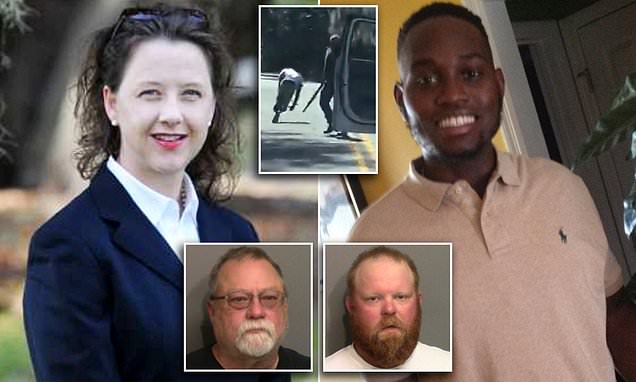
The tragic murder of Ahmaud Arbery in February 2020 in Glynn County, Georgia, exposed not only the heinous actions of the three perpetrators — Gregory McMichael, Travis McMichael, and William “Roddie” Bryan — but also troubling failures in the local justice system. Beyond the crime itself, the role of the Glynn County District Attorney at the time, Jackie Johnson, raised serious questions about the integrity and fairness of the local justice process. Johnson, who had worked closely with Gregory McMichael during his tenure as a former investigator in her office, was accused of interfering with the investigation in ways that delayed justice and may have emboldened the perpetrators. I wrote an article at the time, five years ago, pointing out that based on the empirical evidence in the public domain Glynn County Prosecutor Jackie Johnson had committed a crime by not allowing the investigations into Mister Arbury’s killing to proceed naturally based on her connections to the senior McMichael. I also did an extensive detailing the case for Jackie Johnson’s prosecution. The video embedded in the article is no longer available as the YouTube account was hacked and taken down by the platform.
Allegations Against Jackie Johnson
Shortly after the murder, it became apparent that Gregory McMichael’s connections to law enforcement and the district attorney’s office had created a conflict of interest. Rather than recuse herself promptly and allow for an impartial investigation, Jackie Johnson reportedly took actions to shield Gregory McMichael. Allegations surfaced that she instructed police officers not to arrest the suspects on the day of the murder and that she sought to influence the case to protect McMichael, using her authority to sway investigative decisions. This interference delayed the pursuit of justice. For weeks, the case languished without arrests, despite clear video evidence of the brutal killing. It was not until the Georgia Bureau of Investigation (GBI) took over the case in May 2020 — following public outcry and national media attention — that the McMichaels and Bryan were arrested and charged. The delay was widely perceived as a miscarriage of justice and a reflection of systemic bias.
The Case for Indicting Jackie Johnson
Jackie Johnson’s actions were not merely unethical; they appear to have violated her legal duties as a public official. By interfering with the investigation and failing to recuse herself in a timely manner, she arguably obstructed justice. In 2021, Johnson was indicted on charges of violating her oath of office and obstructing law enforcement. The charges stem from her alleged direction to police not to arrest Gregory McMichael and her attempts to influence the outcome of the case. Johnson’s indictment sent a powerful message: public officials must be held accountable when they abuse their positions of power. The justice system relies on the principle that no one is above the law, and Johnson’s alleged actions undermined this principle by protecting a former colleague rather than pursuing justice for Ahmaud Arbery.
Broader Implications
The case also highlights systemic issues within local law enforcement and prosecutorial practices. The reluctance of local officials to act underscores the importance of independent oversight and accountability mechanisms, such as the role played by the GBI in this case. It also underscores the need for reforms to prevent conflicts of interest and ensure that justice is administered impartially, regardless of an individual’s connections or status. In conclusion, Jackie Johnson’s indictment was a necessary step toward restoring faith in the justice system and addressing the failures that allowed Ahmaud Arbery’s killers to evade accountability for so long. Her alleged actions, along with the inaction of others, delayed justice and deepened the tragedy for Arbery’s family and community. This case serves as a stark reminder of the critical importance of integrity and accountability in public office.
Here is my article written on September 4th 2021
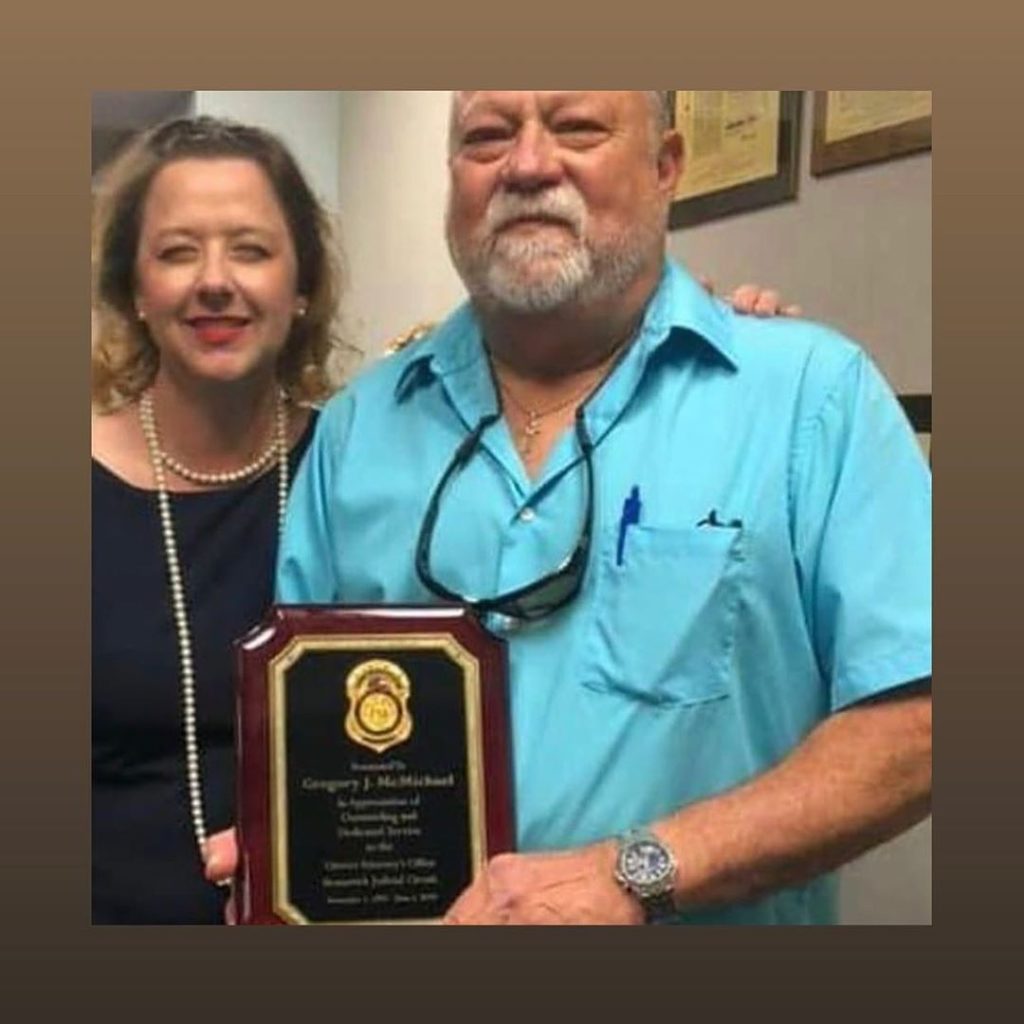
We told you there was corruption there; former prosecutor charged with corruption in Ahmaud Arbery investigations…After Gregory McMichael and his son Travis murdered Amhaud Arbury in 2020, aided by their neighbor William(Roddy) Bryan, this writer argued that the case was mishandled by the then prosecutor Jackie Johnson who clearly had shown favoritism toward the two killers, one of whom was a former cop who worked in her office as an investigator. Well, we are happy to see that your humble servant was not the only person who thought that Jackie Johnson had committed crimes in the way she handled the investigations until it blew up in her face.Here is prosecutor Jackie Johnson with Gregory McMichaels, one of the white supremacist killers of Ahmaud Arbery.
However, it was not only Johnson, whom I personally believed was criminally culpable; I also believe the prosecutor from the neighboring county, George Barnhill, may have also committed criminal acts to protect the father and son murder team. Below is a video and a link to an article I did discussing the ins and outs of the corruption as I saw it then, even as much of the conversation was centered on the killing itself.
Jackie Johnson is accused of directing police not to arrest one of the suspects and showing “favor and affection” to another. Ms. Johnson has previously denied any wrongdoing in her handling of the case. The Georgia attorney general’s office indictment claims Ms. Johnson “knowingly and willfully” hindered police officers from arresting suspect Travis McMichael, It also alleges that Ms. Johnson showed “favor and affection” to Travis’ father, Gregory McMichael, a former district attorney employee. In the indictment, Jackie Johnson also failed to treat Mr. Arbery and his family “fairly and with dignity” by not disclosing she had sought the help of another district attorney, George Barnhill.
Those of you who bother to take the time to read or listen to the content on this medium will recall that I have consistently pointed out that though police are the actual killers, prosecutor’s offices and judges are equally as guilty of the corrupt racism; plaguing American policing.
As a consequence of Jackie Johnson’s conduct, police did not charge the McMichaels until the shooting gained widespread attention and sparked nationwide protests. Jackie Johnson was voted out of office later that year after the national uproar over the case. In the meantime, I will continue to shine a light on the prosecutors who not only shield corrupt, murderous cops but hinder full and transparent investigations into their criminal conduct.
.….….….….….….….….….…..
The Trial of Prosecutor Jackie Johnson begins in a Georgia courtroom this week five years after the killing of the innocent Amhaud Arbery. We will keep an eye out and report on this important case in a time when lies and injustice has taken over discarding morality truth and justice.
: The Democratic Party is far and beyond anything the Republican Party could ever hope to be as it pertains to the working class. The problem for Democrats is that they suffer from an overabundance of humility. Simply put, Democrats fight for and pass laws that benefit the working class over the objection of Republicans, who then take credit when the benefits are obvious. The Infrastructure Act. The Affordable Care Act. Advocating for service workers on the picket line. Rebuilding federal employee bargaining rights. Giving fast-food and outsourced workers a stronger voice at the bargaining table. Preventing debt from derailing careers in public service. Raising pay and improving job quality for childcare and long-term care workers Giving service workers on government contracts raises and better jobs Making rights real through funding and enforcement. Raising standards for service workers across the economy. The Biden Administration has done more for the working class than any other single-term Administration in American history. Joe Biden and the Democrat’s problem of ineffective communication, coupled with a race-based society that prefers old racist traditions over equality and justice, cost them the election’s not underperformance.
In recent days, political commentators have suggested that the Democratic Party has “lost the working class.” At first glance, this claim appears plausible, given the Republican Party’s growing support among white, non-college-educated voters. However, a closer look at voting patterns, economic policies, and demographic trends reveals a more nuanced reality: the Democratic Party remains the strongest advocate for working people, and shifts in white working-class support often reflect cultural and racial anxieties rather than economic grievances. Data from the 2020 presidential election offers a telling story. While Donald Trump performed well among white voters without a college degree, Joe Biden won the majority of votes from the overall working class — defined as Americans without a college degree — because of overwhelming support from Black, Hispanic, and Asian voters in this demographic. According to the Pew Research Center, Biden carried 61% of nonwhite voters without a college degree, a significant portion of the working-class electorate.
Furthermore, Biden’s policies consistently resonated with working people. Initiatives such as the American Rescue Plan provided direct relief to families, while the Infrastructure Investment and Jobs Act promised millions of well-paying jobs in construction, manufacturing, and clean energy. Democrats have also championed raising the minimum wage,expanding union protections, and increasing access to affordable healthcare—policies that benefit workers of all races. The shift of white working-class voters toward the Republican Party is less about economic alignment and more about identity politics and cultural issues. Research by political scientists like Justin Gest and Katherine Cramer shows that many white working-class voters feel alienated by societal changes, including increasing racial diversity and perceived declines in their cultural dominance. This sense of “status threat” has driven them toward Republican candidates who emphasize nationalism, anti-immigration policies, and opposition to “woke” cultural values. Economic data contradicts the narrative that Republicans better serve the working class. While Democrats advocate for policies that strengthen worker protections and economic equity, Republicans often prioritize tax cuts for the wealthy and corporate deregulation. Yet, many white working-class voters perceive cultural alignment with Republican rhetoric, even if GOP policies fail to address their material needs.
Despite losing ground with some segments of the white working class, the Democratic Party continues to represent a broad coalition of working people. This coalition includes union members, teachers, healthcare workers, and service industry employees. Unions, historically a backbone of the working class, overwhelmingly support Democrats. In 2020, 57% of union households voted for Biden, according to CNN exit polls. Additionally, Democrats lead on issues that directly impact workers’ lives, such as healthcare, childcare, and student loan relief. These policies resonate across racial and educational divides, even as Republicans emphasize culture wars over substantive economic reform. The idea that Democrats have “lost the working class” oversimplifies a complex political landscape. While shifts in white working-class voting patterns are undeniable, they reflect racial and cultural dynamics rather than a wholesale rejection of Democratic economic policies. The Democratic Party remains the party of working people through its advocacy for fair wages, labor rights, and social programs that uplift families across racial and economic lines. As America’s workforce becomes increasingly diverse, the Democrats’ commitment to equity and opportunity ensures their place as the true party of the working class.
Jamaica’s authorities have gravely erred by succumbing to the loud and misguided rhetoric of far-left anti-police reactionaries. These individuals, cloaking their agendas in the language of social justice, have long militated for “soft” laws and leniency that embolden criminals while dismantling the deterrents that once kept violence at bay. The tragic result is a nation where police officers are gunned down with impunity, their killers reveling in celebration, and a justice system that is increasingly complicit in this descent into lawlessness.
The People’s National Party (PNP) bears significant historical responsibility for this crisis. Under the guise of championing the poor, the PNP has consistently aligned itself with criminal elements, exploiting them as a political strategy. For decades, the party has carefully cultivated a narrative of faux concern for marginalized communities while using these same communities as a breeding ground for violence and intimidation to secure votes. This cynical exploitation has done nothing to alleviate poverty or empower the vulnerable. Instead, it has created a culture in which criminality is tolerated, if not openly celebrated, while genuine law enforcement is undermined at every turn.
The current Jamaica Labour Party (JLP) administration has fared little better. While it ostensibly rejects the PNP’s pro-criminal legacy, it has failed to draw a decisive line of demarcation between itself and its opposition on the issue of crime. The JLP’s inaction has perpetuated a culture of weak governance, where the state is unwilling or unable to stand up to both violent offenders and the élite enablers who romanticize them. The line separating justice from chaos has blurred, leaving a void where once the rule of law prevailed.
Two or three decades ago, such brazenness as the murder of police officers would have been unthinkable. Perpetrators would have been swiftly brought to justice, serving as a stark warning to others. Today, however, Jamaica has degenerated into a society where criminality is normalized. Far-left elites — lawyers, academics, and even political representatives — have worked tirelessly to erode public confidence in law enforcement, all while empowering criminals. Their rhetoric has borne bitter fruit: a Jamaica where the killers of police officers, the latest being Corporal Christopher Smith of the Kingston Western Division, drink and celebrate with impunity, mocking the very concept of justice. The police high command, a product of new-age policing, has zero concepts of how to attack the killers who roam the streets, and neither does its supporting cast of men and women who serve under it. Frankly, they make me sick. Press briefings promising thorough probes into the deaths of police officers are not worth the paper they are written on. There was a time when we brought cop-killers to justice or brought justice to them; their choice.
This is not the Jamaica that once stood firm against violence and lawlessness. The current state of affairs reflects the triumph of a dangerous ideology that prioritizes the rights of criminals over the safety of citizens and the justice system’s integrity. Until Jamaica’s leaders reject the influence of far-left reactionaries, dismantle the networks of criminal enablers, and restore accountability to both offenders and the elites who shield them, the island’s descent into anarchy will continue unabated. It is time for Jamaica to reclaim its legacy of law and order — not merely as a political talking point but as a foundational principle. The lives of police officers and the safety of all Jamaicans depend on it.
Referring to the Media as Fake News, telling low-information people that their problems are all to be blamed on others not like them, and that government institutions are corrupt were just some of the ways lies, and disinformation allowed the lumpenproletariat to turn over power to a fascist
In a bold yet perplexing move, Trump’s nominations of Matt Gaetz for Attorney General and Tulsi Gabbard as Director of National Intelligence underscore a dramatic shift in political dynamics. Known for their steadfast support, these choices reveal Trump’s untold truth: a preference for loyalists over conventional qualifications. Gaetz, a polarizing figure with divisive rhetoric, reflects Trump’s historical policies aimed at challenging the status quo, while Gabbard’s unconventional stance could reshape the socio-political landscape.
Their appointments highlight a leadership style that prioritizes allegiance over experience, potentially transforming the Department of Justice and the intelligence community. As the election looms, these controversial picks may redefine the interaction between Trump’s administration and Black voters, amid ongoing debates on immigration and stimulus checks. This video delves into these contrasting political engagements and the broader impact on stereotypes within the Democratic Party. Don’t miss this in-depth exploration — join the discussion on the future of American governance!